

Living with a faith first mindset means more than attending Sunday Mass or saying grace before meals. It represents a fundamental reorientation of priorities, placing relationship with God at the center of every decision, relationship, and activity. In 2026, as cultural pressures continue to challenge traditional religious practice, the call to put faith first becomes both more difficult and more essential. This approach transforms how we raise children, conduct business, spend our time, and measure success.
Understanding the Faith First Philosophy
The faith first philosophy begins with a simple yet profound recognition: our relationship with God should inform and shape every other aspect of our lives. Rather than compartmentalizing faith as a Sunday activity or personal hobby, this approach integrates spiritual priorities into the fabric of daily existence.
Research from the Association of Religion Data Archives demonstrates that families who prioritize religious practice experience measurable benefits in stability, communication, and shared values. The faith first approach isn't merely about personal piety; it creates a framework for decision-making that touches every relationship and responsibility.
The Three Pillars of Faith First Living
When we examine what it means to truly put faith first, three foundational pillars emerge:
- Prayer as the starting point for each day and every significant decision
- Scripture and sacred tradition as the authoritative guide for behavior and choices
- Community worship and service as essential expressions of lived faith
These pillars work together to create a sustainable spiritual life. Prayer without community leads to isolation. Scripture without prayer becomes academic. Community without scriptural grounding loses its foundation.
Faith First in Family Life
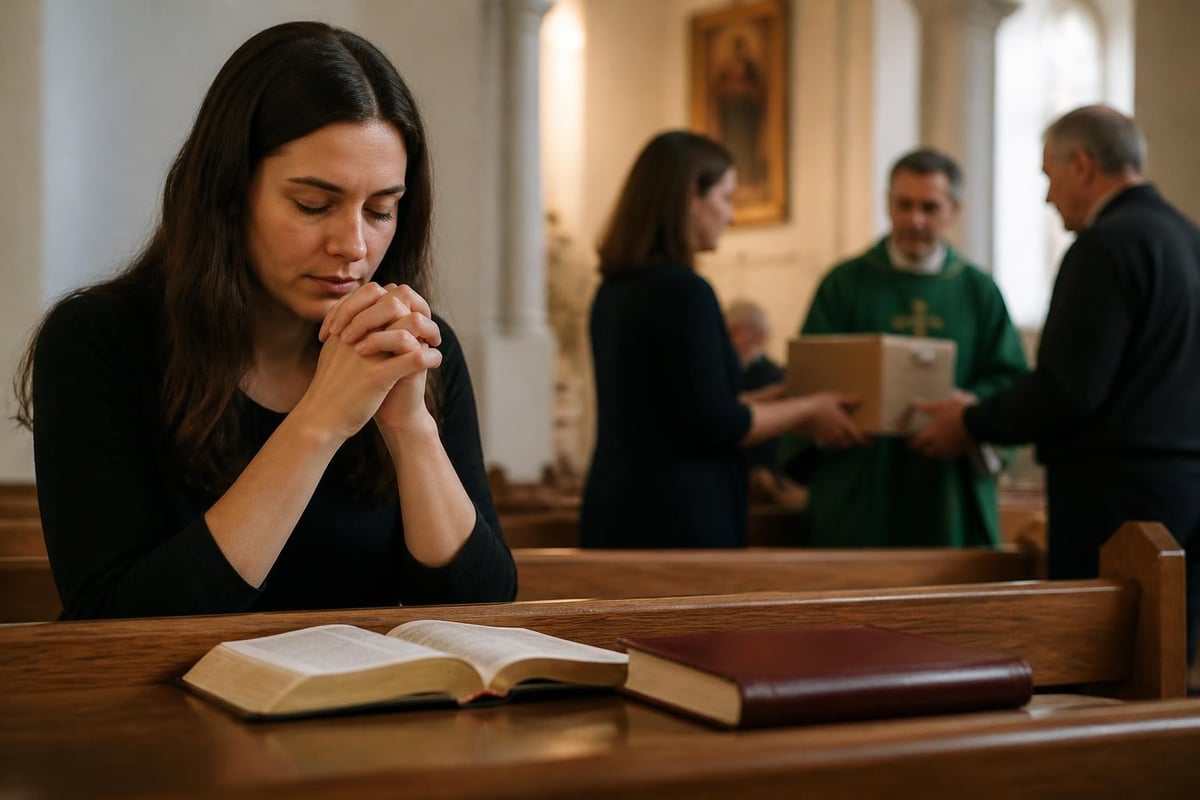
Parents face unprecedented challenges in 2026 when transmitting faith to the next generation. According to Pew Research Center data, most American parents do pass along their religious beliefs to children, but intentionality matters significantly. The difference between passive cultural Catholicism and active faith first parenting shows up in long-term outcomes.
Brought to you by Journeys of Faith, founded by Bob and Penny Lord. We are an Augustinian Secular Institute and Cyber Apostles. Our mission is evangelization through media.
Creating a faith first household requires practical, daily implementation. Morning prayer before school, evening rosary, and regular discussion of saints and Scripture weaves faith into the ordinary rhythms of family life. Parents who model faith first living demonstrate that relationship with God isn't optional or peripheral but central to human flourishing.
Practical Strategies for Faith First Families
| Strategy | Implementation | Expected Outcome |
|---|---|---|
| Morning Offering | Begin each day consecrating activities to God | Intentional spiritual focus |
| Mealtime Prayer | Pause before meals for gratitude and blessing | Recognition of God's provision |
| Bedtime Scripture | Read brief Bible passages or saint stories | Formation of spiritual imagination |
| Family Rosary | Weekly or daily rosary together | Shared devotional practice |
| Service Projects | Regular acts of charity as a family unit | Faith expressed through action |
The Institute for Family Studies' research on intergenerational faith transmission confirms that consistency matters more than perfection. Families who maintain regular spiritual practices, even when imperfectly executed, see higher rates of religious continuity across generations.
Children raised with faith first priorities develop a framework for understanding life's challenges through a spiritual lens. When difficulties arise, they've been trained to turn first to prayer, seek wisdom in Scripture, and rely on community support rather than defaulting to purely secular solutions.
Faith First in Professional Life
The workplace presents unique challenges for those committed to faith first principles. Professional advancement, competitive pressures, and secular workplace cultures can create tension with religious values. Yet Catholic teaching has always maintained that faith and work are not separate spheres but integrated dimensions of human vocation.
Research on spiritual leadership in organizational settings demonstrates that leaders who operate from clear spiritual principles often achieve better outcomes in employee satisfaction, ethical culture, and long-term sustainability. Faith first leadership doesn't mean proselytizing in the break room; it means allowing spiritual values to guide decision-making about integrity, treatment of employees, and service to customers.
Characteristics of Faith First Professionals
Integrity in all transactions stands as the foundation. When profit conflicts with honesty, the faith first professional chooses integrity. When advancement requires ethical compromise, they decline. This isn't naïve idealism but practical wisdom rooted in eternal rather than temporal values.
Service orientation shapes how faith first professionals approach their work. Rather than viewing employment solely as a means to personal gain, they recognize work as vocation and service to the common good. This perspective transforms mundane tasks into opportunities for glorifying God through excellence and charity.
Sabbath rest represents a counter-cultural practice in 2026's hustle culture. Faith first professionals protect Sunday as sacred time, resisting the pressure to be constantly available and productive. This practice witnesses to the primacy of worship and acknowledges that human worth isn't measured by productivity alone.

Faith First in Personal Formation
Individual spiritual growth forms the bedrock of faith first living. Without personal prayer, Scripture reading, and sacramental life, the attempt to build faith first families and workplaces lacks authentic foundation. The spiritual life requires intentional cultivation through disciplines and practices.
The sacraments, particularly the Eucharist and Reconciliation, provide irreplaceable nourishment for faith first living. Weekly Mass attendance isn't merely obligation but essential spiritual food. Regular confession addresses the reality of sin and provides grace for ongoing conversion.
Many Catholics find that daily devotional practices strengthen their commitment to faith first principles. The Divine Mercy Novena and Chaplet offers a powerful structure for daily prayer that connects personal devotion to Christ's mercy with the Church's liturgical rhythm. This type of focused prayer discipline helps embed faith first thinking into daily consciousness.

Building a Personal Faith First Routine
- Wake with purpose by immediately offering the day to God before checking devices or engaging with news
- Allocate prayer time before other morning activities begin, even if brief
- Integrate Scripture through daily Mass readings or systematic Bible study
- Practice examination of conscience each evening to review the day through a spiritual lens
- End with gratitude by thanking God for specific blessings before sleep
These practices train the mind and heart to default to spiritual awareness rather than purely secular consciousness. Over time, the faith first perspective becomes natural rather than forced.
Faith First and Cultural Engagement
Catholics committed to faith first living must engage thoughtfully with contemporary culture. This doesn't mean withdrawal into isolated religious communities but rather active participation guided by clear spiritual principles. The USCCB's guidance on evangelization and catechesis provides authoritative direction for engaging culture while maintaining doctrinal integrity.
Faith first cultural engagement requires discernment about media consumption, entertainment choices, and social participation. Not every cultural product or trend deserves Catholic participation. Some must be rejected outright as incompatible with Christian anthropology or moral teaching. Others can be engaged with appropriate critical distance and spiritual formation.
Navigating Cultural Tensions
The tension between faith first commitments and cultural norms intensifies around issues of sexuality, gender, life ethics, and religious freedom. Catholics face real costs for maintaining traditional teaching: professional consequences, social ostracism, and accusation of bigotry.
- Stand firm on non-negotiable moral teachings while extending pastoral charity to individuals
- Articulate Catholic positions with clarity and winsomeness rather than anger or defensiveness
- Build coalitions with other people of goodwill who share common ground on specific issues
- Accept that cultural marginalization may be the price of faithfulness in this generation
Faith first doesn't mean cultural isolationism. Catholics should continue participating in public life, arts, education, and civic institutions. However, participation must be guided by faith rather than faith being modified to accommodate cultural demands.
Faith First Community and Accountability
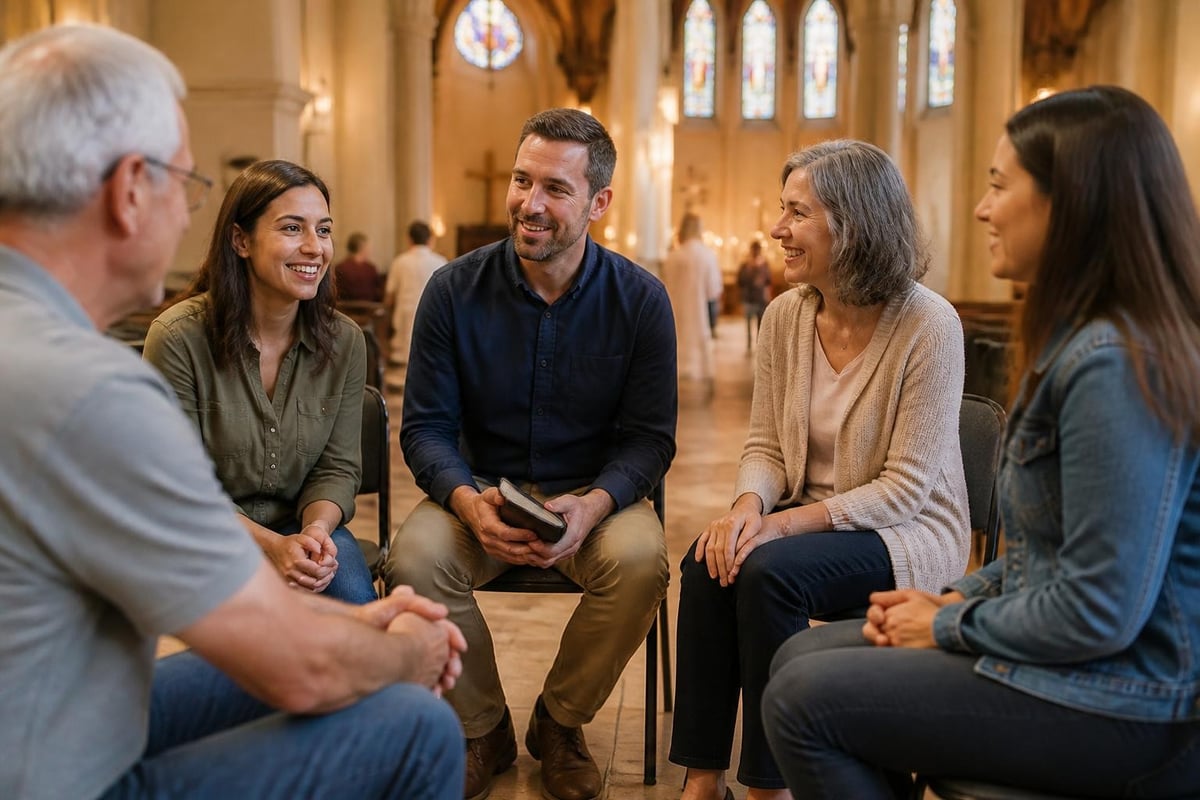
No one sustains a faith first life in isolation. The Catholic tradition emphasizes the essential role of community in spiritual formation and perseverance. Parish life, small groups, and intentional friendships provide the accountability and encouragement necessary for long-term faithfulness.
Research from the National Study of Youth and Religion at the University of Notre Dame demonstrates that social networks significantly influence religious practice and belief retention. Young adults who maintain faith first priorities almost universally have strong connections to religious communities and mentors.
| Community Type | Primary Function | Faith First Contribution |
|---|---|---|
| Parish | Sacramental life and corporate worship | Essential spiritual nourishment |
| Small Group | Study, prayer, and mutual support | Accountability and growth |
| Spiritual Direction | Individual guidance and discernment | Personalized formation |
| Service Team | Organized charitable work | Faith in action |
Building authentic Catholic community requires vulnerability and commitment. Surface-level social connection doesn't provide the depth needed to support faith first living through trials and temptations. Genuine community involves confession of struggles, mutual encouragement, and willingness to offer and receive correction.
Faith First Leadership and Influence
Whether in formal leadership positions or informal influence, Catholics committed to faith first principles have opportunity to shape culture and guide others. Research on spiritual leadership and public health demonstrates that leaders operating from clear spiritual values contribute to individual and community flourishing in measurable ways.
Faith first leadership begins with personal credibility. Leaders who talk about spiritual priorities while living according to worldly values undermine their witness. Consistency between professed beliefs and actual choices establishes the moral authority necessary for genuine influence.
Characteristics of Faith First Leaders
Humility marks authentic spiritual leadership. Faith first leaders recognize their position as stewardship rather than status, opportunity for service rather than self-aggrandizement. They give credit generously and accept responsibility for failures without deflection.
Courage enables faith first leaders to make unpopular decisions based on principle rather than expedience. When financial pressure conflicts with just treatment of employees, the faith first leader chooses justice. When cultural trends contradict Catholic teaching, they maintain fidelity regardless of social cost.
Wisdom develops through prayer, study, and experience. Faith first leaders seek counsel from Scripture, tradition, and trusted advisors. They recognize that human wisdom alone proves insufficient for the complexities of leadership and actively seek divine guidance through regular prayer and discernment.
Faith First in Times of Trial
The faith first approach reveals its true value during suffering and difficulty. When life proceeds smoothly, maintaining spiritual priorities feels manageable. Crisis tests whether faith genuinely holds first place or merely occupies a comfortable but ultimately secondary position.
Catholic history overflows with examples of men and women who maintained faith first commitments through persecution, poverty, illness, and martyrdom. Their witness demonstrates that faith first living isn't contingent on favorable circumstances but represents a fundamental choice about ultimate priorities and values.
Responding to Suffering with Faith First Principles
When trials come, the faith first response differs markedly from secular approaches:
- Turn to prayer before problem-solving, seeking God's perspective and grace
- Search Scripture for wisdom, comfort, and examples of faithful endurance
- Lean on community for practical support and spiritual encouragement
- Embrace suffering as opportunity for spiritual growth and union with Christ's cross
- Trust divine providence even when circumstances seem to contradict God's goodness
This doesn't mean denying the reality of pain or refusing legitimate solutions. Faith first suffering acknowledges anguish while maintaining that God works redemptively even through difficulty. The cross itself proves that God transforms suffering into salvation.
Families and individuals who've built faith first foundations before crisis find those practices sustaining during trial. The prayer routines, scriptural knowledge, and community connections established in ordinary time become lifelines when extraordinary challenges arrive.
Sustaining Faith First Commitments Long-Term
The greatest challenge of faith first living isn't dramatic persecution but mundane drift. Day-to-day pressures gradually erode spiritual priorities unless actively resisted through intentional practices and periodic renewal.
Regular retreat time provides opportunity to step back from daily obligations and reassess priorities. An annual weekend retreat, quarterly day of reflection, or even monthly holy hour creates space for examination and recommitment. During these times, honest assessment reveals where faith first intentions have slipped into faith-optional practice.
Spiritual direction offers personalized guidance for navigating the unique challenges each person faces in maintaining faith first priorities. A skilled spiritual director helps identify patterns of compromise, suggests concrete practices for growth, and provides accountability between meetings. Journeys of Faith offers extensive resources for deepening spiritual life through books, DVDs, and materials focused on the Eucharist, Mary, and the saints.
The liturgical year provides natural rhythm for renewing faith first commitments. Advent and Lent offer built-in seasons for intensified spiritual focus. The cycle of feast days celebrating Christ's life, Mary's role, and the saints' examples continuously calls Catholics back to foundational truths and priorities.
Signs Your Faith First Commitment Needs Renewal
Watch for these warning indicators that spiritual priorities have drifted:
- Prayer time consistently gets bumped for other activities
- Sunday Mass attendance becomes negotiable based on convenience
- Major decisions get made without serious prayer or spiritual consultation
- Entertainment and media consumption happens without moral discernment
- Charitable giving and service decline while discretionary spending increases
- Conversation about faith feels awkward or forced even with fellow Catholics
Recognizing drift represents the first step toward correction. The spiritual life involves continuous conversion, repeatedly choosing to reorient toward God when we find ourselves drifting toward worldly priorities.
Living faith first in 2026 requires intentionality, courage, and community support, but the rewards extend beyond this life into eternity. Whether you're beginning this journey or recommitting after a period of drift, the essential practices remain constant: daily prayer, regular sacraments, scriptural formation, and active service.
Resources to support your faith first journey:
-
Explore the Journeys of Faith online store with thousands of Catholic items including books, rosaries, prayer cards, and devotional materials designed to strengthen your spiritual life.
-
Journeys of Faith is blessed to provide Catholic media, including podcasts and inspirational content, free of charge across multiple media platforms for viewers and listeners around the world. While access to this content remains free, there are significant and continually increasing costs associated with producing, hosting, and distributing these programs. Your support helps us continue sharing the beauty of the Catholic faith with souls. Please make a donation to support this evangelization mission.
Journeys of Faith, founded by Bob and Penny Lord, offers the resources, inspiration, and community support you need to build and sustain a truly faith first life centered on the Eucharist, devotion to Mary, and the examples of the saints.
