

The lives of famous saints continue to inspire millions of Catholics worldwide in 2026, offering powerful examples of faith, sacrifice, and divine grace. These holy men and women, recognized by the Church for their exceptional virtue and often miraculous intercession, serve as intercessors and models for believers navigating the challenges of modern life. From ancient martyrs to contemporary witnesses of faith, famous saints demonstrate that holiness is accessible to all who seek to follow Christ with unwavering devotion.
Understanding the Path to Sainthood
The process of becoming a recognized saint in the Catholic Church is rigorous and methodical, overseen by the Dicastery for the Causes of Saints. This institution carefully investigates the lives of candidates to ensure they truly exemplified heroic virtue and maintained theological orthodoxy throughout their lives.
The Canonization Process Today
According to recent Vatican statistics, the canonization process has evolved significantly while maintaining its essential standards. The journey typically begins at the diocesan level, where bishops investigate the life and writings of a candidate who has been deceased for at least five years.
The stages of canonization include:
- Servant of God: Initial investigation begins at the local diocese level
- Venerable: The Vatican recognizes the candidate lived a life of heroic virtue
- Blessed: Beatification occurs after one verified miracle (martyrs are exempt)
- Saint: Canonization requires a second verified miracle after beatification
The process demands extensive documentation, witness testimony, and theological review. Medical experts scrutinize alleged miracles with scientific rigor, ensuring no natural explanation exists for the healing or event attributed to the candidate's intercession.
Brought to you by Journeys of Faith. Founded by Bob and Penny Lord, we are an Augustinian Secular Institute and Cyber Apostles. Our Mission is Evangelization through Media.
Ancient Martyrs and Early Famous Saints
The earliest famous saints emerged from periods of persecution when Christians faced death rather than renounce their faith. These martyrs established a foundation for understanding sanctity that emphasizes complete surrender to God's will.
Saint Stephen: The First Martyr
Saint Stephen, the first Christian martyr, set a powerful precedent around 34 AD. As recorded in the Acts of the Apostles, his willingness to forgive his executioners while being stoned to death exemplified Christ-like charity. His feast day on December 26 immediately follows Christmas, symbolizing how discipleship can demand the ultimate sacrifice.
Saint Peter and Saint Paul
These two apostles, though different in background and temperament, both achieved martyrdom in Rome under Emperor Nero's persecution. Saint Peter, the fisherman chosen as the first pope, was crucified upside down at his own request, feeling unworthy to die as Christ did. Saint Paul, the former persecutor of Christians transformed by divine encounter, was beheaded as a Roman citizen.
| Saint | Death Year | Feast Day | Patronage |
|---|---|---|---|
| Stephen | c. 34 AD | December 26 | Deacons, stonemasons |
| Peter | c. 64 AD | June 29 | Fishermen, papacy |
| Paul | c. 67 AD | June 29 | Writers, missionaries |
| Agnes | c. 304 AD | January 21 | Young women, purity |
Medieval Saints Who Shaped Western Christianity
The medieval period produced famous saints whose influence extended beyond spiritual matters into education, theology, and social reform. These individuals demonstrated that holiness involves engaging with the world's challenges while maintaining contemplative depth.
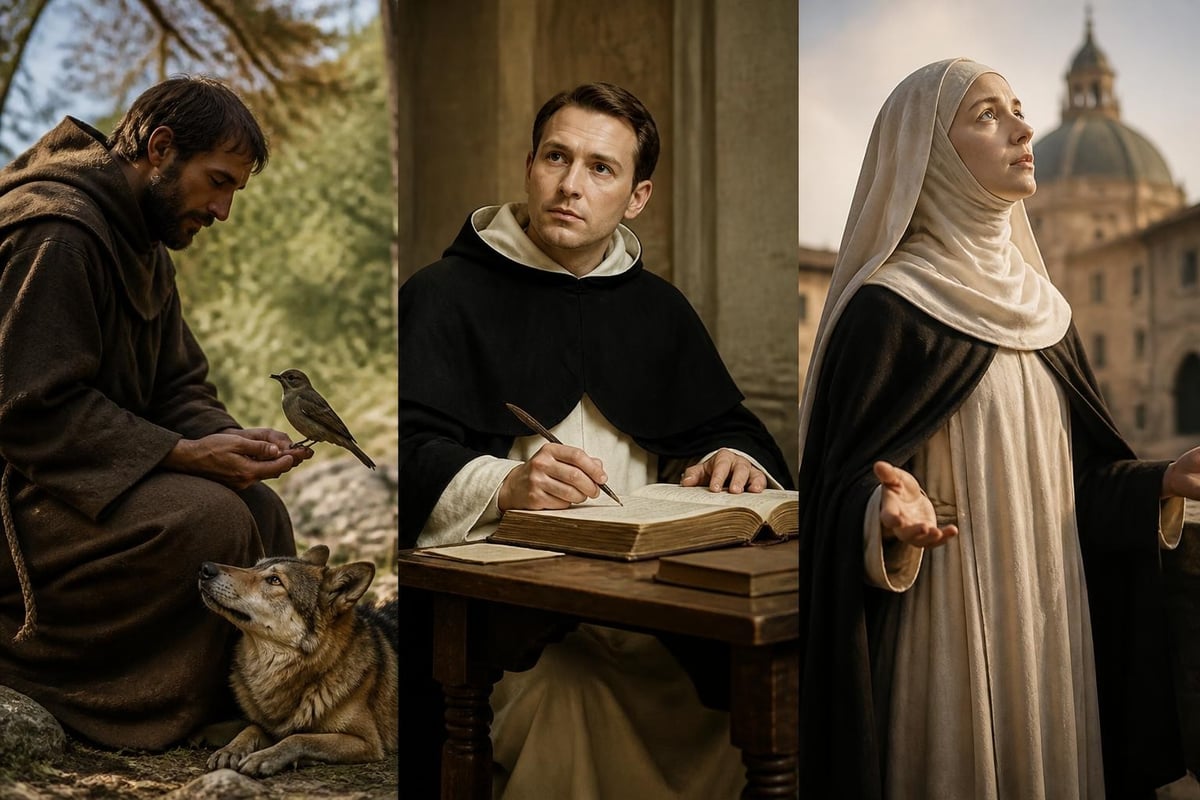
Saint Francis of Assisi
Born into wealth in 1182, Francis renounced his inheritance to embrace radical poverty and rebuild the Church. His love for creation, communion with animals, and stigmata reception made him one of history's most beloved famous saints. The Franciscan Order he founded continues serving the poor and preaching the Gospel across six continents in 2026.
Saint Thomas Aquinas
This Dominican friar transformed Catholic theology through his synthesis of Aristotelian philosophy and Christian doctrine. His Summa Theologica remains essential reading for Catholic seminarians. Thomas demonstrated that faith and reason complement rather than contradict each other, a principle particularly relevant as the Church engages contemporary scientific and philosophical questions.
The Cult of Saints research project at Oxford University has documented how medieval saints' cults developed locally before gaining universal recognition, showing how communities identified and promoted their own holy intercessors.
Famous Saints of Prayer and Mysticism
Certain famous saints achieved recognition primarily through their extraordinary prayer lives and mystical experiences. These contemplatives accessed profound union with God while often remaining hidden from public view.
Saint Teresa of Ávila
This 16th-century Carmelite reformer experienced ecstatic visions while simultaneously managing the practical demands of founding seventeen convents. Her writings on prayer, particularly The Interior Castle, map the soul's journey toward divine intimacy with psychological insight that resonates with modern readers.
Saint John of the Cross
Teresa's collaborator in Carmelite reform, John articulated the "dark night of the soul," that painful purification believers sometimes endure when God seems absent. His poetry and prose demonstrate how suffering can deepen faith rather than destroy it.
Key mystical themes from these famous saints:
- Prayer progresses through distinct stages toward union with God
- Spiritual dryness often precedes breakthrough experiences
- Authentic mysticism produces practical charity and humility
- Divine encounters transform rather than merely console
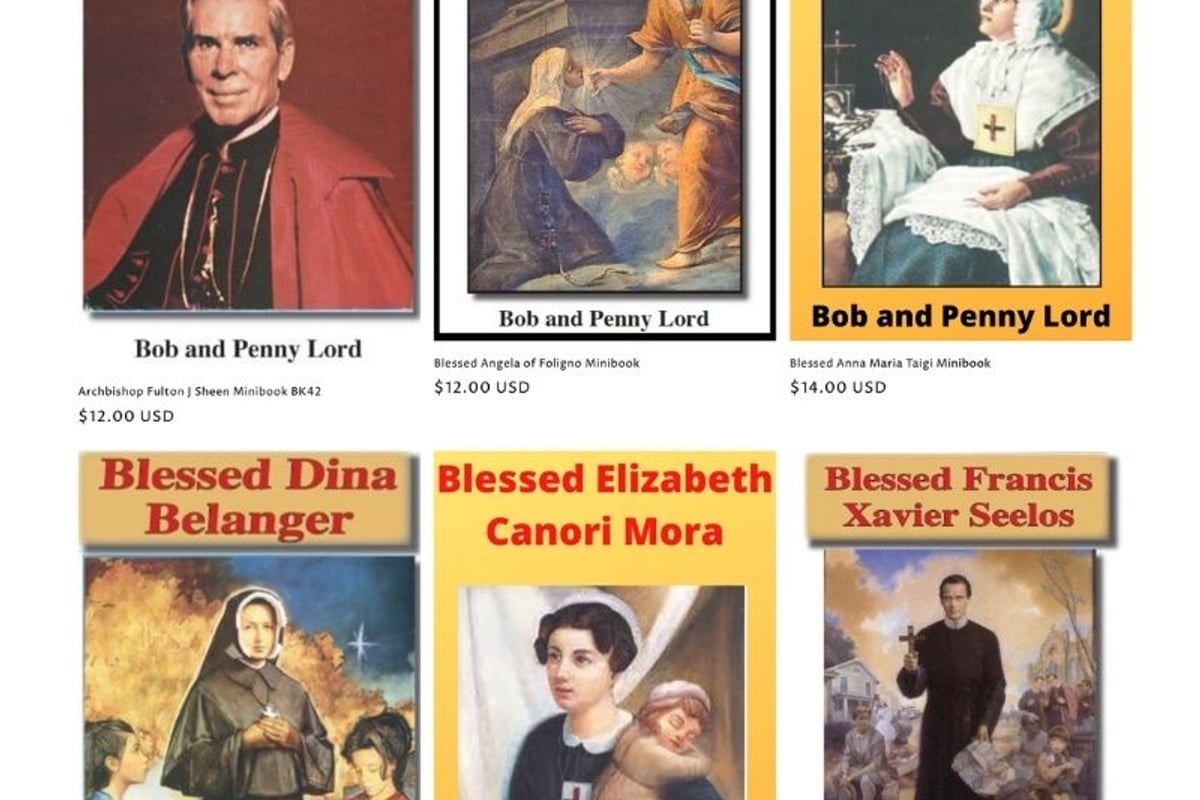
For those exploring the lives of these remarkable individuals, the Catholic Saints Minibooks available at Journeys of Faith offer accessible introductions to various saints' stories and spiritualities, making these profound witnesses of faith approachable for modern readers.
Modern Saints Addressing Contemporary Challenges
The 20th and 21st centuries have produced famous saints who confronted totalitarianism, secularism, poverty, and cultural upheaval while maintaining radical fidelity to the Gospel.
Saint Maximilian Kolbe
This Polish Franciscan friar volunteered to die in place of a stranger at Auschwitz in 1941, demonstrating love's triumph over hatred. His martyrdom revealed how sanctity manifests even in humanity's darkest moments. Kolbe's use of media for evangelization presaged modern Catholic communications efforts.
Saint Teresa of Calcutta
Mother Teresa's service to Calcutta's dying poor made her globally recognized even before her 2016 canonization. She challenged comfortable Christianity by insisting believers must see Christ in "the distressing disguise of the poorest of the poor." Her Missionaries of Charity now serve in 133 countries.
Saint John Paul II
Canonized in 2014, this Polish pope helped dismantle European communism while traveling extensively to evangelize and inspire youth. His theology of the body addressed modern confusion about human sexuality with philosophical rigor grounded in personalism.
Regional Saints and Cultural Expressions of Holiness
Different cultures have produced famous saints whose lives reflect particular regional challenges and spiritual sensibilities, demonstrating that holiness adapts to diverse contexts while maintaining universal Christian principles. The ongoing research at KU Leuven examines how local saints' cults anchored Christianity in specific geographical areas during the medieval period.
Saint Juan Diego
This indigenous Mexican's encounter with Our Lady of Guadalupe in 1531 resulted in millions of conversions. His canonization in 2002 affirmed the Church's recognition of non-European holiness and the dignity of indigenous peoples.
Saint Kateri Tekakwitha
The first Native American saint, Kateri embraced Catholicism despite family opposition and maintained her consecrated virginity in a culture where women typically married. Her 2012 canonization acknowledged indigenous American spirituality's compatibility with Catholic faith.
| Region | Saint | Era | Significance |
|---|---|---|---|
| Mexico | Juan Diego | 1474-1548 | Indigenous evangelization |
| North America | Kateri Tekakwitha | 1656-1680 | Native American faith |
| India | Alphonsa Muttathupadathu | 1910-1946 | Asian women's witness |
| Philippines | Lorenzo Ruiz | c.1600-1637 | Lay martyrdom |
Saints and Eucharistic Devotion
Many famous saints centered their spiritual lives on the Eucharist, understanding Christ's Real Presence in the consecrated host as Catholicism's beating heart. Their devotion produced profound theological insights and missionary zeal.
Saint Juliana of Liège
This Belgian nun's visions led to establishing the Feast of Corpus Christi in 1264. Recent scholarship has examined her Latin vita and the manuscript tradition preserving her mystical experiences, revealing how medieval women's spirituality influenced liturgical development.
Saint Thomas Aquinas composed the office for this feast, including the hymn Pange Lingua, still sung during Eucharistic adoration worldwide. These famous saints' Eucharistic focus reminds contemporary Catholics that the Mass is not merely communal ritual but encounter with the living God.
Exploring deeper connections between saints and Eucharistic devotion, readers interested in documented supernatural events may find value in examining Eucharistic miracles throughout history, which often involved saints as witnesses or recipients of divine manifestations.
Doctor Saints: Theological Giants
The Church has designated 37 saints as "Doctors," recognizing their exceptional theological contributions. These famous saints shaped doctrine, defended orthodoxy, and articulated faith with intellectual brilliance.
Saint Augustine of Hippo
This North African bishop's Confessions pioneered spiritual autobiography while his City of God provided Christians a framework for understanding history amid Rome's collapse. Augustine's wrestling with grace, free will, and original sin continues influencing Catholic and Protestant theology alike.
Saint Catherine of Siena
Despite no formal education, this 14th-century laywoman advised popes and wrote theological treatises. Her mystical experiences informed practical wisdom about Church reform. Catherine demonstrated that divine wisdom can bypass human credentials.
Contributions of Doctor Saints:
- Systematic theology organizing revealed truth coherently
- Biblical commentary illuminating Scripture's deeper meanings
- Spiritual direction guiding souls toward holiness
- Apologetics defending faith against philosophical objections
- Mystical theology articulating prayer's heights
Saints of Social Justice and Service
Authentic holiness produces concern for the marginalized and oppressed. These famous saints challenged unjust systems while serving those society discarded.
Saint Vincent de Paul
This 17th-century French priest organized systematic charity, founding organizations that still serve the poor in 2026. Vincent understood poverty's structural causes while maintaining personal compassion for individual sufferers. His Vincentian spirituality emphasizes seeing Christ in the poor.
Saint Damien of Molokai
This Belgian priest volunteered to serve Hansen's disease patients exiled to a Hawaiian island in 1873. Living among the quarantined, he eventually contracted leprosy himself. Damien's witness challenged societal abandonment of the sick and disfigured.
The modern Church continues recognizing saints who served marginalized populations. Pope Francis recently advanced several causes for beatification, including those who offered their lives serving others during epidemics and wars.
The Communion of Saints in Daily Life
Famous saints remain spiritually active through intercessory prayer, forming what Catholic theology calls the Communion of Saints. This doctrine affirms that those in heaven maintain connection with earthbound believers, praying for them and providing models of virtue.
Practical Devotion to Saints
Catholics cultivate relationships with specific famous saints based on personal circumstances, professions, or spiritual needs. Fishermen pray to Saint Peter, writers to Saint Francis de Sales, those struggling with doubt to Saint Thomas the Apostle.
Ways believers connect with famous saints:
- Learning their life stories for inspiration and guidance
- Praying novenas requesting their intercession for specific needs
- Celebrating their feast days with special devotions
- Naming children after them to invoke protection
- Wearing medals depicting them as reminders of their witness
Many Catholics find that keeping prayer cards featuring famous saints helps maintain daily awareness of these holy intercessors. Prayer cards and novenas provide portable reminders of saints' stories and ready-made prayers requesting their help.
Lesser-Known Saints with Powerful Witnesses
While certain famous saints achieve global recognition, countless others lived equally holy lives in obscurity. The Church's calendar includes over 10,000 canonized saints, most unknown beyond their local regions.
Saint Josephine Bakhita
Born into slavery in Sudan around 1869, Josephine endured brutal treatment before gaining freedom in Italy. Despite her suffering, she forgave her enslavers and joined the Canossian Sisters, serving with joy until her 1947 death. Her 2000 canonization highlighted modern slavery's evil.
Saint Gianna Beretta Molla
This Italian physician and mother chose to continue her pregnancy in 1962 despite knowing it would likely cause her death, which occurred seven days after childbirth. Gianna's canonization in 2004 affirmed the value of maternal sacrifice and the sanctity of unborn life.
These lesser-known famous saints demonstrate that holiness blooms in every era and circumstance. Their lives answer skeptics who claim sanctity belonged only to ancient, simpler times.
Saints and Artistic Expression
Many famous saints either created sacred art themselves or inspired masterpieces through their lives. This intersection of faith and beauty enriched Catholic culture for centuries.
Blessed Fra Angelico
This Dominican friar painted frescoes of extraordinary spiritual depth in 15th-century Florence. His beatification recognized how artistic talent directed toward divine glory constitutes a form of prayer. Fra Angelico's sacred artistry demonstrates that beauty serves evangelization by making invisible realities visible.
The scholarly examination of saints' lives reveals how hagiography functions as scriptural interpretation, with saints' biographies serving as living commentaries on Gospel truths. This literary tradition spans from early martyrologies through medieval legendaries to contemporary biographies.
Contemporary Causes and Future Saints
The canonization process continues actively in 2026, with hundreds of causes under investigation. Recent years have seen emphasis on recognizing diverse forms of holiness, including married couples, laypeople, and those from non-European cultures.
Causes to Watch
Several individuals currently progressing toward potential canonization represent contemporary holiness models. These include martyrs killed by totalitarian regimes, founders of new religious communities addressing modern needs, and laypeople who sanctified ordinary life through extraordinary fidelity.
The Church has also begun recognizing those who offered their lives for others without undergoing traditional martyrdom. This expansion acknowledges heroic sacrifice in contexts like natural disasters, epidemics, and accidents where believers chose death rather than abandon those in need.
Learning from Famous Saints for Modern Discipleship
The lives of famous saints offer practical wisdom for 21st-century believers navigating secularism, materialism, and cultural relativism. Their examples demonstrate that radical Christian discipleship remains possible regardless of historical context.
Timeless Lessons from Saints
Holiness emerges from ordinary life circumstances. Most famous saints weren't born into privilege or power. They sanctified mundane routines through intention and grace. Saint Thérèse of Lisieux called this the "little way," finding profound meaning in small acts of love.
Suffering can become redemptive when united with Christ's passion. Famous saints didn't escape pain but transformed it through faith. Their resilience during persecution, illness, and loss provides hope for believers facing trials.
Prayer sustains authentic action. The most effective saints balanced contemplation and service. Their activism flowed from intimate relationship with God rather than merely humanitarian sentiment.
Community strengthens individual faith. Famous saints typically belonged to religious orders, confraternities, or tight-knit parishes. Few achieved holiness in isolation, reminding modern Catholics that faith requires fellowship.
For those seeking to deepen their understanding of how saints like Saint Frances Cabrini or Saint Toribio Romo lived these principles in their specific contexts, Journeys of Faith offers extensive resources exploring their legacies and continuing relevance.
The Universal Call to Holiness
The Second Vatican Council emphasized that all baptized Christians are called to holiness, not merely clergy or religious. Famous saints demonstrate this universal vocation's possibilities across every state of life.
Saints from Every Vocation
The Church has canonized popes and peasants, scholars and illiterates, celibates and parents. This diversity proves God calls each person uniquely while establishing common patterns of virtue.
Married saints like Louis and Zélie Martin (parents of Saint Thérèse) show that family life can be a path to sanctity. Their canonization as a couple in 2015 was unprecedented, affirming marriage as a vehicle for mutual sanctification.
Worker saints like Saint Joseph the Worker sanctified manual labor, while intellectual saints like Saint Thomas More integrated faith with professional excellence in law and politics.
This breadth among famous saints should encourage rather than intimidate believers. Holiness doesn't require extraordinary circumstances but extraordinary love within ordinary circumstances.
The lives of famous saints across twenty centuries reveal that holiness remains accessible to all who earnestly seek God with humble hearts. Their intercession continues supporting believers navigating modern challenges while their examples illuminate paths toward authentic discipleship. Journeys of Faith, through its extensive collection of books, prayer resources, and media, helps Catholics connect with these powerful witnesses of faith and deepen their understanding of the saints' enduring relevance. Whether exploring the Eucharistic devotion of mystics, the missionary courage of martyrs, or the quiet faithfulness of hidden servants, these holy men and women invite contemporary believers into the adventure of sanctity.
Explore more Catholic resources:
- Explore the Journeys of Faith Online store with thousands of Catholic items supporting your spiritual journey and devotion to the saints.
- Journeys of Faith is blessed to provide Catholic media, including podcasts and inspirational content, free of charge across multiple media platforms for viewers and listeners around the world. While access to this content remains free, there are significant and continually increasing costs associated with producing, hosting, and distributing these programs. Your support helps us continue sharing the beauty of the Catholic faith with souls. Please Make a Donation to support ongoing evangelization efforts.
