

The history of the Catholic Church shines brightly with the witness of countless holy women who dedicated their lives to God and service. These female saints come from every continent, every century, and every walk of life. Their stories of faith, courage, and transformative love continue to inspire millions of believers today. From martyrs who gave their lives for Christ to mystics who experienced profound union with God, from educators who built schools to reformers who renewed religious life, these women demonstrate that holiness knows no boundaries of time, culture, or circumstance.
The Legacy of Early Christian Martyrs
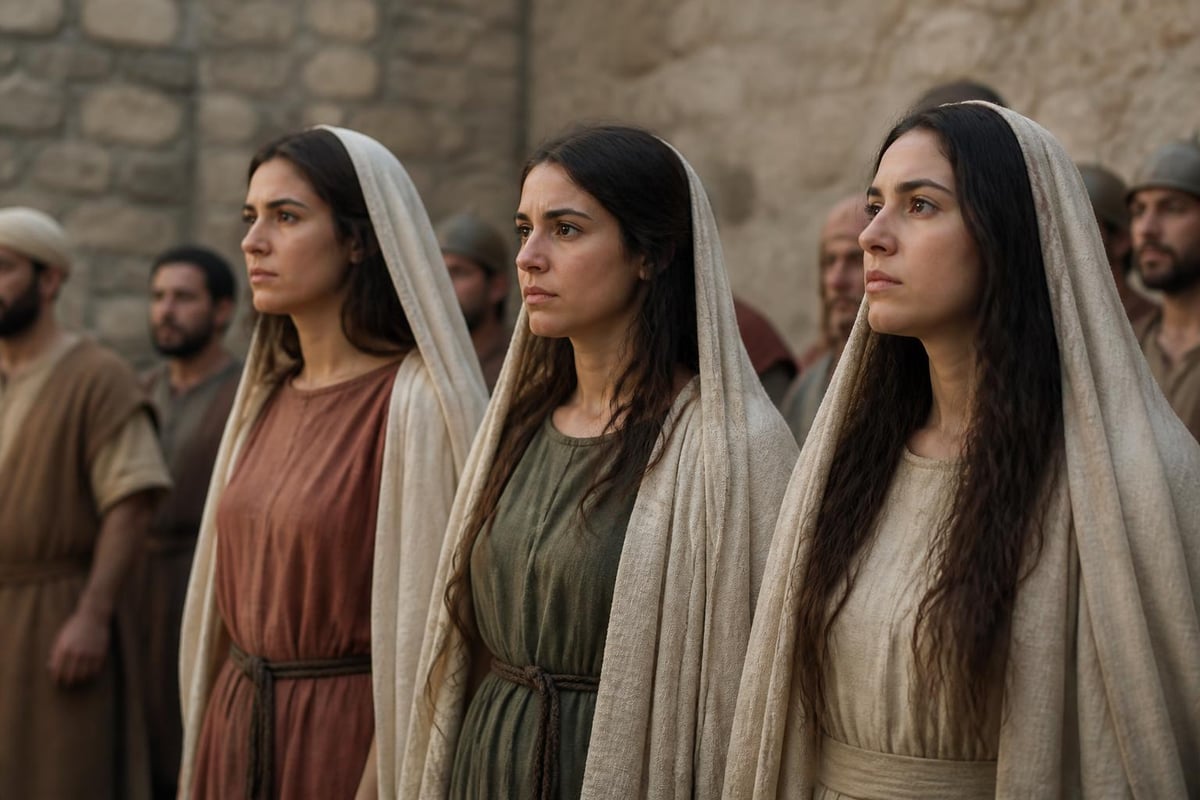
The first centuries of Christianity produced remarkable female saints who faced persecution with extraordinary courage. Saint Agnes of Rome, martyred at just thirteen years old around 304 AD, refused to renounce her faith or her consecration to Christ. Her steadfast witness inspired countless others to remain faithful during the Roman persecutions.
Saint Perpetua, a young mother from Carthage, left behind a diary documenting her imprisonment and martyrdom in 203 AD. Her writings provide one of the earliest personal accounts of Christian martyrdom. Together with her servant Felicity, who gave birth while imprisoned, Perpetua faced death in the arena with remarkable composure. Their story exemplifies how female saints demonstrated unwavering faith even when it cost them everything.
Courage Under Persecution
Saint Catherine of Alexandria, though her historical details remain debated, represents the archetype of the learned virgin martyr. According to tradition, she converted philosophers through her wisdom and suffered martyrdom on a breaking wheel. Saint Lucy of Syracuse, whose name means "light," had her eyes gouged out yet continued to proclaim Christ. These accounts, whether historical or hagiographical, shaped Christian understanding of female courage and intellectual strength.
The diversity among these early martyrs reveals an important truth: holiness transcends social class, education level, and life circumstance. Some were wealthy patricians, others were slaves. Some were educated, others were simple. What united them was total commitment to Christ.
Brought to you by Journeys of Faith, founded by Bob and Penny Lord. We are an Augustinian Secular Institute - Cyber Apostles. Our Mission is Evangelization through Media.
Medieval Mystics and Reformers
The medieval period witnessed an explosion of female sanctity expressed through mystical experience and institutional reform. Saint Hildegard of Bingen (1098-1179) stands as one of the most remarkable figures of the Middle Ages. A Benedictine abbess, composer, theologian, and visionary, she wrote extensively on theology, natural science, and medicine. Her mystical visions were approved by Pope Eugenius III, giving her authority to preach and write.
Saint Catherine of Siena (1347-1380) exercised profound influence on Church and state despite never holding official office. Her mystical marriage to Christ at age seven shaped her entire life. She advised popes, negotiated peace between warring Italian city-states, and wrote spiritual classics like The Dialogue. In 1970, she became one of the first women declared a Doctor of the Church.
The Carmelite Reform
Saint Teresa of Avila, born in 1515, transformed religious life through her reform of the Carmelite order. Her writings on prayer, particularly The Interior Castle, map the soul's journey toward union with God with psychological insight that remains relevant today. She founded seventeen convents while navigating opposition from both civil and church authorities.
| Medieval Female Saint | Primary Contribution | Special Recognition |
|---|---|---|
| Hildegard of Bingen | Mysticism, theology, music | Doctor of the Church (2012) |
| Catherine of Siena | Diplomacy, spiritual writing | Doctor of the Church (1970) |
| Teresa of Avila | Carmelite reform, prayer | Doctor of the Church (1970) |
| Julian of Norwich | Mystical theology | Revelations of Divine Love |
Saint Julian of Norwich, an English anchoress, received sixteen visions of Christ's Passion in 1373. Her Revelations of Divine Love explores God's love with theological depth and literary beauty. Her famous words, "All shall be well, and all shall be well, and all manner of thing shall be well," continue to comfort believers facing difficulty.
Missionaries and Educators
The expansion of Christianity across continents involved countless female saints who brought the Gospel to new territories. Saint Rose of Lima (1586-1617) became the first canonized saint of the Americas. Her life of penance and service to the poor in Peru demonstrated that sanctity flourished in the New World.
Saint Kateri Tekakwitha (1656-1680), a Mohawk-Algonquin woman, converted to Catholicism despite fierce opposition from her tribe. She lived her faith with such fervor that she became known as the "Lily of the Mohawks." In 2012, she became the first Native American saint canonized by the Catholic Church.
Building Educational Institutions
Saint Elizabeth Ann Seton (1774-1821) founded the first Catholic school system in the United States. A convert from Episcopalianism, she established the Sisters of Charity of Saint Joseph and created a network of schools that educated thousands of children. She became the first native-born American to be canonized.
Saint Julie Billiart (1751-1816) founded the Sisters of Notre Dame de Namur despite being paralyzed for twenty-two years. When she miraculously recovered, she established schools throughout Europe focused on educating poor children, especially girls.
The commitment of these female saints to education reflects a profound understanding: faith and reason complement each other. They recognized that intellectual development enables people to better serve God and neighbor. Many Catholic saints understood that education liberates people from poverty and ignorance.
Modern Witnesses of Faith
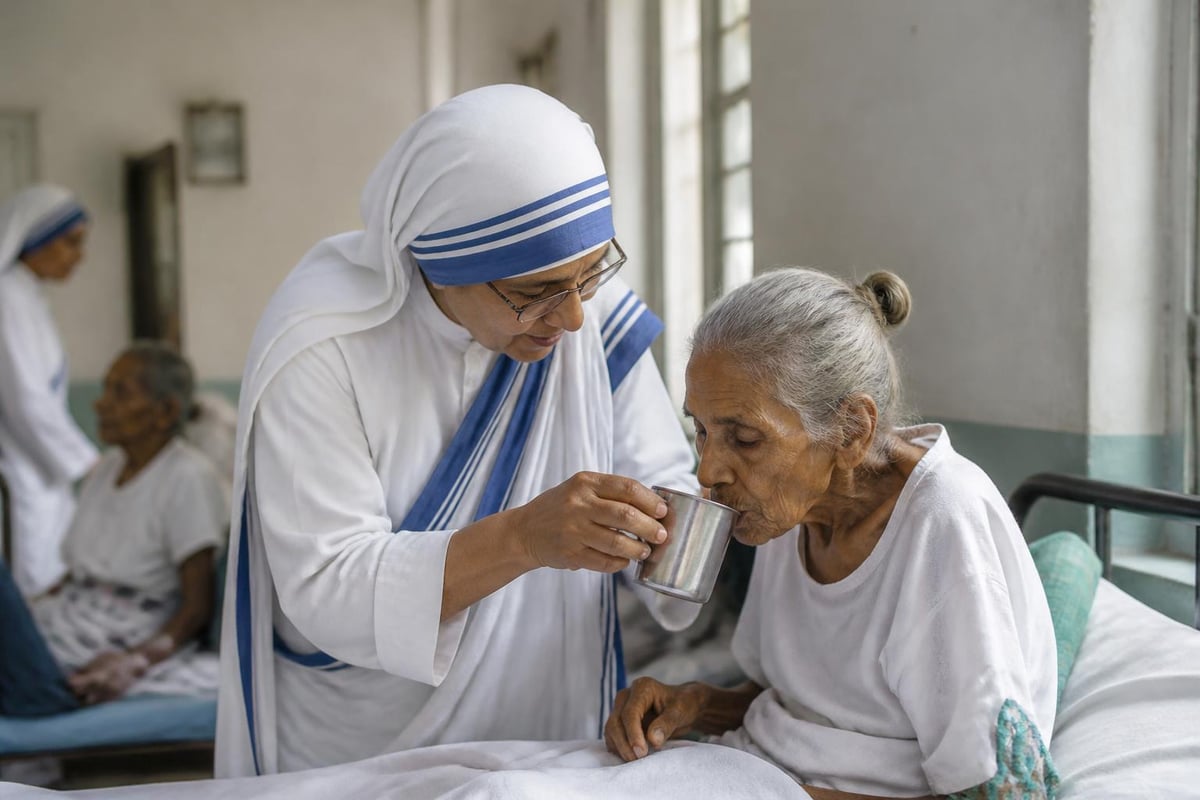
The twentieth and twenty-first centuries have produced female saints whose lives intersect with modern challenges. Saint Teresa of Calcutta (1910-1997) became the face of service to the poorest of the poor. Her Missionaries of Charity serve the dying, abandoned, and destitute in cities worldwide. She received the Nobel Peace Prize in 1979 and was canonized in 2016.
Saint Maria Faustina Kowalska (1905-1938), a Polish nun, received visions of Jesus that became the foundation of the Divine Mercy devotion. Her spiritual diary, Divine Mercy in My Soul, has been translated into numerous languages and inspires millions. Through her, Jesus gave the Church the Divine Mercy Chaplet and Image, along with the Feast of Divine Mercy.
Martyrs of the Modern Age
Saint Josephine Bakhita (1869-1947) was kidnapped as a child in Sudan and sold into slavery. After experiencing brutal treatment, she eventually gained her freedom in Italy and joined the Canossian Sisters. Her story of forgiveness and faith transformed suffering into sanctity. She was canonized in 2000 and is patron saint of human trafficking victims.
Saint Edith Stein (1891-1942), a Jewish philosopher who converted to Catholicism, became a Carmelite nun taking the name Teresa Benedicta of the Cross. She died in Auschwitz, offering her life for her people. As both a brilliant intellectual and a martyr, she bridges the academic and spiritual worlds.
- Bold witness in hostile environments: Female saints faced persecution in Nazi Germany, Communist regimes, and totalitarian states
- Professional excellence combined with faith: Many modern saints were accomplished in medicine, education, philosophy, and social work
- Advocacy for the vulnerable: Modern female saints championed causes like abolition, workers' rights, and care for refugees
- Ecumenical and interfaith engagement: Several engaged meaningfully with other Christian traditions and world religions
These women demonstrate that sanctity adapts to every age while remaining rooted in timeless truths. Their lives prove that holiness isn't escapism but rather profound engagement with the world's deepest needs.
Patronages and Intercession
The Church recognizes female patron saints for virtually every human concern. Saint Monica, mother of Saint Augustine, intercedes for mothers of wayward children. Her thirty years of prayer for her son's conversion give hope to parents facing similar struggles. Saint Anne, mother of the Blessed Virgin Mary, is patroness of grandmothers and women in labor.
Saint Lucy protects those with eye diseases and vision problems. Saint Agatha is invoked against breast cancer. Saint Dymphna, who fled her father's incestuous advances and was martyred for her faith, became patroness of those suffering mental illness and emotional disorders. Saint Rita of Cascia, who endured an abusive marriage before becoming a nun, helps those in impossible situations.
Vocational Patronesses
Different professions and vocations also have female heavenly advocates:
- Nurses and healthcare workers: Saint Camillus de Lellis, Saint Agatha
- Teachers and students: Saint Catherine of Alexandria, Saint Ursula
- Writers and journalists: Saint Francis de Sales, Saint Lucy
- Musicians: Saint Cecilia, Saint Gregory the Great
- Domestic workers: Saint Zita, Saint Martha
For those seeking to deepen their understanding of these holy women, Catholic Saints Minibooks offer accessible introductions to individual saints' lives and spiritual lessons. These compact resources make excellent companions for personal prayer and family devotions, bringing the witness of female saints into daily life.

The tradition of patronage reflects the Church's understanding of the Communion of Saints. These holy women, now in heaven, remain intimately connected to those still on earth. Their prayers have power because they stand before God's throne, perfected in charity.
Diverse Paths to Holiness
Female saints demonstrate that there is no single template for sanctity. Some were queens like Saint Elizabeth of Hungary (1207-1231), who used her royal position to build hospitals and feed the poor. Others were servants like Saint Germaine Cousin (1579-1601), who suffered abuse yet maintained gentle charity.
Saint Margaret of Scotland (1045-1093) raised eight children while reforming the Scottish Church and caring for orphans. Saint Gianna Beretta Molla (1922-1962), a pediatrician, chose to continue her pregnancy despite knowing it would likely cost her life, dying a week after giving birth. These contrasting vocations-queens and mothers, professionals and contemplatives-all led to the same destination: union with God.
| Life State | Example Saints | Key Characteristics |
|---|---|---|
| Virgin Martyrs | Agnes, Lucy, Cecilia | Youth, purity, courage |
| Married Women | Monica, Gianna, Margaret | Family life, sacrifice |
| Widows | Elizabeth Ann Seton, Frances of Rome | Service after loss |
| Religious Founders | Teresa of Avila, Mary MacKillop | Leadership, vision |
| Mystics | Julian of Norwich, Catherine of Genoa | Contemplation, wisdom |
The variety among female saints reveals God's creativity in calling people to holiness. Whether married or consecrated, active or contemplative, educated or simple, wealthy or poor-sanctity emerges from surrendering completely to God's will within one's particular circumstances.
Cultural and Geographic Diversity
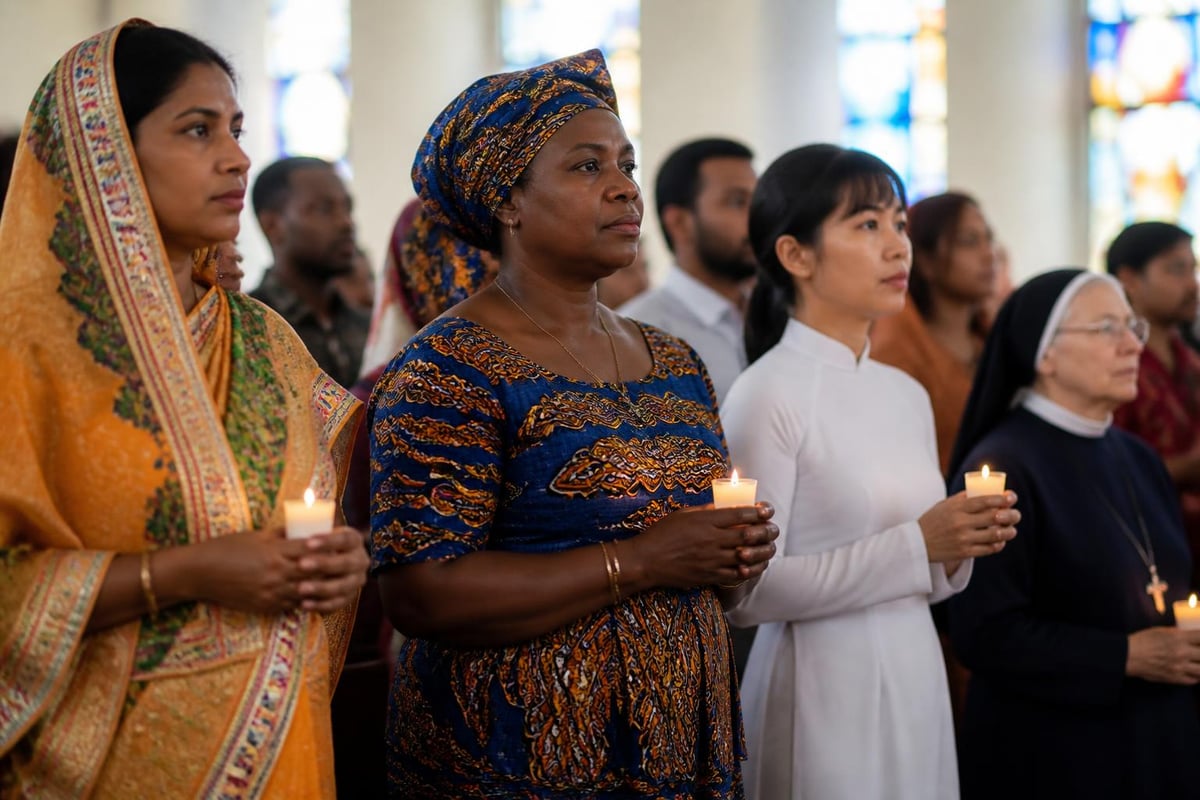
Female saints represent every continent and culture. From Saint Mary MacKillop of Australia to Saint Mariam Thresia of India, from Saint Josephine Bakhita of Sudan to Saint Laura Vicuña of Chile, these women embody the universal call to holiness. Their diverse backgrounds demonstrate that God calls people of every ethnicity, language, and culture to intimate friendship.
Asian female saints like Saint Teresa Chen Jinxie of China and Saint Clelia Barbieri of Italy faced unique cultural challenges. African saints like the Ugandan Martyrs included women who chose death rather than apostasy. Latin American saints like Saint Rosa of Lima blended indigenous and European spiritual traditions into new expressions of faith.
This geographic diversity reminds us that Christianity is truly a world religion, not the possession of any single culture. The faith transforms cultures while respecting their legitimate diversity. Female saints from different continents often faced similar challenges-persecution, poverty, illness-yet responded with locally-rooted yet universally-recognizable sanctity.
Contemporary Canonizations
Pope Francis has canonized numerous female saints from diverse backgrounds, emphasizing the Church's global character. Canonizations now regularly include blesseds from Asia, Africa, and Latin America, correcting historical imbalances. This shift reflects both improved global communication and intentional effort to recognize sanctity wherever it flourishes.
The process of canonization has also evolved to include more lay women and those who lived "ordinary" lives of extraordinary charity. Rather than focusing exclusively on dramatic miracles or mystical visions, the Church increasingly recognizes sanctity in faithful marriage, professional excellence combined with charity, and quiet perseverance through suffering.
Learning from Female Saints Today
The witness of female saints remains profoundly relevant for contemporary believers. Their lives address modern challenges: Saint Gianna Molla speaks to bioethical dilemmas, Saint Teresa Benedicta of the Cross engages philosophical questions, Saint Katharine Drexel confronted racism and inequality. These women were not passive recipients of grace but active collaborators with God's plan.
Studying their lives provides concrete examples of virtue in action. How did Saint Monica persevere through decades of unanswered prayer? What enabled Saint Teresa of Calcutta to see Christ in the dying? How did Saint Thérèse of Lisieux transform ordinary actions into prayers? These questions lead to practical wisdom for Christian living.
Many believers find particular saints who resonate with their own circumstances. A mother struggling with a difficult child finds hope in Saint Monica. A professional woman balancing career and faith looks to Saint Gianna. Someone facing terminal illness draws comfort from Saint Bernadette Soubirous. These connections create spiritual friendships that span centuries.
Practical ways to learn from female saints:
- Read their writings and biographies to understand their spiritual journeys
- Pray novenas seeking their intercession for specific needs
- Celebrate their feast days with special devotions or charitable acts
- Study their responses to suffering, opposition, and disappointment
- Imitate their virtues in your own circumstances
The lives of female saints offer more than historical interest. They provide roadmaps for spiritual growth, examples of virtue under pressure, and evidence that God's grace truly transforms human weakness into strength.
Resources for Deeper Study
Numerous resources exist for those wanting to explore female saints more deeply. The Church's official liturgical calendar commemorates hundreds of holy women throughout the year. Diocesan websites often provide brief biographies for the saints celebrated each day. Academic resources like those from the Catholic University of America offer scholarly perspectives on historical female saints.
Online databases catalog female saints alphabetically, making it easy to discover saints whose names or patronages match particular interests. Resources listing female saints beginning with specific letters help researchers and those seeking patron saints for children or confirmation candidates. These digital tools complement traditional printed hagiographies and scholarly monographs.
Journeys of Faith offers comprehensive resources on Catholic saints through books, videos, and educational materials that bring these holy women's stories to life. Their mission of evangelization through media makes the witness of female saints accessible to contemporary audiences seeking inspiration and guidance.
Parish libraries, Catholic bookstores, and online retailers provide access to biographies ranging from children's picture books to academic studies. Documentaries and films dramatize the lives of popular saints like Saint Teresa of Calcutta and Saint Bernadette. Podcasts explore lesser-known holy women whose stories deserve wider recognition.
For those serious about studying female saints, consulting multiple sources provides fuller understanding. Hagiographies written shortly after a saint's death offer historical proximity but may include legendary elements. Modern critical biographies apply scholarly methods while maintaining reverence. Primary sources like the saints' own writings provide unmediated access to their spirituality.
Female saints throughout history demonstrate that holiness transcends every human boundary and flourishes in countless forms. Their lives of faith, courage, and transformative love continue inspiring believers today, offering practical wisdom for contemporary challenges. Whether you're seeking intercession for specific needs, looking for role models of Christian virtue, or simply wanting to deepen your understanding of Church history, Journeys of Faith provides comprehensive resources to help you discover these remarkable women and grow in your own spiritual journey.
- Explore Journeys of Faith Online store with thousands of Catholic items at https://journeysoffaith.com/collections
- Our Unique Mega Search Engine https://journeysoffaith.com/search is linked to hundreds of Catholic shops and stores
- Get the Journeys of Faith NEW App for iPhone or Android - Search for Journeys of Faith or go to https://journeysoffaith.com/pages/download-our-app
- Chat with us anytime https://chatting.page/mjxs9aerrtgm3lmpndlcepmbyosntrjn
- We need your help to reach more souls. Please Make a Donation https://journeysoffaith.com/pages/donate
