

Francis Xavier (1506 to 1552) was a Spanish Jesuit priest and co-founder of the Society of Jesus who became the greatest Catholic missionary of the sixteenth century, bringing the Gospel to India, Southeast Asia and Japan. He is the patron saint of missionaries and of the Catholic missions, and the Church honors him on December 3. For Catholics who love the saints, his story offers both a model of zeal and a reminder that evangelization begins with prayer, humility and the sacraments.
Born into a noble family, Xavier gave up a promising academic career to follow Christ across oceans. He baptized, taught, nursed the sick and trained local catechists, often in conditions of great hardship. His life continues to shape how the Church thinks about mission today.
Who Was Francis Xavier?
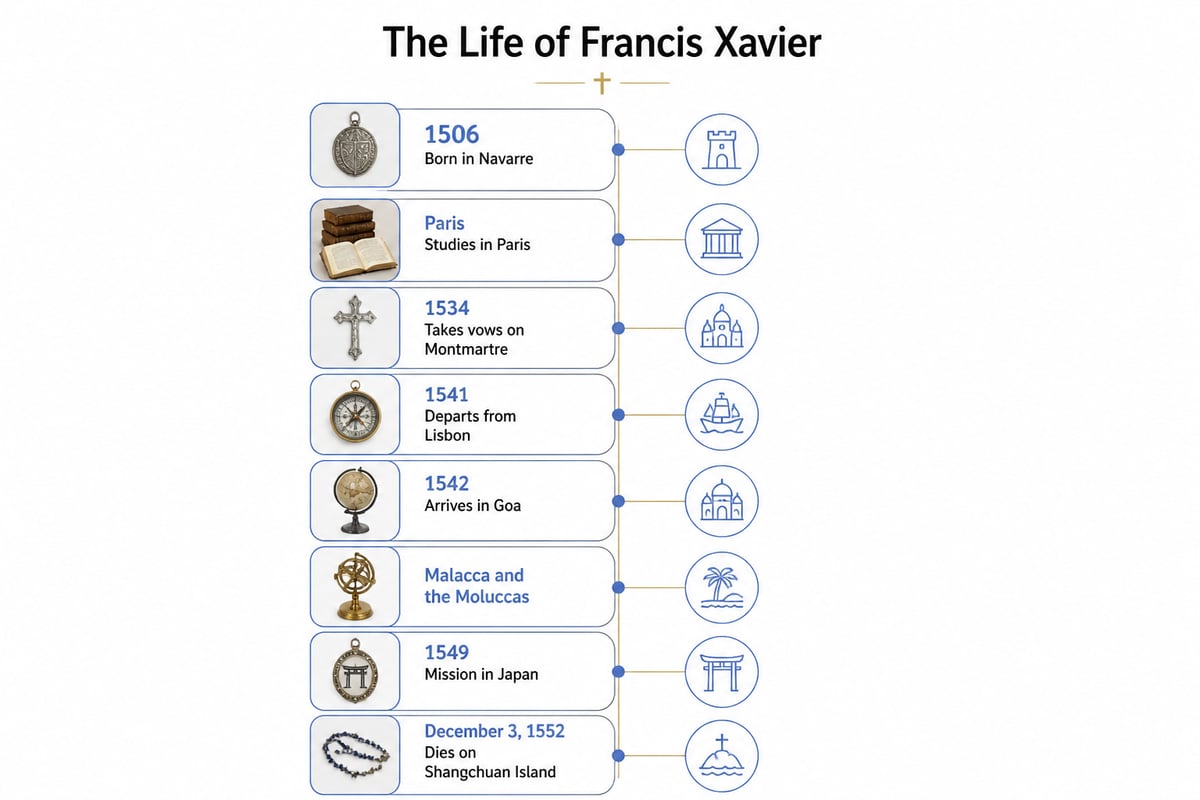
Francis Xavier was born on April 7, 1506, in Navarre, Spain, according to the Jesuits. He was raised in a noble family in the castle of Xavier in an era of political upheaval, when Navarre was being absorbed into the Spanish crown.
His family hoped he would pursue a career in the Church or in scholarship. At about age eighteen he traveled to the University of Paris, where he studied philosophy and later taught at the College of Beauvais. He was ambitious, gifted and admired by his peers.
That ambition was redirected by an encounter that changed his life.
How Did Francis Xavier Become a Jesuit?
Xavier became a Jesuit after meeting Ignatius of Loyola in Paris, who gradually led him from worldly ambition toward spiritual conversion.
Xavier resisted at first. Over time, and after making the Spiritual Exercises, he surrendered. In 1534, in a small chapel on Montmartre, he joined Ignatius and other companions in vows and a promise to go to Jerusalem or to place themselves at the disposal of the Pope. This small band became the Society of Jesus, which Pope Paul III approved in 1540.
Xavier was ordained a priest around 1537. When the planned pilgrimage to the Holy Land proved impossible because of war, the companions turned to Rome. There, King John III of Portugal requested missionaries for his Asian territories, and Xavier was chosen.
What Was Francis Xavier Famous For?
Francis Xavier is famous for carrying the Catholic faith across Asia in the ten years before his death, and for establishing a model of mission built on teaching, charity and local leadership. He left Lisbon for Goa, the center of Portuguese India, in the early 1540s.
His major works included:
- Goa and southern India: He taught catechism to children, visited prisons and hospitals, and ministered among the pearl-fishing communities of the Fishery Coast.
- Southeast Asia: He traveled to Malacca and the Moluccas (modern Indonesia), preaching in port cities and among scattered island communities.
- Japan: He arrived in Kagoshima in 1549 and spent more than two years there learning about its language, culture and customs.
Xavier's missionary approach is often summarized by his work among the poor, his teaching of children and his care for the sick. Those emphases reveal the heart of his method: he went first to the poor and the overlooked, and he loved them concretely.
Brought to you by Journeys of Faith, a Catholic media company founded by Bob and Penny Lord, dedicated to evangelization through media.
What Was His Missionary Method?
Xavier's method combined personal holiness with practical adaptation: he learned from the people he served, prayed constantly, and trained local Christians to carry on the work. He accepted simple food and lodging, and made prayer a central part of his days of ministry.
Several practices stand out:
- Teaching through simplicity. He taught the basic prayers and doctrine in plain, memorable ways so that children and villagers could learn them.
- Training catechists. In India he relied on local lay leaders to teach the faith in his absence, a model that sustained communities long after he moved on.
- Adapting to culture. In Japan he observed that status and learning commanded respect, and he adjusted his dress and approach accordingly, while remaining firm about the substance of the faith.
- Corporal works of mercy. He cared for the sick and the dying, visited prisoners and distributed alms, believing that charity gave credibility to the message.
Did Francis Xavier Go to the Philippines?
No, Francis Xavier never reached the Philippines, although his missionary routes passed close to it. His travels took him through Goa, southern India, Ceylon, Malacca, the Moluccas and Japan, with his final journey aimed at China.
The Philippine Islands were evangelized later in the sixteenth century, chiefly by Augustinian, Franciscan and Jesuit missionaries who arrived after Spain established its presence there in the 1560s and 1570s. Xavier's influence, however, shaped the wider missionary spirit of the era. Many of the priests who followed him in Asia were inspired by his letters, which circulated widely in Europe and drew a generation of young men to mission work.
What Happened to Francis Xavier?
Francis Xavier died on December 3, 1552, on Shangchuan Island off the coast of China, while seeking entry to the mainland, according to Britannica.
He died at about age forty-six while seeking a way into China, still driven by a desire to bring Christ to people who had never heard of Him.
His body was first buried on the island and later transported to Goa. Accounts of its condition have led to one of the most frequently asked questions about the saint.
Is Francis Xavier Incorrupt?
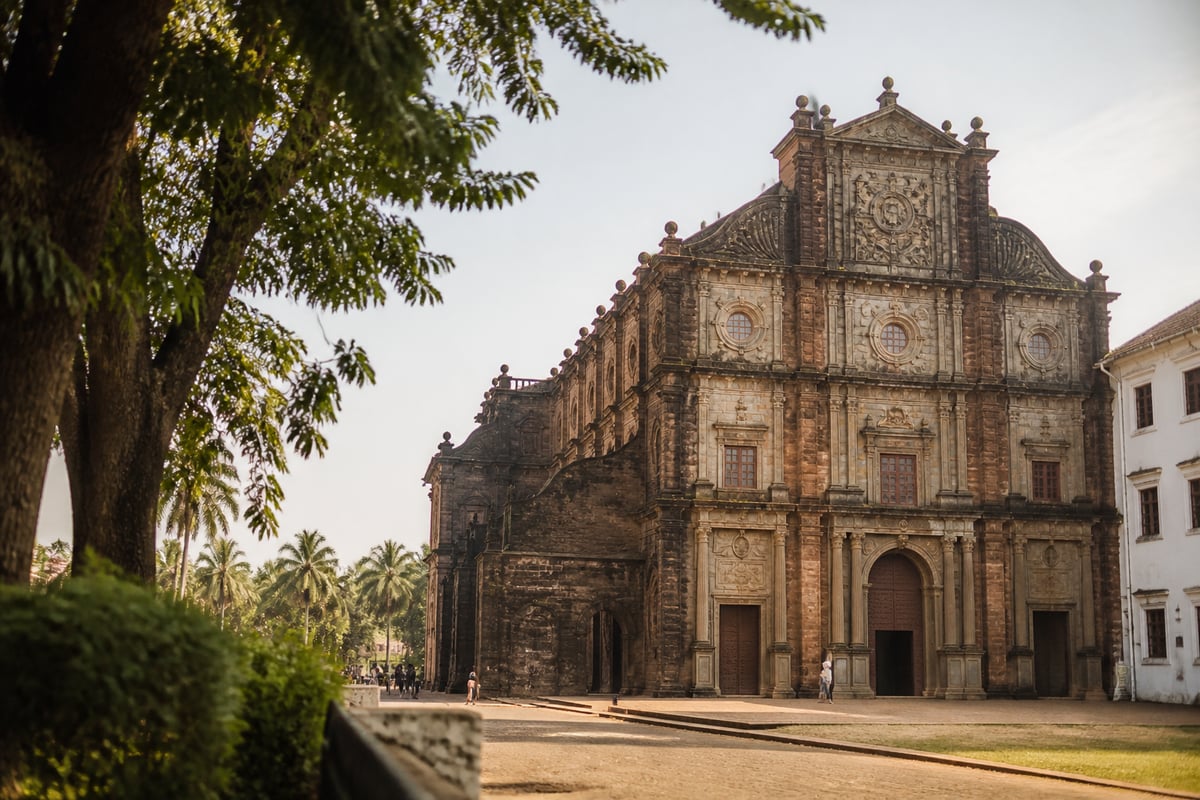
Francis Xavier's body is traditionally held to be incorrupt, and its relics rest today in the Basilica of Bom Jesus in Goa.
The Basilica of Bom Jesus was completed on November 24, 1594, and consecrated on May 15, 1605, according to the Government of Goa. It houses his relics to this day.
The Church does not require belief in incorrupt bodies as a matter of doctrine, but for many Catholics the preservation is a sign of God's favor toward His faithful servant. Pilgrims still travel to Goa to venerate the relics.
When Was Francis Xavier Canonized?
Pope Gregory XV canonized Francis Xavier in 1622, as noted by the Jesuits.
In 1927 Pope Pius XI named him, together with Thérèse of Lisieux, a patron of all missions. That pairing carries a lesson: the missionary who crossed oceans and the cloistered Carmelite who never left her convent share equal honor, because evangelization depends as much on prayer and sacrifice as on travel.
What Is His Legacy in the Church Today?
Xavier's legacy lives on in the global reach of the Jesuits, in the Church's emphasis on inculturation and local clergy, and in the devotions that bear his name. Britannica's account of his influence explores his role in shaping Catholic missionary practice, including cultural adaptation and the development of local clergy, while also acknowledging the complicated history of the Church's presence in Goa.
For Catholics at prayer, several traditions flow from his life:
- The Novena of Grace. A nine-day novena associated with Xavier, seeking his intercession for graces and the needs of the missions.
- Prayer for the missions. Many parishes and families pray for missionaries on his feast day and during Mission Sunday.
- His example of zeal. He is often invoked by those discerning a vocation, by teachers and catechists, and by anyone who feels called to share the faith with others.
How Can Catholics Learn More About Francis Xavier?
Catholics can deepen their knowledge of Francis Xavier through biographies, letters, prayer and media that bring the saints to life. His own letters, written to Ignatius and to his Jesuit brothers, remain a vivid window into his zeal, his struggles and his tenderness.
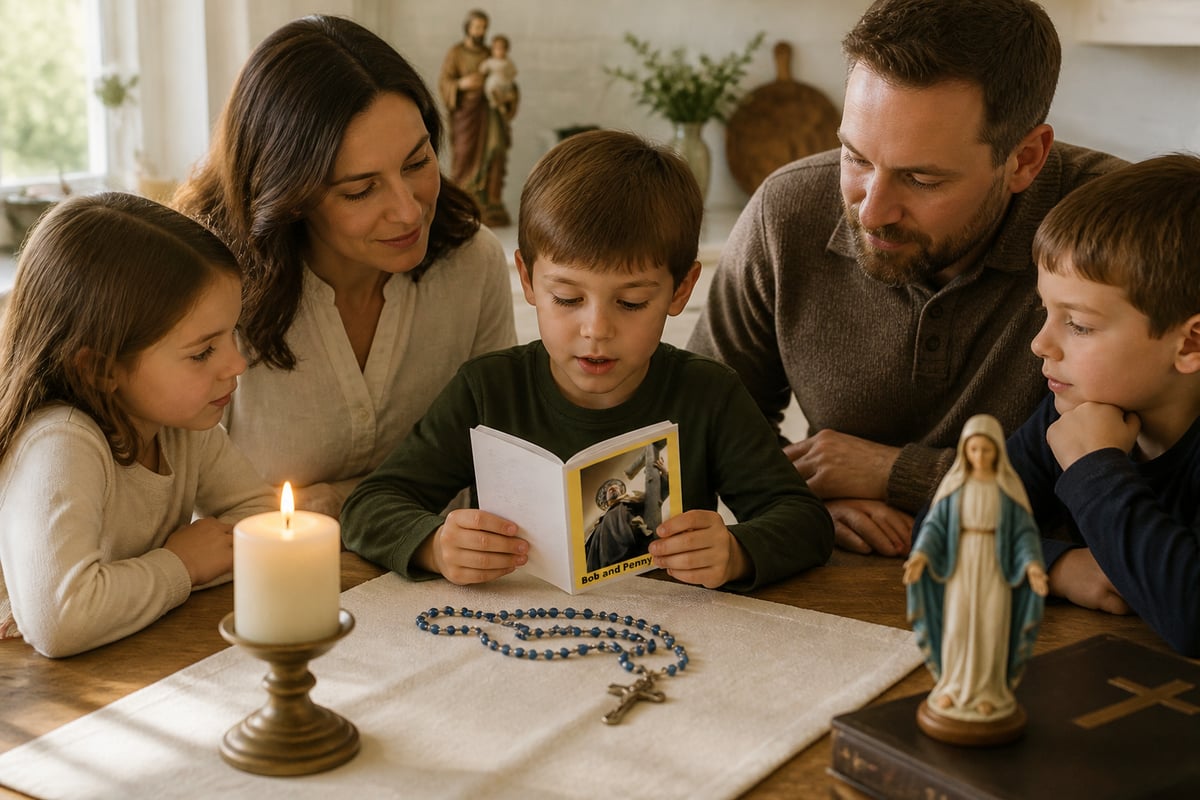
Families who pray together can introduce children to the saints through short, readable books. The Catholic Saints Minibooks from Journeys of Faith are brief printed volumes, usually 20 to 50 pages, designed to be easy to read and to pair with the associated DVDs. They make a natural companion for family prayer time, especially around a saint's feast day.
Journeys of Faith has also published a reflection titled Saint Francis Xavier and the Fire of Evangelization in Asia, which follows his zeal across the continent.
How Can You Pray With Francis Xavier?
You can pray with Francis Xavier by asking his intercession for missionaries, for those who have drifted from the faith, and for your own willingness to witness to Christ. Prayer was the source of his strength, and he often spent nights in contemplation after long days of service.
A simple practice for the week of his feast:
- Begin with the Sign of the Cross and a brief reading from the Gospel of Matthew, chapter 28, on the great commission.
- Pray the rosary, offering one decade for missionaries serving in difficult places.
- Make a short act of dedication, asking Christ to use you where you are.
- Close with a Hail Mary and an invocation: Saint Francis Xavier, pray for us.
Even a modest practice, kept faithfully, carries the spirit of his life: trust in God, love for souls and a readiness to go where the Lord leads.
FAQ
Why is Francis Xavier the patron of missionaries?
He is honored as the patron of missionaries because of his far-reaching work spreading the faith across Asia. He is traditionally honored as a patron of missions alongside Thérèse of Lisieux.
What is the feast day of Saint Francis Xavier?
The Church celebrates his feast on December 3, the anniversary of his death in 1552. Many parishes and mission groups mark the day with prayer for missionaries and reflection on his example.
Was Francis Xavier one of the founders of the Jesuits?
Yes. He was one of the seven original companions who took vows with Ignatius of Loyola at Montmartre in 1534. Their group received papal approval as the Society of Jesus in 1540.
Choose one prayer for the missions this week, whether the Novena of Grace or a decade of the rosary offered for missionaries, and pray it each day through his feast on December 3. To keep the saints close to your family, begin with the Catholic Saints Minibooks from Journeys of Faith, and explore the wider selection of books, DVDs, rosaries and holy cards at Journeys of Faith, where you can shop now for the devotional items that help you pray and learn about the saints. Free shipping applies to all orders over $50.
Resources:
- Explore the Journeys of Faith online store with thousands of Catholic items at journeysoffaith.com/collections.
- Journeys of Faith is blessed to provide Catholic media, including podcasts and inspirational content, free of charge across multiple media platforms for viewers and listeners around the world. While access to this content remains free, there are significant and continually increasing costs associated with producing, hosting and distributing these programs. Your support helps us continue sharing the beauty of the Catholic faith with souls. Please make a donation.
