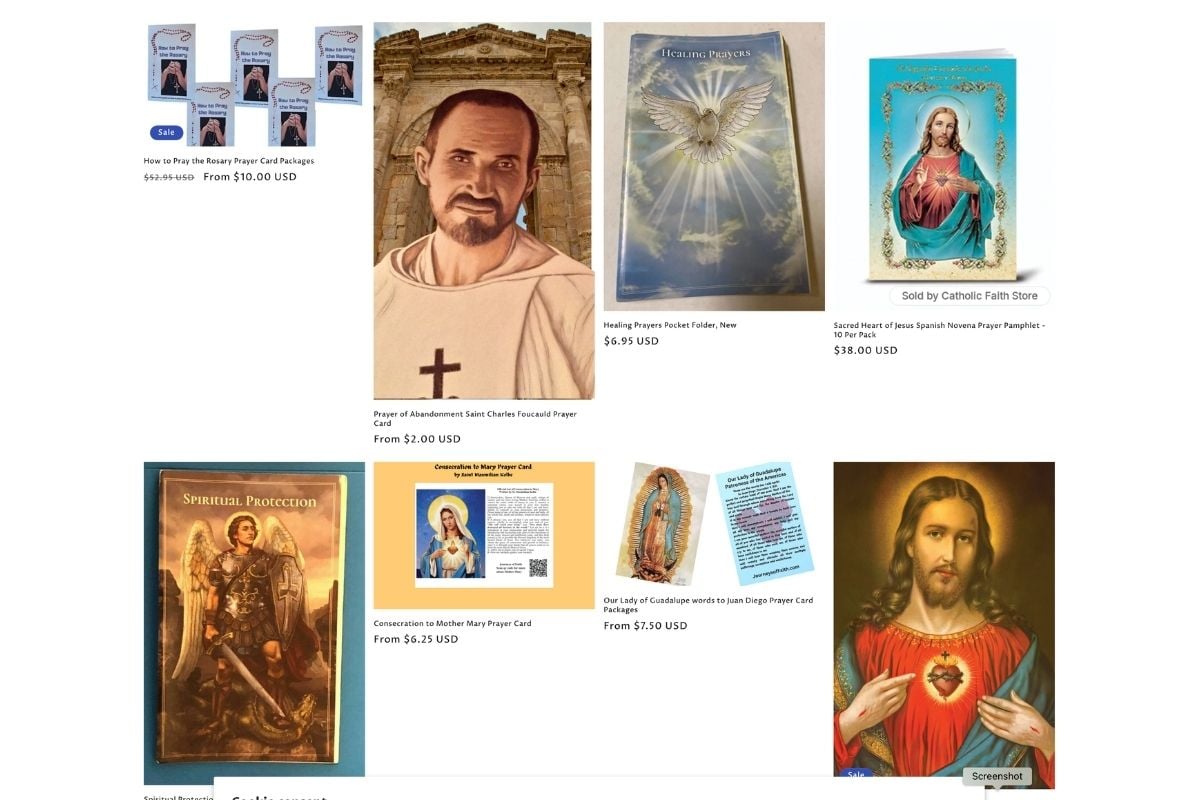

The holy card occupies a unique place in Catholic devotional life, bridging centuries of tradition with contemporary spiritual practice. These small printed cards, typically featuring an image of Jesus Christ, the Blessed Virgin Mary, or a saint on one side and a prayer on the reverse, have served as portable companions for millions of believers worldwide. From their medieval origins to their current role in parishes, funerals, and personal prayer routines, these tangible expressions of faith continue to connect Catholics to the communion of saints in profound and practical ways.
The Historical Evolution of the Holy Card
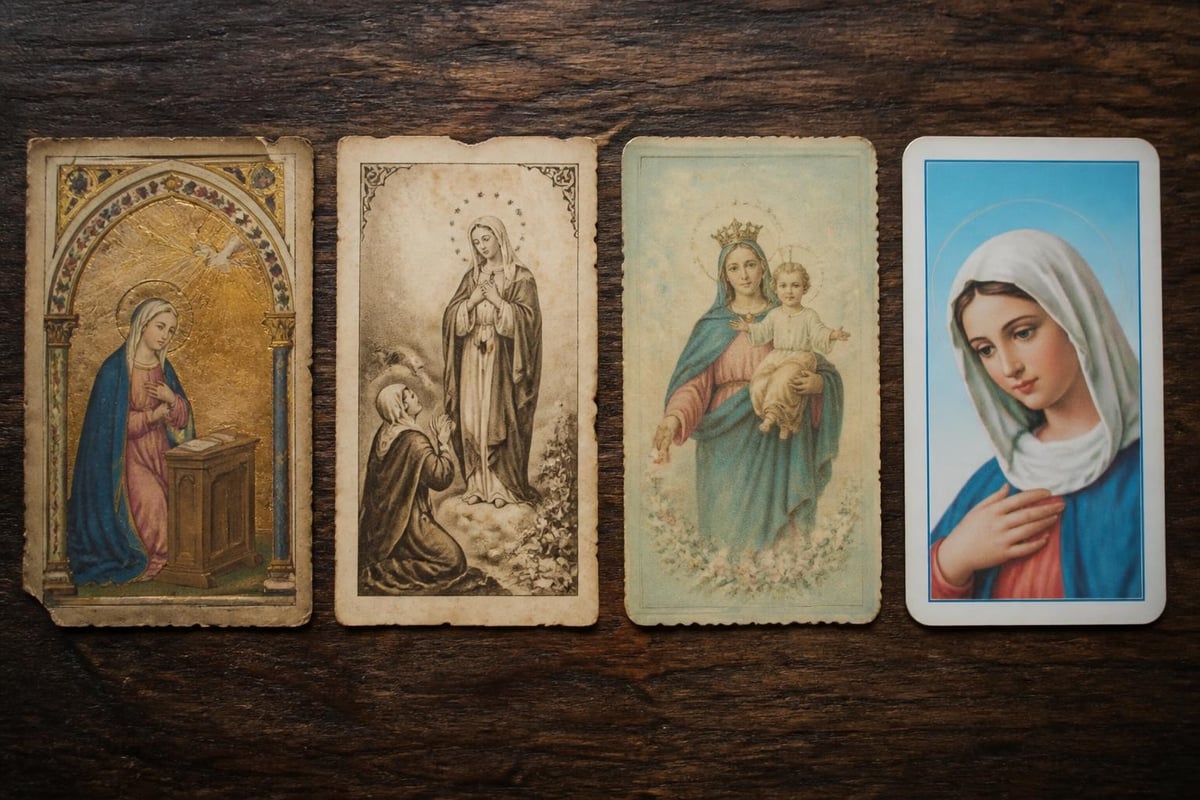
The story of the holy card begins long before modern printing technology made them accessible to ordinary believers. Medieval origins trace back to hand-painted devotional images created by monks and artisans for wealthy patrons. These early examples were precious items, often gilded and illuminated with painstaking detail.
The invention of the printing press in the 15th century revolutionized religious imagery. Woodcuts and engravings allowed for mass production of devotional cards, democratizing access to sacred art. By the 17th and 18th centuries, the holy card had become a staple in Catholic households across Europe.
Industrial Revolution and Mass Production
The 19th century brought lithography and chromolithography, techniques that enabled vibrant, colorful images at affordable prices. This technological leap coincided with increased Marian devotions and the expansion of missionary work, creating unprecedented demand for devotional materials.
Manufacturing centers in France, Germany, and Italy produced millions of cards annually. Each depicted specific saints, feast days, or devotional themes. The cards became collectible items, passed down through generations as family heirlooms.
Key developments during this period included:
- Introduction of lace-paper borders and elaborate embossing
- Standardization of card sizes for easy storage in missals and prayer books
- Regional variations reflecting local saints and devotions
- Use of cards as rewards in Catholic schools and catechism classes
Spiritual Significance and Devotional Practice
The holy card functions as more than decorative religious art. It serves as a focal point for prayer, a reminder of spiritual commitments, and a tangible connection to the invisible reality of the communion of saints. When Catholics carry a holy card in their wallet or pocket, they're participating in a practice rooted in sacramental theology.
The physical nature of these cards matters profoundly. In a faith tradition that embraces the Incarnation-God becoming flesh-material objects can serve as vehicles of grace. The holy card operates similarly to crucifixes, medals, and rosaries as sacramentals that dispose believers to receive divine assistance.
Personal Prayer and Intercession
Many Catholics select holy cards featuring saints whose lives resonate with their own circumstances. A student might carry a card of Saint Thomas Aquinas, patron of students. Someone facing illness might turn to Saint Peregrine. These aren't superstitious tokens but rather invitations to relationship with holy men and women who intercede before God's throne.
The prayers printed on the reverse side of most cards provide structured language for petition and thanksgiving. Particularly powerful are novena prayers-nine-day prayer campaigns seeking specific graces through a saint's intercession. For those exploring devotions to specific saints, resources like Our Lady of Czestochowa demonstrate how particular images become focal points for national and personal spirituality.
Brought to you by Journeys of Faith, founded by Bob and Penny Lord. We are an Augustinian Secular Institute-Cyber Apostles. Our Mission is Evangelization through Media.
Types and Categories of Holy Cards
The diversity within the holy card tradition reflects the breadth of Catholic devotional life. Understanding these categories helps believers select cards that align with their spiritual needs and liturgical seasons.
| Category | Focus | Common Uses |
|---|---|---|
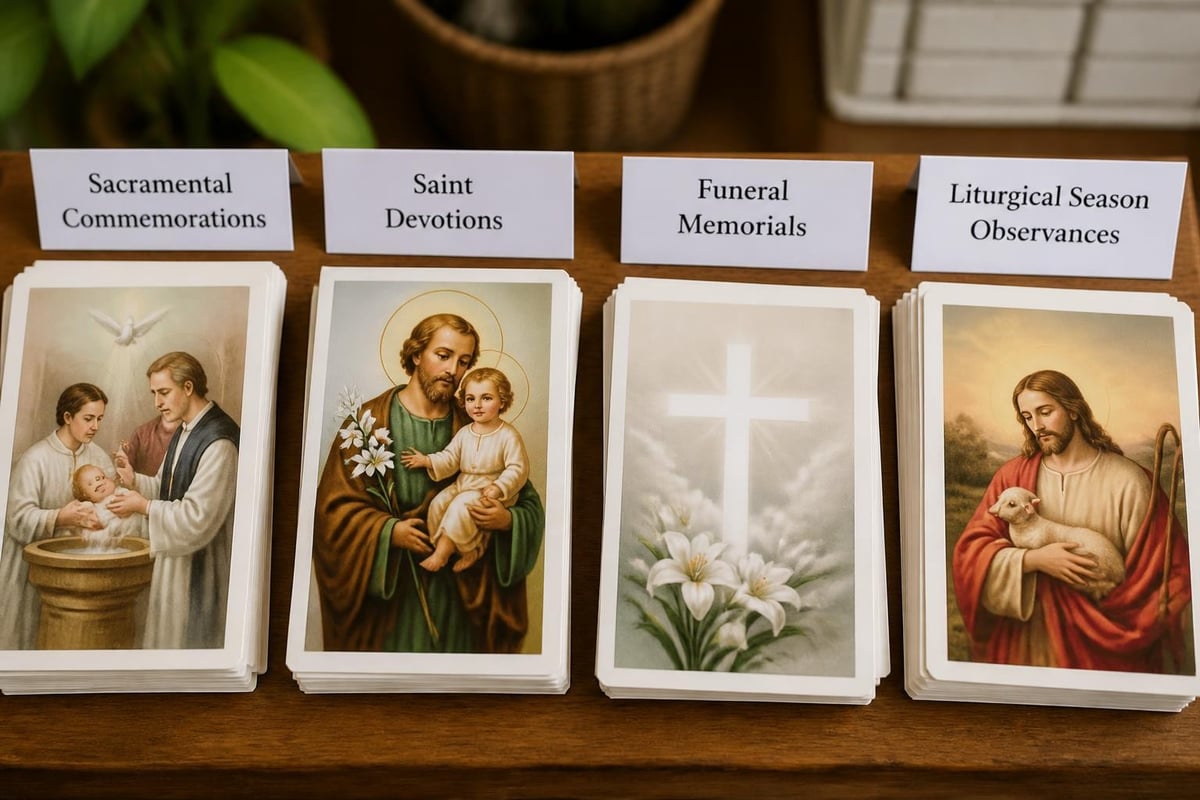
| Saint Cards | Individual saints | Personal patronage, feast day remembrance |
| First Communion | Eucharistic themes | Commemorating sacramental milestones |
| Funeral Memorial | Deceased person's photo | Grief support, prayer for the dead |
| Feast Day | Liturgical celebrations | Seasonal devotions, liturgical education |
| Novena Cards | Nine-day prayers | Intensive petition, spiritual preparation |
Sacramental and Liturgical Cards
Cards commemorating baptisms, confirmations, first communions, and weddings serve as lasting mementos of grace-filled moments. These often include the date, location, and names of participants, transforming them into family historical documents.
Funeral memorial cards deserve special attention. These cards honor the deceased while providing comfort to mourners through prayers for the soul's journey. They've become standard elements in Catholic funeral traditions across cultures, distributed during visitations or services.
The selection of image and prayer text for funeral cards often reflects the deceased's particular devotions. A lifetime Rosary pray-er might be commemorated with a Marian image. Someone devoted to Divine Mercy would be honored with that iconography.
Artistic Traditions and Visual Theology
The imagery on holy cards isn't arbitrary decoration-it communicates theological truths through visual language developed over centuries. Understanding this iconographic vocabulary enriches appreciation for these small masterpieces.
Traditional Catholic art adheres to conventions that make saints recognizable. Saint Peter holds keys. Saint Paul carries a sword. Saint Catherine of Alexandria stands beside a breaking wheel. These attributes, called iconographic elements, function as visual shorthand for the saints' lives and martyrdoms.
Artistic Styles Through the Ages
Early holy cards favored formal, Byzantine-influenced compositions with gold backgrounds and frontal poses. Renaissance humanism introduced more naturalistic representations. The Baroque period brought dramatic lighting and emotional intensity.
The 19th and 20th centuries saw diverse artistic movements influence holy card design. Art Nouveau contributed flowing lines and organic forms. Mid-century modernism simplified images to essential elements. Contemporary artists continue exploring new approaches while respecting traditional symbolism.
Major artistic elements include:
- Halos indicating sanctity
- Lilies symbolizing purity
- Palms representing martyrdom
- Books signifying teaching authority
- Specific colors associated with different feast days
The University of Dayton maintains one of the world's largest holy card collections with over 18,000 examples, documenting this visual heritage in remarkable detail.
Modern Production and Distribution Methods
While digital technology has transformed communication, the physical holy card remains remarkably popular in 2026. Modern production techniques combine traditional aesthetics with contemporary efficiency.
Professional printing services offer various cardstock weights, finishes, and sizes. Standard dimensions typically measure 2.5 by 4.25 inches, though larger formats and trifold designs provide more space for prayers and reflections.
Digital Design and Custom Creation
Desktop publishing software enables parishes and individuals to create custom cards for special occasions. This democratization allows personalization while maintaining professional quality. Online platforms offer templates incorporating traditional imagery with customizable text fields.
Quality considerations matter when selecting or producing cards. Heavier cardstock (100-pound weight or greater) withstands repeated handling. Lamination protects cards carried daily in pockets or purses. UV-resistant inks prevent fading when cards are displayed.
Bulk purchasing options make cards accessible for parish distribution, retreat centers, and Catholic schools. Organizations like Journeys of Faith offer professionally printed prayer cards that maintain high standards for both image quality and theological accuracy. Their Catholic Prayer Cards collection provides diverse options for personal devotion and group distribution, ensuring believers have access to beautifully crafted tools for prayer.
Practical Applications in Contemporary Catholic Life
The holy card adapts seamlessly to modern Catholic practice, serving functions both traditional and innovative. Its portability makes it ideal for busy lifestyles where formal prayer spaces aren't always accessible.
Common contemporary uses:
- Wallet or purse devotional reminders during daily routines
- Bookmark in missals, Bibles, or spiritual reading books
- Visual aids for children learning about saints
- Gifts marking sacramental milestones or feast days
- Prayer focus during hospital visits or difficult situations
- Distribution tools for parish evangelization programs
Educational and Catechetical Value
Religious education programs leverage holy cards as teaching tools. Children respond positively to visual representations of saints' stories. The combination of image and text accommodates different learning styles, making theological concepts more accessible.
Many Catholic schools award cards as recognition for academic achievement, good behavior, or memorizing prayers. This practice connects academic success with spiritual development, reinforcing the integration of faith and learning.
Parish religious education coordinators often build lesson plans around specific saint cards, using them as jumping-off points for discussions about virtue, sacrifice, and contemporary discipleship.

Collecting and Preserving Holy Cards
For many Catholics, holy card collecting transcends mere hobby, becoming a form of devotional practice. Collections document family histories, trace devotional trends, and preserve artistic traditions.
Proper preservation ensures these paper artifacts survive for future generations. Archival storage methods protect cards from environmental damage while maintaining accessibility for prayer use.
| Preservation Method | Benefits | Considerations |
|---|---|---|
| Acid-free sleeves | Prevents yellowing | Initial investment required |
| Climate control | Reduces deterioration | May not be practical for all |
| Digital scanning | Creates backup copies | Loses tactile dimension |
| Archival albums | Organizes chronologically | Requires dedicated space |
Family History and Genealogical Research
Holy cards often contain valuable genealogical information. Funeral memorial cards include dates, family relationships, and sometimes biographical details not found in official records. Researchers increasingly recognize these cards as important family history ephemera that illuminate ancestral religious practices and community connections.
Cards inherited from grandparents or great-grandparents provide windows into past devotional cultures. The saints they honored, the prayers they prayed, and the occasions they commemorated reveal spiritual priorities across generations.
The Holy Card in Funeral Traditions
Catholic funeral customs extensively incorporate holy cards as both practical prayer aids and meaningful keepsakes. The tradition of distributing memorial cards dates to the 19th century, when printing technology made personalized cards affordable for average families.
These memorial cards typically feature the deceased's photograph, name, birth and death dates, and a selected prayer or Scripture passage. The reverse often includes funeral service details, making the card both devotional object and practical information source.
Theological Dimensions of Memorial Cards
The practice connects to Catholic beliefs about purgatory, prayers for the dead, and the communion of saints. Distributing cards requesting prayers acknowledges that the deceased may need spiritual assistance on their journey toward beatific vision.
Choosing prayers for memorial cards involves theological consideration. Traditional options include the De Profundis (Psalm 130), the Hail Mary, or prayers specifically for souls in purgatory. Some families select prayers reflecting the deceased's favorite devotions.
The visual imagery selected for funeral cards communicates theological hope. Common choices include Christ the Good Shepherd, angels, the Resurrection, or the deceased's patron saint. These images comfort mourners while affirming faith in eternal life.
Regional and Cultural Variations
Holy card traditions vary significantly across Catholic cultures worldwide. European cards often feature more formal, classical artistic styles. Latin American examples might incorporate vibrant colors and folk art influences. Asian Catholic communities blend traditional iconography with cultural aesthetic preferences.
Italian cards frequently emphasize particular regional saints and local Marian apparitions. Polish traditions include cards featuring Our Lady of Czestochowa and Polish martyrs. Irish cards might highlight Saint Patrick, Saint Brigid, and Celtic Christian symbols.
American Catholic Traditions
American Catholic holy card culture reflects the nation's immigrant history. Early American cards were imported from European manufacturers. By the mid-20th century, domestic production flourished, adapting to American tastes while maintaining devotional authenticity.
Contemporary American Catholics often favor simpler, more modern designs alongside traditional options. Bilingual cards accommodate diverse parish populations. Cards featuring American saints like Elizabeth Ann Seton, Katharine Drexel, and Junipero Serra have gained popularity.
The Future of Holy Cards in Digital Age
Despite smartphones, apps, and digital prayer resources, physical holy cards maintain strong appeal in 2026. Their tangibility offers advantages technology cannot replicate. The act of physically holding a card, the texture of paper, the visibility of an image on a desk or dashboard-these sensory elements enhance devotional experience.
Some innovators have created hybrid approaches. QR codes on cards link to extended prayers, saint biographies, or related media content. This bridges traditional and digital without abandoning the physical card's spiritual value.
Emerging trends include:
- Eco-conscious production using recycled materials and sustainable inks
- Integration with parish apps for tracking prayer intentions
- Artistic collaborations with contemporary Catholic artists
- Customization services for personal devotional needs
- Educational series teaching iconography and saint stories
The rich tradition of sacred art continues evolving while maintaining essential elements that make holy cards effective prayer tools.
Theological Reflection on Material Devotion
The holy card tradition raises important questions about materiality in spiritual life. How do physical objects facilitate encounters with invisible realities? What role do images play in prayer for a tradition that emphasizes God's transcendence?
Catholic theology, grounded in Incarnational principles, affirms that matter can mediate grace. God became flesh in Jesus Christ, sanctifying material creation. Sacraments use physical elements-water, bread, wine, oil-as vehicles of divine action.
Holy cards participate in this sacramental imagination. They're not magical objects but instruments that, properly used, dispose souls toward God. Comparing them to "little windows into heaven" captures their function as portals directing attention beyond themselves.
Avoiding Superstition While Embracing Devotion
Proper understanding prevents misuse. Holy cards don't guarantee answered prayers or function as good luck charms. Their value lies in focusing attention, inspiring virtue, and connecting believers to the Church's treasury of holiness embodied in canonized saints.
The broader context of Catholic devotional practices helps situate holy cards within authentic spiritual life. They complement rather than replace Mass attendance, sacramental reception, Scripture reading, and works of mercy.
Practical Guide to Starting a Holy Card Practice
For those new to holy card devotions, beginning simply ensures sustainable practice. Select a single card featuring a saint whose life story resonates with current circumstances or spiritual goals.
Getting started steps:
- Research the chosen saint's biography and patronages
- Place the card where it's visible during daily routines
- Pray the card's printed prayer daily for one week
- Notice what virtues the saint's example highlights
- Consider how those virtues apply to present challenges
Gradually expand the practice by adding cards for different needs or liturgical seasons. Advent might focus on Mary's waiting. Lent could emphasize penitent saints. Easter season naturally highlights martyrs' resurrection hope.
Pairing cards with other devotions deepens their impact. Use a Saint Thérèse card during Rosary decades. Display a Divine Mercy card during the three o'clock hour. Coordinate saint cards with liturgical feast days.
Those seeking structured approaches to Catholic prayer and devotion can explore additional resources that complement holy card practices, including materials that explain the lives of saints and the theological richness of sacred images.
The holy card remains a powerful, accessible tool for deepening Catholic faith in 2026, connecting believers across centuries to the communion of saints through prayer and visual beauty. Whether you're seeking personal devotional aids, commemorating sacramental moments, or exploring Catholic spiritual traditions, Journeys of Faith provides quality resources to support your journey. Explore thousands of Catholic items including prayer cards, books, DVDs, and devotional materials at https://journeysoffaith.com/collections. Journeys of Faith is blessed to provide Catholic media, including podcasts and inspirational content, free of charge across multiple media platforms for viewers and listeners around the world. While access to this content remains free, there are significant and continually increasing costs associated with producing, hosting, and distributing these programs. Your support helps us continue sharing the beauty of the Catholic faith with souls-please make a donation at https://journeysoffaith.com/pages/donate.