

The holy name of mary carries profound spiritual significance in Catholic tradition, representing far more than a simple designation. This sacred name embodies the identity of the Blessed Virgin Mary, Mother of God, and has been revered by the faithful for centuries as a source of protection, grace, and intercession. Understanding the depth of meaning behind Mary's name offers believers a richer appreciation for her role in salvation history and provides a powerful tool for prayer and devotion.
The Biblical and Linguistic Origins of Mary's Name
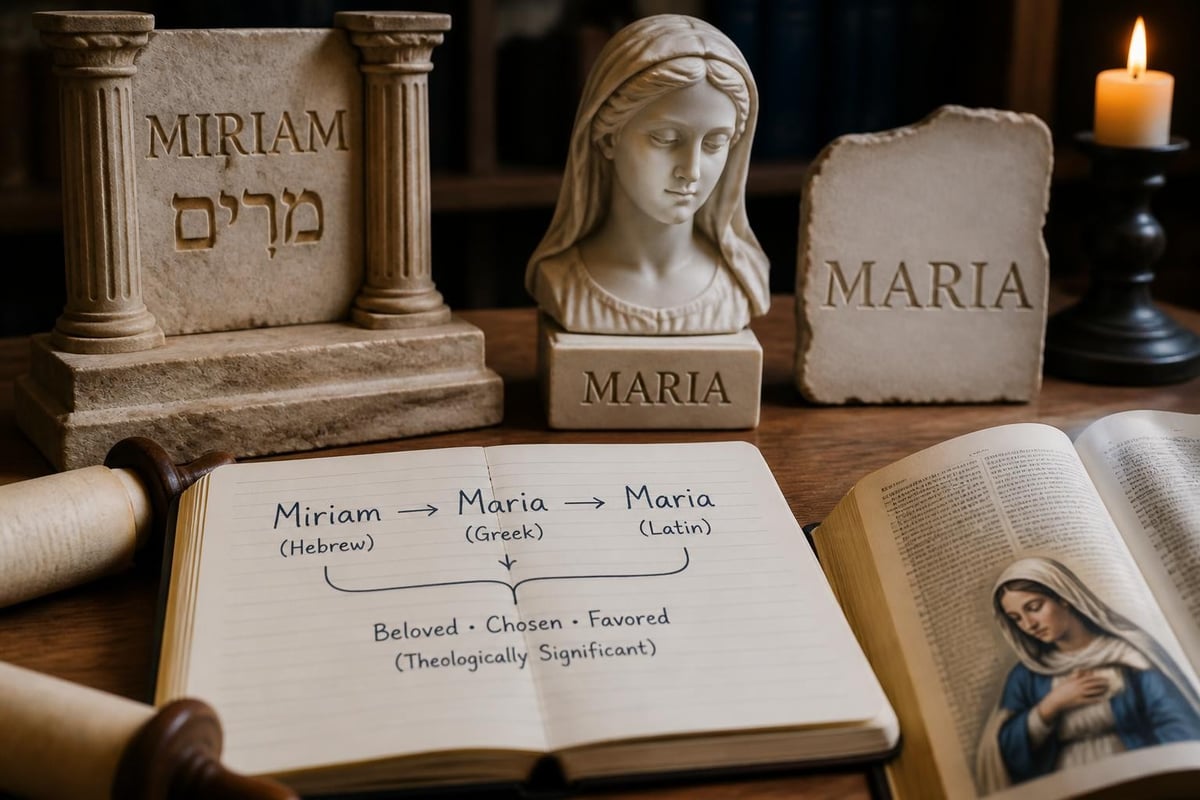
The name Mary derives from the Hebrew "Miriam," which appears throughout Scripture with various interpretations and symbolic meanings. Biblical scholars have proposed multiple translations of this ancient name, each offering unique insights into the character and mission of the Blessed Mother.
Ancient Hebrew Meanings
The most commonly cited interpretations of Miriam include "star of the sea," "bitter sea," "drop of the sea," and "beloved." Each translation reveals different facets of Mary's spiritual identity and her relationship to both God and humanity. According to theological scholarship on Mary's name, these varied meanings reflect the multifaceted nature of her role in salvation history.
Some scholars suggest the name means "exalted one" or "rebellion," connecting Mary to the Old Testament Miriam, sister of Moses, who led the Israelites in song after crossing the Red Sea. This connection emphasizes Mary's role in leading believers to spiritual freedom through her Son.
Key interpretations of the name Mary:
- Star of the sea (Stella Maris)
- Bitter sea or drop of the sea
- Beloved or wished-for child
- Exalted one
- Lady or mistress
The interpretation "star of the sea" has become particularly beloved in Catholic devotion, symbolizing Mary as a guiding light for those navigating the turbulent waters of life toward the safe harbor of salvation.
Historical Development of the Feast Day
The Feast of the Holy Name of Mary emerged from centuries of Marian devotion, becoming officially established in the liturgical calendar through a combination of grassroots piety and papal decree. The feast celebrates not just the name itself but the person it represents and the spiritual power invoked when the faithful call upon Mary's name.
The Battle of Vienna Connection
The modern observance of the holy name of mary feast day traces directly to a pivotal moment in European history. On September 12, 1683, Christian forces achieved a decisive victory over the Ottoman Empire at the Battle of Vienna, a triumph widely attributed to the intercession of the Blessed Virgin Mary. This historical event shaped the establishment of the feast, as Pope Innocent XI extended the celebration to the universal Church in thanksgiving.
King John III Sobieski of Poland led the Christian coalition, invoking Mary's protection before the battle. When victory came on the vigil of Mary's birthday, it was seen as a clear sign of her maternal care for Christendom.
| Year | Event | Significance |
|---|---|---|
| 1513 | Spanish diocese approves local observance | Early regional devotion begins |
| 1683 | Battle of Vienna victory | Catalyst for universal feast |
| 1684 | Pope Innocent XI extends feast | Universal Church celebration begins |
| 1969 | Temporarily removed from calendar | Vatican II liturgical reforms |
| 2002 | Pope John Paul II restores feast | Permanent September 12 observance |
The restoration of this feast in 2002 by Pope John John Paul II demonstrated the enduring importance of honoring the holy name of mary in contemporary Catholic practice.
Spiritual Significance and Power of Mary's Name
Catholic tradition teaches that invoking the holy name of mary carries genuine spiritual power, not through magic but through the intercession of the Blessed Mother herself. When believers call upon Mary's name with faith and devotion, they activate her maternal protection and invite her prayers before the throne of God.
Brought to you by Journeys of Faith, founded by Bob and Penny Lord. We are an Augustinian Secular Institute and Cyber Apostles. Our Mission is Evangelization through Media.
Protection and Intercession
Saints and mystics throughout Church history have testified to the protective power of Mary's name. Saint Bernard of Clairvaux wrote extensively about how pronouncing Mary's name brings comfort to the afflicted, strength to the weak, and light to those in darkness. The name serves as both a prayer and a proclamation of faith in God's redemptive plan.
The spiritual power of invoking Mary's name extends to protection from spiritual dangers, temptations, and the assaults of evil. Many exorcists and spiritual directors recommend calling upon Mary's name as a first defense against demonic influence.
Benefits of invoking Mary's name:
- Spiritual protection from evil
- Comfort during trials and suffering
- Strength to resist temptation
- Intercession for personal intentions
- Connection to Mary's maternal care
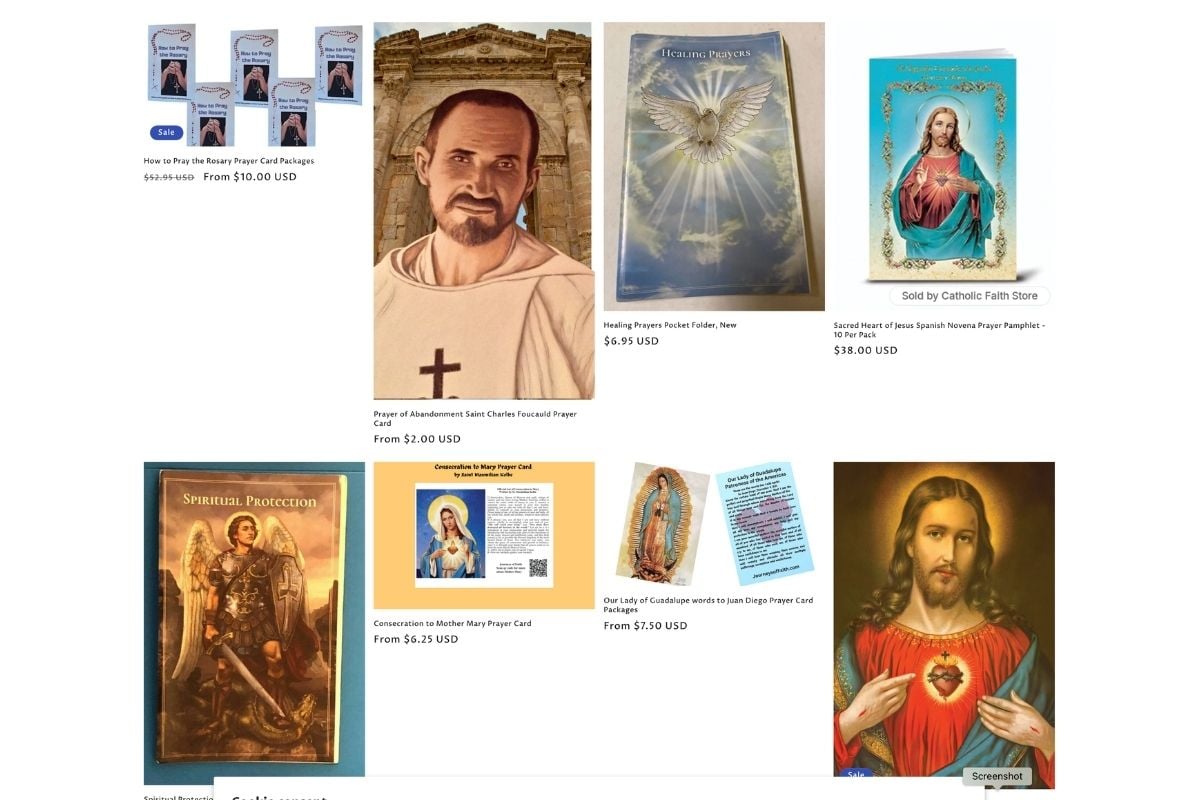
When Catholics incorporate Mary's name into their daily prayers, they strengthen their relationship with the Mother of God and open themselves to her guidance and protection. For those seeking to deepen their Marian devotion, prayer cards and novenas offer structured ways to honor Mary's name and invoke her intercession regularly. These tangible devotional aids help believers maintain consistent prayer practices and carry Mary's presence throughout their daily activities.
Liturgical Celebrations and Traditions
The Feast of the Holy Name of Mary on September 12 provides Catholics with a dedicated opportunity to honor and meditate upon the significance of Mary's name. This celebration falls strategically close to the Feast of Mary's Nativity on September 8, creating a natural connection between her birth and her identity.
Liturgical Observance Practices
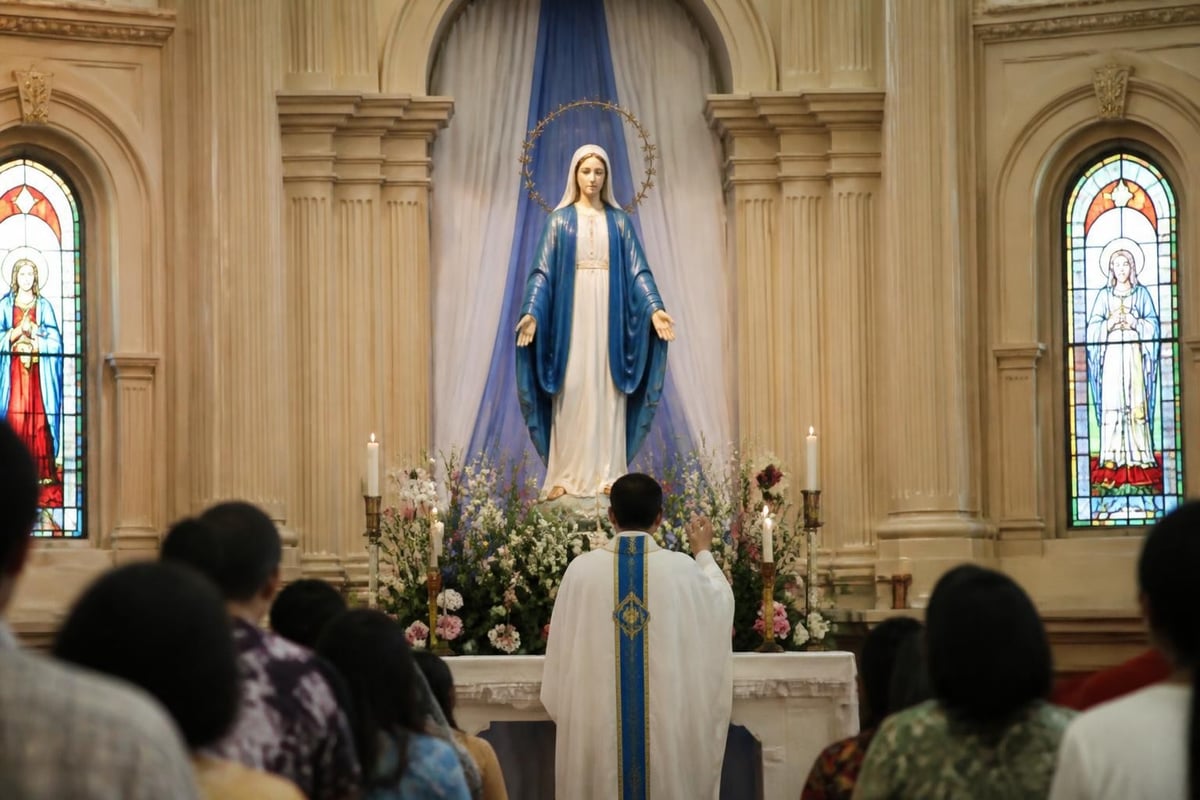
Parishes worldwide mark this feast day with special Masses, novenas, and devotional practices. Many communities organize processions, consecrations to Mary, and opportunities for the Sacrament of Reconciliation. The liturgical texts for the day emphasize Mary's role as Mother of God and her powerful intercession for all who call upon her name.
- Morning Offering: Begin the day by consecrating all actions to God through Mary's intercession
- Scripture Reading: Meditate on biblical passages featuring Mary, especially the Annunciation and Magnificat
- Rosary Prayer: Pray the rosary with special attention to Mary's titles and attributes
- Litany of Loreto: Recite the traditional litany honoring Mary's many names and titles
- Evening Consecration: Renew personal or family consecration to Mary before retiring
Some traditions encourage believers to research the etymology and meaning of Mary's name, sharing these insights with family members and faith communities to deepen collective appreciation.
Mary's Names and Titles Throughout Tradition
Beyond her given name, Catholic tradition has bestowed countless titles upon Mary, each reflecting different aspects of her relationship to Christ, the Church, and individual believers. These titles, while distinct from the holy name of mary itself, flow from and expand upon the significance of her identity.
Traditional Marian Titles
The Litany of the Blessed Virgin Mary contains dozens of invocations, each highlighting specific virtues, roles, or attributes associated with the Mother of God. Understanding these titles enriches Catholic devotion and provides multiple entry points for prayer and meditation.
| Category | Example Titles | Theological Significance |
|---|---|---|
| Biblical | Mother of God, Virgin Most Prudent | Direct scriptural connections |
| Christological | Mother of Divine Grace, Mother of Our Savior | Relationship to Christ |
| Ecclesial | Help of Christians, Queen of Apostles | Role in Church life |
| Protective | Refuge of Sinners, Comfort of the Afflicted | Maternal intercession |
| Cosmic | Queen of Heaven, Morning Star | Eschatological glory |
Each title represents a facet of Mary's complete identity and mission. When believers invoke these various names and titles, they approach Mary from different spiritual needs and perspectives, confident in her universal maternal care.
The Name Mary in Scripture and Tradition
While the New Testament references Mary by name relatively few times, each mention carries profound theological weight. The angel Gabriel addresses her by name at the Annunciation, establishing the intimate relationship between heaven and this particular woman chosen to bear God's Son.
Gospel References and Significance
The Gospels present Mary's name within narratives that reveal her faith, obedience, and unique role in salvation history. At Cana, Jesus addresses his mother not by name but as "woman," a title connecting her to Eve and emphasizing her universal motherhood. Yet throughout Acts and the Epistles, early Christians identified her specifically as Mary, the mother of Jesus.
Notable scriptural moments featuring Mary:
- The Annunciation: Gabriel greets Mary by name before revealing God's plan
- The Visitation: Elizabeth calls Mary "mother of my Lord," affirming her divine maternity
- At the Cross: Jesus entrusts his mother to John, establishing her spiritual motherhood
- In the Upper Room: Mary prays with the apostles, cementing her place in the early Church
The veneration of Mary's name developed organically from these scriptural foundations, as believers recognized the power and beauty contained within this simple designation.
Incorporating Marian Devotion Into Daily Life
Honoring the holy name of mary need not be confined to formal feast days or liturgical celebrations. Catholics can integrate reverence for Mary's name into everyday spirituality through simple practices that maintain awareness of her maternal presence and intercession.
Practical Daily Devotions
Begin each morning by invoking Mary's name, asking for her protection and guidance throughout the day. This practice, taking mere seconds, establishes a pattern of conscious reliance on her maternal care. Similarly, ending the day with a brief prayer acknowledging Mary's name creates bookends of devotion around daily activities.
Simple daily practices:
- Include "Holy Mary" in morning prayers
- Pause at noon to pray the Angelus, which mentions Mary's name
- Wear a Miraculous Medal or other Marian sacramental as a physical reminder
- Use Mary's name when facing challenges or temptations
- Teach children to call upon Mary's name for protection
Many families establish the tradition of blessing their homes with holy water while invoking Mary's name, creating a spiritually protected domestic environment. This practice combines sacramental theology with Marian devotion, reinforcing the holy name of mary as a source of grace and protection.
The Theological Foundation for Venerating Mary's Name
Catholic theology carefully distinguishes between the worship (latria) due to God alone and the veneration (dulia and hyperdulia) appropriate for saints, especially Mary. Honoring the holy name of mary falls under hyperdulia, the special veneration reserved for the Mother of God because of her unique relationship to Christ.
Doctrinal Basis and Church Teaching
The Second Vatican Council's document Lumen Gentium affirms that Marian devotion, including reverence for her name, finds its source and summit in the Eucharist and always leads believers toward deeper relationship with Christ. Mary's name, properly honored, becomes a pathway to her Son rather than an end in itself.
The Catechism of the Catholic Church emphasizes that all authentic Marian devotion flows from recognition of Mary's role in God's salvific plan. When Catholics invoke her name, they acknowledge her consent to becoming the Mother of God, her perfect discipleship, and her continuing maternal care for all believers.
- Theological Principle: Mary's unique privileges derive from her divine motherhood
- Scriptural Foundation: Biblical testimony to Mary's faith and obedience
- Liturgical Expression: Church-approved prayers and feasts honoring Mary
- Pastoral Application: Practical devotions accessible to all faithful
- Christocentric Focus: All Marian devotion ultimately glorifies Christ
This theological framework ensures that devotion to the holy name of mary remains properly ordered within Catholic faith and practice, avoiding both excessive sentiment and inadequate appreciation.
Historical Figures and Their Devotion to Mary's Name
Throughout Church history, saints, theologians, and ordinary believers have demonstrated profound devotion to the holy name of mary, leaving testimonies that continue to inspire contemporary Catholics. Their examples provide models for authentic Marian spirituality rooted in Scripture and tradition.
Saints Who Championed Mary's Name
Saint Louis de Montfort advocated for total consecration to Jesus through Mary, emphasizing the power of her name in spiritual warfare and growth in holiness. His classic work "True Devotion to Mary" presents Mary's name as a fortress against evil and a channel of grace. Saint Alphonsus Liguori similarly wrote extensively about the glories of Mary's name, compiling testimonies of miraculous interventions attributed to invoking her name with faith.
Saint Bernardine of Siena promoted devotion to both the Holy Name of Jesus and the Holy Name of Mary, creating visual representations and encouraging public proclamation of these sacred names. His preaching sparked widespread renewal of Marian devotion across Italy in the 15th century.
Notable Marian advocates:
- Saint Bernard of Clairvaux: "Mary" means Star of the Sea
- Saint Alphonsus Liguori: Documented miracles through Mary's name
- Saint Louis de Montfort: Total consecration through Mary
- Saint Maximilian Kolbe: Knight of the Immaculata
- Saint John Paul II: "Totus Tuus" papal motto
These saints understood that the holy name of mary represents not mere syllables but the person of the Blessed Mother herself, present and active through her continuing intercession.
Contemporary Relevance and Modern Devotion
In the 21st century, devotion to the holy name of mary remains vibrant and relevant, adapting to contemporary contexts while maintaining theological integrity. Modern Catholics encounter Mary's name through traditional practices, digital media, and new expressions of ancient faith.
Digital Age Marian Devotion
Technology has expanded access to Marian prayers, teachings, and communities. Catholic apps offer daily reflections on Mary's titles, virtual rosary groups connect believers worldwide, and podcasts explore Marian theology in accessible formats. Organizations dedicated to evangelization through media continue spreading knowledge of and devotion to Mary across multiple platforms, ensuring that reverence for her holy name reaches new generations.
Social media enables Catholics to share Marian devotions instantaneously, creating virtual communities united by love for the Mother of God. Hashtags celebrating Marian feast days trend globally, demonstrating continued widespread devotion to the holy name of mary among believers of all ages.
Young adults particularly resonate with Mary as a model of faithful discipleship and counter-cultural courage. Her willingness to embrace God's will despite personal cost speaks powerfully to generations facing complex moral and spiritual challenges.
| Traditional Practice | Modern Adaptation | Spiritual Benefit |
|---|---|---|
| Praying the Rosary | Virtual rosary groups via video call | Community support, accountability |
| Wearing scapulars | Miraculous Medal apps with daily prayers | Constant reminder of Mary's protection |
| Marian shrines pilgrimage | Virtual shrine tours and online chapels | Access for homebound or distant faithful |
| Litany recitation | Audio recordings for commuters | Integration into busy schedules |
These adaptations preserve the essence of traditional Marian devotion while making the holy name of mary accessible in contemporary life circumstances.
The Name Mary in Art, Music, and Culture
Artistic and musical traditions have long celebrated the holy name of mary, creating cultural touchstones that transmit Marian devotion across generations. From Renaissance paintings to contemporary worship songs, Mary's name appears as both subject and inspiration.
Artistic Representations
Medieval and Renaissance artists frequently incorporated Mary's name into visual compositions, often using Latin inscriptions or symbolic elements to highlight her identity. The tradition of painting Mary's monogram (the intertwined letters M and A for Maria) appears in countless churches, manuscripts, and devotional objects.
Musical compositions honoring Mary's name span centuries and styles, from Gregorian chant to modern hymns. The "Ave Maria" has been set to music by hundreds of composers, each interpretation offering a unique meditation on the angel's greeting to Mary by name.
Cultural expressions of Marian devotion:
- Visual arts: Icons, paintings, sculptures featuring Mary's name
- Architecture: Churches dedicated to various Marian titles
- Literature: Poetry and prose exploring Mary's identity
- Music: Hymns, chants, and contemporary songs
- Popular devotion: Festivals, processions, and local traditions
Catholic culture worldwide demonstrates remarkable creativity in honoring the holy name of mary, ensuring that devotion remains vibrant and engaging across diverse contexts and communities.
Resources for Deepening Marian Devotion
Catholics seeking to grow in devotion to the holy name of mary have access to abundant resources spanning traditional practices, scholarly studies, and pastoral guidance. Building a robust Marian spirituality requires both intellectual understanding and heartfelt prayer.
Recommended Practices and Materials
Begin with foundational prayers like the Hail Mary, Memorare, and Rosary, which invoke Mary's name repeatedly and establish rhythms of devotion. Progress to longer forms like the Litany of Loreto, novenas to various Marian titles, and eventual consecration to Jesus through Mary.
Essential Marian resources:
- Scripture: Gospel passages featuring Mary, especially Luke's infancy narrative
- Prayers: Traditional Marian prayers and contemporary compositions
- Books: Classic texts by Marian saints and modern theological studies
- Sacramentals: Rosaries, medals, scapulars blessed by priests
- Community: Parish Marian groups, online forums, pilgrimage opportunities
Many Catholics find that maintaining a dedicated space for Marian devotion in their homes, featuring images of Mary, blessed candles, and prayer resources, helps sustain consistent practice. This physical reminder of Mary's presence encourages daily invocation of the holy name of mary.
Honoring the holy name of mary enriches Catholic spiritual life by deepening relationship with the Mother of God and opening channels of grace and intercession. Whether you're beginning your Marian journey or seeking to renew existing devotion, Journeys of Faith offers comprehensive resources to support your growth. Explore Journeys of Faith online store with thousands of Catholic items at https://journeysoffaith.com/collections. Journeys of Faith is blessed to provide Catholic media, including podcasts and inspirational content, free of charge across multiple media platforms for viewers and listeners around the world. While access to this content remains free, there are significant and continually increasing costs associated with producing, hosting, and distributing these programs. Your support helps us continue sharing the beauty of the Catholic faith with souls. Please make a donation at https://journeysoffaith.com/pages/donate.
