

The litany of saint joseph stands as one of the Church's most cherished prayers to the foster father of Jesus Christ. This ancient form of devotion invites Catholics to meditate on Saint Joseph's virtues, roles, and spiritual gifts through a series of rhythmic invocations. For centuries, the faithful have turned to this litany during times of need, seeking the powerful intercession of the patron of workers, fathers, and the Universal Church. Understanding its structure, history, and spiritual richness deepens our appreciation for this remarkable prayer.
Historical Development of the Litany of Saint Joseph
The litany of saint joseph emerged during a period of growing devotion to the husband of Mary in the late medieval and early modern Church. Unlike the Litany of the Saints, which dates to ancient Christian worship, Joseph's litany developed later as theological understanding of his unique role expanded.
Historical records trace early versions of Joseph litanies to the 16th century. The Thesaurus litaniarum, compiled by Georg Victorinus in 1596, represents one of the earliest documented collections including litanies honoring Saint Joseph. This anthology of polyphonic litanies reflected the Counter-Reformation's emphasis on cultivating devotion to saints as intercessors and models of Christian virtue.
Vatican Recognition and Updates
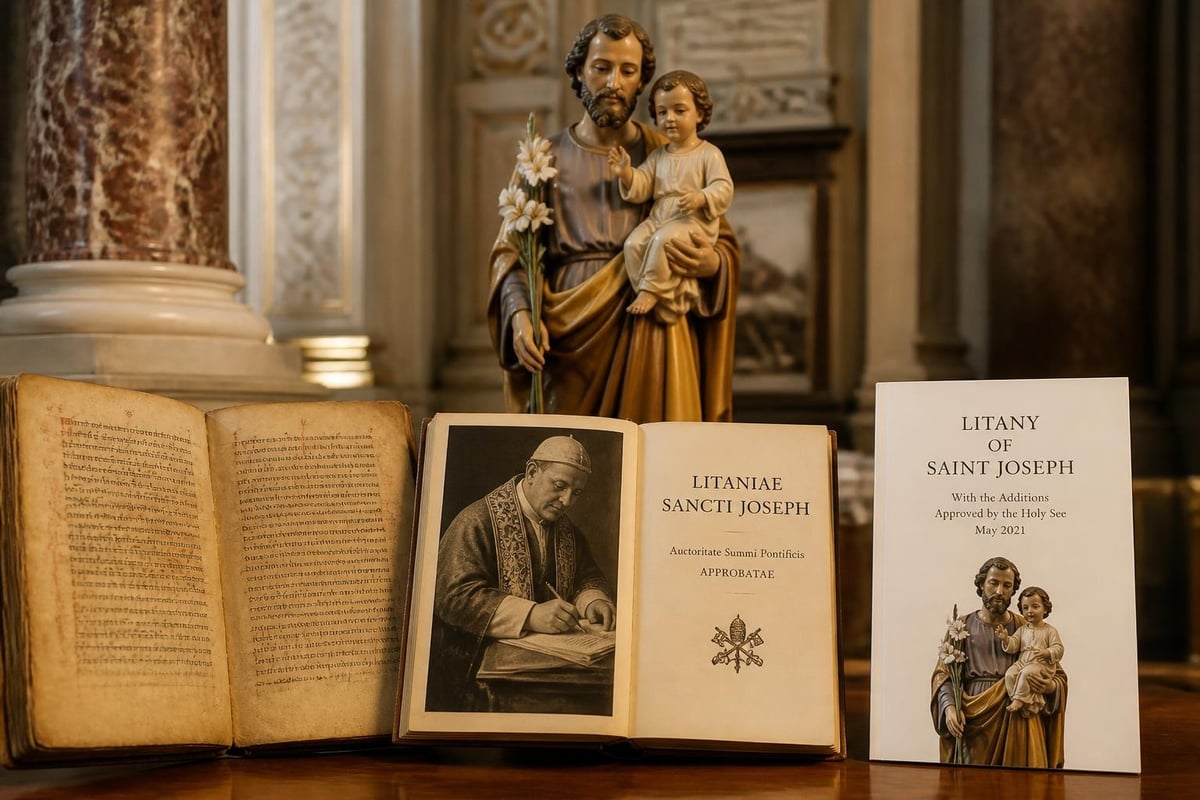
The Church formally approved the litany of saint joseph for public devotion in 1909 under Pope Saint Pius X. This approval came during a period when papal teaching increasingly highlighted Joseph's role in salvation history. Pope Pius IX had already declared him Patron of the Universal Church in 1870, establishing a foundation for liturgical and devotional recognition.
Recent updates demonstrate the litany's living nature within Catholic tradition. In May 2021, the Congregation for Divine Worship and the Discipline of the Sacraments added seven new invocations to honor Saint Joseph during the Year of Saint Joseph proclaimed by Pope Francis. These additions reflect contemporary theological insights while maintaining the prayer's traditional structure.
Brought to you by Journeys of Faith, founded by Bob and Penny Lord. We are an Augustinian Secular Institute, Cyber Apostles. Our Mission is Evangelization through Media.
Structure and Content of the Prayer
The litany of saint joseph follows the traditional litany format established in Catholic worship. This structure creates a meditative rhythm that engages both mind and heart in prayer.
Opening Invocations
The prayer begins with standard litany openings:
- Lord, have mercy
- Christ, have mercy
- Lord, have mercy
- Christ, hear us
- Christ, graciously hear us
These initial petitions establish the Trinitarian foundation, acknowledging that all intercession ultimately directs us toward God. The repetition creates a contemplative atmosphere, preparing the soul for deeper meditation on Joseph's virtues.
Titles and Invocations
The heart of the litany consists of approximately 50 invocations, each highlighting a different aspect of Joseph's character or role. The official English text approved by the USCCB organizes these invocations into thematic clusters:
| Category | Example Invocations | Spiritual Focus |
|---|---|---|
| Relational Titles | Spouse of the Mother of God, Guardian of the Virgin | Joseph's unique relationship with Mary |
| Fatherhood | Foster father of the Son of God, Watchful defender of Christ | Joseph's paternal role and protection |
| Virtues | Most just, Most chaste, Most prudent | Joseph's moral excellence |
| Patronages | Terror of demons, Patron of the dying, Protector of the Church | Joseph's intercessory power |
New Invocations Added in 2021
The seven additions approved by the Vatican reflect contemporary theological emphases:
- Protector of the Holy Mother of God
- Guardian of the Word Incarnate
- Comfort of the Afflicted
- Hope of the Sick
- Patron of Exiles
- Patron of the Afflicted
- Patron of the Poor
These invocations respond to modern pastoral needs while remaining rooted in Scripture and Tradition. The titles "Patron of Exiles" and "Patron of the Poor" particularly resonate with contemporary migration crises and economic challenges.
Theological Significance of Joseph's Titles
Each invocation in the litany of saint joseph carries profound theological weight. Understanding these titles deepens our appreciation for both Joseph's sanctity and the prayer's spiritual richness.
Joseph as Guardian and Protector
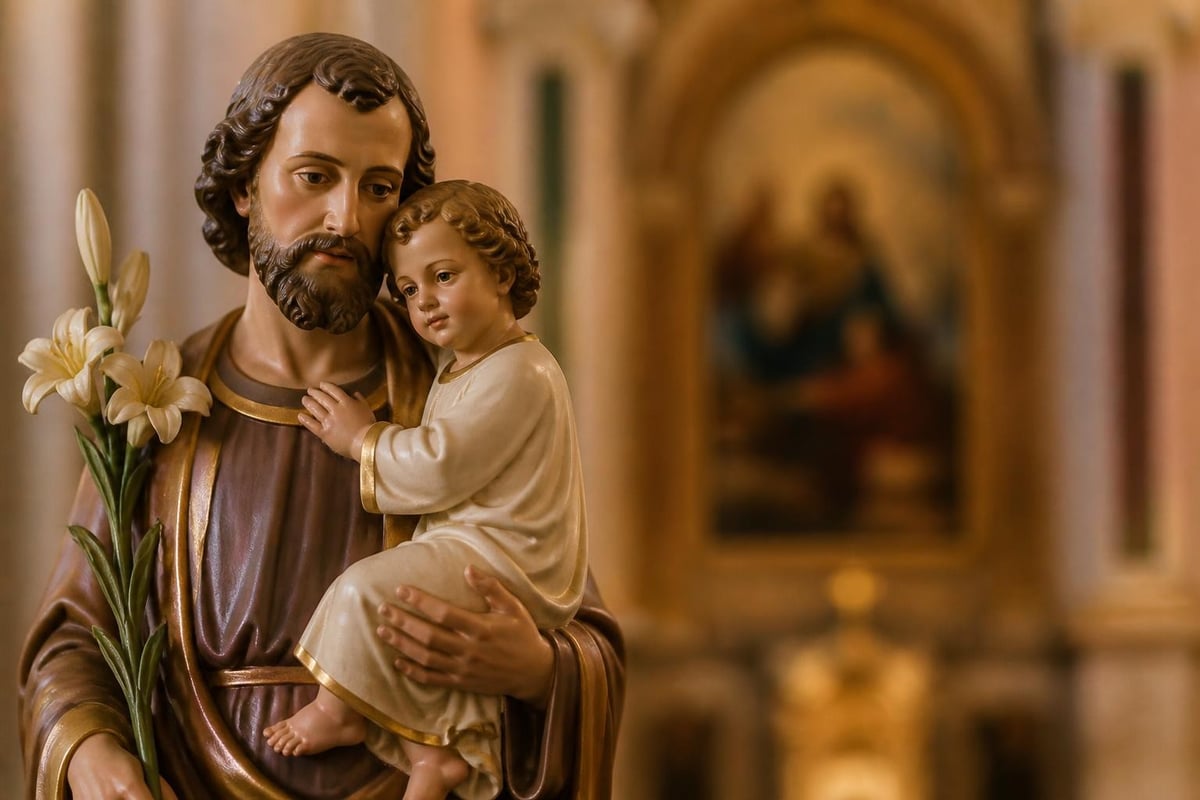
Guardian of virgins and Protector of holy Church establish Joseph's role as defender of purity and faith. These titles reflect the theological principle that Joseph's earthly protection of Jesus and Mary extends mystically to the Church. Just as he sheltered the Holy Family during the flight into Egypt, he continues to safeguard believers facing spiritual dangers.
The new invocation "Guardian of the Word Incarnate" emphasizes Joseph's unique privilege of protecting the Second Person of the Trinity made flesh. This title underscores the intimacy between Joseph and Jesus, highlighting his complete dedication to fulfilling God's plan.
Moral Excellence and Virtue
Invocations emphasizing Joseph's virtues provide models for Christian living:
- Most just recalls Matthew 1:19, establishing righteousness as Joseph's defining characteristic
- Most obedient reflects his immediate response to angelic guidance
- Most faithful honors his unwavering commitment despite extraordinary circumstances
- Mirror of patience acknowledges his silent endurance of trials
These titles transform the litany into a catechetical tool. Praying these invocations regularly imprints Joseph's virtues on the soul, inspiring imitation of his holiness.
Patronage and Intercession
The litany identifies Joseph as patron of numerous groups and needs. "Patron of workers" connects his carpentry trade with all human labor, dignifying work as participation in God's creative activity. "Support of families" makes him the intercessor for domestic life, drawing on his experience leading the Holy Family through challenges.
"Hope of the sick" and "Comfort of the afflicted"-both added in 2021-respond to physical and emotional suffering. These invocations remind us that Joseph, who witnessed Jesus' passion and understood Mary's sorrows, comprehends human pain and brings it before God's throne.
For those seeking to deepen their devotion to Saint Joseph, prayer cards and novenas offer accessible ways to maintain daily connection with his intercession. These portable devotional aids carry the litany's invocations and other Josephite prayers, making them ideal companions for prayer time throughout busy days.

Praying the Litany: Practical Guidance
The litany of saint joseph adapts to various devotional contexts, from private meditation to communal worship. Understanding how to pray it effectively enhances its spiritual fruitfulness.
Individual Devotion
Daily recitation of the litany establishes a rhythm of seeking Joseph's intercession. Many Catholics pray it during the month of March (Joseph's feast month) or on Wednesdays (traditionally dedicated to him). The prayer typically takes 10-15 minutes, making it manageable even for busy schedules.
Meditative approach involves pausing after each invocation to reflect on its meaning. Rather than rushing through the titles, consider how each one applies to your life circumstances. When praying "Terror of demons," for instance, contemplate specific spiritual battles where you need Joseph's protection.
Communal Prayer Settings
The litany functions beautifully in group settings:
- Parish devotions often include it during May (Mary's month) or October (Rosary month), recognizing Joseph's connection to both
- Family prayer uses the call-and-response structure, with one person reading invocations and others responding
- Liturgical celebrations on Joseph's feast days (March 19 and May 1) incorporate the litany into extended devotional services
Musical settings enhance communal praying. Gregorian chant versions exist for those interested in traditional sung forms, connecting contemporary devotion with ancient liturgical practice.
Intentions and Petitions
Catholics traditionally pray the litany for specific needs:
- Employment and work concerns, invoking "Patron of workers"
- Family protection, especially for fathers seeking to model Joseph's care
- Purity and chastity, drawing on his virginal marriage
- Happy death, as "Patron of the dying" who experienced Christ's presence in his final moments
- Church needs, remembering his role as "Protector of holy Church"
The Litany in Contemporary Spirituality
The litany of saint joseph remains remarkably relevant to modern Catholic life. Its invocations address contemporary challenges while maintaining timeless spiritual wisdom.
Responding to Modern Crises
The 2021 additions particularly speak to current circumstances. "Patron of Exiles" responds to unprecedented global migration, recognizing Joseph's experience of displacement fleeing Herod's persecution. This invocation transforms the litany into a prayer for refugees, asylum seekers, and all forced from their homes.
"Patron of the Poor" addresses economic inequality and material insecurity. Joseph's humble carpentry and simple lifestyle make him an authentic advocate for those struggling financially, offering hope that God sees and cares for their needs.
Integration with Other Devotions
The litany complements rather than replaces other Josephite prayers:
| Devotion | Focus | Relationship to Litany |
|---|---|---|
| Memorare to St. Joseph | Urgent petitions | Litany provides broader meditation |
| Novena to St. Joseph | Nine-day intensive prayer | Litany can be incorporated daily |
| Consecration to St. Joseph | Total dedication | Litany reinforces consecration themes |
| Seven Sorrows and Joys | Meditation on Joseph's life events | Litany summarizes virtues displayed |
Many Catholics incorporate the litany into their examination of conscience, using Joseph's virtues as standards for moral self-assessment. "Am I 'most obedient' to God's will? Do I show 'mirror of patience' in trials?"
Spiritual Fruits of Regular Recitation
Consistent praying of the litany of saint joseph yields measurable spiritual growth. The repetitive meditation on his virtues gradually transforms the soul, conforming it more closely to Christ through Joseph's example.
Formation in Humility
Joseph's silent presence throughout the Gospels teaches humility. The litany never calls him "most famous" or "most recognized," but rather "most faithful" and "most prudent." This emphasis redirects attention from worldly acclaim to authentic holiness, helping pray-ers value interior virtue over external validation.
Strengthening Family Life
Families who pray the litany together report deeper unity and peace. Joseph's model of sacrificial love, especially in the invocations about protection and provision, inspires fathers and husbands. The prayer also reminds children of obedience and trust, mirroring Jesus' submission to Joseph's authority.
Discernment and Decision-Making
Joseph's discernment-particularly his decision to marry Mary despite confusion, guided by angelic revelation-provides a template for navigating complex choices. Praying "Most prudent" and "Most obedient" before major decisions invites his intercession for clarity and courage to follow God's will even when challenging.
Protection Against Evil
"Terror of demons" has particular power in spiritual warfare. Exorcists and deliverance ministers frequently invoke Joseph's protection, recognizing that Satan fears the one who guarded the Incarnate Word. Regular recitation of the litany establishes spiritual armor against temptation and demonic influence.
Theological Context: Joseph in Catholic Tradition
Understanding the broader theological appreciation for Saint Joseph enriches our praying of his litany. The Catholic Encyclopedia's entry on St. Joseph traces how the Church's understanding of his role developed over centuries.
Scriptural Foundation
While the Gospels present Joseph sparingly, these passages carry immense theological weight. Matthew's Gospel emphasizes his righteousness and obedience, while Luke highlights his faithful participation in Jewish religious practices. The litany extrapolates from these scriptural foundations, drawing out implications often overlooked in casual reading.
Magisterial Teaching
Papal documents increasingly emphasize Joseph's significance:
- Quamquam Pluries (Pope Leo XIII, 1889) established theological foundations for Joseph's patronage
- Redemptoris Custos (Pope John Paul II, 1989) provided extensive meditation on Joseph's role in redemption
- Patris Corde (Pope Francis, 2020) proclaimed the Year of Saint Joseph, spurring renewed devotion
These teachings inform how we pray the litany, understanding each invocation within the Church's living Tradition rather than as isolated titles.
Liturgical Recognition
The Church's liturgical calendar honors Joseph with two major celebrations: the Solemnity of Saint Joseph (March 19) and Saint Joseph the Worker (May 1). The litany often features prominently in devotions surrounding these feasts, connecting private prayer with public worship.
Resources for Deepening Josephite Devotion
Beyond the litany itself, numerous resources help Catholics grow in relationship with Saint Joseph. Journeys of Faith offers extensive materials on saints and devotions, supporting believers in their spiritual journeys.
Books and Written Materials
- Biographies of Joseph provide historical and theological context for the litany's invocations
- Spiritual classics like Teresa of Avila's writings on Joseph offer mystical insights into his intercession
- Contemporary studies explore Joseph's relevance to modern family life, work, and fatherhood
The Saints and Other Powerful Men in the Church volume includes extensive material on Saint Joseph, contextualizing his sanctity among other male saints throughout history.
Digital and Audio Resources
Podcasts, audiobooks, and online presentations make Josephite spirituality accessible during commutes or household tasks. Many feature the litany of saint joseph in its entirety, allowing listeners to pray along or simply absorb its rhythms and themes.
Community Connections
Joining or forming a Saint Joseph prayer group multiplies the litany's effectiveness. These gatherings provide accountability, shared insights, and communal intercession for members' needs. Many parishes host Joseph-centered devotions, particularly during March and May.
The Litany's Place in Personal Spiritual Practice
Incorporating the litany of saint joseph into a balanced prayer life requires intentionality. Rather than viewing it as an isolated exercise, see it as one element in a holistic Catholic spirituality.
Integration with the Liturgical Year
Praying the litany aligns naturally with the Church's seasons:
- Advent: Meditate on Joseph's preparation for Christ's coming
- Christmas: Celebrate his role in the Nativity
- Lent: Contemplate his sacrifices and obedience
- Easter: Rejoice in his share in Jesus' triumph over death
This seasonal approach prevents the litany from becoming rote, keeping it fresh and relevant throughout the year.
Complementing Sacramental Life
The litany never replaces sacramental grace but enhances openness to it. Praying for Joseph's intercession before Confession cultivates his virtue of justice and truthfulness. Invoking him before Mass deepens awareness of the Eucharist's presence, recalling his daily intimacy with Christ.
Balancing Devotions
While Josephite devotion is valuable, it should complement rather than overshadow Christ-centered prayer. The litany always directs us toward Jesus-every title ultimately points to Joseph's relationship with the Savior. This christocentric focus prevents unbalanced piety.
The litany of saint joseph offers a rich, time-tested pathway for honoring the foster father of Jesus and seeking his powerful intercession for our needs. Whether you're exploring Catholic devotions for the first time or deepening long-held practices, Journeys of Faith provides the resources, inspiration, and community support to strengthen your spiritual journey. Through books, prayer cards, media, and more, we're dedicated to helping you grow closer to Christ through the saints who walked before us.
Resources:
-
Explore the Journeys of Faith online store with thousands of Catholic items supporting your devotional life.
-
Journeys of Faith is blessed to provide Catholic media, including podcasts and inspirational content, free of charge across multiple media platforms for viewers and listeners around the world. While access to this content remains free, there are significant and continually increasing costs associated with producing, hosting, and distributing these programs. Your support helps us continue sharing the beauty of the Catholic faith with souls. Please make a donation to support our evangelization mission.
