

The litany of saints prayer stands as one of the most ancient and powerful intercessory prayers in Catholic tradition, weaving together centuries of faith through the invocation of holy men and women who have gone before us. This prayer creates a profound connection between the Church militant on earth and the Church triumphant in heaven, calling upon the saints to intercede for us in our spiritual journey. Whether prayed during the Easter Vigil, ordinations, consecrations, or moments of personal need, the litany of saints prayer demonstrates the Catholic understanding of the communion of saints and the power of collective intercession.
Understanding the Litany of Saints Prayer
The litany of saints prayer represents a distinctive form of responsive prayer that systematically invokes the intercession of numerous saints, angels, and holy figures. Unlike other Catholic prayers that address God directly, this litany acknowledges our spiritual family in heaven and requests their prayerful support.
Historical Origins and Development
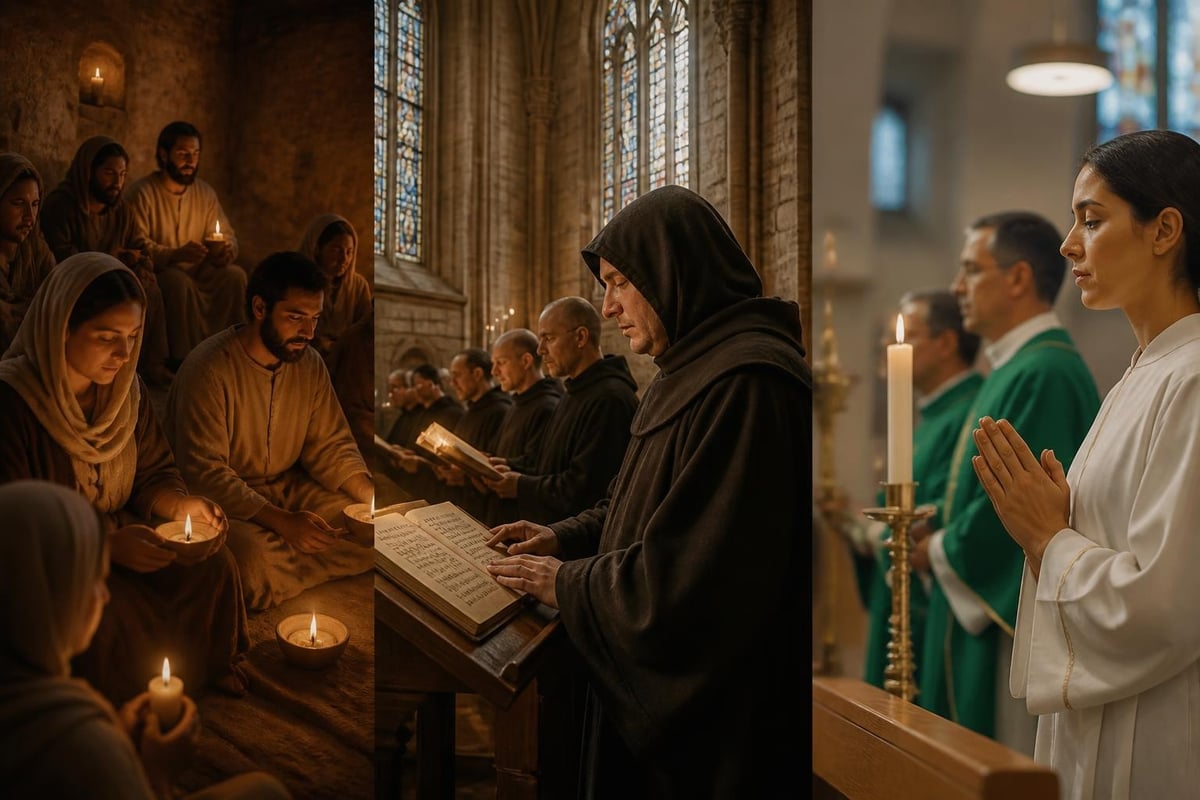
The roots of the litany of saints prayer extend back to the early Church, with evidence of similar invocations appearing in Christian worship by the fourth century. The Catholic Encyclopedia traces its development through various iterations, showing how communities of faith gathered the names of martyrs and holy men and women to seek their heavenly assistance. Early Christians understood that those who had died in Christ remained spiritually alive and capable of interceding for the living.
The structured format evolved gradually, incorporating regional saints before standardizing into the version used throughout the universal Church today. Monastic communities played a significant role in preserving and transmitting this prayer, making it a regular part of their liturgical life. By the medieval period, the litany of saints prayer had become firmly established in major liturgical celebrations, particularly those involving sacramental milestones.
Structure and Components
The litany of saints prayer follows a clear architectural pattern that builds spiritual momentum through repetition and comprehensive invocation:
- Opening invocations to the Holy Trinity
- Appeals to Mary under various titles
- Invocations of angels including Michael, Gabriel, and Raphael
- Calls to patriarchs and prophets from the Old Testament
- Apostles and evangelists who walked with Christ
- Early martyrs who gave their lives for the faith
- Bishops, doctors, priests, and deacons who served the Church
- Religious founders and monastic saints
- Holy men and women from various states of life
Each invocation follows the response "pray for us" (in Latin, "ora pro nobis"), creating a rhythmic pattern that draws the pray-er deeper into contemplation. The litany then transitions to petitions asking for deliverance from various evils and requests for specific graces, followed by invocations of Christ as Lamb of God.
Brought to you by Journeys of Faith, founded by Bob and Penny Lord. We are an Augustinian Secular Institute - Cyber Apostles. Our Mission is Evangelization through Media.
When and Why the Litany of Saints Prayer Is Used
Catholic liturgical tradition designates specific occasions when the litany of saints prayer holds particular significance, though individuals can pray it at any time for personal intercession.
Liturgical Celebrations
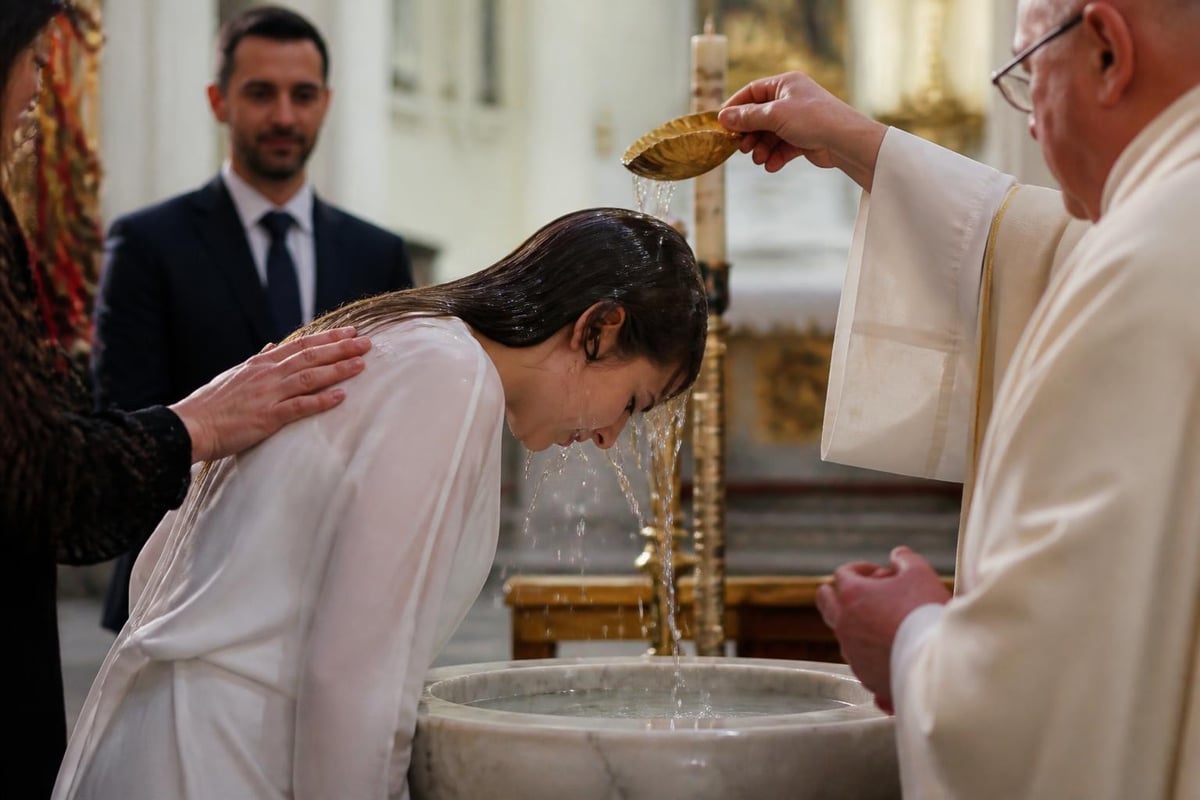
The Easter Vigil represents the most prominent liturgical use of the litany of saints prayer. As catechumens prepare to enter the waters of baptism and candidates await full communion with the Church, the congregation invokes the entire communion of saints to support these individuals in their spiritual rebirth. This ancient practice emphasizes that new Christians join not only the earthly Church but the vast spiritual family spanning heaven and earth.
Ordinations to the priesthood and diaconate incorporate the litany as candidates prostrate themselves before the altar, physically demonstrating their submission to God's will while the faithful call upon the saints to intercede for these men entering sacred ministry. Religious professions follow similar patterns, marking the solemn commitment of men and women to consecrated life.
| Liturgical Occasion | Specific Purpose | Typical Placement |
|---|---|---|
| Easter Vigil | Baptism and Confirmation | Before sacraments |
| Priestly Ordination | Support for ordinands | During prostration |
| Religious Profession | Consecration of vows | Before final profession |
| Church Dedication | Blessing of sacred space | During consecration rite |
| Rogation Days | Blessing of crops/protection | Processions |
Personal Devotional Use
Beyond official liturgical contexts, Catholics often turn to the litany of saints prayer during moments requiring powerful intercession. Families facing serious illness, individuals discerning vocations, or communities confronting crises find strength in calling upon the collective power of heaven's holy ones.
The prayer works particularly well for group recitation, as its responsive format naturally divides between leader and congregation. Journeys of Faith recognizes the value of communal prayer in strengthening faith communities and provides resources to support these devotional practices.
How to Pray the Litany of Saints Prayer
Approaching the litany of saints prayer with reverence and understanding enhances its spiritual impact and helps pray-ers enter more fully into communion with the Church triumphant.
Preparation and Posture
Physical preparation matters when praying the litany of saints prayer, as bodily posture affects spiritual disposition. During solemn liturgical occasions, participants often kneel or stand, depending on rubrical directions. For private devotion, adopting a posture of reverence-whether kneeling, sitting attentively, or standing with hands folded-helps focus the mind and heart.
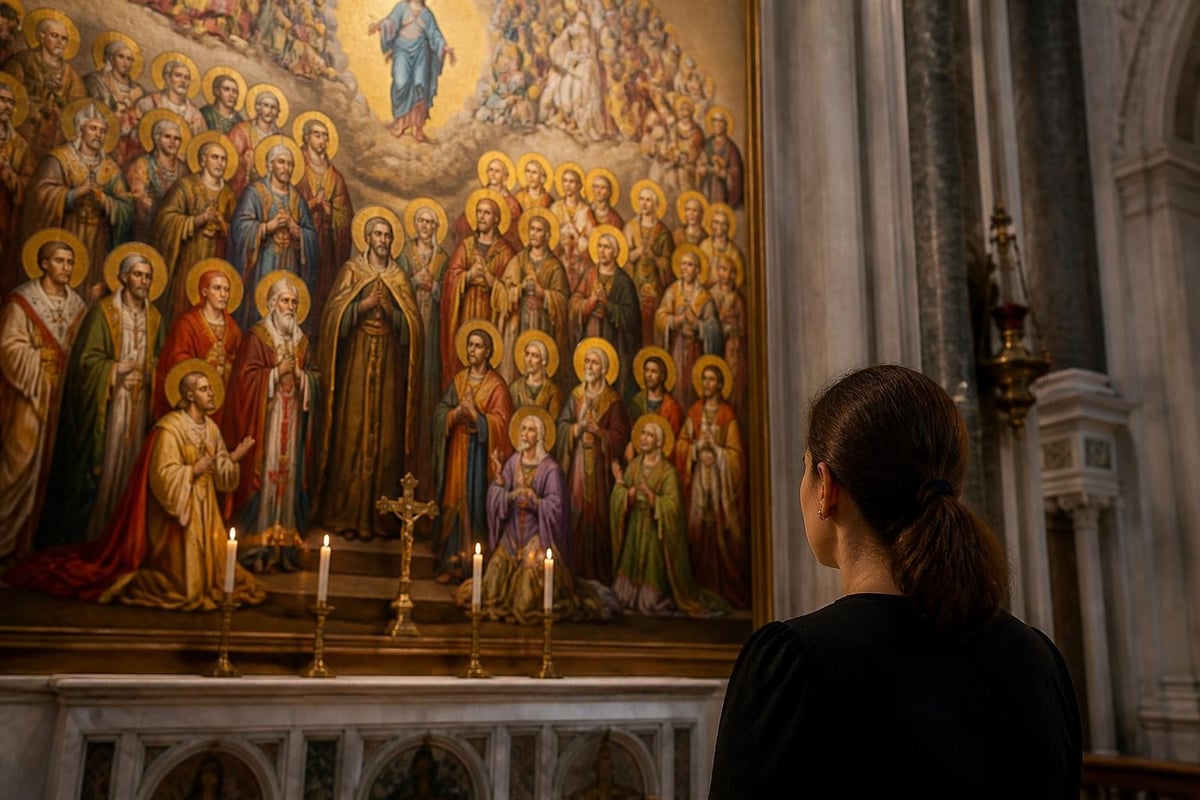
Creating a sacred space enhances the prayer experience. Light a candle, hold a rosary, or place a crucifix nearby as tangible reminders of spiritual realities. Some find that praying before icons or images of saints deepens their connection to the communion of saints. The extensive collection of prayer cards and novenas can serve as visual aids, featuring images of the saints you're invoking.
Praying the Full Text
The complete litany of saints prayer text begins with invocations of the Trinity:
- Lord, have mercy (Kyrie eleison)
- Christ, have mercy (Christe eleison)
- Lord, have mercy (Kyrie eleison)
Progress through each section deliberately, allowing the names to resonate rather than rushing through the list. Consider pausing on saints who hold special meaning in your life or whose intercession you particularly seek. When praying privately, you might add brief personal petitions after certain invocations: "Saint Joseph, pray for us... and for my family's needs."
The responsive nature of the prayer makes it ideal for family prayer time. One person leads by announcing each saint's name, while others respond "pray for us." This pattern engages even younger participants who can easily learn the response. Families might explore Catholic minibooks that tell the stories of saints invoked in the litany, helping children understand who they're asking to pray for them.
Adaptations and Variations
While the official Roman Ritual contains the standard version, legitimate adaptations exist for particular circumstances or needs:
- Shortened versions that include only major categories of saints
- Regional variations incorporating local patron saints
- Thematic selections focusing on saints relevant to specific intentions (healing saints for illness, patron saints of particular professions)
- Bi-lingual formats alternating between Latin and vernacular languages
The Church permits reasonable customization for private devotion while maintaining the essential structure and major invocations. Some prayer books offer expanded versions that include recently canonized saints or additional biblical figures.
Theological Significance of the Litany of Saints Prayer
The litany of saints prayer embodies core Catholic theological principles, particularly regarding the communion of saints and the nature of intercessory prayer.
The Communion of Saints
Catholic teaching affirms that death does not sever the bonds of charity uniting members of Christ's mystical body. The litany of saints prayer demonstrates this belief practically, showing that Christians on earth maintain living relationships with those who have achieved heavenly glory. As the Catechism of the Catholic Church teaches, the saints in heaven intercede for us continuously, and we can request their prayers just as we ask living friends to pray for our needs.
Three states comprise the Church: the Church triumphant (saints in heaven), the Church suffering (souls in purgatory), and the Church militant (faithful on earth). The litany of saints prayer connects these dimensions, acknowledging that spiritual reality transcends temporal boundaries.
This understanding differs fundamentally from worship, which belongs to God alone. Catholics venerate saints and request their intercession, but adoration remains reserved for the Trinity. The litany makes this distinction clear by addressing saints with "pray for us" while addressing Christ directly in the concluding petitions.
Power of Collective Intercession
The litany of saints prayer multiplies intercessory power by gathering the prayers of countless holy men and women simultaneously. Scripture demonstrates that the "prayer of a righteous person has great power" (James 5:16), and the saints represent the ultimate examples of righteousness perfected in Christ.
| Theological Principle | Expression in Litany | Practical Impact |
|---|---|---|
| Communion of Saints | Invocation of heavenly family | Strengthens sense of spiritual community |
| Intercessory Prayer | "Pray for us" response | Multiplies prayer power |
| Universal Church | Saints from all eras/locations | Connects to global faith tradition |
| Sanctification | Examples of holiness | Provides models for Christian life |
The diversity of saints invoked-martyrs, virgins, confessors, religious, laity-demonstrates that holiness is achievable across all vocations and circumstances. This inclusivity encourages modern Catholics that sainthood remains accessible regardless of their state in life.
Incorporating the Litany of Saints Prayer into Spiritual Life
Regular engagement with the litany of saints prayer enriches personal devotion and strengthens one's connection to Catholic tradition and the universal Church.
Monthly or Seasonal Practice
Establishing a rhythm for praying the litany of saints prayer helps integrate this ancient practice into contemporary spiritual life. Many Catholics designate the first of each month for the full litany, creating a monthly pattern of comprehensive intercession. Others align it with the liturgical calendar, praying it on major feast days or during penitential seasons like Lent.
Specific occasions particularly suited to the litany include:
- Feast of All Saints (November 1)
- Solemnity of the Assumption of Mary (August 15)
- Patronal feast days of your parish or diocese
- Personal anniversaries (baptism, confirmation, marriage)
- Times of significant decision-making or crisis
Integration with Other Devotions
The litany of saints prayer complements other Catholic devotional practices beautifully. Consider combining it with:
- Eucharistic Adoration: Pray the litany during a holy hour, asking saints to join you in adoring Christ present in the Blessed Sacrament
- Rosary devotion: Follow the rosary with the litany, particularly on Saturdays dedicated to Mary
- Novenas: Begin or conclude nine-day prayer periods with the litany, specifically invoking the saint honored in the novena
- Family prayer time: Use abbreviated versions with children, gradually introducing more saints as they grow
Catholic families seeking to deepen their prayer life will discover that prayer resources and materials support regular engagement with traditional prayers like the litany. Printed cards and booklets make it easier to pray together without struggling to remember lengthy texts.
Learning About the Saints
The litany of saints prayer becomes more meaningful when pray-ers know the stories behind the names they invoke. Consider studying one saint each month from those mentioned in the litany. Read their biographies, understand their particular virtues and struggles, and learn what patronages they hold.
This approach transforms the litany from a rote recitation into a rich tapestry of personal relationships with holy men and women who faced real challenges and achieved authentic holiness. The complete guide to canonized saints provides excellent background for deepening your knowledge of these heavenly intercessors.
Children especially benefit from hearing the dramatic stories of martyrs who chose death over denying Christ, or modern saints who served the poor amid challenging circumstances. These narratives make the abstract concept of "sainthood" concrete and inspiring.
Spiritual Fruits of Regular Practice
Catholics who regularly pray the litany of saints prayer report multiple spiritual benefits that enrich their faith journey and deepen their relationship with God and the Church.
Expanded Spiritual Perspective
The litany broadens spiritual vision by connecting pray-ers to two millennia of Christian witness. Modern Catholics can feel isolated in increasingly secular cultures, but the litany reminds them they belong to an enormous family of faith spanning continents and centuries. This expanded perspective combats spiritual loneliness and reinforces Catholic identity.
Praying the names of saints from diverse backgrounds-hermits and queens, scholars and simple laborers, ancient martyrs and modern witnesses-demonstrates that holiness flourishes in every era and circumstance. This realization encourages contemporary believers that sanctity remains achievable regardless of current cultural challenges.
Strengthened Faith During Trials
The litany of saints prayer provides powerful support during difficult times. When facing serious illness, family crises, or spiritual struggles, calling upon the collective intercession of heaven's holy ones strengthens hope and perseverance. The saints themselves endured tremendous trials-imprisonment, persecution, misunderstanding, physical suffering-and emerged victorious through God's grace.
Their victories inspire confidence that current difficulties can be overcome with divine assistance and saintly intercession. Many Catholics describe experiencing renewed courage and peace after praying the litany during dark moments, sensing the spiritual support of the communion of saints surrounding them.
Growth in Humility and Community
Regular recitation of the litany of saints prayer cultivates humility by acknowledging our need for help from others, both living and deceased. It contradicts the modern emphasis on radical individualism and self-sufficiency, teaching instead that Christians thrive through interdependence and mutual support.
This prayer also strengthens ecclesial consciousness-the awareness of belonging to the Church as Christ's mystical body. When Catholics pray the litany, they join their voices with countless others throughout history who have invoked these same names, creating a prayer that transcends time and geography.
Contemporary Relevance and Applications
Far from being merely a historical curiosity, the litany of saints prayer addresses contemporary spiritual needs and provides practical applications for modern Catholic life.
In Times of Cultural Challenge
Catholics navigating secular environments often feel pressure to compartmentalize or diminish their faith. The litany of saints prayer counters this tendency by boldly proclaiming Catholic identity and connecting believers to a cloud of witnesses who remained faithful despite far greater opposition. Early martyrs faced death rather than compromise; modern saints endured ridicule, professional consequences, and social ostracism for their convictions.
Invoking these witnesses strengthens resolve to live authentically Catholic lives in challenging contexts. The litany becomes a declaration of solidarity with the Church triumphant and a request for courage to witness effectively in the Church militant.
For Vocational Discernment
Young adults discerning their vocations find the litany of saints prayer particularly valuable. By invoking saints representing diverse vocational paths-married, consecrated religious, ordained ministers, single laypeople-those seeking God's will can ask for specific guidance and clarity.
For instance, a young woman considering religious life might pay special attention to invocations of foundresses and holy virgins, asking these saints to help her understand if God calls her to consecration. A man discerning priesthood finds encouragement in the names of holy priests and bishops who served faithfully.
Supporting Major Life Decisions
The comprehensive nature of the litany of saints prayer makes it ideal for seeking guidance regarding significant decisions. Whether choosing a career path, considering relocation, evaluating a potential marriage, or facing medical choices, Catholics benefit from gathering the widest possible intercessory support.
Praying the full litany demonstrates serious intent and appropriate reverence when approaching major crossroads. It acknowledges human limitation and the need for supernatural guidance, while expressing confidence that God provides direction through the Church and the communion of saints.
Resources for Deepening Your Prayer Life:
-
Explore the Journeys of Faith online store with thousands of Catholic items, including prayer cards, books, and devotional materials to support your spiritual journey.
-
Journeys of Faith is blessed to provide Catholic media, including podcasts and inspirational content, free of charge across multiple media platforms for viewers and listeners around the world. While access to this content remains free, there are significant and continually increasing costs associated with producing, hosting, and distributing these programs. Your support helps us continue sharing the beauty of the Catholic faith with souls. Please make a donation to support this evangelization mission.
The litany of saints prayer connects us to the rich treasury of Catholic tradition and the powerful intercession of heaven's holy men and women. By understanding its history, structure, and proper use, Catholics can incorporate this ancient prayer into their spiritual lives with greater fruit and devotion. Whether prayed during solemn liturgical celebrations or quiet moments of personal need, the litany reminds us that we never pray alone-the entire communion of saints joins us in approaching the throne of grace. Journeys of Faith provides the resources, inspiration, and community support you need to deepen your prayer life and grow in relationship with the saints who have gone before us marked with the sign of faith.