

The mary religious tradition within Catholicism represents one of the most profound and enduring expressions of faith in Christian history. For over two millennia, Catholics have turned to the Blessed Virgin Mary as a mother, intercessor, and model of discipleship. This devotion encompasses prayer practices, theological understanding, artistic expression, and lived faith that continues to shape millions of lives worldwide. Understanding the depth and breadth of mary religious devotion helps believers appreciate how this relationship with Christ's mother strengthens their journey toward holiness.
The Theological Foundation of Mary Religious Devotion
The Catholic Church's teaching on Mary rests on solid scriptural and doctrinal foundations. The Catechism presents Mary as the first disciple, the one who said "yes" to God's plan for salvation. This theological framework shapes all authentic mary religious practices.
Key Marian dogmas form the cornerstone of Catholic belief:
- The Immaculate Conception: Mary conceived without original sin
- The Perpetual Virginity: Mary remained virgin before, during, and after Christ's birth
- The Divine Motherhood: Mary is truly the Mother of God (Theotokos)
- The Assumption: Mary assumed body and soul into heaven
Understanding Mary's Role in Salvation History
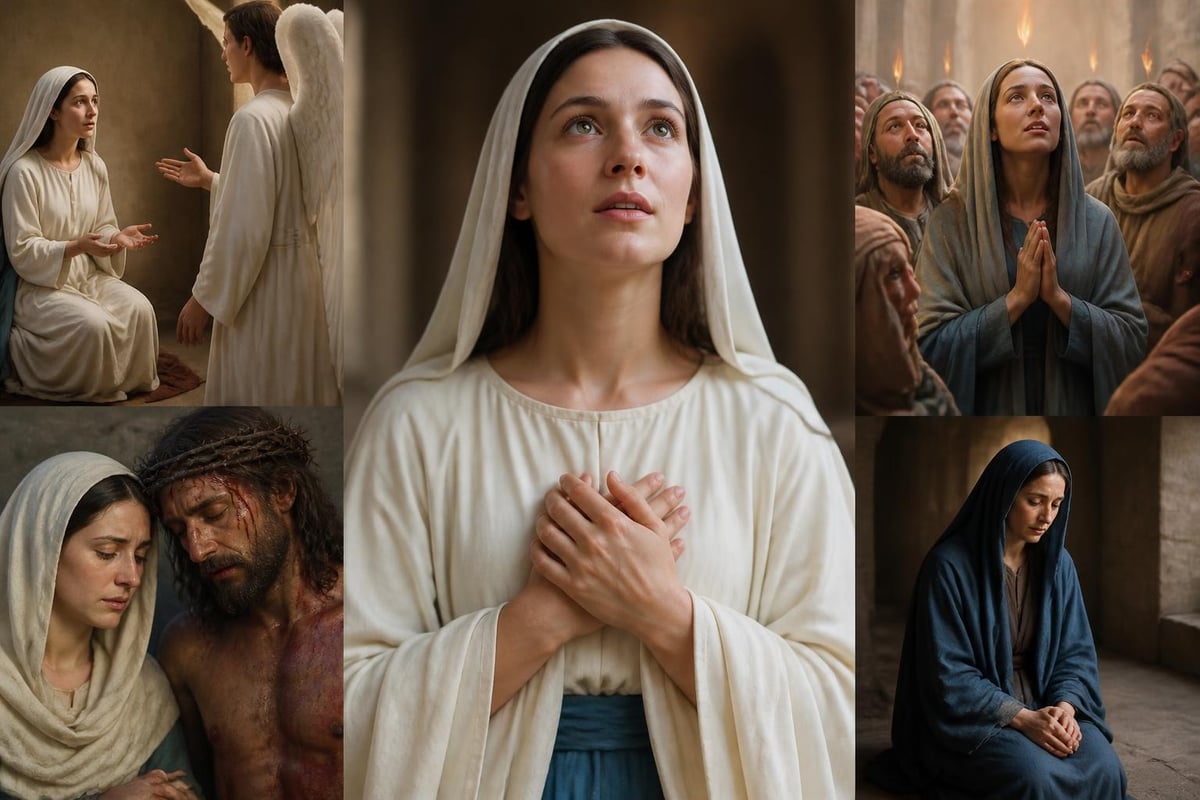
Mary's participation in salvation history extends beyond her biological role as Jesus's mother. The mary religious perspective recognizes her as the New Eve, reversing the disobedience of the first woman through her faithful obedience. When the angel Gabriel announced God's plan, Mary's "fiat" (let it be done) opened the door for the Incarnation.
This cooperation with divine grace makes Mary the perfect model for all Christians. She demonstrates how human beings can collaborate with God's work while remaining completely dependent on His grace.
Prayer Practices in Mary Religious Tradition
The mary religious tradition encompasses diverse prayer forms that have developed across centuries and cultures. These practices connect believers to Mary while always directing them toward her Son. Prayer to Mary never replaces prayer to God but rather enhances it through her maternal intercession.
The Rosary: Crown Jewel of Marian Prayer
The Rosary stands as the quintessential mary religious devotion. This meditative prayer combines vocal prayer with contemplation of the mysteries of Christ's life, death, and resurrection. The Rosary: The Life of Jesus and Mary explores how this powerful prayer weaves together Scripture, tradition, and personal meditation.
| Rosary Mystery Set | Focus | Scripture Foundation |
|---|---|---|
| Joyful Mysteries | Incarnation and early life | Luke 1-2 |
| Luminous Mysteries | Public ministry of Jesus | Gospel accounts |
| Sorrowful Mysteries | Passion and death | Gospel Passion narratives |
| Glorious Mysteries | Resurrection and glory | Acts, Revelation |
Benefits of praying the Rosary include:
- Deepened meditation on Christ's life
- Increased peace and spiritual clarity
- Strengthened family bonds through communal prayer
- Protection from spiritual dangers
- Growth in virtue and holiness
Additional Marian Prayers and Devotions
Beyond the Rosary, the mary religious treasury includes numerous prayers and practices. The Angelus marks morning, noon, and evening with remembrance of the Incarnation. The Memorare expresses confident trust in Mary's intercession. The Litany of Loreto invokes Mary under various titles, each revealing a facet of her relationship with God and humanity.
Brought to you by Journeys of Faith, founded by Bob and Penny Lord. We are an Augustinian Secular Institute-Cyber Apostles. Our mission is evangelization through media.
Novenas to Mary address specific needs and intentions through nine days of focused prayer. The Magnificat, Mary's own prayer from Scripture, offers a template for praising God's mighty works and humble service.
Mary Religious Art and Iconography
Visual representations of Mary have played a crucial role in mary religious devotion throughout Church history. Sacred art serves as a "theology in color," teaching truths about Mary while inspiring prayer and contemplation.
Symbols and Their Meanings
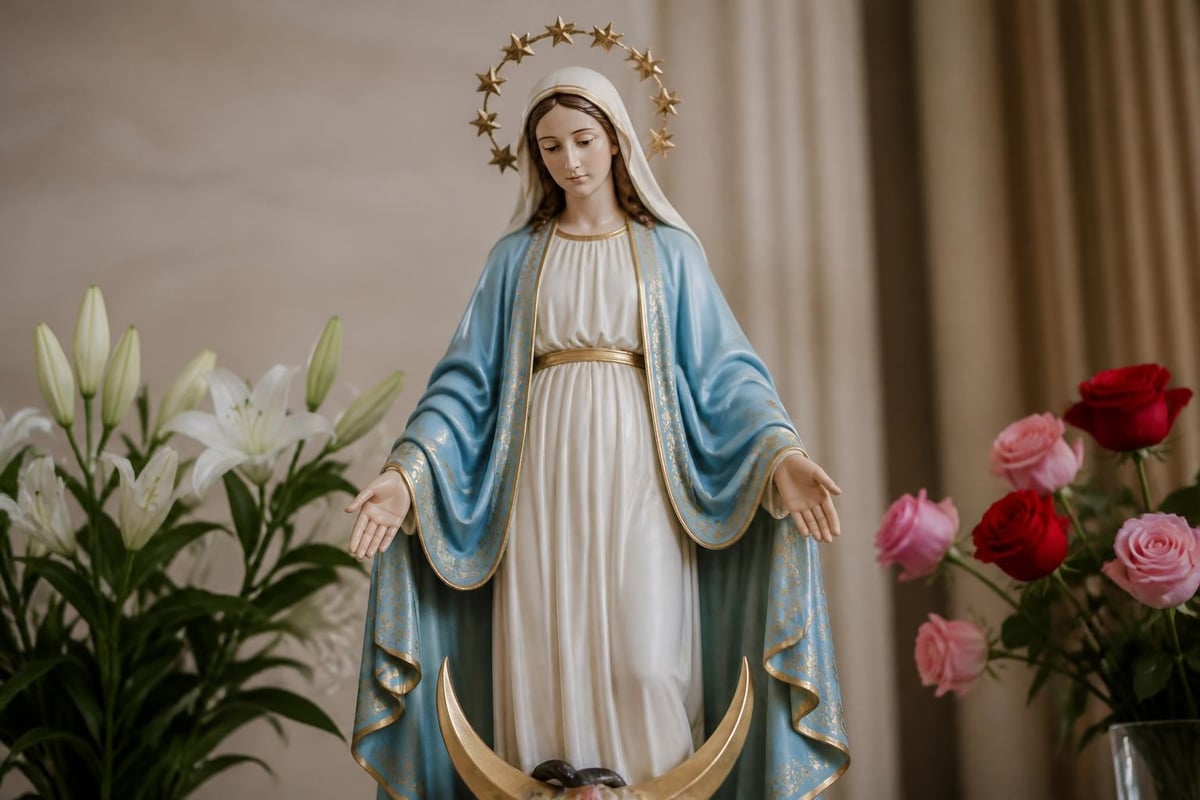
Marian iconography employs rich symbolism to communicate theological truths. The blue mantle signifies Mary's heavenly nature and purity. The crown of twelve stars references Revelation 12 and represents the twelve tribes of Israel and twelve apostles. Lilies symbolize purity, while roses indicate charity and martyrdom.
The Rijksmuseum's Immaculate Virgin relief demonstrates how artists have portrayed Marian doctrines through visual language. The crescent moon beneath Mary's feet, the serpent crushed, and other elements communicate the Immaculate Conception without words.
Regional and Cultural Expressions
Mary religious devotion adapts to diverse cultural contexts while maintaining doctrinal consistency. Our Lady of Guadalupe speaks to indigenous Mexican identity. Our Lady of Akita carries particular significance in Japan. Each authentic Marian apparition or devotion respects local culture while proclaiming universal truth.
This cultural diversity enriches the global Church, demonstrating Mary's universal motherhood while honoring particular communities.
Marian Apparitions and Their Impact
Throughout Church history, reported apparitions of Mary have profoundly influenced mary religious devotion. The Church exercises careful discernment before recognizing these events, requiring thorough investigation and evidence of authentic spiritual fruit.
Major Approved Apparitions
Several Marian apparitions have received official Church approval and continue shaping Catholic spirituality:
- Our Lady of Guadalupe (1531): The tilma image and message of God's love for indigenous peoples
- Our Lady of Lourdes (1858): Emphasis on penance, prayer, and healing
- Our Lady of Fatima (1917): Calls to conversion, Rosary devotion, and consecration to the Immaculate Heart
- Our Lady of Knock (1879): Silent witness to Eucharistic adoration and redemption
Our Lady of Lourdes particularly emphasizes the connection between physical and spiritual healing, with the spring at Lourdes becoming a site of pilgrimage for millions seeking Mary's intercession.
Discernment and Authentic Devotion
Not every reported apparition receives Church approval. The USCCB provides guidance on distinguishing authentic from false apparitions. True mary religious experiences align with Scripture and tradition, promote virtue, lead to Christ, and bear good spiritual fruit.
Catholics remain free to accept or decline belief in even approved apparitions, as they are private revelation. However, these events have undeniably enriched the Church's prayer life and understanding of Mary's maternal care.
Living Mary Religious Devotion Daily
Authentic mary religious devotion transforms daily life rather than remaining compartmentalized as occasional prayer. Mary models the practical living of faith in ordinary circumstances, making her an accessible guide for modern believers.
Consecration to Mary
Total consecration to Mary represents a complete entrustment of oneself to her maternal care so that she may form believers more perfectly into Christ's image. Saint Louis Marie de Montfort developed this practice systematically, teaching that the fastest, easiest, and surest path to Jesus runs through Mary.
This consecration involves preparation, often through 33 days of prayer and reflection, followed by a formal act of entrustment. Living the consecration means making decisions, facing challenges, and pursuing holiness in union with Mary.
Wearing Sacramentals with Faith
Mary religious tradition includes various sacramentals-blessed objects that signify spiritual realities and convey grace through the Church's intercession. The Miraculous Medal, Brown Scapular, and Rosary worn or carried become reminders of Mary's protection and calls to holiness.
These objects hold power not through superstition but through faith in God's providence and Mary's maternal intercession. They work most effectively when accompanied by genuine conversion, regular prayer, and sacramental life.
Mary Religious Devotion and Social Justice
Pope Francis and recent Church teaching emphasize how mary religious devotion connects to social justice and care for the vulnerable. Mary's Magnificat proclaims God's preferential option for the poor and reversal of worldly power structures.
The USCCB's Respect Life reflection explores Mary's role as Mother of Life, connecting Marian devotion to defense of human dignity from conception to natural death. This perspective challenges believers to see mary religious practices as inseparable from concrete acts of mercy and justice.
Mary's example inspires:
- Solidarity with the poor and marginalized
- Protection of unborn life and vulnerable persons
- Humble service without seeking recognition
- Trust in God's power to accomplish the impossible
- Courage to stand with Christ even at great personal cost
The Domestic Church and Marian Spirituality
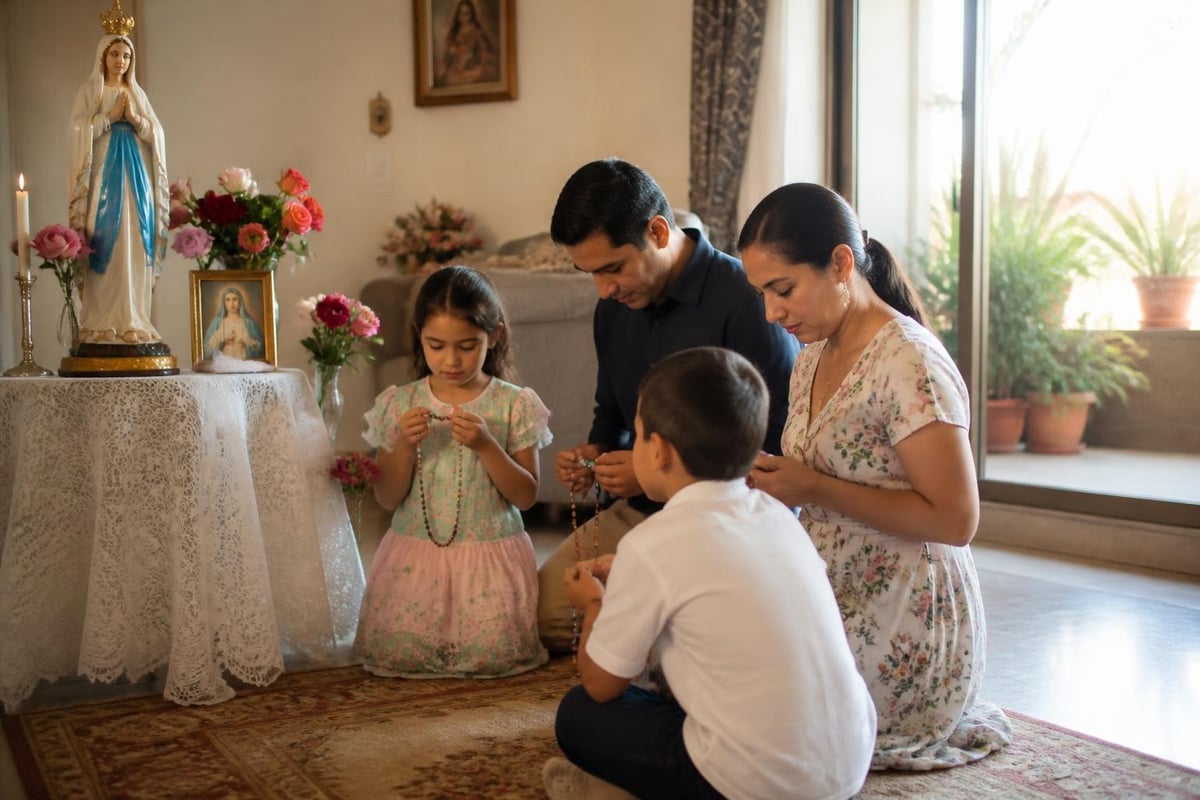
Families practicing mary religious devotion create domestic churches where faith is lived, transmitted, and celebrated. Family Rosary, Marian feast day celebrations, and teaching children Marian prayers establish patterns that often last for life.
Pope Francis reflected on Mary as the first disciple who teaches believers to listen, ponder, and respond to God's word. Families embracing this approach create environments where faith flourishes naturally.
Resources for Deepening Mary Religious Understanding
Numerous resources help believers deepen their mary religious knowledge and practice. Books, audio resources, prayer cards, and devotional items support ongoing formation and prayer.
Books and Media
The Many Faces of Mary explores diverse aspects of Marian devotion through history, apparitions, and titles. This comprehensive resource helps readers appreciate the breadth of mary religious tradition while maintaining focus on core truths. For those seeking to combine Marian devotion with Eucharistic faith, resources that connect both aspects of Catholic spirituality prove especially valuable.
Audio resources including podcasts, audiobooks, and talks make formation accessible during commutes, exercise, or household tasks. Digital formats reach global audiences, spreading mary religious devotion to new generations and cultures.
Prayer Cards and Devotional Tools
Physical prayer tools remain important despite digital alternatives. Prayer cards provide portable reminders and can be shared easily with family, friends, and those seeking spiritual support. Prayer cards and novenas offer accessible entry points into structured mary religious practices.
Quality religious items crafted with reverence honor Mary while supporting prayer. Choosing sacramentals carefully-prioritizing authentic Catholic content over mere decoration-ensures these objects serve their intended spiritual purpose.
Teaching Mary Religious Devotion to Children
Forming young hearts in authentic mary religious devotion establishes foundations for lifelong faith. Age-appropriate methods respect children's developmental stages while introducing them to Mary's maternal love.
Simple Prayers and Stories
Young children connect with Mary through simple prayers like the Hail Mary, memorized and repeated until they become second nature. Stories of Marian apparitions, told at children's level, capture imagination while teaching theological truths.
Visual aids including icons, statues, and illustrated books help children form mental images of Mary that align with Catholic tradition. Creating May altars, celebrating feast days, and incorporating Mary into seasonal rhythms make devotion tangible and memorable.
| Age Group | Appropriate Practices | Goals |
|---|---|---|
| Preschool (3-5) | Hail Mary, simple songs, May crowning | Familiarity and affection |
| Elementary (6-11) | Full Rosary, feast days, Marian stories | Understanding and habit |
| Teen (12-18) | Consecration, deeper study, pilgrimage | Personal commitment and ownership |
Modeling Devotion Through Example
Children absorb attitudes toward Mary from parents and mentors more than from formal instruction. Adults who pray the Rosary, seek Mary's intercession naturally, and speak of her with affection transmit authentic mary religious faith.
Explaining why Mary matters-not just what prayers to say-helps children develop theological understanding. Connecting Marian devotion to Scripture and the sacraments prevents devotion from becoming detached from the core of Catholic faith.
Common Misconceptions About Mary Religious Practices
Despite mary religious devotion's long history and widespread practice, misconceptions persist both among Catholics and others. Addressing these misunderstandings promotes authentic devotion while fostering ecumenical dialogue.
Mary Worship vs. Veneration
The most common misconception holds that Catholics worship Mary, equating her with God. Catholic theology clearly distinguishes worship (latria), given to God alone, from veneration (dulia), offered to saints, and hyperdulia, the special honor given to Mary as Mother of God.
This distinction matters practically: Catholics pray to Mary asking her intercession, not granting requests herself. All Marian prayer ultimately directs believers toward Christ and glorifies the Trinity through recognition of what God accomplished in Mary.
Necessity of Marian Devotion
Some wonder whether mary religious practices are optional or essential to Catholic faith. While the Church requires belief in defined Marian dogmas, particular devotional practices remain voluntary expressions of that belief.
However, completely rejecting Marian devotion while claiming Catholic identity creates internal contradiction. If Mary is truly the Mother of God who deserves honor, some form of devotion naturally follows from authentic faith.
Mary Religious Tradition and Liturgical Life
The Church's official worship integrates mary religious elements throughout the liturgical year and sacramental celebrations. This integration distinguishes Catholic liturgy from Protestant worship while maintaining Christocentric focus.
Marian Feast Days and Solemnities
The liturgical calendar includes numerous Marian celebrations ranging from solemnities to optional memorials:
- January 1: Mary, Mother of God (Solemnity)
- March 25: Annunciation of the Lord (Solemnity)
- August 15: Assumption of Mary (Solemnity)
- December 8: Immaculate Conception (Solemnity)
- December 12: Our Lady of Guadalupe (Feast in the Americas)
These celebrations anchor mary religious devotion in the Church's official prayer, ensuring personal devotion aligns with communal worship. The Mass readings and prayers for these days illuminate different aspects of Mary's role in salvation.
Mary in the Mass and Sacraments
Every Mass includes Marian elements, even on ordinary days. The Confiteor invokes Mary's intercession. The Roman Canon mentions her by name. The Liturgy of the Hours incorporates Marian antiphons that change with liturgical seasons.
Sacramental celebrations often include Marian dimensions. Weddings frequently honor Mary with flowers and prayers. Baptisms may occur on Marian feast days. This integration prevents compartmentalization of devotion from sacramental life.
Contemporary Challenges and Mary Religious Revival
Modern secularization challenges traditional mary religious practices even within Catholic communities. Yet simultaneous signs of Marian revival appear globally, suggesting renewed hunger for her maternal guidance.
Obstacles to Devotion
Contemporary obstacles to mary religious practice include:
- Time pressures reducing prayer opportunities
- Rationalism dismissing supernatural elements
- Misunderstandings of Catholic teaching
- Cultural shifts away from traditional religious expression
- Lack of formation in younger generations
These challenges require creative responses that maintain theological integrity while adapting methods to reach modern audiences.
Signs of Renewal
Despite challenges, mary religious renewal appears in various forms. Young adults discovering traditional devotions, families returning to daily Rosary, and increased participation in Marian pilgrimages indicate continued vitality.
Digital media enables new forms of Marian catechesis and community. Virtual Rosary groups, podcasts exploring Marian theology, and social media sharing of Marian art reach audiences traditional methods miss. Visionaries, Mystics, and Stigmatists examines how Mary has worked throughout Church history, providing context for contemporary experiences.
Mary Religious Practices Across Catholic Cultures
The universal Church celebrates Mary while honoring cultural particularity. Understanding diverse expressions of mary religious devotion enriches appreciation for the Church's catholicity-its universality and inclusiveness.
European Traditions
European Catholicism developed many foundational mary religious practices still used worldwide. French spirituality contributed Marian consecration and the Miraculous Medal. Spanish traditions emphasize Mary's sorrows and compassion. Italian devotion highlights numerous regional Marian shrines and feast days.
Eastern Catholic Churches honor Mary as Theotokos (God-bearer) with distinctive liturgical and iconographic traditions. The Akathist Hymn, Byzantine iconography, and emphasis on Mary's perpetual intercession enrich the whole Church's understanding.
Latin American Expressions
Latin American mary religious devotion blends indigenous and European elements, creating vibrant expressions of faith. Our Lady of Guadalupe stands as the paradigmatic example, where Mary appeared as an indigenous woman speaking Nahuatl, validating native culture while proclaiming the Gospel.
Popular religiosity in Latin America often centers on Mary, with elaborate processions, home altars, and community celebrations. This devotion sustained faith through persecution and continues energizing Latin American Catholicism.
Asian and African Developments
Growing Catholic populations in Asia and Africa develop indigenous mary religious expressions. Our Lady of Akita represents Asian Marian devotion, while various African Marian shrines reflect local spirituality.
These emerging traditions demonstrate Mary's universal motherhood while respecting cultural diversity. The challenge lies in distinguishing authentic inculturation from syncretism that compromises Catholic doctrine.
The richness of mary religious tradition offers Catholics a profound path toward deeper faith, holistic spirituality, and authentic Christian living. From theological foundations through prayer practices, artistic expressions, and daily consecration, devotion to Mary strengthens believers' relationship with Christ while fostering virtues essential for contemporary discipleship. Whether you're beginning your journey with Mary or seeking to deepen existing devotion, Journeys of Faith provides resources including books, prayer cards, and media that support authentic Marian spirituality rooted in Scripture and tradition.
Explore Journeys of Faith's online store with thousands of Catholic items at https://journeysoffaith.com/collections.
Journeys of Faith is blessed to provide Catholic media, including podcasts and inspirational content, free of charge across multiple media platforms for viewers and listeners around the world. While access to this content remains free, there are significant and continually increasing costs associated with producing, hosting, and distributing these programs. Your support helps us continue sharing the beauty of the Catholic faith with souls. Please make a donation at https://journeysoffaith.com/pages/donate.
