

The devotion to our lady of pilar represents one of the earliest and most cherished Marian apparitions in Christian history, tracing its origins to the first century when the Blessed Mother appeared to the Apostle James in what is now Zaragoza, Spain. This miraculous encounter established a foundation of faith that continues to inspire millions of Catholics worldwide, serving as a testament to Mary's maternal care and her active role in the spread of the Gospel. The story of our lady of pilar combines historical tradition, theological significance, and cultural impact across multiple continents, making it a cornerstone of Catholic devotion that transcends geographical boundaries.
The Historical Apparition in Zaragoza
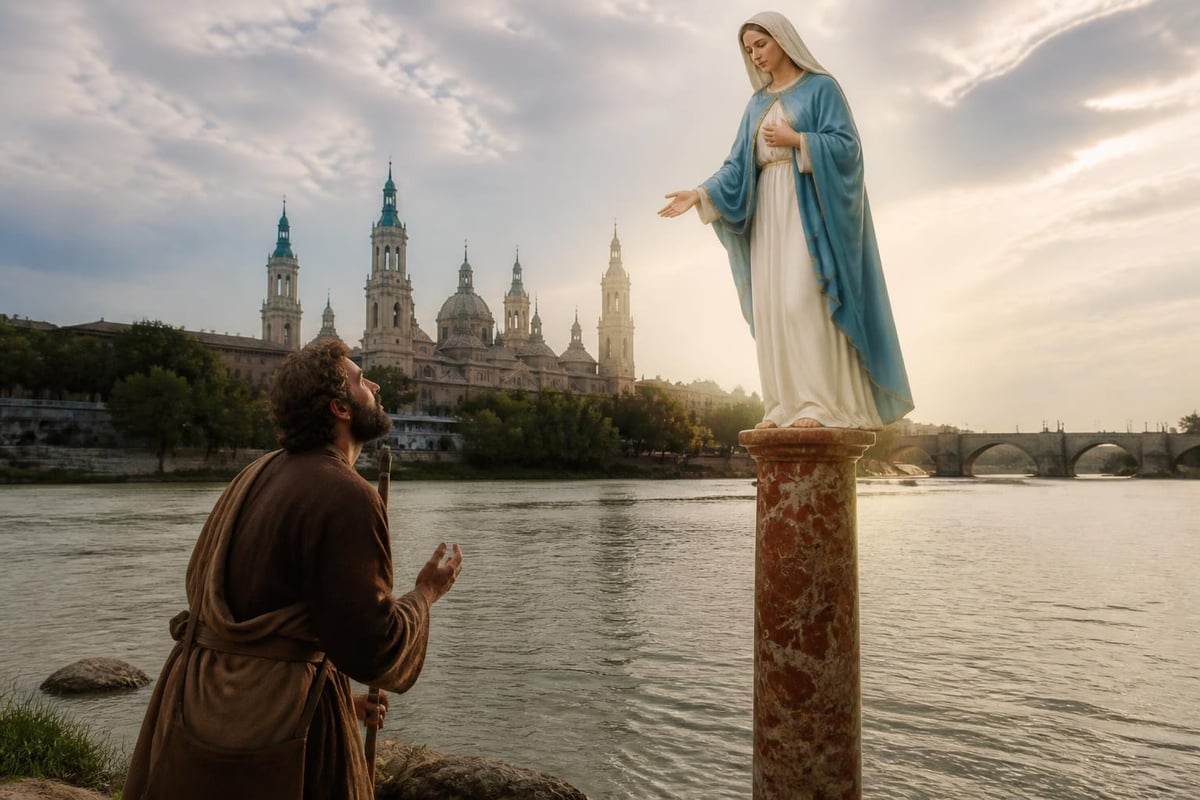
According to sacred tradition, the apparition of our lady of pilar occurred on January 2, 40 A.D., while the Apostle James was evangelizing in the Roman province of Hispania. Discouraged by the lack of conversions and contemplating a return to Jerusalem, James prayed fervently along the banks of the Ebro River in what is now Zaragoza. During his prayer vigil, the Virgin Mary appeared to him while still living in Jerusalem, miraculously bilocating to encourage her son's apostle.
The Catholic News Agency documents this apparition as the only known instance where Mary appeared to an apostle during her earthly life. She stood atop a pillar of jasper, accompanied by angels, and instructed James to build a chapel in her honor at that precise location. The pillar itself became a tangible sign of her presence, remaining as a permanent reminder of divine intervention and maternal protection.
The Sacred Pillar and Its Significance
The jasper pillar brought by angels during the apparition serves as the physical center of devotion to our lady of pilar. This column, measuring approximately six feet tall, has remained in the Basilica of Our Lady of Pilar for nearly two millennia. Pilgrims traditionally kiss or touch the pillar through an opening in the shrine, seeking Mary's intercession and blessing.
Physical characteristics of the sacred pillar:
- Made of jasper stone
- Approximately 1.77 meters in height
- Covered with bronze and silver casing for protection
- Small exposed section for veneration
- Never moved from its original location
The permanence of this pillar symbolizes the enduring nature of faith and Mary's constant presence in the lives of believers. Unlike other apparition sites where only spiritual memories remain, the physical pillar provides a concrete connection to the miraculous event.
Brought to you by Journeys of Faith, founded by Bob and Penny Lord. We are an Augustinian Secular Institute and Cyber Apostles. Our mission is evangelization through media.
The Basilica and Worldwide Devotion
The Basilica-Cathedral of Our Lady of the Pillar in Zaragoza stands as one of Christianity's most important Marian shrines. The current baroque structure, completed in the 18th century, replaced earlier chapels built on the site where our lady of pilar first appeared. This architectural masterpiece features eleven domes, four towers, and houses remarkable artwork including frescoes by Francisco Goya.
Annual Celebrations and Traditions
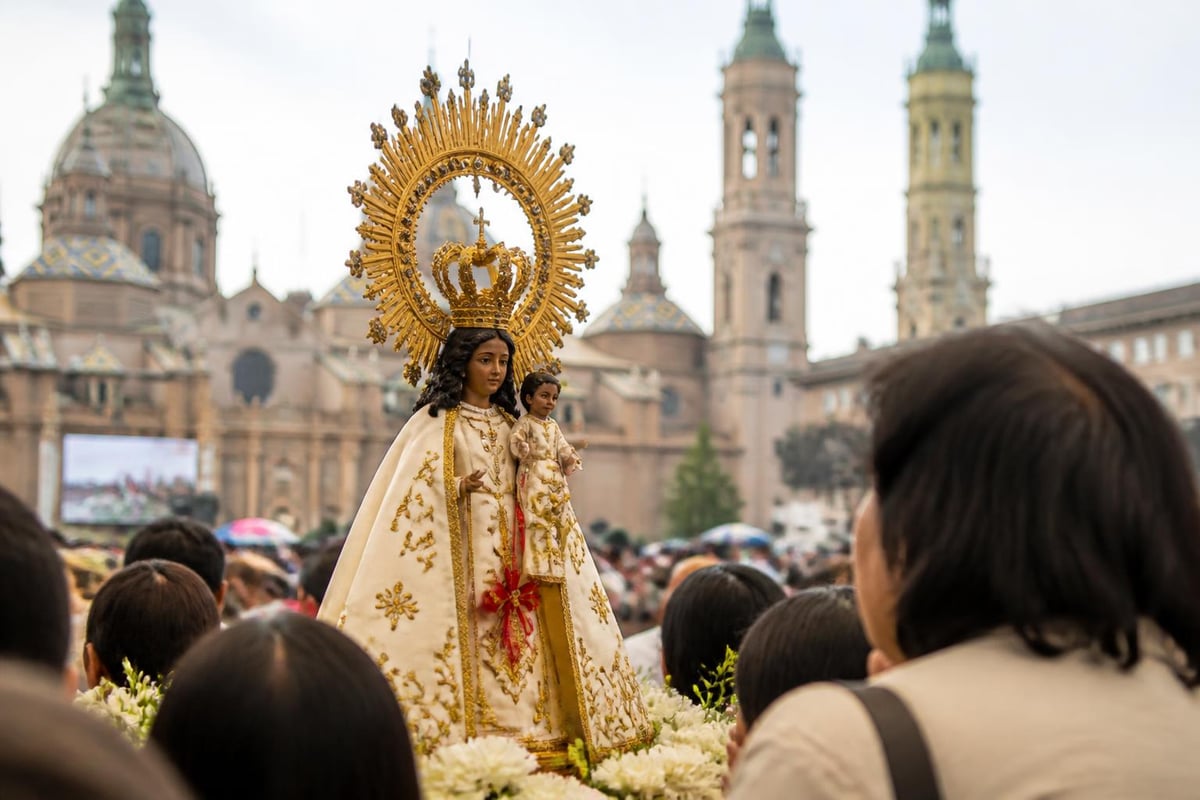
October 12th marks the feast day of our lady of pilar, celebrated with particular fervor in Spain and Spanish-speaking countries. Thousands participate in devotions including the traditional flower offering where pilgrims create massive floral arrangements around the pillar.
The celebration encompasses multiple elements:
- Novena Masses leading up to the feast day
- Processions through the streets of Zaragoza
- Traditional flower offerings forming a monumental display
- Cultural performances celebrating Spanish heritage
- Special liturgies attended by civic and religious leaders
The connection between our lady of pilar and the discovery of America adds another dimension to her feast day. Christopher Columbus sailed from Spain on the feast of Our Lady of Pilar in 1492, and the celebration in Jerusalem honors both the Marian devotion and this historical milestone.
Global Spread of the Devotion
The devotion to our lady of pilar extended far beyond Spain through missionary work and Spanish colonization. Churches, schools, and communities worldwide bear her name, creating a global network of faithful devoted to this Marian title.
Our Lady of Pilar in the Philippines
The Philippines celebrates the feast with particular enthusiasm, reflecting centuries of Spanish influence and deep Catholic faith. Filipino communities established numerous parishes under her patronage, and feast day celebrations in Manila feature elaborate novenas, processions, and community gatherings.
Indian Catholic Heritage
In Goa, India, the devotion to our lady of pilar established itself through Portuguese missionaries. The Pilar Fathers, a religious congregation founded in the 17th century, took her as their patroness. The Seminary of Our Lady of Pilar in Goa became a center for theological education and spiritual formation, training countless priests who spread the faith throughout Asia.
| Region | Establishment | Key Features | Annual Celebrations |
|---|---|---|---|
| Spain | 40 A.D. | Original basilica, sacred pillar | October 12, flower offerings |
| Philippines | 16th century | Multiple parishes, strong devotion | Novenas, processions |
| India (Goa) | 17th century | Seminary, Pilar Fathers | Traditional feasts |
| Latin America | 16th-18th centuries | Numerous shrines | Regional variations |
Theological Significance and Spiritual Lessons
The apparition of our lady of pilar carries profound theological meaning beyond its historical importance. Mary's appearance while still living demonstrates her unique role in salvation history and her powerful intercessory capacity even before her assumption into heaven.
Key theological insights:
- Mary's universal motherhood extends to all who labor for the Gospel
- Divine encouragement comes precisely when discouragement threatens faith
- Physical reminders of spiritual realities strengthen human faith
- Apostolic mission receives heavenly confirmation and support
- Eucharistic devotion connects to Marian apparitions through chapel building
The instruction to build a chapel points toward the centrality of the Eucharist in Catholic worship. Our lady of pilar directed James to create a sacred space where the faithful could gather for Mass, emphasizing that Marian devotion always leads to deeper union with Christ.
Lessons for Modern Evangelization
The encounter between our lady of pilar and Saint James offers timeless wisdom for contemporary evangelizers. James faced discouragement in his missionary work, receiving few converts despite his best efforts. Mary's appearance reminded him that success in evangelization belongs to God, while human instruments need only remain faithful.
For those engaged in sharing the faith today, the story provides several practical applications:
- Persevere through difficulty without measuring success by immediate results
- Seek divine assistance through prayer when obstacles seem insurmountable
- Trust in Mary's intercession as a powerful source of strength
- Build communities of worship as foundations for lasting conversion
- Remember God's presence even when circumstances appear discouraging
Catholics seeking to deepen their devotion to Mary and learn from the saints' examples find rich resources in comprehensive guides to canonized saints, which illuminate the connections between various devotions and spiritual practices.
Iconography and Artistic Representations
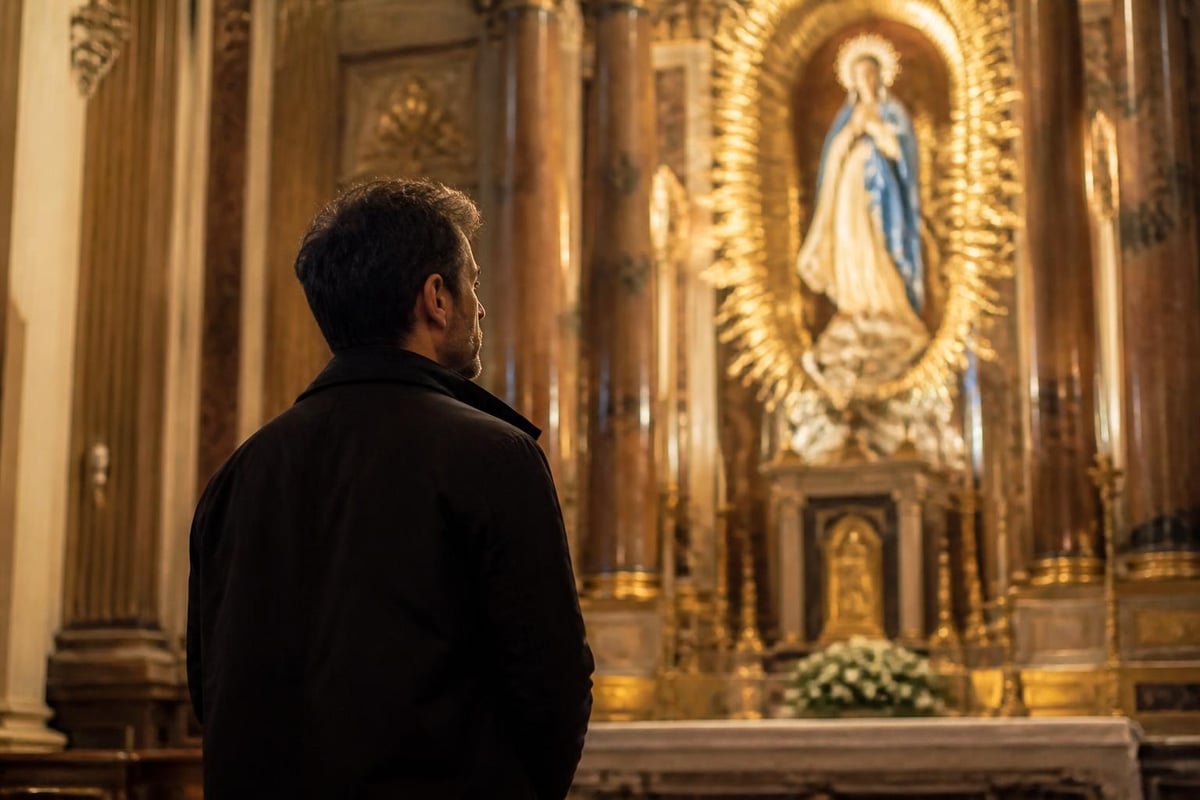
Artistic depictions of our lady of pilar follow specific traditional elements that make the image immediately recognizable. The Virgin appears standing on a pillar, often wearing a crown and holding the infant Jesus. Angels typically surround her, and the pillar itself features prominently in the composition.
Traditional Elements in Images
| Element | Symbolism | Artistic Variations |
|---|---|---|
| Jasper Pillar | Firmness of faith | Heights and proportions vary |
| Crown | Queen of Heaven | Different styles across regions |
| Infant Jesus | Christ-centered devotion | Various positions and poses |
| Angels | Heavenly origin | Numbers range from two to many |
| Mantle | Maternal protection | Colors and patterns differ |
The iconography evolved over centuries while maintaining core elements that preserve the apparition's essential characteristics. Spanish baroque art particularly influenced representations of our lady of pilar, creating ornate images that emphasize both majesty and maternal tenderness.
Prayers and Devotional Practices
Specific prayers dedicated to our lady of pilar have developed throughout the centuries, asking for her intercession in various needs. These prayers often reference the pillar as a symbol of strength and stability in faith.
Common devotional practices include:
- Reciting novenas before her feast day
- Making pilgrimages to Zaragoza or local shrines
- Wearing medals depicting our lady of pilar
- Praying for missionary vocations and evangelization
- Seeking intercession for strength during trials
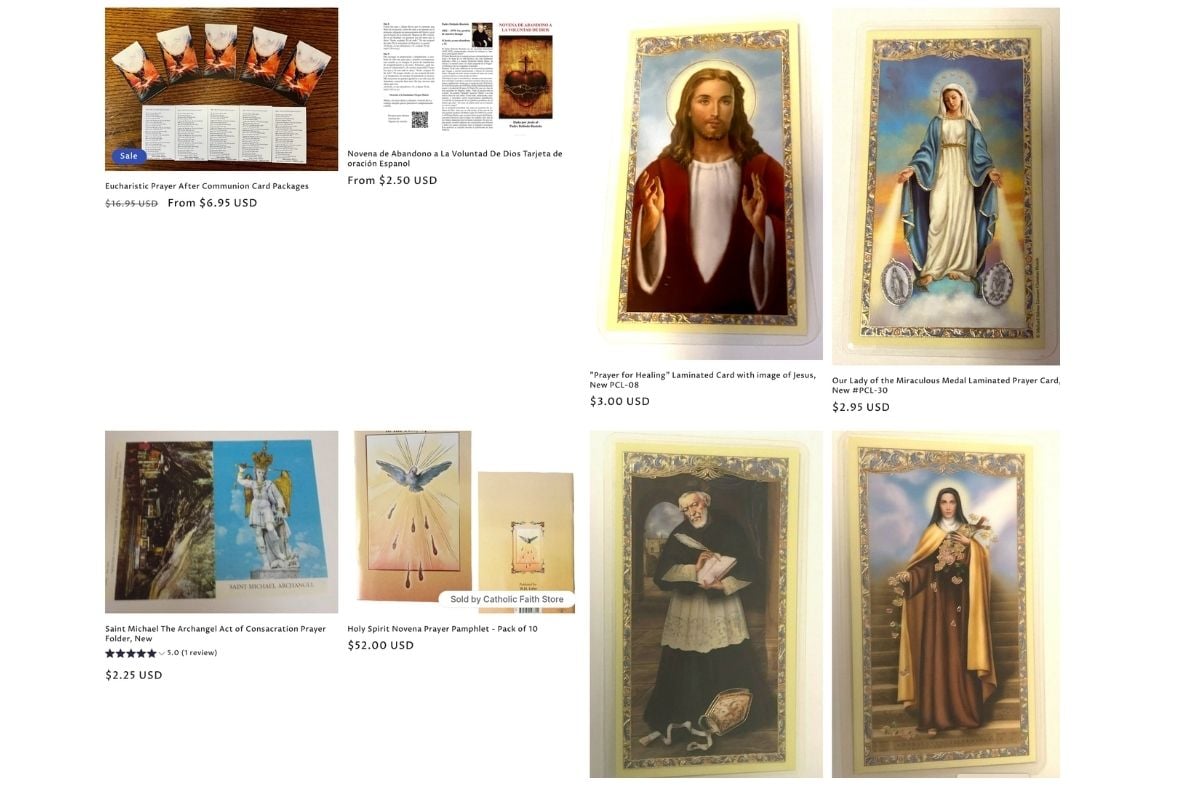
The availability of prayer cards and novenas makes these devotions accessible to Catholics worldwide, allowing them to carry tangible reminders of Mary's maternal care and powerful intercession. These prayer cards serve as portable connections to our lady of pilar, offering comfort and spiritual strength throughout daily life.
Many faithful combine devotion to our lady of pilar with other Marian prayers such as the Rosary, creating a rich tapestry of spiritual practices that honor the Blessed Mother under various titles.
Cultural Impact and National Identity
In Spain, our lady of pilar represents far more than religious devotion; she symbolizes national identity and cultural heritage. The Spanish Civil Guard adopted her as their patroness, and her image appears throughout Spanish-speaking cultures as a unifying symbol of faith and tradition.
Connection to Hispanic Heritage
The spread of Spanish language and culture throughout the Americas carried devotion to our lady of pilar to new continents. Cities, provinces, and institutions bear her name from Argentina to the Philippines, creating a global community united by this shared devotion.
The feast day celebrations often blend religious observance with cultural festivals, featuring traditional music, dance, and cuisine. This integration of faith and culture demonstrates how Marian devotion enriches community life and preserves cultural identity across generations.
Miracles and Testimonies
Throughout history, numerous miracles have been attributed to the intercession of our lady of pilar. These range from physical healings to spiritual conversions, each testimony strengthening devotion and inspiring greater faith among believers.
Categories of reported miracles:
- Physical healings after touching the sacred pillar
- Protection during warfare and national crises
- Conversions of skeptics and non-believers
- Guidance in vocational discernment
- Family reconciliations and restored relationships
Saint for a Minute provides additional biographical information about the apparition and subsequent spread of devotion, documenting how our lady of pilar has touched countless lives across twenty centuries.
The testimonies emphasize Mary's role as mother and intercessor, highlighting her constant availability to those who seek her help. These accounts inspire confidence in approaching Mary with all needs, trusting in her maternal care and powerful intercession before her divine Son.
Contemporary Relevance and Practice
In 2026, devotion to our lady of pilar remains vibrant and relevant, addressing contemporary spiritual needs while maintaining ancient traditions. Modern pilgrims continue traveling to Zaragoza, while those unable to make the journey connect through digital resources and local communities.
The challenges facing the Church today mirror those encountered by Saint James: discouragement in evangelization, cultural resistance to the Gospel, and the need for divine encouragement. Our lady of pilar's message to James speaks directly to these modern concerns, offering hope and supernatural assistance to contemporary evangelizers.
Digital Age Devotion
Technology has transformed how Catholics engage with Marian devotion. Virtual tours of the Basilica of Our Lady of Pilar allow worldwide participation in liturgies and devotions. Social media communities share prayers, testimonies, and images, creating global networks of faithful devoted to our lady of pilar.
Modern expressions of devotion:
- Live-streamed Masses from Zaragoza
- Digital prayer groups and communities
- Online novenas and devotional resources
- Virtual pilgrimage experiences
- Educational content about apparition history
These digital tools complement rather than replace traditional practices, offering new pathways for encountering our lady of pilar while preserving the essence of centuries-old devotion.
Integration with Catholic Spirituality
Devotion to our lady of pilar integrates seamlessly with broader Catholic spiritual practices. The emphasis on building a chapel for Eucharistic worship demonstrates how Marian devotion directs believers toward Christ and the sacraments.
The connection between our lady of pilar and missionary work also highlights evangelization as central to Catholic identity. Mary's encouragement to James reminds all Catholics of their baptismal call to share the faith, supporting this mission through prayer and action.
| Spiritual Practice | Connection to Our Lady of Pilar | Practical Application |
|---|---|---|
| Eucharistic Adoration | Chapel building instruction | Visit churches dedicated to her |
| Missionary Work | Encouragement of Saint James | Support evangelization efforts |
| Prayer in Difficulty | Mary's timely appearance | Seek intercession during trials |
| Community Worship | Gathering place creation | Join parish celebrations |
Through exploring various Catholic resources, believers can deepen their understanding of how Marian devotion enriches overall spiritual life and strengthens commitment to Christ and His Church.
The devotion to our lady of pilar offers Catholics a powerful example of Mary's maternal care and her active role in supporting the Church's mission throughout history. From the first-century apparition to Saint James through contemporary celebrations worldwide, this Marian title continues inspiring faith and encouraging evangelization. Journeys of Faith provides extensive resources for deepening your understanding of our lady of pilar and other aspects of Catholic faith, including books, prayer cards, and media content that bring the lives of saints and Marian devotions to life. Explore Journeys of Faith online store with thousands of Catholic items at https://journeysoffaith.com/collections. Our unique mega search engine at https://journeysoffaith.com/search is linked to hundreds of Catholic shops and stores. Get the Journeys of Faith NEW App for iPhone or Android by searching for Journeys of Faith or visiting https://journeysoffaith.com/pages/download-our-app. Chat with us anytime at https://chatting.page/mjxs9aerrtgm3lmpndlcepmbyosntrjn. We need your help to reach more souls-please make a donation at https://journeysoffaith.com/pages/donate.
