

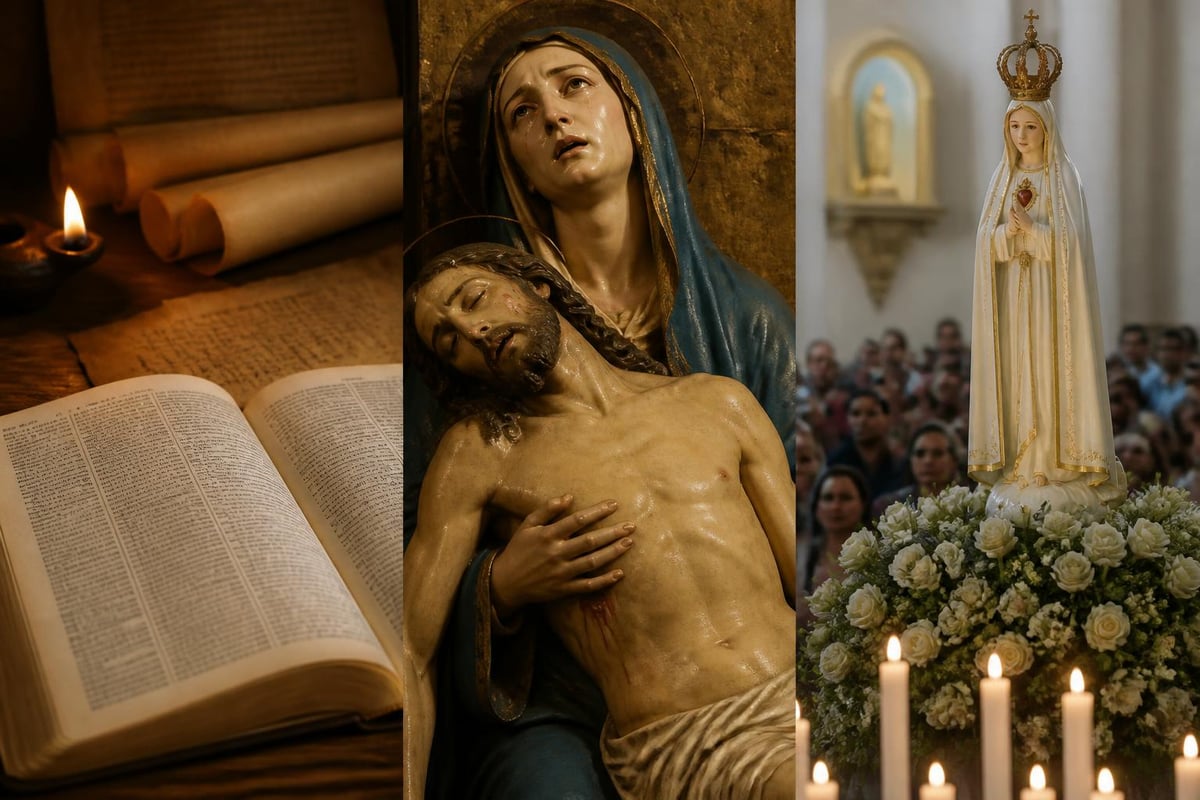
The devotion to our lady of tears represents one of the most emotionally powerful and theologically profound expressions of Marian piety in the Catholic tradition. This title honors the Blessed Virgin Mary in her deep sorrow and compassion, acknowledging the tears she shed throughout her earthly life-especially during the Passion of her Son, Jesus Christ. Understanding this devotion requires exploring its historical roots, documented miracles, and the spiritual practices that have sustained it through centuries of Catholic faith.
The Historical Origins of Our Lady of Tears
The veneration of our lady of tears finds its foundation in Sacred Scripture and early Christian tradition. The Gospel of Luke prophetically records Simeon's warning to Mary that "a sword will pierce through your own soul" (Luke 2:35), foreshadowing the sorrows she would endure. This prophecy became reality at the foot of the Cross, where Mary witnessed her innocent Son's brutal crucifixion.
Throughout Church history, the faithful have recognized Mary's tears as expressions of her maternal love and deep compassion for humanity. The devotion gained particular prominence during the Middle Ages when theologians and mystics reflected extensively on Mary's seven sorrows. These sorrows traditionally include the prophecy of Simeon, the flight into Egypt, the loss of Jesus in the temple, meeting Jesus on the way to Calvary, the crucifixion, the taking down of Jesus from the Cross, and His burial.
Early Documented Apparitions and Miracles
Several significant events throughout history have strengthened devotion to our lady of tears. One of the most remarkable occurred in 1796 in Campocavallo, Italy, when a painted image of the Madonna reportedly shed tears. This event sparked widespread religious fervor and ecclesiastical investigation.
The Our Lady of Tears devotion received particular attention following documented lacrimation events-instances where images or statues of Mary appeared to weep. These phenomena have been reported across multiple centuries and continents, each carefully examined by Church authorities before receiving official recognition.
The Syracuse Miracle of 1953
Perhaps the most thoroughly documented and scientifically examined case of our lady of tears occurred in Syracuse, Italy, in August 1953. A small plaster plaque depicting the Immaculate Heart of Mary, owned by newlyweds Angelo and Antonina Iannuso, reportedly began weeping human tears. The 1953 Syracuse event attracted immediate attention from medical professionals, chemists, and Church officials.
Brought to you by Journeys of Faith, Founded by Bob and Penny Lord. We are an Augustinian Secular Institute-Cyber Apostles. Our Mission is Evangelization through Media.
Scientific Investigation and Church Approval
The tears were collected and analyzed by multiple laboratories, which confirmed they were genuine human tears with the correct chemical composition. Key findings included:
- Chemical Analysis: Laboratory tests verified the liquid contained sodium chloride, proteins, and other components consistent with human tears
- Medical Examination: Doctors witnessed the lacrimation firsthand and certified it could not be explained naturally
- Ecclesiastical Approval: After thorough investigation, Archbishop Ettore Baranzini officially recognized the supernatural nature of the event in 1954
| Aspect | Details | Verification |
|---|---|---|
| Duration | August 29 - September 1, 1953 | Multiple witnesses daily |
| Chemical Composition | Human tears with correct protein levels | Independent laboratory analysis |
| Witnesses | Thousands, including skeptics | Documented testimonies |
| Church Recognition | Approved December 1953 | Archbishop's official declaration |
This miraculous event led to the construction of the Sanctuary of Our Lady of Tears in Syracuse, which was consecrated by Pope John Paul II in 1994. The sanctuary stands as a permanent testament to this extraordinary manifestation of our lady of tears.
Apparitions to Sister Amalia in Brazil
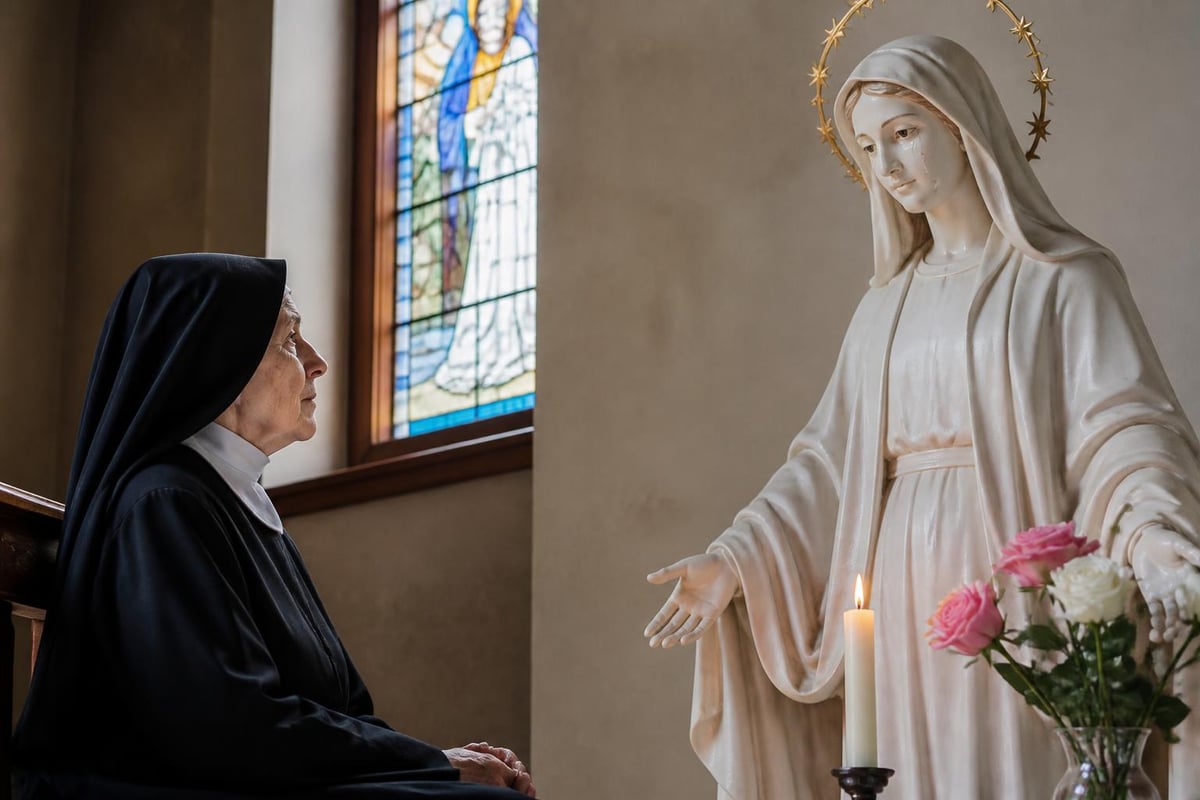
Another significant manifestation of our lady of tears occurred through apparitions to Sister Amalia Aguirre in Brazil beginning in 1929. During these visions, the Blessed Virgin appeared weeping and expressed her sorrow over humanity's sins and the lack of devotion to her Immaculate Heart. She revealed specific prayers and devotions meant to console her sorrowful heart.
The messages emphasized:
- Reparation for sins committed against the Immaculate Heart
- Devotion and consecration to Mary's Sorrowful and Immaculate Heart
- Specific prayers including the Rosary of Our Lady of Tears
- First Saturday devotions to honor Mary's maternal heart
Sister Amalia's experiences received ecclesiastical approval, and the devotional practices she promoted have spread throughout the Catholic world. The messages emphasized that Mary's tears are not signs of despair but expressions of maternal concern and an invitation to conversion and holiness.
Devotional Practices Honoring Our Lady of Tears
The Catholic faithful have developed several devotional practices to honor our lady of tears and respond to her maternal sorrow with filial love and reparation. These practices unite believers with Mary's suffering and deepen their understanding of Christ's Passion.
The Rosary of Our Lady of Tears
The Rosary of Our Lady of Tears represents a distinct devotion that meditates specifically on Mary's sorrows. This prayer form includes special meditations on:
- Mary's tears at the prophecy of Simeon
- Her tears during the flight into Egypt
- Her tears searching for the lost Jesus
- Her tears on the road to Calvary
- Her tears at the crucifixion and burial
Each decade invites the faithful to console Mary's Immaculate Heart through prayer, sacrifice, and acts of reparation. The rosary includes promises of special graces for those who pray it with devotion, particularly increased compassion for others' suffering and deeper union with Christ's redemptive work.
The Chaplet of Our Lady of Tears
The Chaplet of Our Lady of Tears offers another powerful devotional practice. Prayed on traditional rosary beads, this chaplet focuses on consoling Mary through meditation on her seven sorrows. The structure includes specific prayers on each bead, building a rhythm of meditation and petition.
Devotees of this chaplet report:
- Increased compassion for those who suffer
- Deeper understanding of redemptive suffering
- Spiritual consolation during personal trials
- Greater devotion to the Blessed Sacrament
- Renewed commitment to avoiding sin
Those seeking to deepen their understanding of Marian devotion can explore resources through the many faces of Mary collection, which examines various approved apparitions and their theological significance.
Theological Significance of Mary's Tears
Understanding our lady of tears requires grasping the theological depth behind this devotion. Mary's tears are not merely expressions of maternal grief but participate in the redemptive work of Christ. As the New Eve, Mary's "yes" at the Annunciation reversed Eve's disobedience, and her tears at Calvary represent her continued participation in salvation history.
Mary as Coredemptrix
Catholic theology recognizes Mary's unique role in redemption, though always subordinate to and dependent upon Christ's saving work. Her tears represent:
Active Participation: Mary freely chose to stand at the foot of the Cross, uniting her maternal suffering with Christ's redemptive sacrifice
Intercession: Her tears continue as heavenly intercession for all her spiritual children
Mediation of Grace: Through her Immaculate Heart, graces flow to those who seek her maternal care
Model of Faith: Her tears teach believers how to remain faithful during trials and suffering
This theological understanding connects our lady of tears with broader Catholic teaching on Mary's role in salvation. Resources exploring Catholic saints and their devotions provide additional context for understanding how Mary's example inspired countless holy men and women throughout Church history.
Modern Manifestations and Continuing Devotion
The devotion to our lady of tears continues to manifest in the contemporary Church through various means. Modern pilgrimage sites, approved apparitions, and personal testimonies demonstrate the enduring relevance of this ancient devotion.
Pilgrimage Sites and Sanctuaries
Several locations worldwide have become centers for devotion to our lady of tears:
| Location | Significance | Year Established |
|---|---|---|
| Syracuse, Italy | Site of 1953 weeping statue | Sanctuary consecrated 1994 |
| Portland, Oregon | Grotto dedicated to Our Lady of Sorrows | Early 20th century |
| Silver City, Idaho | Historic Our Lady of Tears church | 1867 |
| Campinas, Brazil | Site of apparitions to Sister Amalia | 1929 |
These sanctuaries attract thousands of pilgrims annually, many reporting spiritual renewals, conversions, and even physical healings. The faithful come seeking consolation in their own sorrows and offering reparation to Mary's Immaculate Heart.
Integration with Eucharistic Devotion
The devotion to our lady of tears naturally complements Eucharistic adoration and devotion. Mary's presence at Calvary, where the first Eucharist was instituted at the Last Supper and consummated on the Cross, connects her tears intimately with the Blessed Sacrament. Many faithful combine their devotion to our lady of tears with Eucharistic adoration, recognizing that Mary's greatest consolation comes from souls who receive her Son worthily in Holy Communion.
This connection between Marian devotion and Eucharistic worship enriches both practices. The faithful who honor our lady of tears often develop deeper reverence for the Real Presence of Christ in the Eucharist. For those seeking to deepen their Eucharistic faith, exploring resources on Eucharistic miracles can provide powerful testimonies of Christ's continued presence in the sacrament.
Responding to Mary's Tears: A Call to Holiness
The message of our lady of tears ultimately calls the faithful to conversion, holiness, and reparation. Mary's tears are not meant to induce guilt but to awaken compassion and inspire spiritual renewal. Her maternal heart weeps over souls lost to sin, yet she offers the remedy: devotion to her Immaculate Heart and return to her Son.
Practical Ways to Honor Our Lady of Tears
Catholics can respond to Mary's maternal tears through concrete spiritual practices:
- Daily Rosary: Meditating on the Sorrowful Mysteries with special attention to Mary's participation in the Passion
- First Saturday Devotions: Following Our Lady of Fatima's request for monthly reparation
- Acts of Reparation: Making sacrifices and offering prayers to console Mary's Immaculate Heart
- Frequent Confession: Avoiding sin and seeking reconciliation regularly
- Eucharistic Adoration: Spending time in prayer before the Blessed Sacrament
- Corporal and Spiritual Works of Mercy: Serving Christ in the suffering members of His Body
Those seeking structured prayer resources can find valuable materials through prayer card collections that support various Marian devotions, including those honoring our lady of tears.
The Promises and Graces of This Devotion
Devotion to our lady of tears carries special graces and promises for those who practice it with sincere hearts. These benefits flow from Mary's maternal intercession and her unique position as Mother of the Church. The faithful who honor our lady of tears report receiving:
- Consolation in suffering: Mary comforts those who turn to her in their own tears and trials
- Strength in temptation: Her maternal protection shields devotees from spiritual dangers
- Growth in compassion: Meditating on Mary's tears develops empathy for others' suffering
- Conversion of heart: Many testimonies describe profound spiritual transformations
- Protection at death: The promise of Mary's presence at the hour of death brings peace
Personal Testimonies Through the Ages
Throughout Church history, countless saints and faithful Catholics have testified to graces received through devotion to our lady of tears. From medieval mystics to modern converts, the common thread remains Mary's maternal care for those who seek her intercession. These testimonies, documented in Church archives and hagiographical accounts, demonstrate the lasting impact of this devotion.
Exploring inspiring stories from lives of the saints reveals how many holy men and women maintained deep devotion to Mary's sorrows, finding in her tears a source of strength and consolation during their own trials.
Contemporary Relevance in Turbulent Times
The devotion to our lady of tears holds particular relevance for contemporary Catholics navigating modern challenges. In an era marked by secularization, moral relativism, and cultural hostility to faith, Mary's tears remind believers of heaven's concern for earthly affairs. Her maternal weeping demonstrates that suffering, when united with Christ's Passion, becomes redemptive rather than meaningless.
Mary's Tears for Modern Society
The messages associated with our lady of tears often emphasize concerns particularly relevant to modern life:
Family breakdown: Mary weeps over the dissolution of marriages and fragmentation of families
Culture of death: Her tears flow for lives lost to abortion, euthanasia, and violence
Loss of faith: She mourns souls who abandon the Church and sacramental life
Moral confusion: Mary's Immaculate Heart grieves over the rejection of God's law
Persecution of believers: Her maternal compassion extends to Christians suffering worldwide
Yet these messages always come with hope. Mary's tears are accompanied by promises of victory for those who remain faithful, practice devotion to her Immaculate Heart, and trust in God's mercy. The faithful are called not to despair but to active engagement in spiritual warfare through prayer, sacrifice, and evangelization.
Distinguishing Authentic Devotion from Superstition
As with all private revelations and devotional practices, the Church exercises careful discernment regarding claims related to our lady of tears. Not every reported apparition or weeping statue receives ecclesiastical approval. The faithful must distinguish between authentic devotion grounded in Church teaching and superstitious practices or unapproved phenomena.
Criteria for Authentic Marian Devotion
The Second Vatican Council's document Lumen Gentium provides guidance for authentic Marian devotion. Legitimate veneration of our lady of tears should:
- Lead to Christ: All Marian devotion ultimately directs believers toward deeper relationship with Jesus
- Conform to Church teaching: Practices must align with Catholic doctrine and magisterial guidance
- Promote virtue: True devotion inspires holiness, charity, and spiritual growth
- Respect ecclesiastical authority: The faithful await and accept Church judgments on private revelations
- Avoid excess: Devotion remains balanced, avoiding emotional manipulation or sensationalism
| Authentic Devotion | Problematic Practice |
|---|---|
| Leads to deeper faith in Christ | Becomes an end in itself |
| Inspires moral conversion | Focuses only on extraordinary phenomena |
| Respects Church authority | Dismisses ecclesiastical guidance |
| Promotes Scripture and sacraments | Replaces liturgical life |
| Encourages charity toward others | Breeds spiritual elitism |
The Church's careful approach protects the faithful from deception while preserving legitimate devotional expressions. Catholics honoring our lady of tears should ensure their practices receive proper ecclesiastical approval and deepen rather than replace their sacramental life.
Resources for Deepening This Devotion
For those seeking to develop or strengthen their devotion to our lady of tears, numerous resources exist within the Catholic tradition. Books, prayer cards, chaplets, and educational materials help the faithful understand and practice this devotion authentically. Quality Catholic media companies provide reliable resources grounded in Church teaching and approved devotions.
Exploring comprehensive Catholic book collections offers opportunities to deepen understanding of Marian devotion within the broader context of Catholic spirituality and saint veneration. These resources help believers integrate devotion to our lady of tears with their overall spiritual life rather than treating it as isolated or disconnected from other aspects of faith.
The devotion to our lady of tears invites believers into profound solidarity with Mary's maternal heart and deeper participation in Christ's redemptive work. Whether through the Rosary, the Chaplet, or simple acts of reparation, this ancient devotion continues offering spiritual fruit to those who practice it with sincere hearts. Journeys of Faith supports Catholics in their spiritual journey through quality educational resources, books, prayer materials, and media that promote authentic devotion to the Eucharist, Mother Mary, and the saints.
Resources:
- Explore Journeys of Faith Online store with thousands of Catholic Items at https://journeysoffaith.com/collections
- Our Unique Mega Search Engine https://journeysoffaith.com/search is linked to hundreds of Catholic Shops and Stores
- Get the Journeys of Faith NEW App for iPhone or Android-Search for Journeys of Faith or go to https://journeysoffaith.com/pages/download-our-app
- Chat with us anytime https://chatting.page/mjxs9aerrtgm3lmpndlcepmbyosntrjn
- We need your help to reach more souls. Please Make a Donation https://journeysoffaith.com/pages/donate
