

Aviation combines human ingenuity with extraordinary courage, taking us to heights that once seemed impossible. For Catholic pilots and aviation professionals, this journey skyward is accompanied by a profound spiritual dimension. The patron saint of pilots represents a powerful tradition of seeking heavenly protection during flight, connecting modern aviation with centuries-old practices of invoking saints for guidance and safety. Understanding these holy protectors offers comfort to those who navigate the skies and inspires deeper faith in God's providential care.
The Primary Patron Saints of Aviation
The Catholic Church recognizes several saints as special protectors of those who fly. Each patron saint of pilots brings unique attributes and historical significance to their role.
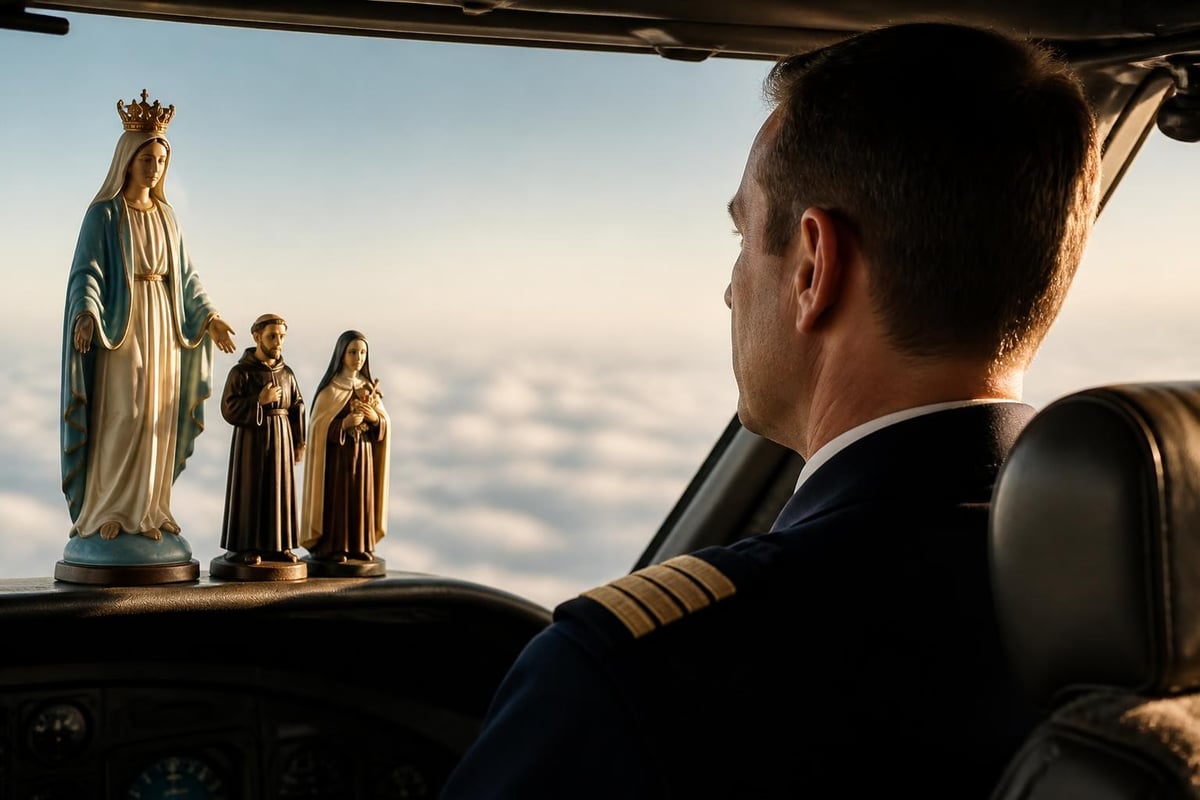
Our Lady of Loreto holds a distinguished position as the patroness of aviators, officially designated by Pope Benedict XV in 1920. This title stems from the miraculous translation of the Holy House of Nazareth, where the Annunciation took place, believed to have been transported by angels to Loreto, Italy. The association between Our Lady of Loreto and aviation reflects the miraculous nature of flight itself and the angelic assistance in the legendary journey of the Holy House.
Saint Joseph of Cupertino serves as another primary patron saint of pilots, renowned for his documented levitations during prayer. Born Giuseppe Desa in 1603, this humble Franciscan friar experienced numerous episodes of ecstatic flight witnessed by credible observers, including cardinals and physicians. His supernatural ability to defy gravity made him a natural choice as intercessor for those who trust their lives to aircraft.
Saint Thérèse of Lisieux, the Little Flower, also protects aviators despite never having flown during her earthly life. Her spiritual doctrine emphasizing trust in God's providence and her powerful intercession from heaven have made her a beloved patron saint of pilots worldwide.
Saint Joseph of Cupertino: The Flying Friar
The life of Saint Joseph of Cupertino presents one of the most extraordinary examples of mystical phenomena in Church history. Despite struggling with learning difficulties and being rejected by multiple religious communities, Joseph's profound holiness manifested in remarkable ways.
His levitations occurred frequently during Mass, sometimes lasting hours. Witnesses documented over seventy instances of these supernatural flights. The documented evidence of St. Joseph of Cupertino's levitations includes testimonies from skeptical observers who investigated these phenomena rigorously.
Key attributes that make him patron saint of pilots:
- Supernatural ability to fly through divine grace
- Humility despite extraordinary gifts
- Complete trust in God's providence
- Intercession for students and test-takers (many pilots)
- Protection during dangerous moments
Aviation professionals often carry medals of Saint Joseph of Cupertino in their flight bags, invoking his prayers before takeoff. His feast day, September 18, is observed with special significance in aviation communities worldwide.
Brought to you by Journeys of Faith, founded by Bob and Penny Lord. We are an Augustinian Secular Institute, Cyber Apostles. Our Mission is Evangelization through Media.
Our Lady of Loreto: Queen of the Skies
The designation of Our Lady of Loreto as the official patron saint of pilots in 1920 marked a pivotal moment in Catholic aviation history. The connection between Mary and flight stems from the miraculous tradition surrounding the Holy House of Nazareth.
According to historical accounts, when Nazareth fell to invaders in 1291, angels transported the house where Mary received the Annunciation first to Croatia, then finally to Loreto, Italy, in 1294. While historical research suggests the house may have been physically dismantled and reconstructed by the Angeli family, the spiritual significance of Our Lady of Loreto's protection of aviators remains profound.
| Aspect | Significance for Aviators |
|---|---|
| Miraculous Translation | Symbol of divine protection during journeys through the air |
| Holy House | Represents safe return home after flights |
| Angelic Assistance | Invocation of guardian angels during flight |
| Maternal Care | Mary's intercession for pilots' safety |
The Basilica of the Holy House in Loreto has become a pilgrimage destination for pilots, flight crews, and aviation personnel seeking Our Lady's blessing and protection.
Prayers to Our Lady of Loreto
Pilots frequently pray the Litany of Loreto before flights, invoking Mary under her various titles. A specific prayer for aviators asks Our Lady of Loreto to watch over all who travel through the skies, protecting them from danger and guiding them safely to their destinations.
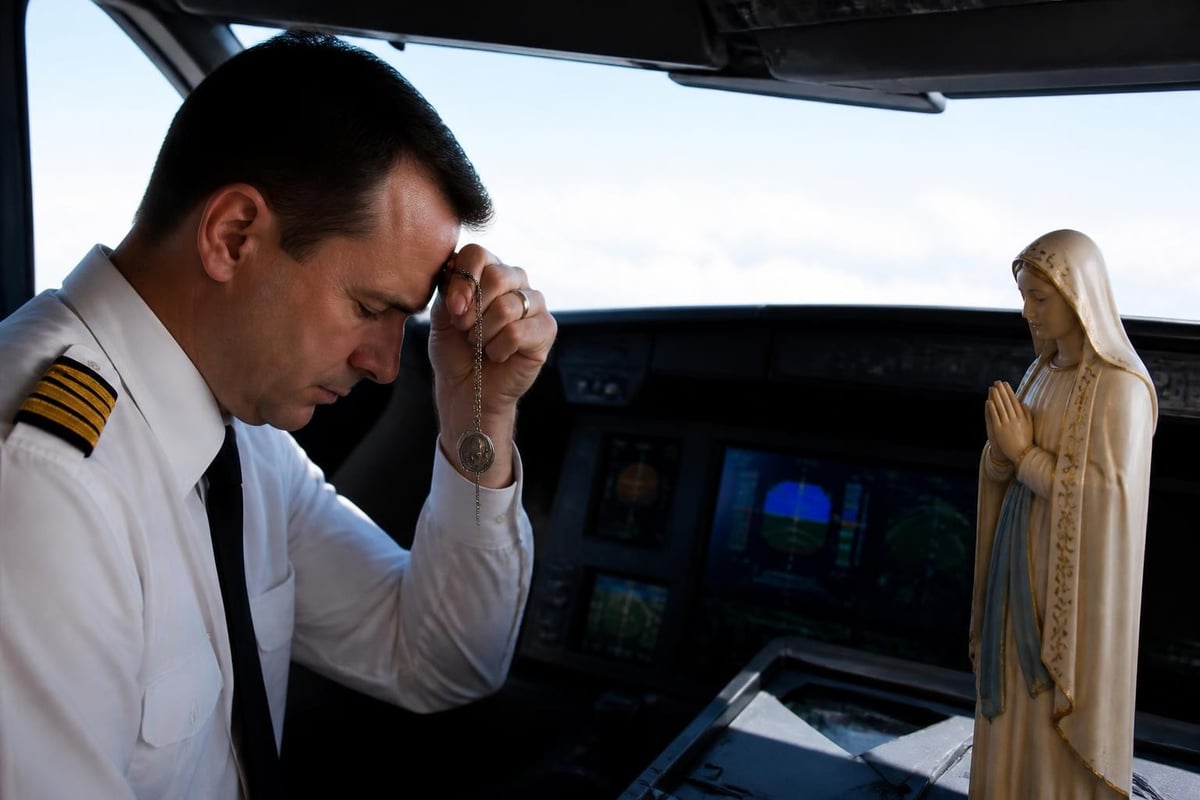
Many Catholic pilots maintain small statues or images of Our Lady of Loreto in their cockpits, creating a visible reminder of her maternal care. This practice echoes the broader Catholic tradition of seeking saintly intercession during potentially dangerous activities.
Saint Christopher: Traditional Protector of Travelers
While not exclusively designated as patron saint of pilots, Saint Christopher's protection extends to all travelers, including those who journey by air. His legendary status as the bearer of Christ across dangerous waters translates naturally to modern transportation.
The tradition of Saint Christopher medals remains strong among pilots, with many wearing them or affixing them to instrument panels. His intercession covers the broader category of travel safety, encompassing the spiritual and physical dangers that pilots may encounter.
Reasons pilots invoke Saint Christopher:
- Historical protection of all who travel
- Symbol of carrying precious cargo (passengers) safely
- Intercession against accidents and mechanical failures
- Spiritual strength during challenging flights
- Traditional Catholic devotion spanning centuries
Despite some historical uncertainties about his life, the devotion to Saint Christopher continues robustly. The enduring veneration of St. Christopher demonstrates the Catholic Church's recognition that legends containing deep spiritual truths can inspire authentic faith and trust in God's protection.
Prayer Practices for Catholic Pilots
Incorporating devotion to the patron saint of pilots into daily routines strengthens faith and provides spiritual preparation for flight duties. Catholic aviation professionals maintain various prayer practices that connect their work with their faith.
Pre-Flight Prayers
Before takeoff, many pilots recite specific prayers invoking their patron saints. A common practice includes the Sign of the Cross, followed by a brief petition to Our Lady of Loreto, Saint Joseph of Cupertino, or Saint Thérèse of Lisieux for safe passage and clear judgment.
Structured prayer routine:
- Morning offering dedicating the day's flights to God
- Rosary or decade of the rosary during pre-flight preparation
- Specific invocation to patron saint of pilots
- Act of Contrition ensuring spiritual readiness
- Prayer for passengers and crew safety
Sacramental Practices
Catholic pilots often receive the Sacrament of Reconciliation regularly, recognizing that spiritual preparation enhances physical safety. Attending Mass before long flights or international assignments provides grace and strengthens resolve during challenging situations.
Many keep blessed sacramentals in their flight bags, including rosaries, medals, and prayer cards. The availability of resources from Journeys of Faith supports these devotional practices, offering prayer cards and Catholic items specifically designed for travelers and aviation professionals. Those seeking to deepen their devotion to patron saints can find inspiration and resources through the extensive collection of saints' stories and prayer materials available through Catholic media ministries.

| Sacramental | Purpose | Usage |
|---|---|---|
| Blessed Medal | Physical reminder of patron's protection | Worn or carried during all flights |
| Rosary | Contemplative prayer during layovers | Daily recitation, especially during travels |
| Holy Water | Blessing of aircraft and equipment | Applied before maiden flights or after maintenance |
| Scapular | Sign of dedication to Mary | Worn continuously under uniform |
Historical Development of Aviation Patronage
The designation of patron saints for modern professions like aviation demonstrates the Church's ongoing engagement with contemporary life. Understanding how these patronages developed reveals the wisdom of connecting ancient faith with modern challenges.
Pope Benedict XV's 1920 declaration of Our Lady of Loreto as patron saint of pilots occurred during aviation's formative years. World War I had demonstrated both the potential and peril of flight, making spiritual protection increasingly relevant for aviators.
The choice reflected theological reasoning beyond the miraculous translation tradition. Mary's role as Theotokos (God-bearer) parallels pilots' responsibility for carrying passengers safely. Her perpetual virginity symbolizes the purity and precision required in aviation. Her assumption into heaven directly connects with ascending into the skies.
Timeline of aviation patronage recognition:
- 1920: Pope Benedict XV declares Our Lady of Loreto patroness of aviators
- 1956: Feast of Our Lady of Loreto extended to universal Church
- 1963: Saint Joseph of Cupertino formally recognized for aviation workers
- Present: Multiple saints invoked by different aviation specialties
Regional Variations and Additional Patrons
Different Catholic communities emphasize various patron saints based on local traditions and historical connections. Italian aviators maintain particularly strong devotion to Our Lady of Loreto due to the shrine's location. French pilots often invoke Saint Thérèse of Lisieux, their beloved compatriot.
Military aviators sometimes seek intercession from warrior saints and military patrons, recognizing their dual role as defenders and flyers. Helicopter pilots occasionally invoke Saint Michael the Archangel, protector against evil and spiritual warrior.
Living Faith at Altitude: Testimonies and Practices
Contemporary Catholic pilots share numerous accounts of experiencing their faith powerfully while airborne. The unique perspective from cruising altitude, seeing God's creation from above, often inspires profound spiritual insights and renewed commitment to prayer.
Many describe feeling particularly close to the patron saint of pilots during challenging weather conditions or mechanical difficulties. These moments of crisis become opportunities for deeper trust and explicit invocation of heavenly protection.
Common spiritual experiences reported:
- Heightened awareness of God's majesty while above clouds
- Peaceful confidence during turbulence through prayer
- Gratitude for safe landings attributed to saintly intercession
- Sense of vocation as serving God through aviation
- Opportunities for witness to crew and passengers
Corporate Devotions
Some Catholic airline crews organize group rosaries during layovers, creating community around shared faith. Aviation chaplains serve major airports, providing sacraments and spiritual counsel to Catholic aviation workers.
Annual blessing ceremonies for aircraft fleets incorporate prayers to the patron saint of pilots, holy water aspersion, and invocation of protection for all who will fly in the aircraft throughout its service life. These ceremonies blend ancient liturgical traditions with modern technology, demonstrating faith's enduring relevance.
Pilot associations and Catholic aviation organizations maintain formal devotion to patron saints through newsletters, prayer groups, and annual commemorations on feast days. The integration of faith and profession creates a holistic approach to aviation work that recognizes both technical skill and divine providence.
Theological Foundations of Saintly Intercession
Understanding why Catholics invoke the patron saint of pilots requires examining the theological basis for saintly intercession. The communion of saints encompasses all members of Christ's Body, whether on earth, in purgatory, or in heaven.
Saints in heaven maintain awareness of earthly needs through their beatific vision and offer prayers on behalf of those still journeying toward salvation. This intercessory role does not replace Christ's unique mediation but participates in it, as all Christian prayer ultimately reaches the Father through the Son.
Core theological principles:
- Communion of Saints: Unity of all believers across heaven and earth
- Intercessory Prayer: Saints pray for us as we pray for one another
- Particular Patronage: Saints' earthly experiences inform their heavenly advocacy
- Divine Providence: God freely chooses to work through human cooperation
- Sacramental Worldview: Physical objects and practices mediate spiritual realities
The patron saint of pilots thus serves as a heavenly advocate specifically attuned to aviation challenges through their earthly experiences or miraculous associations with flight. Pilots who invoke these saints entrust themselves to proven intercessors while ultimately trusting in God's sovereign care.
Distinction from Superstition
Authentic Catholic devotion to patron saints differs fundamentally from superstition. Superstition attributes inherent power to objects or rituals apart from God. Catholic sacramentals and prayers derive any efficacy from God's free choice to work through them, not from magical properties.
Wearing a medal of the patron saint of pilots expresses faith in God's protection mediated through that saint's prayers. It does not constitute a charm guaranteeing safety regardless of the pilot's relationship with God or adherence to proper aviation procedures.
Proper devotion integrates prayer with responsible action. Catholic pilots maintain rigorous professional standards, undergo required training, and follow safety protocols precisely because they recognize these practices as cooperating with divine providence rather than replacing it.
Practical Resources for Aviation Devotion
Catholic pilots seeking to deepen their devotion to patron saints can access numerous resources designed specifically for aviation professionals and frequent travelers. These materials support regular prayer and maintain focus on spiritual preparation alongside technical preparation.
Prayer cards featuring images and prayers to the patron saint of pilots fit easily in flight bags, providing quick access during layovers or before departure. Novenas offer structured nine-day prayer programs seeking particular graces or giving thanks for safe flights.
Recommended devotional resources:
- Pocket-sized prayer books with aviation-specific prayers
- Medal sets featuring multiple patron saints of travelers
- Blessed rosaries designed for durability during frequent travel
- Mobile applications with Catholic prayers and saint biographies
- Digital subscriptions to Catholic media covering saints' lives
The extensive collection available through Catholic media ministries provides options for every preference and schedule. From brief morning prayers to comprehensive studies of saints' lives, these resources accommodate the demanding schedules aviation professionals maintain.
Many pilots establish prayer routines synchronized with their flight schedules, reciting specific prayers during pre-flight checks, at cruising altitude, and upon landing. This integration of devotion and duty sanctifies their work and maintains spiritual focus amid technical demands.
For those interested in learning more about the lives and intercession of Catholic saints, the comprehensive resources available at Journeys of Faith offer books, videos, and prayer materials that bring these holy protectors closer to daily life and work.
The Future of Aviation and Faith
As aviation technology advances, the relevance of the patron saint of pilots remains constant. Whether piloting traditional aircraft or emerging drone systems, Catholic aviation professionals face the same fundamental human need for divine protection and spiritual grounding.
Future developments in space travel may expand the concept of patron saints for aviators to include those who venture beyond Earth's atmosphere. The precedent of designating Our Lady of Loreto demonstrates the Church's ability to apply timeless spiritual wisdom to novel circumstances.
Emerging considerations for aviation patronage:
- Commercial space flight and orbital tourism
- Unmanned aerial vehicle operators and remote pilots
- Air traffic controllers and ground support personnel
- Aviation engineers and maintenance technicians
- Emergency medical flight crews
The fundamental principle underlying all patron saint designations endures: humans engaged in challenging or dangerous work benefit from the prayers of those who have gone before us in faith. The patron saint of pilots reminds aviators that their work participates in God's creative and providential action in the world.
Contemporary Catholic pilots carry forward a tradition spanning from the earliest days of flight, when brave aviators first lifted off with prayers on their lips and medals in their pockets. This continuity across generations witnesses to faith's enduring power to comfort, strengthen, and inspire those who entrust themselves to God's care while exercising human skill and courage.
The patron saint of pilots offers powerful spiritual support to all who navigate the skies, from military aviators to commercial airline captains to private pilots. Through the intercession of Our Lady of Loreto, Saint Joseph of Cupertino, and other heavenly protectors, Catholic aviation professionals maintain their connection to the communion of saints while exercising their professional responsibilities. Journeys of Faith provides extensive resources to help deepen your understanding of and devotion to the saints who protect and inspire us. Explore thousands of Catholic items, books, prayer cards, and media resources at the Journeys of Faith online store. Your support helps continue sharing the beauty of the Catholic faith with souls worldwide-please consider making a donation to support free Catholic media content across multiple platforms. Together, we can strengthen the faith that sustains us through every journey, whether earthly or heavenly.
