

The prayer of all saints stands as one of the most ancient and powerful devotions in Catholic tradition, connecting the faithful on earth with the communion of saints in heaven through a litany of intercession that has echoed through churches for more than fifteen centuries. This profound prayer brings together every generation of Christian witness, from the apostles and martyrs to contemporary saints, creating a spiritual tapestry of intercession that strengthens our faith and reminds us of the universal Church's unity across time and eternity.
The Historical Roots of the Litany of the Saints
The prayer of all saints emerged during the early centuries of Christianity, when persecution and martyrdom shaped the Church's identity. The earliest evidence of litanies appears in fourth-century liturgical documents, though the practice of invoking martyrs and saints likely predates written records.
Ancient Origins and Development
The litany form itself draws from Jewish prayer traditions, particularly responsorial psalms and temple liturgies. Early Christians adapted this structure to honor those who had given their lives for Christ. By the fifth century, processions through Rome incorporated litanies naming specific martyrs buried in the catacombs, creating a living connection between the earthly Church and the heavenly witnesses.
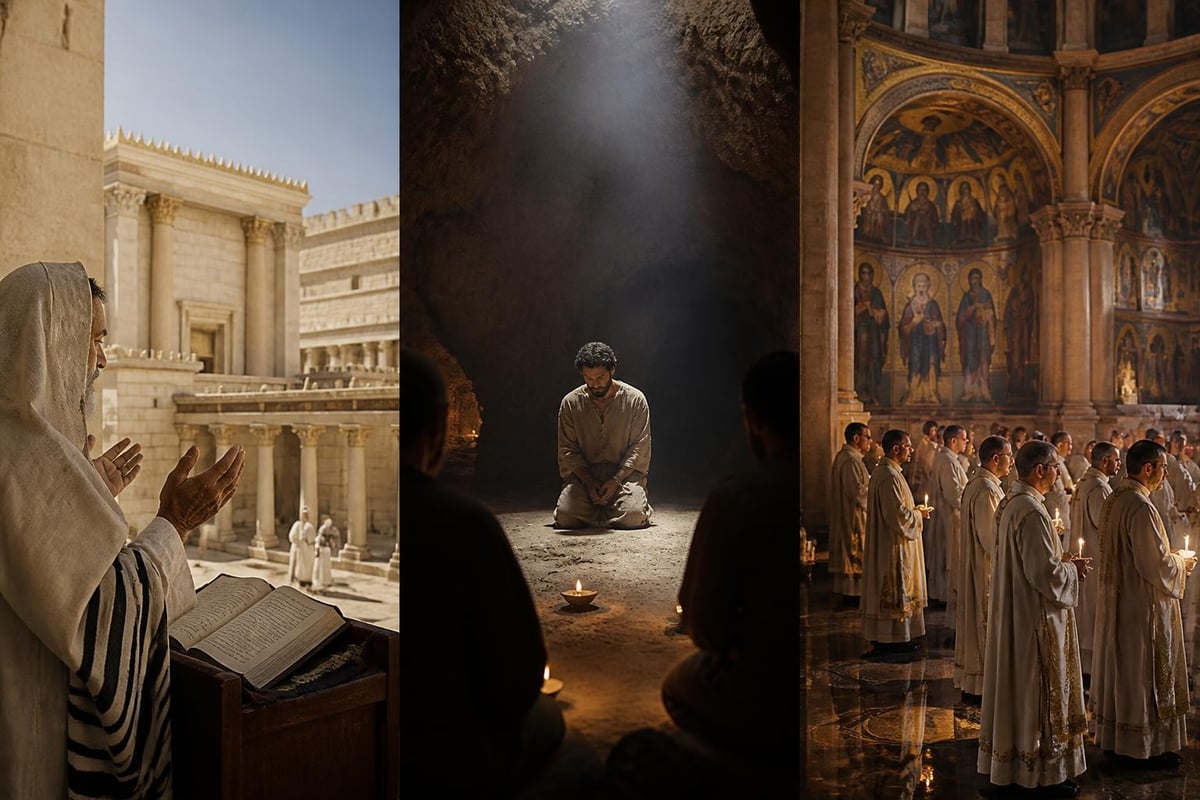
According to the Catholic Encyclopedia's detailed historical analysis, the litany underwent significant standardization during the pontificate of Pope Gregory the Great in the late sixth century. Gregory organized a great penitential procession during a plague outbreak, establishing a pattern that would influence liturgical practice for centuries.
Medieval Expansion and Variation
Throughout the Middle Ages, local churches developed their own variations of the prayer of all saints, adding regional martyrs and beloved holy figures. Scholarly research on English monastic litanies reveals how communities customized these prayers while maintaining core structures. Monasteries used the litany daily in the Divine Office, while parishes reserved it for solemn occasions.
The structure typically included:
- Invocations to the Trinity
- Appeals to Mary and the angels
- Petitions to apostles and evangelists
- Calls to martyrs, both early and contemporary
- Invocations of confessors and virgins
- Concluding petitions and intercessions
Brought to you by Journeys of Faith. Founded by Bob and Penny Lord, we are an Augustinian Secular Institute and Cyber Apostles. Our Mission is Evangelization through Media.
Liturgical Use in the Modern Church
The prayer of all saints occupies a central place in Catholic liturgy today, particularly during major sacramental celebrations and feast days. The Vatican's Directory on Popular Piety and the Liturgy provides comprehensive guidelines for its proper use, emphasizing both theological significance and pastoral application.
Sacramental Celebrations
The Church prescribes the litany for several crucial moments in Catholic life:
| Sacrament/Rite | When Used | Purpose |
|---|---|---|
| Baptism (Easter Vigil) | During blessing of water | Invoking saints' intercession for new Christians |
| Confirmation | Before chrismation | Strengthening candidates with communion of saints |
| Holy Orders | During prostration | Calling on heavenly witnesses for ordinands |
| Religious Profession | Profession ceremony | Uniting vows with the Church's holy witnesses |
During the Easter Vigil, the prayer of all saints takes on particular solemnity as catechumens prepare to enter the Church. The litany bridges the Old and New Covenants, calling upon patriarchs, prophets, apostles, and martyrs to welcome these new members into the Body of Christ.
The Feast of All Saints
November 1st represents the annual pinnacle for the prayer of all saints. All Saints' Day celebrates not only canonized saints but the entire communion of the blessed in heaven, many of whom remain unknown to earthly history. The liturgy for this solemnity incorporates extended forms of the litany, often adding locally venerated saints and blesseds.
Parish communities frequently organize special devotions on this day, creating opportunities for families to discover the prayer of all saints together. Many Catholics keep prayer cards featuring various saints, which serve as tactile reminders of this spiritual communion. For those seeking to deepen their devotion to specific saints, Prayer Cards and Novenas offer accessible resources that connect daily prayer with the Church's liturgical rhythms.
The Theological Foundation of Communal Prayer
The prayer of all saints rests on the doctrine of the communion of saints, a fundamental belief articulated in the Apostles' Creed. This teaching holds that all members of Christ's Body-living, deceased, and glorified-remain united in supernatural charity.
Three States, One Church
Catholic theology distinguishes three states within the Church:
The Church Triumphant comprises saints in heaven who enjoy the beatific vision. They intercede for the faithful on earth and the souls in purgatory.
The Church Militant includes all baptized Christians still living on earth, engaged in spiritual combat against sin and working out their salvation.
The Church Suffering consists of souls in purgatory being purified before entering heaven, who benefit from the prayers and sacrifices of the living.
The prayer of all saints activates this communion, directing petitions through the triumphant Church to God while simultaneously expressing solidarity with the entire mystical Body of Christ.
Intercession and Mediation
Critics sometimes question whether asking saints to pray contradicts Christ's unique mediatorship. The USCCB's explanation of the saints' role clarifies this apparent difficulty: saints do not replace Christ but participate in his one mediation through their union with him.
When we recite the prayer of all saints, we acknowledge that:
- Christ alone saves and reconciles humanity to God
- The saints' power comes entirely from Christ
- Their prayers add nothing to Christ's sufficiency but express the Church's unity
- Asking for their intercession mirrors asking fellow Christians to pray for us
Practical Application in Personal Prayer
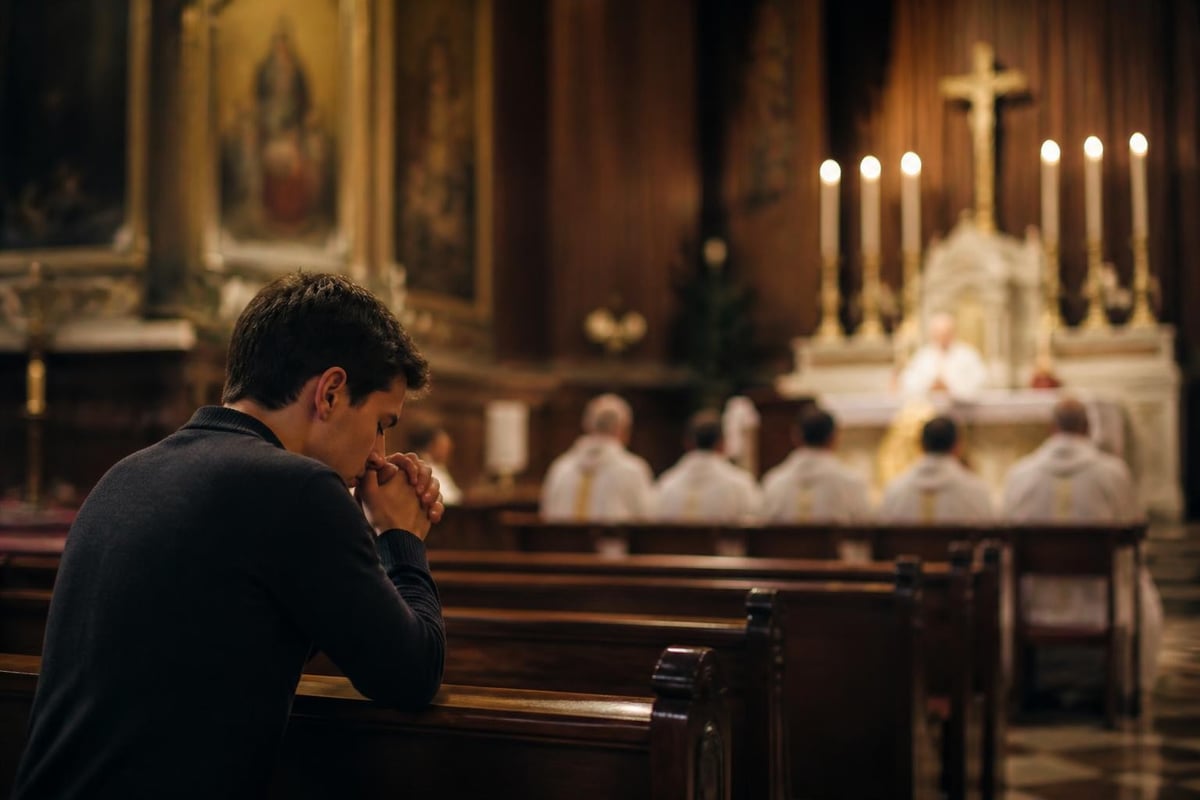
Beyond its liturgical settings, the prayer of all saints enriches personal devotion and family prayer life. Many Catholics discover that regular use of this prayer deepens their sense of belonging to the universal Church while providing specific intercessors for particular needs.
Incorporating the Litany into Daily Prayer
The Liturgy of the Hours, the Church's official daily prayer, integrates brief litanies at various points, especially during Morning and Evening Prayer on saints' feast days. Lay Catholics can adopt this practice in simplified forms:
- Morning Offering: Begin the day by invoking three or four saints whose example relates to your daily work or challenges
- Meal Prayers: Include a brief petition to the saint of the day before or after grace
- Bedtime Examination: Conclude evening prayers by asking saints to intercede for areas where you struggled during the day
- Family Rosary: Add a short litany before or after the rosary, allowing different family members to name their favorite saints
Selecting Personal Patron Saints
The prayer of all saints becomes more meaningful when we develop relationships with specific holy men and women. Consider choosing patrons based on:
- Your baptismal or confirmation name
- Your profession or state of life
- Particular trials or health concerns
- Personal devotions or spiritual attractions
- Family heritage or cultural background
Building familiarity with these saints' lives transforms the litany from a list of names into a gathering of friends. Resources from Journeys of Faith help Catholics discover the rich stories behind the saints they invoke, making the prayer of all saints a more personal and powerful experience.
Teaching Children the Litany
Families can introduce young children to the prayer of all saints through age-appropriate methods:
| Age Group | Approach | Example |
|---|---|---|
| 3-5 years | Picture cards and simple actions | Show saint images while saying "Saint [Name], pray for us" |
| 6-9 years | Story-based learning | Read brief saint stories before reciting their litany invocations |
| 10-13 years | Personal connection | Help children choose patron saints for specific interests or challenges |
| Teens | Historical context | Explore saints' lives in depth and their relevance to modern issues |
Contemporary Adaptations and Ecumenical Perspectives
While the prayer of all saints remains distinctively Catholic in its current form, the practice of invoking holy witnesses has broader Christian roots and contemporary ecumenical expressions.
Vatican II Reforms
The Second Vatican Council prompted revisions to the Roman Missal, including updates to the Litany of the Saints. The 2022 canonization liturgy demonstrates how the Church continues to adapt the prayer of all saints for contemporary celebrations while preserving its essential character.
Modern revisions have:
- Simplified some repetitive elements
- Added recently canonized saints
- Created flexibility for including local saints
- Clarified rubrics for different liturgical occasions
- Emphasized active participation by the assembly
Ecumenical Dialogue
Protestant traditions generally reject prayers to saints, emphasizing direct access to God through Christ alone. However, some Anglican and Lutheran communities have retained modified forms of remembrance. The Presbyterian Church USA's All Saints' Day prayers illustrate how Reformed traditions honor the faithful departed without technically invoking their intercession.
These ecumenical variations offer dialogue opportunities:
- Shared appreciation for exemplary Christian lives
- Common belief in the resurrection and eternal life
- Mutual recognition of the Church as a communion across time
- Different understandings of saints' ongoing relationship with the living
The Prayer's Structure and Components
Understanding the architecture of the prayer of all saints helps participants engage more fully with its meaning and movement. The litany follows a logical progression that takes the faithful through salvation history while building toward specific petitions.
Opening Invocations
The prayer typically begins with Trinitarian invocations:
- Lord, have mercy
- Christ, have mercy
- Lord, have mercy
This opening establishes the prayer's direction toward God while acknowledging human dependence on divine mercy. The threefold pattern recalls baptism and echoes the Kyrie eleison of the Mass.
The Roll Call of Saints
The central section names saints in approximate historical order:
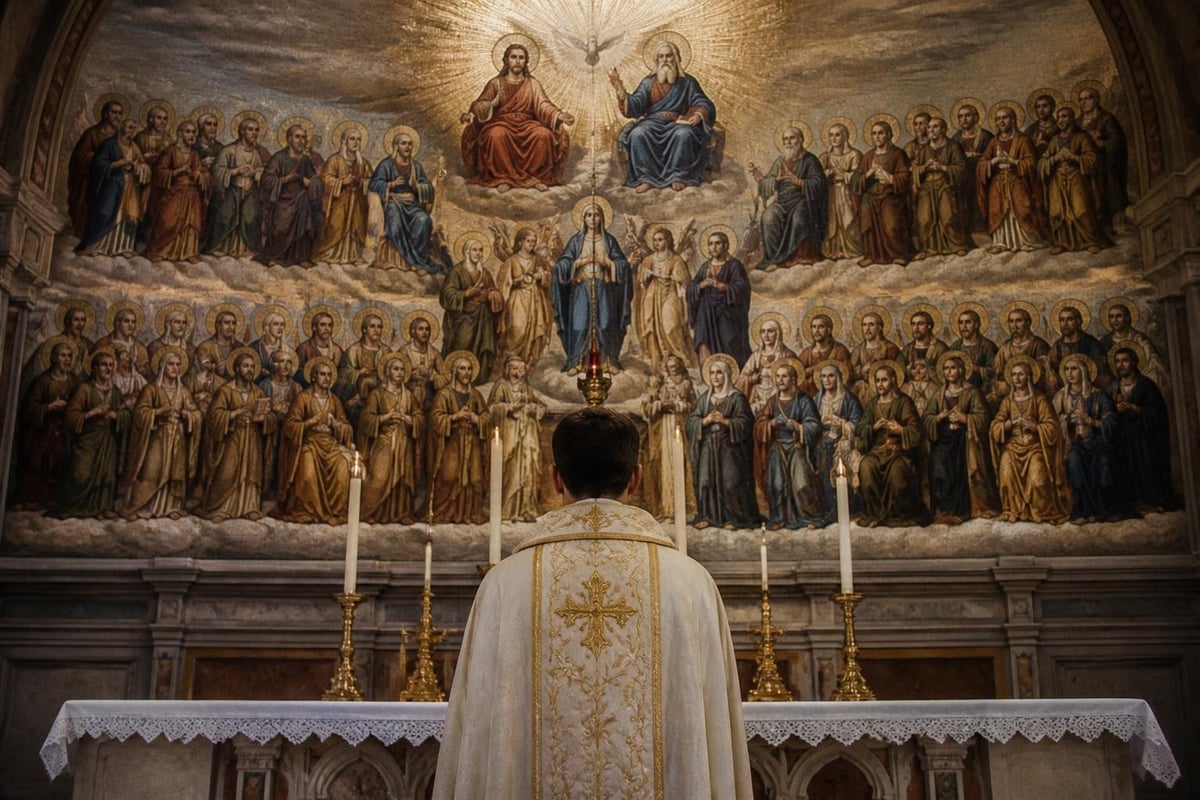
Holy Mary, Mother of God always heads the list after the Trinity, acknowledging her unique role in salvation history and her preeminent place among the saints.
Angels and Archangels follow, representing the heavenly hosts who worship God continually and serve as messengers and guardians.
Patriarchs and Prophets connect the prayer to the Old Testament, honoring figures like Abraham, Moses, Elijah, and Isaiah who prepared for Christ's coming.
Apostles and Evangelists constitute the foundation of the Church, those who knew Christ personally and transmitted the Gospel.
Martyrs form an extensive category, from early Church witnesses like Stephen and Lawrence to modern martyrs who died for the faith.
Bishops, Priests, and Deacons represent ordained ministry throughout the centuries, including doctors of the Church like Augustine and Thomas Aquinas.
Religious and Virgins honor those who embraced consecrated life, from desert fathers like Anthony to mystics like Teresa of Ávila.
Closing Petitions
After the roll call, the prayer shifts to specific requests:
- Deliver us from evil
- Protect the Church
- Guide leaders
- Bless the faithful
- Bring peace
- Strengthen vocations
Each petition receives the response "Lord, hear our prayer" or "Christ, hear us," maintaining the dialogical character established at the beginning.
Spiritual Benefits and Interior Transformation
Regular use of the prayer of all saints produces tangible spiritual fruits in those who pray it with attention and devotion. These benefits extend beyond the immediate requests to reshape the believer's entire spiritual outlook.
Expanded Vision of the Church
Modern Catholics often experience Church primarily through their parish community. The prayer of all saints dramatically expands this vision, connecting believers to:
- Two thousand years of Christian witness
- Every continent and culture where the Gospel has taken root
- Countless unnamed saints known only to God
- The heavenly liturgy already underway
This expansion combats the individualism and presentism that plague contemporary spirituality. It reminds us that we pray not alone but surrounded by "a cloud of witnesses" (Hebrews 12:1).
Humility and Perspective
Reciting dozens or hundreds of names in the prayer of all saints cultivates healthy humility. We recognize that our struggles and victories form one small thread in the vast tapestry of salvation history. The saints faced similar challenges, often in far more difficult circumstances, and overcame through grace.
This perspective helps believers:
- Avoid spiritual pride or discouragement
- Contextualize contemporary challenges
- Learn from proven spiritual strategies
- Maintain hope during trials
- Celebrate the Church's ongoing vitality
Concrete Models of Holiness
Abstract calls to holiness can feel overwhelming or vague. The prayer of all saints provides concrete examples of sanctity across different vocations, temperaments, and historical contexts. Each name represents a unique path to God:
- Married saints like Thomas More and Gianna Molla show holiness in family life
- Scholars like Albert the Great and Edith Stein model intellectual virtue
- Social reformers like Vincent de Paul and Josephine Bakhita demonstrate practical charity
- Contemplatives like John of the Cross and Thérèse of Lisieux explore mystical prayer
- Missionaries like Francis Xavier and Kateri Tekakwitha evangelize new cultures
Regional Variations and Cultural Expressions
While the Roman Rite provides a standard form, the prayer of all saints takes on distinctive characteristics in different cultural contexts, enriching the universal Church through diverse expressions of common faith.
Local Patron Saints
Dioceses and nations add their particular patrons to the litany for local celebrations. Ireland includes Patrick, Brigid, and Columba prominently. Mexico honors Our Lady of Guadalupe and Juan Diego. Poland emphasizes Stanislaus and Faustina.
These additions create a sense of continuity between contemporary believers and the saints who first brought the faith to their region. They demonstrate that holiness flourishes in every culture while maintaining its essential Christian character.
Linguistic and Musical Adaptations
Different languages bring unique qualities to the prayer of all saints. Latin versions carry solemnity and historical resonance. Spanish litanies often include rhythmic elements that facilitate memorization. African adaptations may incorporate call-and-response patterns reflecting indigenous prayer traditions.
Musical settings range from simple congregational responses to elaborate polyphonic compositions. Gregorian chant remains the traditional vehicle for Latin litanies, but contemporary composers continue creating new settings that make the prayer of all saints accessible to modern assemblies.
Popular Devotions and Processions
Many cultures combine the prayer of all saints with processions, pilgrimage, or other devotional practices. Filipino communities might pray the litany during the Flores de Mayo. Italian villages process with relics while chanting saints' names. Mexican traditions integrate the prayer into Day of the Dead celebrations, emphasizing the communion between living and dead.
The prayer of all saints weaves together every strand of Catholic faith-Scripture, Tradition, liturgy, and personal devotion-into a powerful tapestry of intercession that spans heaven and earth. As we discover the rich history and spiritual power of this ancient practice, we're invited to deepen our connection with the communion of saints who pray alongside us. Journeys of Faith supports your spiritual journey through carefully curated Catholic resources, from devotional materials to educational content that brings the saints' stories to life. Whether you're new to this prayer or seeking to enrich your existing practice, we invite you to explore thousands of Catholic items at https://journeysoffaith.com/collections and discover how the witnesses who have gone before us continue to inspire faith today. Journeys of Faith is blessed to provide Catholic media, including podcasts and inspirational content, free of charge across multiple media platforms for viewers and listeners around the world. While access to this content remains free, there are significant and continually increasing costs associated with producing, hosting, and distributing these programs. Your support helps us continue sharing the beauty of the Catholic faith with souls. Please Make a Donation at https://journeysoffaith.com/pages/donate.
