

When you embark on a journey-whether a daily commute, a cross-country road trip, or a pilgrimage to sacred sites-the Catholic tradition offers powerful spiritual companions to watch over you. The saint of safe travels has been invoked for centuries by believers seeking divine protection on the road, in the air, and across the seas. Understanding this devotion connects us to a rich heritage of faith that spans continents and generations, reminding us that we never travel alone when we carry the intercession of the saints with us.
The Legacy of Saint Christopher as the Saint of Safe Travels
Saint Christopher remains the most recognized saint of safe travels in Catholic tradition. According to legend, Christopher was a third-century martyr who sought to serve the greatest king. After his conversion to Christianity, he devoted himself to carrying travelers across a dangerous river. The most famous story tells of Christopher carrying a small child across the water, only to discover the child was Christ himself, bearing the weight of the world.
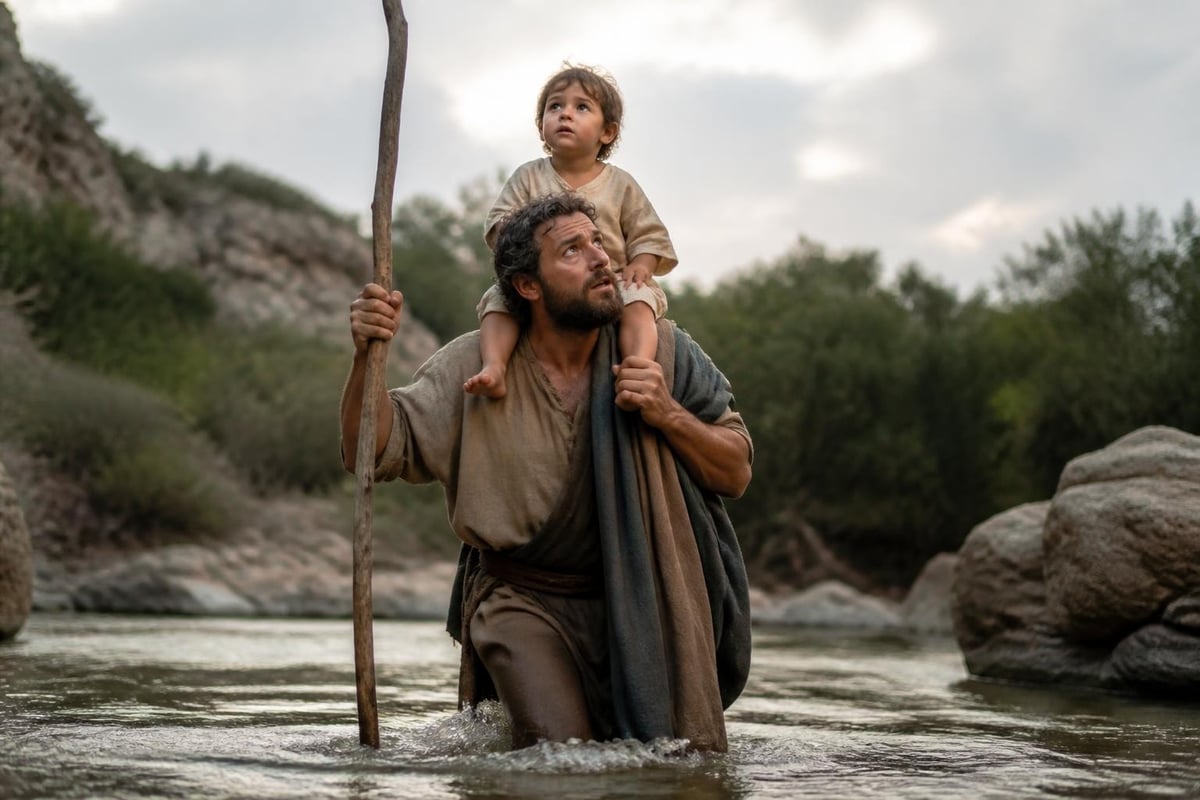
While scholarly examination of Saint Christopher's historical existence has led to questions about the factual basis of his legend, his spiritual significance as a protector of travelers remains deeply embedded in Catholic devotion. The symbolism of Christopher's story-a strong figure bearing others safely through perilous waters-resonates with the human experience of vulnerability during travel.
Why Saint Christopher Became the Universal Travel Patron
The association between Saint Christopher and travel protection developed organically throughout the Middle Ages. His name itself, meaning "Christ-bearer," captured the imagination of medieval Christians who saw their own journeys as microcosms of the spiritual journey toward heaven.
Several factors contributed to Christopher's prominence as the saint of safe travels:
- Visual accessibility: His dramatic legend translated well into art and iconography
- Universal need: Travel dangers were constant in pre-modern societies
- Portable devotions: Small medals and prayer cards could accompany travelers
- Miraculous reputation: Reports of protection attributed to his intercession spread rapidly
Brought to you by Journeys of Faith, founded by Bob and Penny Lord-We are an Augustinian Secular Institute, Cyber Apostles. Our Mission is Evangelization through Media.
The Vatican's perspective on Saint Christopher acknowledges both the devotional importance and the historical uncertainties surrounding his cult. Even when his feast was removed from the universal calendar in 1969 during liturgical reforms, local devotion continued unabated, demonstrating the deep-rooted nature of this particular patronage.
Diverse Iconography of the Saint of Safe Travels
The visual representation of the saint of safe travels has varied dramatically across cultures and centuries. Traditional Western images show Christopher as a giant wading through water with the Christ child on his shoulder and a flowering staff in his hand. These elements carry rich symbolic meaning: the water represents life's dangers, the child signifies the presence of Christ in our burdens, and the blooming staff points to new life through faith.
| Iconographic Element | Symbolic Meaning | Regional Variations |
|---|---|---|
| Giant stature | Strength to bear burdens | More prominent in Western art |
| Christ child | Jesus present in our struggles | Sometimes shown with orb representing world |
| Flowering staff | Miracle of faith, resurrection | Staff occasionally depicted as palm tree |
| River or water | Life's dangers and trials | Sometimes shown as turbulent sea |
| Hermit with lantern | Guidance received from faith | Common in German and Austrian renditions |
Eastern Christian traditions, particularly in the Orthodox world, developed strikingly different iconographic traditions. Academic research on zoomorphic representations reveals that some Eastern icons depict Saint Christopher with a dog's head, a cynocephalic representation rooted in alternative legendary traditions. These variations demonstrate how the concept of the saint of safe travels adapted to different cultural contexts while maintaining the core protective function.
Museum collections worldwide preserve these varied artistic traditions. The Rijksmuseum's collection includes remarkable examples that show how artists across centuries interpreted the saint's protective role. These artifacts aren't merely historical curiosities-they reveal how deeply the need for travel protection resonated with our ancestors.
Regional Cults and Local Variations
The devotion to the saint of safe travels wasn't uniform across Christendom. Regional variations developed based on local needs and traditions. Scholarly examination of reliquary practices shows how communities on the Dalmatian coast maintained distinctive devotions to Saint Christopher connected to maritime travel, while Alpine communities emphasized his protection for mountain crossings.
These local expressions enriched the universal devotion:
- Maritime communities: Emphasized Christopher's protection against shipwreck and drowning
- Mountain regions: Invoked him against avalanches and treacherous passes
- Trading centers: Merchants sought his intercession for commercial journeys
- Pilgrimage routes: Shrines to the saint of safe travels marked major pathways
The rich history of Catholic saints demonstrates how these local variations eventually contributed to a more comprehensive understanding of saintly intercession for travelers.
Other Patron Saints Who Protect Travelers
While Christopher holds pride of place as the primary saint of safe travels, Catholic tradition recognizes several other heavenly protectors for those on the road. This diversity reflects the Church's understanding that different types of journeys and travelers benefit from different forms of intercession.
Saint Raphael the Archangel
Saint Raphael, whose name means "God heals," serves as patron of travelers based on his role in the Book of Tobit. In this biblical account, Raphael accompanies young Tobias on a dangerous journey, protecting him from harm and guiding him safely home. For travelers facing particular dangers or those traveling alone, Raphael offers powerful intercession.
His patronage extends specifically to:
- Pilgrims seeking spiritual transformation through travel
- Young people traveling away from home for the first time
- Those seeking healing who must travel for medical care
- Travelers facing unknown dangers or unfamiliar territories
Saint Anthony of Padua
Better known as the patron of lost items, Saint Anthony also protects travelers, particularly those who have lost their way. His intercession is particularly invoked when travelers face confusion, wrong turns, or when travel plans go awry. Many Catholics pray to Saint Anthony when navigation challenges arise or when important travel documents go missing.
The connection between finding lost items and safe travel makes intuitive sense-both involve divine assistance in locating what we need, whether that's a physical object or the right path forward. Resources on patron saints and their various roles help Catholics understand these multifaceted patronages.
Saint Frances of Rome and Her Guardian Angel
Saint Frances of Rome experienced a unique gift: the constant visible presence of her guardian angel throughout her adult life. This angel lit her path with divine light and protected her during her charitable work throughout Rome. Her example reminds us that every traveler has angelic protection, whether visible or unseen. The story of Saint Frances and her guardian angel offers profound insights into how heavenly protection accompanies us on all our journeys.
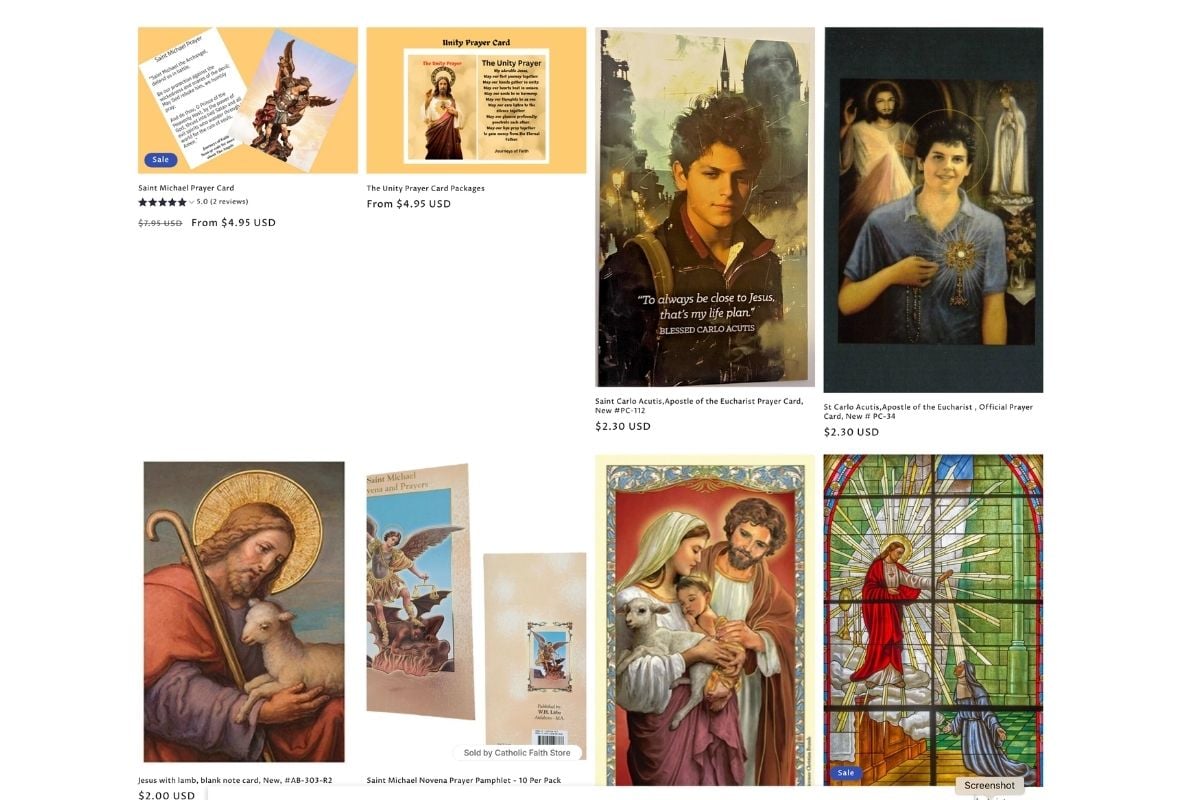
For those seeking spiritual protection during travel, prayer cards can serve as powerful reminders of saintly intercession. The tangible presence of a prayer card connects travelers with centuries of Catholic devotional practice.
Practical Devotions to the Saint of Safe Travels
Devotion to the saint of safe travels takes many practical forms in contemporary Catholic life. These practices bridge ancient tradition with modern needs, creating continuity between the pilgrims of earlier centuries and today's travelers navigating highways and airports.
Travel Prayers and Blessings
The Catholic Church offers formal prayers for travelers that can be incorporated into departure rituals:
Brief Prayer Before Travel: "Lord God, you led your people through the desert and brought them to the promised land. Guide our journey now as we trust in your protection through the intercession of [saint's name], the saint of safe travels. Keep us safe from harm and bring us to our destination in peace. Amen."
Family Blessing Before a Journey: Parents can bless children and spouses before travel by making the sign of the cross on their foreheads and asking for angelic protection and the intercession of patron saints. This simple ritual reinforces that travel happens within the context of God's providence.
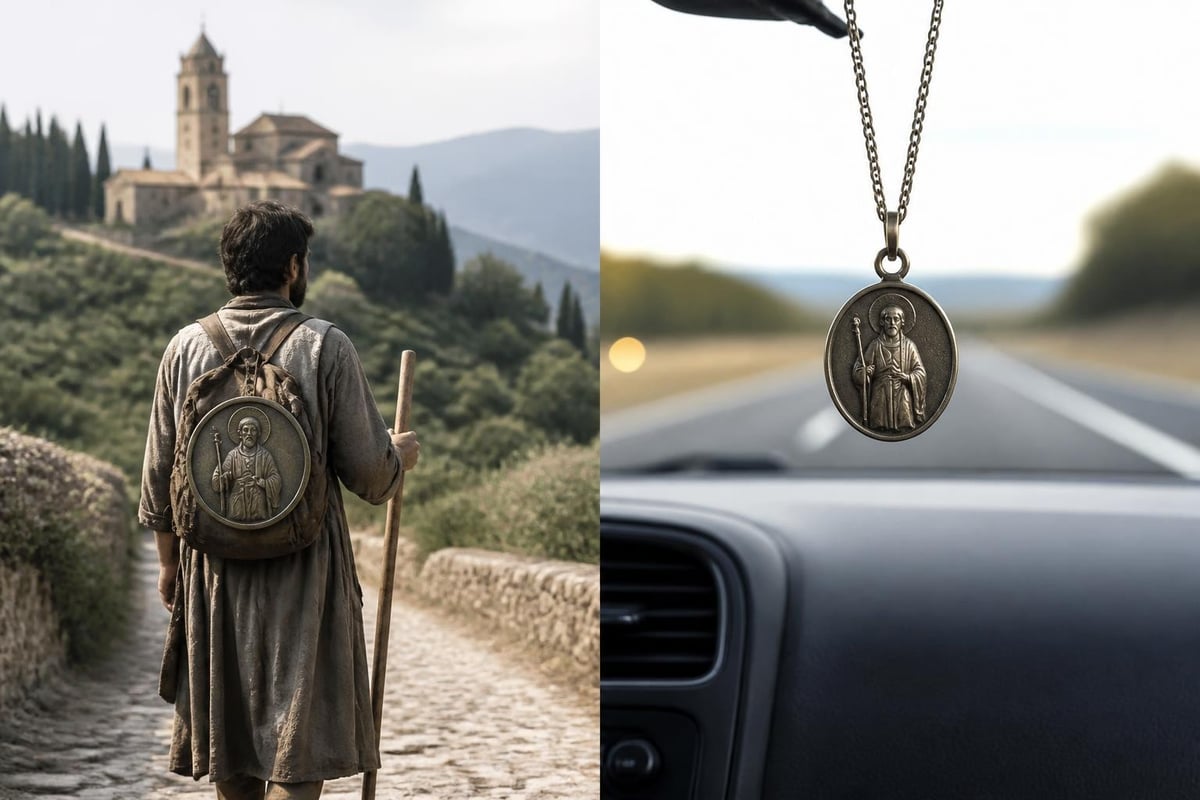
Dashboard and Vehicle Blessings: Many Catholics place Saint Christopher medals on their dashboards or hang them from rearview mirrors. Some parishes offer formal vehicle blessings, especially around the feast of Saint Christopher (July 25) or during the Easter season. These blessings acknowledge that our vehicles, like any tool, function within God's creation and can be dedicated to holy purposes.
Medals, Prayer Cards, and Sacramentals
Physical objects connected to the saint of safe travels serve as tangible reminders of spiritual protection:
- Saint Christopher medals: Traditionally worn or carried during journeys
- Trifold prayer cards: Pocket-sized devotionals for use during travel
- Dashboard statues: Small representations for vehicle protection
- Scapulars: Including images or prayers to travel patrons
- Rosaries: Particularly those blessed for travelers
The collection of crucifixes, rosaries, and medals available through Catholic suppliers provides travelers with multiple options for carrying their faith on the road. These sacramentals function not as magical talismans but as physical expressions of faith and focal points for prayer.
Modern Applications of Ancient Devotions
The saint of safe travels remains relevant in an age of air travel, space exploration, and digital connectivity. Contemporary Catholics adapt traditional devotions to new circumstances:
- Air travel: Prayers to patron saints during takeoff and landing
- Long commutes: Daily invocation of the saint of safe travels
- Business travel: Seeking guidance for ethical decisions far from home
- Vacation travel: Family prayers before road trips
- Virtual travel: Protection for those who work in digital spaces
| Travel Type | Recommended Patron | Specific Intention |
|---|---|---|
| Road trips | Saint Christopher | Protection from accidents |
| Air travel | Saint Joseph of Cupertino | Safe flights, calm during turbulence |
| Sea voyages | Our Lady, Star of the Sea | Protection from storms, safe passage |
| Pilgrimages | Saint Raphael | Spiritual fruit from the journey |
| Medical travel | Saint Peregrine | Healing and safe travel for treatment |
The Theological Foundation of Travel Protection
Understanding the saint of safe travels requires appreciating Catholic theology about saintly intercession and divine providence. Saints don't possess independent power to protect travelers; rather, they intercede with God on behalf of those who ask for their prayers, just as we might ask a friend to pray for us.
Providence and Free Will
Catholic teaching holds that God's providence extends to all aspects of creation, including the safety of travelers. Yet this providence respects human free will and the natural order. Praying to the saint of safe travels doesn't guarantee immunity from all danger-accidents still happen to faithful people. Instead, these prayers:
- Acknowledge dependence on God for all good things
- Unite our will with God's loving plan
- Provide spiritual strength to face whatever occurs
- Connect us with the communion of saints
- Remind us that earthly life is itself a journey toward heaven
Academic research on early Christian devotional practices demonstrates that the Church Fathers understood saintly intercession as part of the mystical body of Christ, where all members-living and dead-remain connected in prayer and love.
The Communion of Saints in Action
When we invoke the saint of safe travels, we participate in the communion of saints, that mystical reality where all the faithful-on earth, in purgatory, and in heaven-remain united in Christ. This doctrine, rooted in Scripture and Tradition, means that the saints in heaven actively care about and pray for those still on their earthly pilgrimage.
The U.S. Conference of Catholic Bishops' materials on saints explain how the Church encourages devotion to saints as models of Christian virtue and powerful intercessors. This isn't mere superstition but a profound expression of Christian community that transcends death itself.
This theological framework elevates travel prayers beyond mere requests for safety. They become moments of communion with the entire Church, living and dead, united in Christ who is himself the Way, the Truth, and the Life.
Cultivating a Spirituality of Journey
The concept of the saint of safe travels invites reflection on the deeper spiritual meaning of physical journeys. In Scripture and Catholic tradition, travel serves as a rich metaphor for the Christian life itself-we are pilgrims passing through this world toward our true homeland in heaven.
Every Journey as Pilgrimage
Medieval Christians understood all travel as potentially sacred. Even merchants and soldiers recognized that their journeys could serve spiritual purposes beyond the immediate practical goals. This perspective transforms how we approach modern travel:
Intentionality: Beginning each journey with prayer sets a spiritual tone and reminds us that we move through God's creation with purpose.
Awareness: Travel removes us from routine, creating opportunities to notice God's presence in new ways-different landscapes, unfamiliar churches, chance encounters with strangers who may be angels unaware.
Gratitude: Arriving safely merits thanksgiving, acknowledging that safe passage is a gift rather than an entitlement.
Witness: How we travel-with patience, courtesy, and peace-witnesses to our faith more powerfully than words.
The extensive collection of Catholic pilgrimage resources offered by evangelization ministries demonstrates how physical journeys to sacred sites can deepen spiritual life and strengthen faith communities.
Teaching Children About Travel Saints
Families play a crucial role in passing on devotion to the saint of safe travels. Children who learn to pray before car trips or flights develop a lifelong habit of acknowledging God's presence in all circumstances:
- Make it routine: Brief prayers before every family trip establish expectations
- Tell the stories: Children love the legends of Saint Christopher and other travel saints
- Use visuals: Medal or prayer cards give children something tangible to hold
- Celebrate safely: Thank God together when you arrive at your destination
- Connect to larger faith: Help children see travel prayers as part of broader Catholic practice
Resources on patron saints of youth provide age-appropriate materials for teaching children about the saints who watch over them. These early practices form spiritual reflexes that endure into adulthood, creating Catholics who naturally turn to prayer in all life circumstances.
Contemporary Challenges and Renewed Devotion
The twenty-first century presents unique challenges and opportunities for devotion to the saint of safe travels. Modern mobility surpasses anything our ancestors could imagine-we cross continents in hours and communicate instantly across oceans. Yet the fundamental human need for protection and the desire for meaningful ritual around travel remains constant.
Reclaiming Sacred Time in Travel
Modern travel often feels rushed and stressful. Airport security lines, traffic congestion, and the pressure to maximize productivity even during transit can drain the spiritual dimension from our journeys. Intentionally invoking the saint of safe travels creates sacred pauses in hectic schedules:
- Before leaving home: A brief prayer grounds the journey in faith
- During delays: Offering frustrations to God transforms annoyance into patience
- At transition points: Prayers during takeoff, when boarding trains, or at highway on-ramps
- Upon arrival: Thanksgiving completes the devotional arc of the journey
Digital Evangelization and Travel Devotions
Catholic media ministries increasingly use digital platforms to support travelers' spiritual needs. Podcast episodes on saint devotions, downloadable prayer guides, and apps with travel prayers make these resources accessible anywhere:
- Audio prayers: Listening during commutes or flights
- Digital prayer cards: Accessible on phones when physical cards aren't available
- Social media: Sharing travel mercies and requesting prayers from online faith communities
- Livestreamed Masses: Attending Mass virtually when travel prevents physical attendance
The mission of Catholic evangelization through various media ensures that spiritual resources reach believers wherever they find themselves, transforming smartphones from distractions into tools for devotion.
Environmental Considerations and Travel Ethics
Contemporary Catholics also wrestle with the environmental impact of travel, particularly air travel's carbon footprint. Invoking the saint of safe travels can include prayers for wisdom about when travel is truly necessary and how to journey responsibly:
Discernment prayers might include requests for guidance about whether a particular journey serves genuine need or mere convenience. Thanksgiving prayers can acknowledge the privilege of travel and our responsibility to use it wisely. Intercessory prayers for those who lack freedom of movement-refugees, the imprisoned, the homebound-remind us that mobility is a gift to be used in service of justice and love.
This ethical dimension enriches rather than diminishes devotion to the saint of safe travels, recognizing that authentic Catholic practice integrates all aspects of life under the lordship of Christ.
Devotion to the saint of safe travels connects contemporary Catholics with centuries of believers who sought divine protection for their journeys, large and small. Whether you're embarking on a pilgrimage, commuting to work, or traveling for family obligations, the intercession of Saint Christopher and other patron saints reminds you that you never travel alone. Journeys of Faith provides extensive resources to deepen your understanding of the saints, strengthen your prayer life, and support your journey of faith through books, prayer cards, and media that bring Catholic tradition to life. Explore the Journeys of Faith online store with thousands of Catholic items at https://journeysoffaith.com/collections. Journeys of Faith is blessed to provide Catholic media, including podcasts and inspirational content, free of charge across multiple media platforms for viewers and listeners around the world. While access to this content remains free, there are significant and continually increasing costs associated with producing, hosting, and distributing these programs. Your support helps us continue sharing the beauty of the Catholic faith with souls-please make a donation at https://journeysoffaith.com/pages/donate to support these vital resources for your spiritual journey.
