

The preservation of saints' bodies has long fascinated Catholic faithful around the world, serving as tangible connections to holy lives and divine intervention. Among the most remarkable examples of incorrupt saints is Saint Rita of Cascia, whose body has remained intact for nearly 600 years. The saint rita body continues to draw pilgrims and inspire devotion across generations, offering a visible testament to her extraordinary sanctity. Her physical remains, displayed in a crystal urn at the Basilica of Saint Rita in Cascia, Italy, represent one of the most well-documented cases of bodily incorruption in Catholic history.
Brought to you by Journeys of Faith. Founded by Bob and Penny Lord, we are an Augustinian Secular Institute and Cyber Apostles. Our mission is evangelization through media.
The Historical Context of Saint Rita's Death and Preservation
Saint Rita of Cascia died on May 22, 1457, after decades of devoted service as an Augustinian nun. Her life was marked by extraordinary suffering, including an abusive marriage, the violent deaths of her husband and sons, and the miraculous stigmata wound on her forehead that remained with her for fifteen years before her death.
According to Vatican News, the saint rita body was never buried in the traditional sense. Instead, following her death, her fellow sisters placed her remains in a wooden coffin, which was later transferred to increasingly ornate reliquaries as her cult of devotion grew. This decision proved providential, as it allowed the preservation phenomenon to be observed and documented across centuries.
The immediate period following Rita's death witnessed numerous reported miracles and healings attributed to her intercession. These supernatural events drew attention to her remains, and when her body showed no signs of decay months and years after death, ecclesiastical authorities began documenting this extraordinary occurrence.
Documentation Through the Centuries
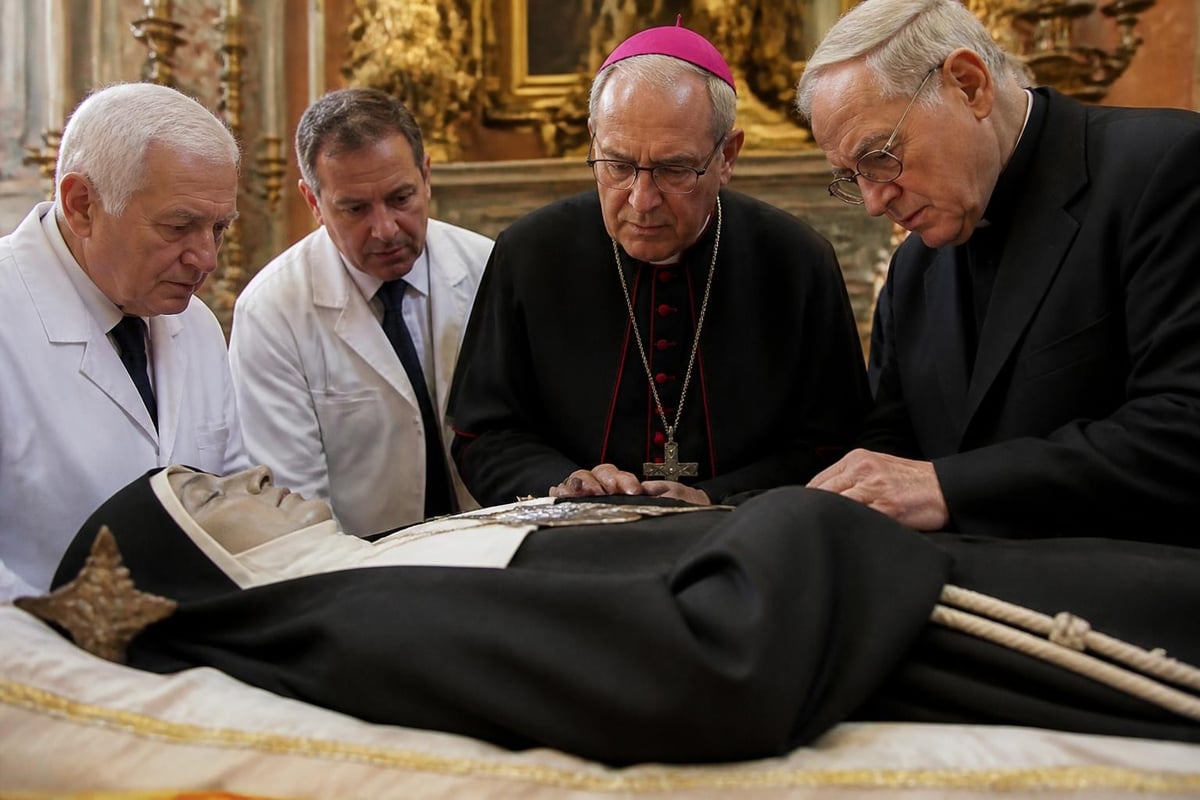
Church officials meticulously recorded examinations of the saint rita body throughout history. Medical professionals and religious authorities conducted formal inspections in 1595, 1628, and at various intervals through the twentieth century. Each examination confirmed that despite the passage of time, Rita's body remained flexible and showed minimal deterioration.
The Catholic Encyclopedia provides historical documentation showing that even centuries after her death, witnesses reported the body retained a natural appearance, with skin intact and features recognizable. This preservation occurred without any artificial embalming techniques available in fifteenth-century Italy.
The Physical Characteristics of the Incorrupt Body
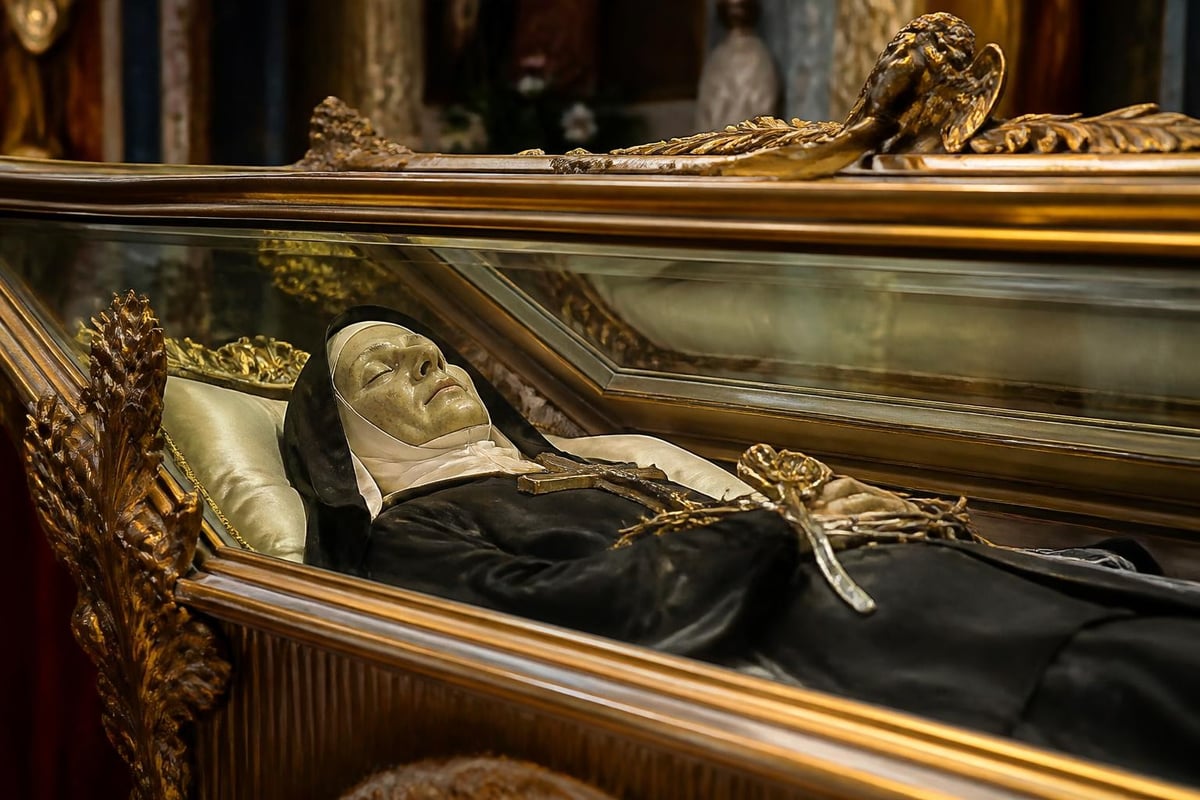
The saint rita body exhibits several distinctive features that differentiate it from typical bodily remains. Observers throughout history have noted the flexibility of the limbs, the preservation of facial features, and the overall integrity of the physical form. Unlike mummification, which results in dried, brittle tissue, Rita's body maintained a more natural appearance.
Medical examinations revealed that the body showed no signs of artificial preservation techniques. The climate of Cascia, while temperate, does not provide conditions typically associated with natural mummification. The absence of extreme dryness, particular mineral content in soil, or other environmental factors that might explain natural preservation made the phenomenon more remarkable.
The Stigmata Wound
One of the most spiritually significant aspects of the saint rita body is the visible wound on her forehead. This stigmata, which Rita received fifteen years before her death while praying before a crucifix, remained evident on her incorrupt body. Historical accounts describe this wound as a constant reminder of her mystical participation in Christ's suffering.
The wound became so severe during her lifetime that Rita lived in seclusion for the final fifteen years, unable to participate in community activities due to the unbearable odor it produced. Paradoxically, after her death, witnesses reported a sweet fragrance emanating from her body, a phenomenon known in hagiography as the "odor of sanctity."
| Physical Feature | Historical Observation | Spiritual Significance |
|---|---|---|
| Facial Features | Preserved and recognizable | Connection to her earthly identity |
| Limb Flexibility | Noted in multiple examinations | Unusual for deceased remains |
| Stigmata Wound | Visible on forehead | Sign of mystical union with Christ |
| Fragrance | Sweet odor reported | Traditional sign of holiness |
The Modern Display and Veneration
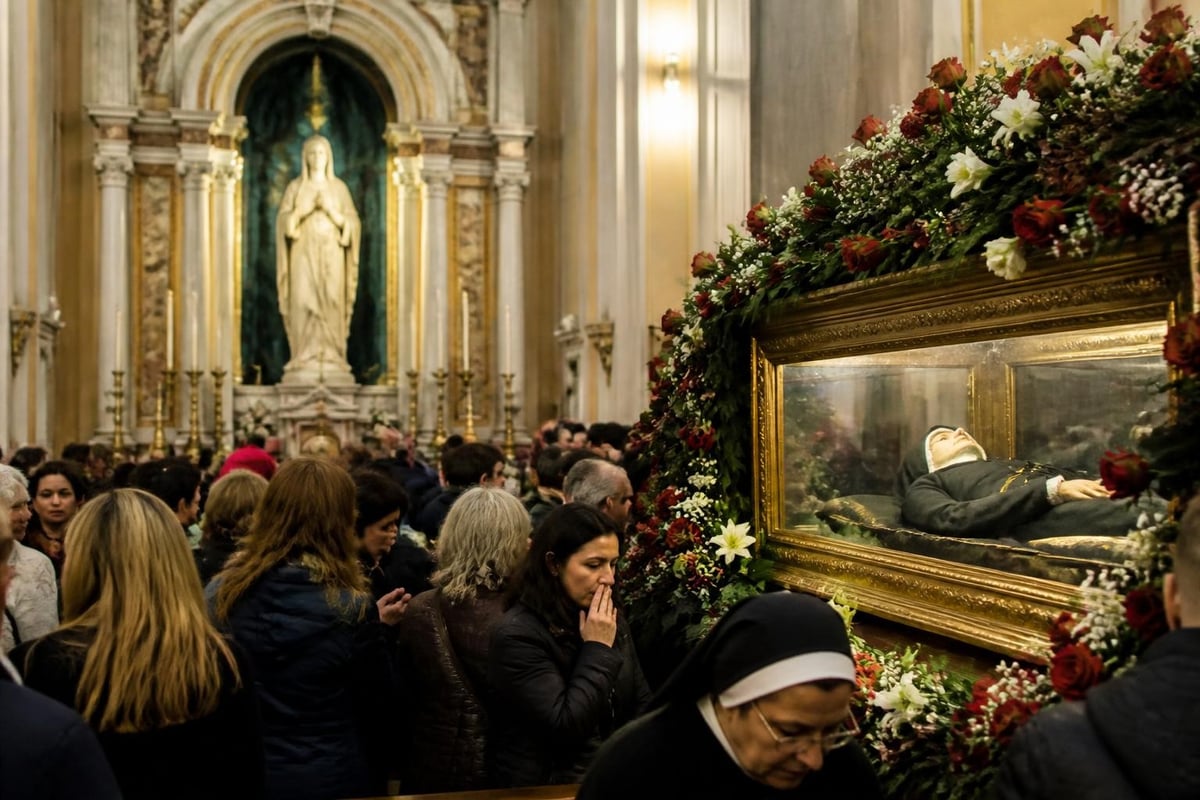
Today, the saint rita body rests in the Basilica of Saint Rita in Cascia, housed within a magnificent crystal reliquary known as the Urna di Santa Rita. This ornate shrine was constructed in 1930, providing pilgrims with a clear view of the saint's preserved remains while maintaining appropriate reverence and protection.
The basilica itself serves as a major pilgrimage destination, attracting hundreds of thousands of visitors annually. The architectural design places the saint rita body in a position of honor behind the main altar, allowing the faithful to venerate the relics during Mass and private prayer.
Pilgrims report profound spiritual experiences when praying before the incorrupt body. Many credit Saint Rita's intercession with healing physical ailments, resolving family conflicts, and providing strength during impossible situations. The official monastery site documents contemporary testimonies alongside historical accounts of miracles.
Liturgical Celebrations and Special Occasions
The feast day of Saint Rita, celebrated on May 22nd, draws especially large crowds to Cascia. During this annual celebration, the basilica hosts special liturgies, processions, and opportunities for extended veneration of the saint rita body. These celebrations blend traditional Catholic devotion with local Italian customs, creating a rich tapestry of faith expression.
The Augustinian order, to which Rita belonged, plays a central role in maintaining the shrine and facilitating pilgrimages. Their presence connects contemporary devotion to the historical religious community that first witnessed Rita's sanctity and the preservation of her remains.
Scientific and Theological Perspectives on Incorruption
The preservation of the saint rita body raises important questions at the intersection of faith and science. The Catholic Church does not require bodily incorruption as proof of sanctity, yet it recognizes such phenomena as potential signs of God's favor. Understanding this balance helps clarify the Church's approach to miraculous claims.
From a scientific standpoint, researchers have studied incorrupt bodies using modern technology. While some cases of preservation can be explained by environmental factors, embalming techniques, or natural mummification, the saint rita body presents features that resist simple naturalistic explanation. The combination of climatic conditions, the absence of preservation treatments, and the documented timeline of examinations creates a complex picture.
Church Teaching on Relics
The Vatican's 2017 Instruction on Relics provides comprehensive guidelines for the authentication, preservation, and veneration of saints' remains. This document emphasizes that relics serve as aids to devotion rather than objects of worship themselves, directing attention ultimately to God.
The instruction specifically addresses incorrupt bodies, noting their role in inspiring faith while cautioning against superstitious approaches. The saint rita body exemplifies the proper Catholic understanding: a physical reminder of spiritual realities, maintained with dignity and presented for veneration within appropriate liturgical and devotional contexts.
Many Catholics find inspiration in learning about the lives of the Catholic saints, discovering how these holy men and women demonstrate God's grace working through human weakness and suffering.
Miraculous Accounts Associated with the Body
Historical records document numerous miracles attributed to contact with or proximity to the saint rita body. These accounts span from the immediate post-mortem period to contemporary times, creating a continuous narrative of supernatural intervention.
Early miracles included healings of blind individuals, the cure of paralyzed limbs, and the resolution of seemingly hopeless situations. Ecclesiastical authorities investigated these claims as part of Rita's canonization process, which culminated in her official recognition as a saint by Pope Leo XIII in 1900.
Contemporary Testimonies
Modern pilgrims continue reporting answered prayers and miraculous occurrences. The official sanctuary website maintains records of thanksgiving offerings and testimonies from those who credit Saint Rita's intercession with healing and help.
These contemporary accounts often mirror Rita's own life circumstances, particularly her role as patroness of impossible causes, difficult marriages, and family reconciliation. Devotees facing similar trials find hope in her example and seek her intercession before her incorrupt body.
- Healings from terminal illnesses
- Reconciliation of estranged family members
- Financial provision during desperate need
- Emotional healing from trauma and abuse
- Vocational guidance and discernment
For those seeking to deepen their prayer life and connection to the saints, resources like prayer cards and novenas offer structured approaches to seeking saintly intercession.
The Spiritual Significance of Bodily Incorruption
The preservation of the saint rita body serves multiple spiritual purposes within Catholic tradition. Most fundamentally, it provides a tangible connection to a life of heroic virtue, making abstract holiness concrete and accessible. Pilgrims who view Rita's remains encounter physical evidence of a person who truly lived, suffered, and persevered in faith.
This physical presence combats the tendency toward purely intellectual or emotional religion. The saint rita body reminds believers that Christian faith is incarnational, rooted in the reality of Jesus Christ's physical resurrection and the promise of bodily resurrection for all the faithful.
Theological Implications
Catholic theology teaches that the body participates in the person's sanctification. When someone lives a holy life, that holiness affects not just the soul but the entire person, body and soul united. The preservation of certain saints' bodies can be understood as a foreshadowing of the resurrection, when glorified bodies will be reunited with souls.
The stigmata wound visible on the saint rita body adds another layer of theological significance. This mark identifies Rita with Christ's passion in a uniquely physical way, demonstrating that Christian suffering, when united to Christ's sacrifice, becomes redemptive and transformative.
| Spiritual Dimension | Manifestation in Saint Rita | Application for Believers |
|---|---|---|
| Incarnational Faith | Physical body preserved | Holiness affects whole person |
| Resurrection Hope | Incorruption as preview | Bodies matter eternally |
| Redemptive Suffering | Visible stigmata | Suffering united to Christ transforms |
| Intercessory Power | Miracles at shrine | Saints actively help from heaven |
Pilgrimage Practices and Devotional Customs
Visiting the saint rita body in Cascia follows established Catholic pilgrimage traditions while incorporating unique elements specific to Rita's cult. Pilgrims typically begin their visit with confession and Mass, preparing spiritually to encounter the saint's remains with proper disposition.
The Basilica of Saint Rita offers structured times for veneration, allowing individuals and groups to pray before the crystal reliquary. Many pilgrims bring prayer intentions written on small papers, leaving them at the shrine as tangible symbols of their requests for intercession.
Traditional Devotional Elements
Rita's association with roses creates a distinctive devotional practice. Pilgrims often bring roses to be blessed at the shrine, recalling the miraculous roses that bloomed out of season at Rita's request shortly before her death. These blessed roses are taken home as sacramentals, connecting the pilgrimage experience to daily life.
The recitation of novenas represents another common practice. Nine days of prayer seeking Rita's intercession, often using approved texts that recount her life and virtues, prepare pilgrims spiritually whether they can physically visit Cascia or pray from distant locations. Resources like the Catholic Saints Minibooks provide accessible formats for learning about Rita's life and incorporating her example into family prayer time.

Prayer before the saint rita body often follows a pattern: acknowledgment of one's unworthiness, presentation of specific needs, commitment to imitate Rita's virtues, and thanksgiving for her intercession. This structure reflects classic Catholic prayer theology, balancing petition with praise and personal transformation.
Caring for the Relic: Conservation and Preservation Efforts
Maintaining the saint rita body requires ongoing attention from specialists in art conservation, Church law, and liturgical practice. The Augustinian community responsible for the shrine works with experts to ensure the remains are preserved with dignity while remaining accessible for veneration.
Modern conservation techniques allow for careful monitoring without disturbing the relics. Climate control systems maintain stable temperature and humidity levels within the crystal reliquary, protecting against environmental factors that could cause deterioration. Regular inspections ensure the integrity of both the body and its container.
Balancing Access and Protection
The tension between allowing pilgrims close contact with holy relics and protecting those relics from damage or theft requires careful management. The saint rita body benefits from its position in a secured, specially designed reliquary that provides visibility while preventing physical contact.
Security measures at the basilica protect the shrine from vandalism or theft while maintaining an atmosphere conducive to prayer. Trained guides and security personnel ensure that veneration practices remain appropriate and that the sacred space is respected.
Those interested in exploring how various saints' shrines preserve and present relics can discover more through resources on Catholic women saints, many of whom are honored through preserved relics and special shrines.
The Global Impact of Saint Rita's Cult
While the saint rita body remains in Cascia, Rita's influence extends worldwide through the distribution of second-class relics, replicas, and devotional materials. Catholic communities from Latin America to Asia maintain special devotion to this Augustinian saint, often focusing on her role as patroness of impossible causes.
Churches dedicated to Saint Rita exist on every continent, many housing relics obtained through official Church channels. These relics, typically pieces of cloth touched to Rita's incorrupt body, carry the spiritual connection to the saint while allowing veneration beyond Italy's borders.
Cultural Adaptations of Rita's Cult
Different cultures emphasize various aspects of Rita's life and intercession. In Italy, her connection to family reconciliation and difficult marriages receives special attention. Latin American devotees often invoke her for protection against violence and abuse, reflecting Rita's own experience with domestic violence.
Filipino Catholics integrate Rita into their rich tradition of novenas and processions. African communities appreciate her perseverance through suffering, finding resonance with their own historical and contemporary struggles. This global diversity enriches the universal Church while maintaining connection to the physical reality of the saint rita body in Cascia.
Educational and Evangelical Opportunities
The preservation of the saint rita body creates unique opportunities for catechesis and evangelization. Pilgrims who visit Cascia often experience conversion or deepening of faith when confronted with this tangible sign of God's power. The shrine serves as a classroom where doctrine comes alive through encounter.
Parish groups organizing pilgrimages to Cascia incorporate education about Rita's life, Church teaching on relics and saints, and broader Catholic theology. The visual impact of the incorrupt body reinforces lessons that might remain abstract without such concrete illustration.
Resources for Deepening Understanding
Numerous books, videos, and digital resources help Catholics understand the significance of the saint rita body and incorporate Rita's example into daily life. Historical biographies trace her journey from married woman to widow to consecrated religious, showing how God works through ordinary lives transformed by grace.
Documentary films capture the beauty of the Cascia shrine and interview contemporary pilgrims about their experiences. These media resources extend the shrine's reach to those unable to make physical pilgrimage, creating virtual encounters that still inspire and transform.
For families seeking to introduce children to the saints, homeschooling resources on patron saints provide age-appropriate materials that bring figures like Rita to life through stories, activities, and prayer.
Comparative Context: Other Incorrupt Saints
Understanding the saint rita body benefits from comparison with other incorrupt saints throughout Catholic history. While each case presents unique features, common patterns emerge that illuminate Church teaching and spiritual realities.
Saint Bernadette Soubirous, whose body rests in Nevers, France, shows similar preservation despite different climatic conditions and historical circumstances. Saint Catherine of Bologna, preserved in a seated position, demonstrates that incorruption can occur in various forms. These comparisons help distinguish the phenomenon from natural mummification or artificial preservation.
Distinctive Features of Rita's Case
Several factors make the saint rita body particularly noteworthy. The duration of preservation, spanning nearly six centuries, exceeds many other documented cases. The visibility of the stigmata wound provides a unique identifying feature with profound spiritual significance. The continuous accessibility to pilgrims, rather than periodic openings, allows for ongoing veneration and study.
The combination of incorruption with other miraculous elements in Rita's life, including the out-of-season roses, healings, and mystical experiences, creates a comprehensive narrative of sanctity. This multiplicity of signs strengthens the case for authentic supernatural intervention rather than natural coincidence.
| Saint | Location | Notable Feature | Duration |
|---|---|---|---|
| Rita of Cascia | Cascia, Italy | Stigmata wound visible | 569 years |
| Bernadette Soubirous | Nevers, France | Face covered with wax mask | 143 years |
| Catherine of Bologna | Bologna, Italy | Seated position | 561 years |
| Vincent de Paul | Paris, France | Bones preserved in wax effigy | 366 years |
Exploring Eucharistic miracles and other supernatural signs provides broader context for understanding how God uses physical realities to communicate spiritual truths.
Contemporary Relevance and Application
The saint rita body speaks powerfully to contemporary concerns despite the centuries separating Rita's death from our present moment. Her life addresses issues of domestic violence, family dysfunction, loss of children, and finding purpose after tragedy, all challenges that resonate deeply in 2026.
Modern pilgrims facing impossible situations find hope in Rita's example and intercession. The physical presence of her incorrupt body serves as a reminder that God remains active in human history, that suffering can be redemptive, and that perseverance in faith yields eternal fruit.
Lessons for Modern Catholics
Rita's journey from abused wife to powerful intercessor demonstrates that no situation places anyone beyond God's transformative reach. The preservation of the saint rita body underscores this message: what seems destined for corruption and decay can be preserved, redeemed, and made beautiful through divine intervention.
Her example challenges contemporary Catholics to trust God with impossible situations rather than relying solely on human solutions. The miracles associated with her body and intercession provide evidence that such trust is not misplaced, that God truly does respond to faithful prayer.
In an age of materialism and skepticism, the incorrupt body offers tangible evidence of spiritual realities. While not demanding belief, it invites consideration of possibilities beyond purely naturalistic explanations, opening hearts to encounter with the divine.
The preservation of Saint Rita's body in Cascia continues to inspire pilgrims and challenge skeptics nearly six centuries after her death, offering a powerful witness to the reality of sanctity and God's ongoing work in the world. Whether you're planning a pilgrimage to Cascia or seeking to deepen your understanding of the saints from home, Journeys of Faith provides resources to enrich your spiritual journey. Explore thousands of Catholic items in our online store, access free Catholic media including podcasts and inspirational content across multiple platforms, and consider making a donation to support our mission of evangelization through media and help us continue sharing the beauty of the Catholic faith with souls around the world.
