

The saints in Roman Catholic Church tradition represent far more than historical figures or names in liturgical calendars. They embody the Church's living testimony to holiness, serving as powerful intercessors, spiritual guides, and models of Christian virtue. Understanding their role provides Catholics with a deeper appreciation of the communion that connects heaven and earth, the power of intercession, and the transformative journey toward sanctity that remains available to every believer today.
Understanding the Role of Saints in Catholic Tradition
The saints in Roman Catholic Church teaching function as exemplars of faith who successfully completed their earthly pilgrimage and now dwell in God's presence. Their lives demonstrate that holiness is achievable, not just for clergy or religious, but for people in every walk of life. From martyrs who gave their lives for Christ to mystics who experienced profound spiritual encounters, the diversity of saints reflects the universal call to holiness that transcends time, culture, and circumstance.
The Communion of Saints Explained
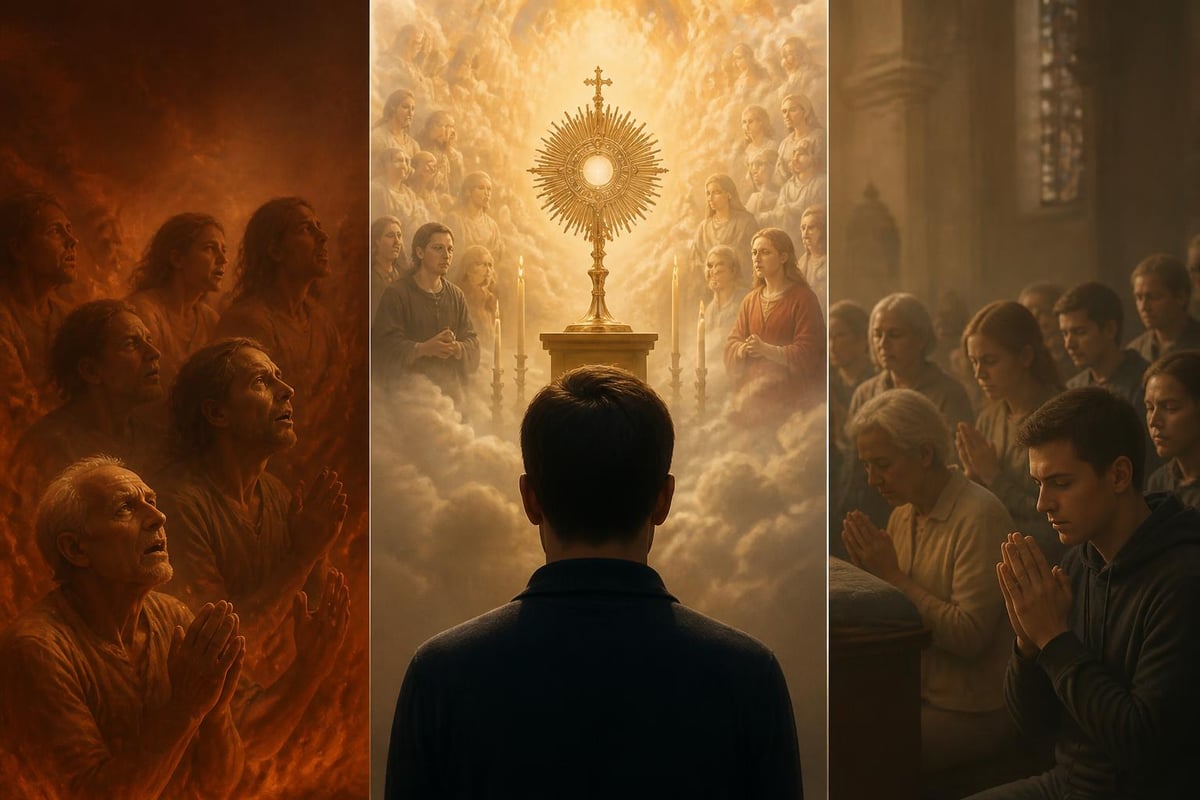
The Communion of Saints forms a cornerstone of Catholic theology, establishing an unbreakable spiritual bond among three distinct groups. This communion connects the Church Triumphant in heaven, the Church Suffering in purgatory, and the Church Militant on earth.
The three dimensions of the Communion of Saints include:
- Saints in heaven who intercede for those still on their earthly journey
- Souls in purgatory who benefit from the prayers of the faithful
- Believers on earth who can request prayers from both the living and the dead
This interconnectedness means that prayer flows in multiple directions. Catholics on earth pray for souls in purgatory and ask saints in heaven for intercession, while the saints themselves pray constantly for the faithful still facing earthly trials.
Why Catholics Honor Saints
Honoring saints differs fundamentally from worship, which Catholics reserve for God alone. Veneration acknowledges the grace God worked through these holy men and women, celebrating His power to transform human lives. When Catholics honor saints, they recognize the faithful servants who cooperated fully with divine grace and now enjoy eternal reward.
Brought to you by Journeys of Faith, founded by Bob and Penny Lord. We are an Augustinian Secular Institute - Cyber Apostles. Our mission is evangelization through media.
The practice of venerating saints dates to Christianity's earliest centuries, when believers gathered at martyrs' tombs to pray and celebrate the Eucharist. This ancient tradition acknowledges that those who died for Christ maintained a special closeness to God and could intercede powerfully for those still living.
The Canonization Process: Creating Official Saints
The process of recognizing saints in Roman Catholic Church involves rigorous investigation and multiple stages designed to verify authentic holiness. Canonization doesn't make someone a saint; it officially recognizes someone who already achieved sanctity through God's grace.
Steps to Sainthood
The journey from death to canonization typically follows this progression:
- Servant of God: The bishop of the deceased person's diocese opens an investigation into their life and virtues
- Venerable: The Pope recognizes that the person lived a life of heroic virtue
- Blessed: Beatification occurs after verification of one miracle (martyrs excepted) attributed to the person's intercession
- Saint: Canonization requires a second verified miracle, officially declaring the person a saint for universal veneration
| Stage | Requirements | Authority |
|---|---|---|
| Servant of God | Five-year waiting period, initial investigation | Local bishop |
| Venerable | Proven heroic virtue | Pope declares |
| Blessed | One verified miracle | Pope beatifies |
| Saint | Second verified miracle | Pope canonizes |
The Role of Miracles in Canonization
Miracles serve as divine confirmation that the candidate truly dwells with God and can intercede for those on earth. Medical boards and theological consultants examine alleged miracles with scientific rigor, ensuring no natural explanation exists for the healing or event.
The Church requires these miracles specifically to occur after the candidate's death, demonstrating their ongoing spiritual power and connection to God. This requirement distinguishes genuine sanctity from mere reputation or popularity.
Types and Categories of Saints
Saints in Roman Catholic Church encompass diverse categories, each reflecting different paths to holiness and various forms of Christian witness. Understanding these categories helps believers identify with saints who faced similar life circumstances or vocations.
Martyrs: Witnesses Through Death
Martyrs represent the earliest recognized category of saints, having given their lives rather than deny Christ. The Church considers martyrdom the supreme act of love and witness, requiring no additional miracle for beatification. From the apostles to modern witnesses like Carlo Acutis, martyrs demonstrate ultimate faithfulness.
Notable categories of martyrs include:
- Early Christian martyrs killed during Roman persecutions
- Medieval martyrs who died defending the faith
- Missionary martyrs killed while evangelizing
- Modern martyrs facing contemporary persecution
Doctors of the Church
The Church recognizes certain saints as Doctors based on their exceptional theological contribution and holiness. Currently, 37 Doctors of the Church include both men and women whose writings significantly influenced Catholic doctrine and spirituality.
Patron Saints
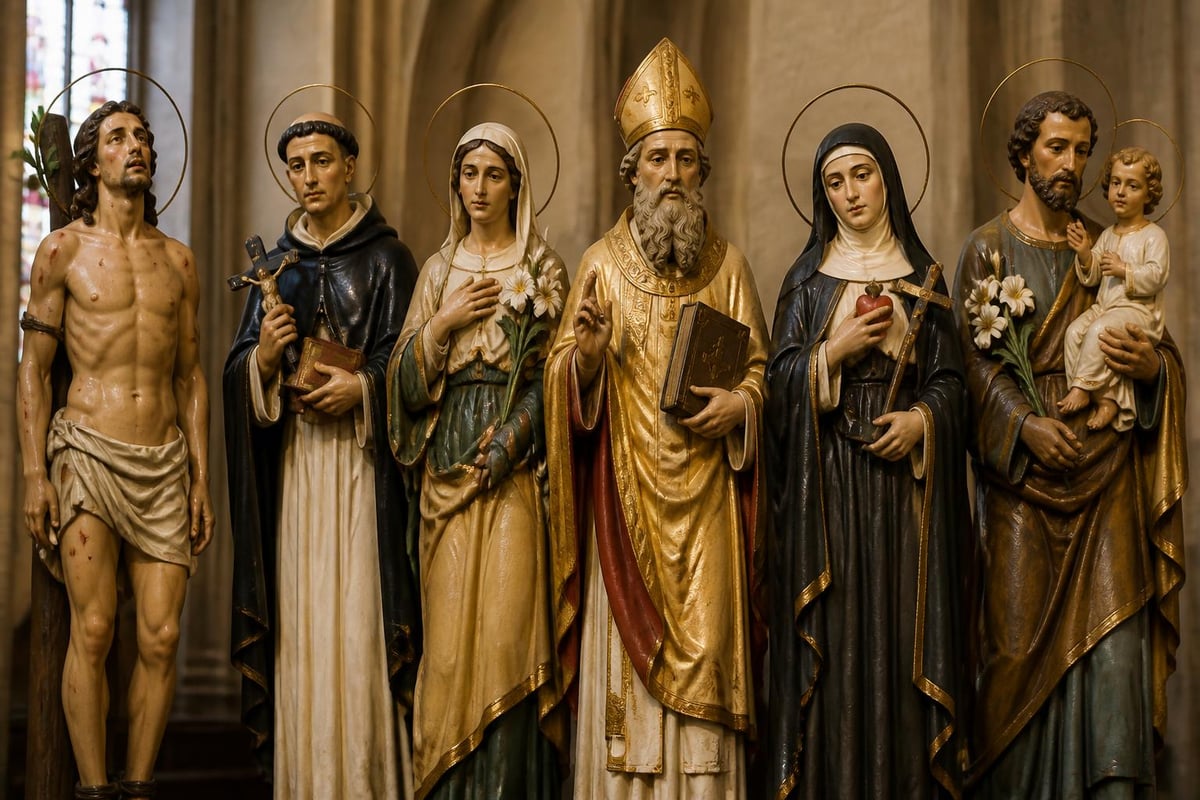
The tradition of patron saints assigns specific saints to protect particular groups, professions, places, or causes. This practice acknowledges the saints' earthly experiences and their ongoing care for related concerns. Saint Joseph serves as patron of workers, while Saint Francis of Assisi protects animals and the environment.
The Spiritual Practice of Invoking Saints
Catholics invoke saints not as intermediaries who replace Christ but as prayer partners who join their intercession to the faithful's petitions. This practice reflects the biblical teaching that the prayers of the righteous are powerful and effective.
How Saints Intercede
Saints intercede by presenting prayers to God on behalf of those who request their help. Their proximity to God and perfected love make their prayers particularly efficacious. EWTN provides extensive resources explaining how various saints intercede for specific needs and intentions.
The practice of asking saints for intercession parallels requesting prayers from living Christians. Just as believers ask fellow Catholics to pray for them, they also request prayers from the saints in heaven who can pray without ceasing.
Developing Devotion to Saints
Personal devotion to particular saints often develops based on shared experiences, patronage, or spiritual attraction. Many Catholics feel drawn to saints who faced similar struggles, worked in similar professions, or exhibited virtues they wish to develop.
Ways to develop devotion to saints include:
- Reading their biographies and writings
- Praying novenas in their honor
- Celebrating their feast days
- Visiting shrines or places associated with them
- Wearing medals or keeping images as reminders
For those seeking to deepen their understanding of saints in Roman Catholic Church tradition, exploring the lives of holy men and women provides both inspiration and practical guidance. The Catholic Saints Books collection offers comprehensive resources revealing how saints discovered holiness by studying those who came before them, creating a chain of sanctity across generations.
Saints as Role Models for Contemporary Catholics
The saints in Roman Catholic Church history offer more than distant inspiration; they provide practical blueprints for living faith in every era. Their struggles often mirror contemporary challenges, making their solutions remarkably relevant despite centuries separating their lives from ours.
Saints for Modern Challenges
Today's Catholics face unique pressures from technology, secularism, and cultural shifts. Yet saints throughout history confronted analogous situations requiring courage, discernment, and unwavering faith. Saint Thomas More faced governmental pressure to compromise his faith, while Saint Gianna Beretta Molla balanced professional life with family devotion.
| Modern Challenge | Relevant Saint | Key Lesson |
|---|---|---|
| Work-life balance | Saint Gianna Beretta Molla | Integrating faith with profession |
| Standing for truth | Saint Thomas More | Courage against pressure |
| Technology use | Blessed Carlo Acutis | Sanctifying modern tools |
| Family struggles | Saint Monica | Persistent prayer for loved ones |
Learning Holiness from the Saints
The saints demonstrate that holiness adapts to individual circumstances while maintaining core principles. A married person's path to sanctity differs from a priest's journey, yet both pursue the same goal. Studying diverse saints reveals multiple routes to heaven, encouraging believers to find their unique calling.
Modern saints continue demonstrating how ancient virtues apply to contemporary life. Their examples prove that technology, career demands, and cultural pressures need not impede spiritual growth when approached with faith and wisdom.
The Liturgical Celebration of Saints
The Church's liturgical calendar integrates the feasts of saints in Roman Catholic Church worship, ensuring their memory remains alive throughout the year. These celebrations serve multiple purposes: honoring the saints, providing spiritual formation, and uniting Catholics worldwide in common devotion.
Feast Days and Solemnities
The Church assigns different levels of celebration to various saints based on their universal significance and historical impact. Solemnities mark the most important feasts, while memorials and optional memorials honor saints of more localized or specialized importance.
Liturgical rankings for saint celebrations:
- Solemnities: Most important celebrations (e.g., Saint Joseph, Saints Peter and Paul)
- Feasts: Significant celebrations (e.g., many apostles and doctors)
- Memorials: Regular commemorations (e.g., many recognized saints)
- Optional Memorials: Local or specialized devotion (e.g., regional saints)
The Proper of Saints
The Proper of Saints within the liturgical calendar provides specific readings, prayers, and hymns for each saint's celebration. These elements often reflect the saint's particular charisms, experiences, or contributions to the Church, making each feast day uniquely meaningful.
Celebrating saint feast days connects contemporary Catholics to the broader communion of saints, reinforcing the reality that believers across time and space share one faith and one Lord. This practice also provides rhythm and variety to the liturgical year.
Popular Devotions to Specific Saints
Certain saints in Roman Catholic Church tradition have attracted widespread devotion across cultures and centuries. These popular devotions often include specific prayers, novenas, or practices associated with particular saints and their intercession.
Marian Devotion: The Greatest Saint
The Blessed Virgin Mary holds the highest place among all saints as the Mother of God. Devotion to Mary includes the Rosary, various feast days, and countless shrines worldwide. Her unique role as Theotokos (God-bearer) and her complete cooperation with grace make her the preeminent model of discipleship.
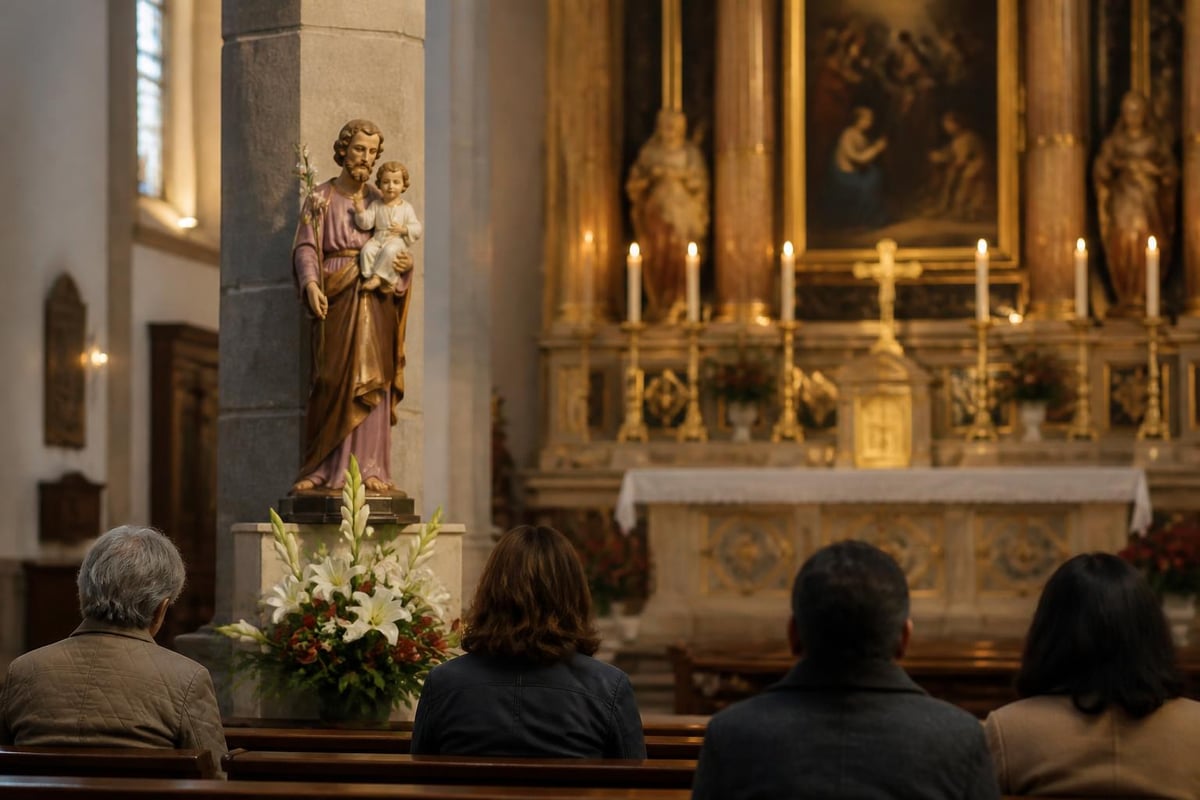
Saint Joseph: Protector and Provider
Devotion to Saint Joseph has grown significantly, particularly regarding his roles as protector of the Holy Family, patron of workers, and patron of a happy death. Catholics invoke his powerful intercession for family needs, employment concerns, and guidance in difficult decisions.
The Apostles and Early Saints
Saints Peter and Paul, the founding pillars of the Church, receive particular veneration for their apostolic witness and martyrdom. Other apostles, early martyrs, and Church fathers form the foundation of Catholic devotional life, their witness inspiring believers across two millennia.
Popular Saints for Specific Needs
Catholics often develop devotions to saints known for interceding in particular circumstances:
- Saint Anthony of Padua: Finding lost items and lost souls
- Saint Jude: Hopeless causes and desperate situations
- Saint Rita: Impossible cases and difficult marriages
- Saint Thérèse of Lisieux: Missionaries and those seeking the "little way"
- Saint Francis of Assisi: Animals, ecology, and peace
Understanding these devotions helps Catholics access the wealth of intercessory power available through the communion of saints, recognizing that specific saints offer particular help based on their earthly experiences and heavenly mission.
Relics and Sacred Objects
The veneration of relics associated with saints in Roman Catholic Church tradition extends devotion beyond prayer to include physical objects connected to holy persons. This practice, rooted in Scripture and early Church history, acknowledges God's power working through material creation.
Types of Relics
The Church categorizes relics into three classes based on their connection to the saint:
- First-class relics: Physical remains of the saint (bone, hair, blood)
- Second-class relics: Objects the saint used or wore (clothing, personal items)
- Third-class relics: Objects touched to first-class relics
The Purpose of Relic Veneration
Venerating relics serves as a tangible connection to the saint's holiness and God's transformative power. Throughout Scripture, physical objects associated with holy people transmitted divine power, from Elisha's bones bringing a man to life to handkerchiefs touched by Paul healing the sick.
The Church carefully authenticates relics and regulates their veneration, ensuring proper respect while preventing superstition. Major churches and cathedrals often house significant relics, making them accessible for pilgrim veneration.
Saints in Art, Culture, and Society
The influence of saints in Roman Catholic Church extends beyond religious practice into art, literature, culture, and social structures. Research shows how deeply saints have shaped European culture, with thousands of place names derived from holy patrons.
Iconography and Sacred Art
Christian art developed rich symbolic language for depicting saints. Artists used specific attributes, symbols, and scenes to make saints recognizable to viewers. Saint Peter carries keys, Saint Catherine holds a wheel, and Saint Sebastian appears pierced with arrows. Studies in computational art analysis demonstrate how consistently these symbols identify saints across centuries of artistic tradition.
Saints in Literature and Culture
Saints' lives have inspired countless literary works, from medieval hagiographies to modern novels and films. Their stories provide archetypal narratives of conversion, struggle, sacrifice, and triumph that resonate across cultural boundaries and historical periods.
Cultural impact of saints includes:
- Geographic names (San Francisco, Saint Louis, São Paulo)
- Educational institutions (Georgetown, Notre Dame, Saint Joseph's)
- Hospitals and charitable organizations
- Artistic masterpieces and architectural wonders
- Literary works and musical compositions
Living the Legacy
Modern Catholics continue the saints' legacy through charitable works, social justice initiatives, and spiritual renewal movements. Organizations founded by saints continue their missions centuries later, demonstrating the lasting impact of sanctity on social structures.
Discovering Your Patron Saint
Many Catholics find value in identifying with a particular patron saint who resonates with their life circumstances, profession, or spiritual journey. This practice personalizes the communion of saints, creating a focused relationship with a heavenly intercessor.
Methods for Choosing a Patron
Several approaches help Catholics select a patron saint:
- Birth or baptism date: Choosing the saint whose feast day falls on or near significant personal dates
- Confirmation name: Selecting a saint's name at Confirmation
- Shared vocation: Identifying with saints who held similar professions or life states
- Personal resonance: Feeling drawn to a particular saint's story or spirituality
- Specific needs: Seeking saints known for interceding in particular circumstances
Building Relationship with Your Patron
Once selected, developing relationship with a patron saint involves regular prayer, studying their life, and imitating their virtues. Many Catholics observe their patron saint's feast day as a personal celebration, attending Mass and reflecting on the saint's example.
The relationship with a patron saint provides spiritual friendship, guidance, and powerful intercession. This personal connection enriches faith life while connecting the individual to the broader tradition of the Church.
Resources for Studying the Saints
Comprehensive resources help Catholics deepen their knowledge of saints in Roman Catholic Church tradition. Britannica provides extensive articles examining the historical development and theological significance of Catholic saints, while detailed saint biographies offer in-depth information on hundreds of holy men and women.
Books and Written Resources
Reading saints' biographies, writings, and theological studies provides thorough formation. Primary sources-the saints' own words-offer direct access to their spiritual wisdom, while modern biographies make their lives accessible to contemporary readers.
Digital Resources and Media
Modern technology enables unprecedented access to saint resources through apps, websites, podcasts, and video content. Catholics can explore inspiring stories from the lives of saints through various media formats suited to different learning preferences.
Prayer Cards and Devotional Items
Physical devotional items like prayer cards, medals, and statues serve as tangible reminders of the saints' presence and intercession. These objects facilitate prayer and provide opportunities for brief spiritual reflection throughout daily activities.
The saints in Roman Catholic Church represent an inexhaustible treasury of wisdom, intercession, and inspiration for Catholics navigating modern life while pursuing holiness. Their diverse experiences demonstrate that sanctity remains achievable for everyone, regardless of circumstances or challenges. Whether you're seeking spiritual guidance, powerful intercession, or inspiring examples of faith lived courageously, Journeys of Faith offers comprehensive resources to help you discover and grow closer to the saints who can transform your spiritual journey.
Resources:
- Explore Journeys of Faith online store with thousands of Catholic items at https://journeysoffaith.com/collections
- Our unique Mega Search Engine at https://journeysoffaith.com/search is linked to hundreds of Catholic shops and stores
- Get the Journeys of Faith NEW App for iPhone or Android by searching for Journeys of Faith or visit https://journeysoffaith.com/pages/download-our-app
- Chat with us anytime at https://chatting.page/mjxs9aerrtgm3lmpndlcepmbyosntrjn
- We need your help to reach more souls. Please make a donation at https://journeysoffaith.com/pages/donate