

Saint Lucy of Syracuse stands as one of the most beloved virgin martyrs in Christian tradition, her feast day celebrated on December 13 across continents and cultures. When Catholics ask about st lucy patron saint of which causes or conditions, they discover a rich tapestry of patronages tied to light, vision, and spiritual illumination. Her intercession has been sought for centuries by those suffering from eye diseases, blindness, and various afflictions of sight, making her a powerful advocate in the communion of saints. Understanding her patronages requires exploring both her historical martyrdom and the devotional traditions that have flourished around her memory.
Historical Foundation of Saint Lucy's Patronages
The question of st lucy patron saint of what specific causes traces back to fourth-century Sicily, where Lucy's story unfolded during the Diocletian persecution. Born around 283 AD in Syracuse, she came from a wealthy Christian family and consecrated her virginity to Christ. According to traditional hagiographic accounts, Lucy distributed her possessions to the poor and rejected marriage proposals, which led to her denunciation as a Christian. Her martyrdom became the foundation for her patronages.
Historical records indicate that Lucy died around 304 AD, though the precise details of her execution vary across sources. The earliest accounts describe torture and execution by sword, while later medieval legends added dramatic elements including the removal of her eyes. Whether these eyes were torn out by persecutors or offered by Lucy herself to discourage an unwanted suitor, the association between Saint Lucy and vision became indelible in Catholic devotion.
The Eyes Patronage
St lucy patron saint of eye disorders and the blind represents her primary patronage, recognized universally throughout the Church. This connection stems from both her name and the legends surrounding her martyrdom. "Lucy" derives from the Latin "lux," meaning light, creating a natural theological association between the saint and illumination, both physical and spiritual.
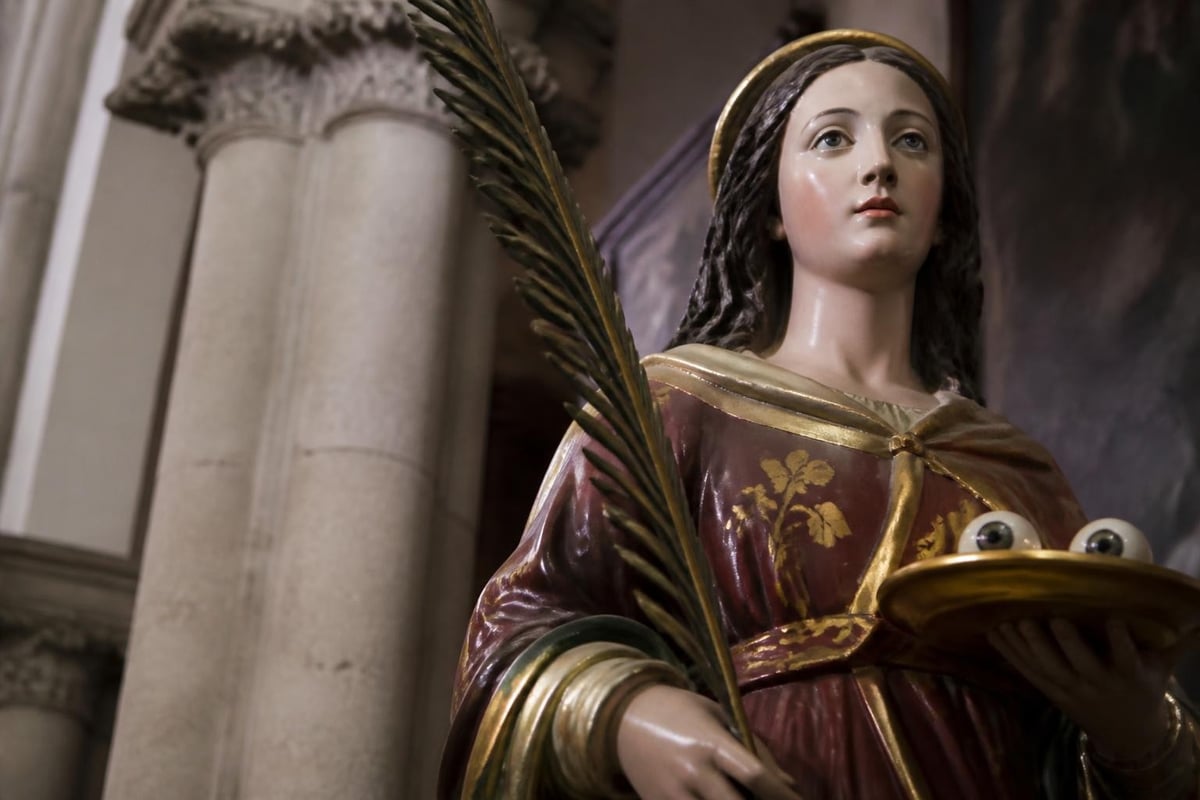
The iconographic tradition depicts Saint Lucy holding a plate or dish bearing two eyes, a striking visual that immediately communicates her special concern for those with vision problems. Devotees have reported miraculous healings of:
- Cataracts and degenerative eye conditions
- Sudden blindness or vision loss
- Chronic eye infections and inflammation
- Congenital vision impairments
- Light sensitivity disorders
Medieval and Renaissance artists consistently portrayed these symbolic eyes, reinforcing the popular devotion. The University of Madrid's iconography database documents hundreds of artistic representations showing this distinctive attribute across European churches and manuscripts.
Brought to you by Journeys of Faith, founded by Bob and Penny Lord. We are an Augustinian Secular Institute, Cyber Apostles. Our Mission is Evangelization through Media.
Comprehensive List of Saint Lucy's Patronages
Understanding st lucy patron saint of requires examining the full scope of her intercession beyond vision alone. The Church has recognized her patronage over multiple related and sometimes surprising causes through centuries of devotional practice.
| Primary Patronage | Secondary Patronages | Geographic Patronages |
|---|---|---|
| The blind | Throat infections | Syracuse, Sicily |
| Eye disorders | Hemorrhages | Various Italian cities |
| Eye disease | Dysentery | Sweden (cultural) |
| Ophthalmologists | Salespeople | Denmark (cultural) |
| Vision problems | Writers | Croatia regions |
St lucy patron saint of throat ailments may seem unexpected, but this patronage relates to accounts of her martyrdom. Some traditions describe attempts to burn Lucy at the stake or suffocate her with smoke before her final execution by sword. These trials led faithful suffering from throat conditions, respiratory problems, and speech difficulties to seek her intercession.
Professional and Geographic Patronages
The designation of st lucy patron saint of certain professions reflects medieval guild traditions. Writers and authors claimed her protection because literacy and vision were intimately connected in manuscript culture. Before widespread eyeglasses, failing vision ended many literary careers, making Lucy's intercession especially precious to scribes and scholars.
Salespeople and peddlers adopted Saint Lucy as their patroness in various European regions, possibly because traveling merchants faced eye strain from reading contracts and accounting ledgers by inadequate light. The connection may also relate to Lucy's own distribution of wealth, seeing her as a model of honest commerce and charitable dealing.
The Archdiocese of Syracuse maintains her primary shrine and celebrates her feast with special solemnity, as she remains the principal patron of the city. Her cult spread rapidly throughout Italy, and early Christian pilgrims visited the Catacomb of Saint Lucy where her relics were originally enshrined.
Feast Day Traditions and Cultural Celebrations
When examining st lucy patron saint of light and illumination, the December 13 feast day celebration reveals how her patronage extends beyond medical intercession into cultural and liturgical significance. Saint Lucy's Day falls during Advent, a season of waiting for Christ the Light of the World, creating rich theological resonance with her patronages.
Scandinavian Lucia Traditions
The most elaborate cultural celebrations occur in Sweden, Norway, and other Nordic countries, where st lucy patron saint of light assumes particular importance during the darkest time of year. Before calendar reforms, December 13 marked the winter solstice in the Julian calendar, the longest night of the year.
Swedish Lucia processions feature young women wearing white robes and wreaths of candles, singing traditional songs at dawn. The eldest daughter typically portrays Saint Lucy, bringing light and saffron buns to family members. This tradition began in the 18th century and became a significant national celebration by the 20th century.
- White robes symbolizing purity and Lucy's virginity
- Candle crowns representing the light she brought to persecuted Christians
- Saffron "Lucia buns" (lussekatter) served at dawn
- Charitable giving to the poor, echoing Lucy's own generosity
- Church services honoring the saint's martyrdom
Norwegian folk museums document how Lucia Day evolved from religious observance to national cultural festival, demonstrating how st lucy patron saint of light resonates in lands experiencing profound winter darkness. Scholars studying folkloric pageantry note how these celebrations reinforced both faith and national identity.
Italian and Mediterranean Celebrations
In Sicily and southern Italy, December 13 involves special foods, particularly wheat-based dishes rather than bread. This custom recalls a legendary grain ship that arrived in Syracuse during famine on Saint Lucy's feast day, saving the population from starvation. The st lucy patron saint of those suffering hunger and famine patronage, while less commonly cited, appears in these regional traditions.
Sicilian families prepare "cuccia," a sweet wheat berry pudding, avoiding all bread products on December 13. Evening processions carry Lucy's statue through Syracuse, and pilgrims visit her tomb and the cathedral dedicated to her memory.

Prayers and Devotional Practices
Catholics seeking st lucy patron saint of eye disorders and other patronages approach her through various established prayers and novenas. Traditional devotions emphasize both physical healing and spiritual illumination, recognizing that Lucy's patronage extends to helping believers see God's will clearly.
Traditional Prayer to Saint Lucy
The classic prayer invokes her intercession for physical sight while acknowledging her witness to Christ the true Light:
"Saint Lucy, you did not hide your light under a bushel, but let it shine for the whole world, for all the centuries to see. We may not suffer torture in our lives the way you did, but we are still called to let the light of our Christianity illumine our daily lives. Please help us to have the courage to bring our Christianity into our work, into our recreation, into our relationships, into every corner of our day."
Many devotees appreciate prayer cards that combine traditional invocations with Saint Lucy's story and image. For those seeking tangible reminders of their devotion to the saints, resources like those available through Catholic media ministries provide accessible ways to maintain daily prayer practices.
Novena Prayers
Nine-day novenas to Saint Lucy typically begin on December 4, concluding on her feast day. These structured prayer periods ask for specific graces:
- Day One: Thanksgiving for the gift of sight and light
- Day Two: Intercession for those suffering blindness
- Day Three: Prayer for spiritual vision and discernment
- Day Four: Petition for healing of eye diseases
- Day Five: Intercession for medical professionals treating vision
- Day Six: Prayer for writers, artists, and those whose work requires sight
- Day Seven: Petition for those in spiritual darkness
- Day Eight: Prayer for courage in witnessing to Christ
- Day Nine: General intercession and thanksgiving
The repetition across nine days reflects traditional Catholic devotional practice, allowing petitioners to deepen their relationship with the saint while persistently bringing their needs before God through her intercession.
Medical Patronage and Modern Relevance
The designation st lucy patron saint of eye conditions maintains profound relevance in contemporary healthcare. Ophthalmologists, optometrists, and vision care professionals honor her feast day, recognizing the spiritual dimension of their healing ministry. Catholic hospitals with ophthalmology departments often display images of Saint Lucy, reminding patients and staff of her intercession.
Specific Eye Conditions
Catholic tradition recognizes Saint Lucy's particular concern for various vision problems:
- Glaucoma: Progressive optic nerve damage
- Macular degeneration: Age-related vision loss
- Diabetic retinopathy: Diabetes-related eye damage
- Cataracts: Lens clouding requiring surgery
- Conjunctivitis: Infectious inflammation
- Corneal disorders: Surface damage or disease
- Retinal detachment: Emergency vision-threatening condition
- Optic neuritis: Nerve inflammation affecting sight
Patients facing these conditions frequently invoke st lucy patron saint of the blind, especially before surgeries or treatments. Many report spiritual peace and even physical improvement after prayers to Saint Lucy, though the Church carefully distinguishes between faith's consolations and medical miracles requiring thorough investigation.
Spiritual Blindness
Beyond physical ailments, st lucy patron saint of those in spiritual darkness offers intercession for another kind of vision. Catholic spiritual direction often employs blindness as a metaphor for sin's effects, moral confusion, or inability to perceive God's presence and will. Saint Lucy's witness during persecution demonstrates spiritual clarity even amid physical darkness and suffering.
Her feast day during Advent reminds believers to prepare for Christ's coming by seeking clearer spiritual vision. Prayers to Saint Lucy during this season ask for:
- Discernment in moral decisions
- Recognition of God's will in daily life
- Freedom from attachments that cloud judgment
- Wisdom to see others with Christ's compassion
- Understanding of Scripture and Church teaching
Relics and Pilgrimage Sites
Devotion to st lucy patron saint of various causes naturally leads faithful to sites preserving her relics and memory. The veneration of saints' bodily remains represents an ancient Catholic practice grounded in belief in the resurrection of the body and the communion of saints that transcends death.
Syracuse Cathedral and Catacombs
The primary pilgrimage destination remains Syracuse, Sicily, where Lucy lived and died. The Cathedral of Syracuse preserves her tomb and major relics, including portions of her body that survived medieval relic divisions. The building itself stands on the site of the ancient Temple of Athena, demonstrating Christianity's triumph over paganism in Lucy's homeland.
Below ground, the Catacomb of Saint Lucy preserves early Christian burial chambers where Lucy's body rested before translation to the cathedral. Pilgrims descend into these ancient passages, walking where fourth-century Christians gathered for clandestine worship during persecution. The catacombs' darkness and narrow passages make Lucy's association with light particularly poignant.
| Pilgrimage Site | Location | Relics/Significance |
|---|---|---|
| Syracuse Cathedral | Sicily, Italy | Primary tomb, major relics |
| Church of San Geremia | Venice, Italy | Substantial body portions |
| Cathedral of Bourges | France | Reliquary with remains |
| Church of St. Louis | Paris, France | Relic chapel |
| Various churches | Global | Minor relics, clothing fragments |
Recent Vatican Recognition
In December 2024, Pope Francis wrote personally to the Church of Syracuse regarding the temporary translation of Saint Lucy's body for special veneration. This papal attention underscores the saint's continued importance in Catholic devotional life and the Church's recognition of st lucy patron saint of the faithful seeking her intercession across twenty centuries.
The Holy Father's letter emphasized Lucy's witness to virginity, martyrdom, and unwavering faith, encouraging contemporary Catholics to follow her example of Christian courage. Such high-level Vatican engagement demonstrates that ancient saints like Lucy remain vitally relevant to modern Catholic practice and spirituality.
Saint Lucy in Art and Iconography
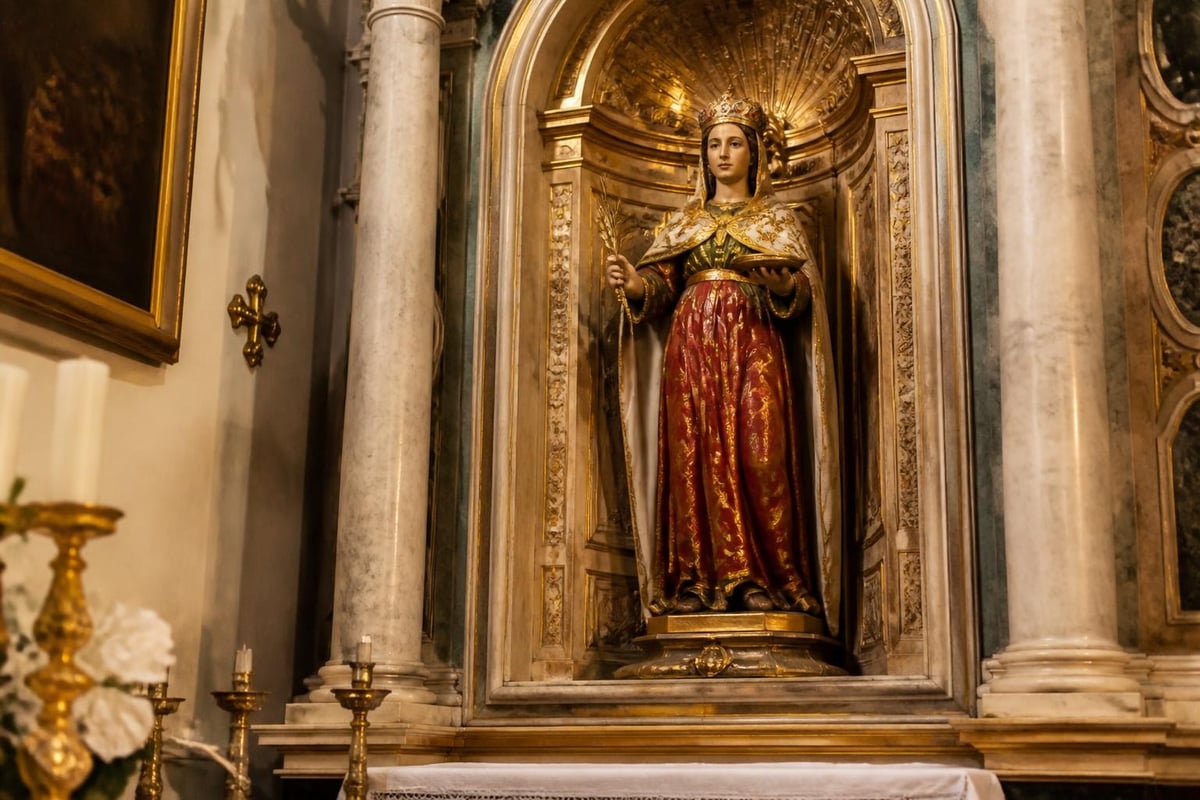
Understanding st lucy patron saint of various causes requires examining how artists have depicted her patronages through symbolic attributes. Religious art serves as visual theology, communicating complex spiritual truths through recognizable symbols that even illiterate medieval believers could interpret.
Standard Iconographic Elements
Traditional representations of Saint Lucy include consistent elements:
- Eyes on a plate or dish: The most distinctive attribute, immediately identifying her
- Palm frond: Universal symbol of martyrdom in Christian art
- Oil lamp or candle: Representing her name's meaning (light) and spiritual illumination
- Red robe or cloak: Signifying martyrdom and blood witness
- Crown or wreath: Denoting virginity and victory over temptation
- Sword: Instrument of her martyrdom in most accounts
Renaissance masters including Franceso del Cossa, Domenico di Pace Beccafumi, and numerous Venetian painters created magnificent altarpieces depicting Saint Lucy. These works adorned churches throughout Catholic Europe, ensuring that believers encountering st lucy patron saint of eye ailments or other needs could immediately recognize her image and seek her intercession.
Regional Variations
Different artistic traditions emphasized various aspects of Lucy's story. Northern European art often stressed the lamp or candle, connecting with Scandinavian light festivals. Italian art frequently depicted her distributing alms to the poor, emphasizing her charity. Spanish colonial art showed her crowned as a noble virgin, reflecting Counter-Reformation emphases on consecrated virginity.
Modern sacred art continues this tradition, with contemporary Catholic churches commissioning new images of Saint Lucy that maintain traditional symbols while employing current artistic styles. Stained glass windows, mosaics, sculptures, and paintings ensure that st lucy patron saint of the blind and light-seekers remains visually present in Catholic worship spaces worldwide.
Living Devotion in 2026
As Catholics in 2026 continue honoring st lucy patron saint of eye disorders and illumination, they discover that ancient devotions speak powerfully to contemporary needs. The digital age brings new vision challenges, from screen-induced eye strain to the metaphorical blindness of information overload and moral confusion.
Modern Applications
Twenty-first century Catholics invoke Saint Lucy's intercession for:
- Digital eye strain: Prolonged screen use causing fatigue and damage
- Laser eye surgery: Successful LASIK and corrective procedures
- Premature infant vision: Retinopathy of prematurity in neonates
- Elderly vision loss: Age-related macular degeneration
- Discernment in media consumption: Spiritual clarity amid digital noise
- Recognizing truth: Cutting through misinformation and propaganda
The saint's patronage proves remarkably adaptable to contemporary health and spiritual challenges. Catholic ophthalmology departments organize annual Saint Lucy Day celebrations, combining Mass, professional development, and charitable vision screening for underserved populations.
Practical Devotional Resources
Catholics seeking to deepen devotion to st lucy patron saint of light and vision can access numerous resources through Catholic media ministries dedicated to evangelization. Books, prayer cards, medals, and educational materials help believers learn about saints and incorporate their intercession into daily prayer life.
Prayer cards featuring Saint Lucy serve multiple purposes: personal prayer aids, gifts for those facing eye surgery or vision challenges, and teaching tools for Catholic education. These tangible devotional items connect modern believers with centuries of Catholic tradition and the communion of saints.
Intercession for Evangelization
Beyond her traditional patronages, some Catholics invoke st lucy patron saint of evangelization efforts, asking her to help others "see" Christ's truth. Her fearless proclamation of faith during persecution inspires contemporary evangelists facing hostile or indifferent audiences. Lucy's willingness to sacrifice everything, including her sight and life, for Christ challenges modern disciples to examine their own commitment.
Catholic media apostolates recognize particular kinship with Saint Lucy, as their work illuminates truth and brings spiritual light into dark places. Writers, filmmakers, podcasters, and digital content creators seek her intercession for clarity of vision, both literal and spiritual, in their evangelical work.
Theological Significance of Light Symbolism
The question of st lucy patron saint of what causes leads naturally to reflection on light theology. Scripture saturates readers with light imagery, from Genesis's first creative word ("Let there be light") through Revelation's vision of the heavenly Jerusalem needing no sun because God's glory illuminates it.
Biblical Foundations
Christ's self-identification as "the light of the world" (John 8:12) provides the theological foundation for Saint Lucy's patronages. Her name, life, and martyrdom embody this scriptural theme:
- Creation Light: God's first creative act separating light from darkness (Genesis 1:3-5)
- Guidance Light: The pillar of fire leading Israel through wilderness (Exodus 13:21)
- Revelatory Light: God's law as "a lamp to my feet" (Psalm 119:105)
- Incarnational Light: Christ as the true light enlightening everyone (John 1:9)
- Ecclesial Light: Believers commanded to be "light of the world" (Matthew 5:14)
- Eschatological Light: Eternal day with no need for lamp or sun (Revelation 22:5)
Saint Lucy's witness fulfilled Christ's command that disciples not hide their light under a basket but let it shine before others. Her public confession of faith during deadly persecution exemplified this radical Christian luminosity.
Spiritual Vision vs. Physical Sight
St lucy patron saint of both physical and spiritual vision reminds Catholics that these two aspects of sight interrelate without being identical. Jesus healed physical blindness as a sign of his power to restore spiritual sight. The man born blind (John 9) progresses from physical healing to spiritual enlightenment, ultimately worshiping Christ while religious leaders remain in willful blindness.
Saint Lucy's intercession thus addresses both bodily and spiritual needs simultaneously. A prayer for healing from cataracts might include petition for clearer perception of God's will. Invocation during glaucoma treatment can extend to asking help seeing others with Christ's compassion. The st lucy patron saint of designation encompasses this holistic Catholic anthropology that refuses to separate body from soul.
Contemporary Witness and Example
Beyond seeking st lucy patron saint of intercession for healing, Catholics look to Lucy as an exemplar of Christian virtue. Her life demonstrates how young people can live radical discipleship, how wealth should serve the poor, and how virginity consecrated to Christ represents supreme freedom rather than deprivation.
Model of Courage
Lucy's martyrdom during the Diocletian persecution occurred when she was likely still a teenager or young adult. Her courage in refusing both marriage to a pagan and denial of Christ speaks powerfully to contemporary youth facing pressure to compromise faith for social acceptance or material gain.
The st lucy patron saint of the persecuted Church title, while less formally recognized, emerges from her example. Christians facing discrimination, legal penalties, or violence for their faith invoke her prayers for courage to remain steadfast. Her intercession proves especially meaningful in regions where Christianity currently faces active suppression.
Consecrated Virginity
Saint Lucy's vow of virginity dedicated to Christ predated formal religious communities but embodied the same charism. Her decision to remain unmarried despite family and social pressure demonstrates that virginity represents positive consecration to God rather than mere absence of marriage.
Modern consecrated virgins, religious sisters, and laypeople choosing celibacy for the Kingdom find in st lucy patron saint of the consecrated life a powerful intercessor and model. Her example shows that this vocation offers authentic fulfillment and purpose, contradicting contemporary culture's frequent incomprehension of freely chosen celibacy.
Saint Lucy's patronages over eyes, light, the blind, and numerous other causes reflect her powerful intercession cultivated through seventeen centuries of Catholic devotion. Whether seeking healing from vision problems, clarity in spiritual discernment, or courage in Christian witness, believers find in Saint Lucy a compassionate advocate whose own suffering and triumph equip her to understand and assist those who call upon her. Journeys of Faith offers extensive resources on the saints, including prayer cards, books, and devotional materials that help Catholics deepen their relationship with holy intercessors like Saint Lucy and grow in faith through their inspiring examples of discipleship. Explore the full collection of Catholic resources, including thousands of items supporting prayer and evangelization, at Journeys of Faith. Journeys of Faith is blessed to provide Catholic media, including podcasts and inspirational content, free of charge across multiple media platforms for viewers and listeners around the world. While access to this content remains free, there are significant and continually increasing costs associated with producing, hosting, and distributing these programs. Your support helps us continue sharing the beauty of the Catholic faith with souls through our mission of evangelization. Please make a donation at https://journeysoffaith.com/pages/donate to support our ongoing work bringing the light of Christ to the world.
