

Fear grips the human heart in countless ways. From anxiety about daily uncertainties to overwhelming dread about the future, fear can paralyze our faith and diminish our joy. For Catholics seeking spiritual relief from these burdens, the surrender novena for fear offers a powerful pathway to peace through complete trust in God's providence. This nine-day prayer practice, rooted in the profound spiritual wisdom of Servant of God Dolindo Ruotolo, invites the faithful to release their anxieties and place every concern into the hands of Jesus Christ.
Understanding the Surrender Novena for Fear
The surrender novena for fear emerged from the spiritual writings of Father Dolindo Ruotolo, an Italian priest who lived from 1882 to 1970. Known for his deep mystical experiences and unwavering trust in divine providence, Father Dolindo composed what would become one of Catholicism's most cherished prayers during a particularly difficult period of his life. When faced with unjust accusations and ecclesiastical trials, he received an interior locution from Jesus that formed the foundation of this novena.
The central message is beautifully simple yet profoundly challenging: "Jesus, You take over." This phrase encapsulates the entire spiritual practice of surrendering our fears, worries, and anxieties to Christ's loving care. The official Dolindo website provides detailed information about the Servant of God's life and the authentic origins of this prayer tradition.
Research shows that prayer practices involving surrender and trust can positively impact mental health outcomes. A systematic review of prayer types and anxiety demonstrates how different forms of prayer relate to psychological well-being, with surrender-focused prayers showing particular promise for reducing anxiety symptoms.
The Structure and Practice
The surrender novena for fear follows a traditional nine-day format, though many practitioners find it so beneficial they repeat it continuously. Each day involves reciting the same core prayer, which begins with an acknowledgment of human weakness and culminates in an act of complete trust in Jesus.
The daily prayer includes several key elements:
- Acknowledgment of helplessness: Recognizing our inability to solve problems through worry alone
- Expression of trust: Affirming faith in Jesus's power and willingness to help
- Act of surrender: Explicitly placing concerns into Christ's hands
- Request for intervention: Asking Jesus to "take over" the situation
- Promise of peace: Trusting that divine providence will provide what is truly needed
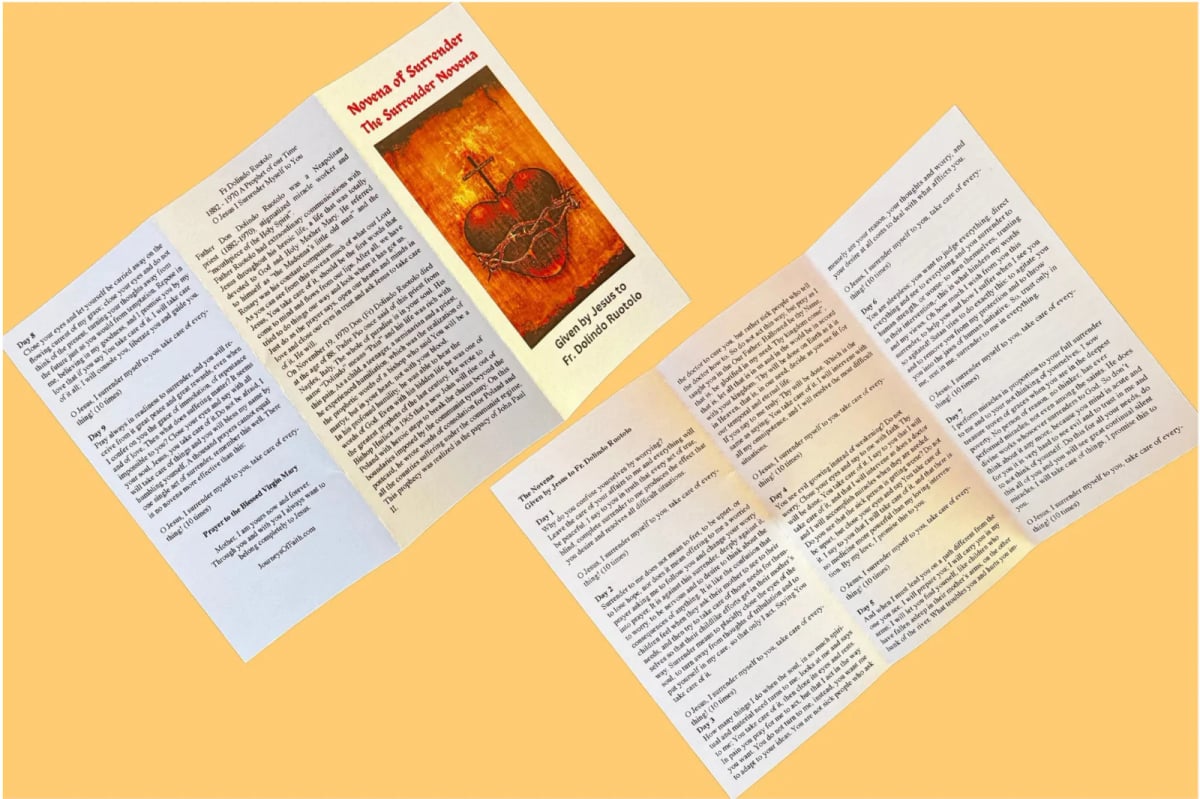
Many Catholics find that maintaining physical prayer aids enhances their practice. Prayer cards and devotional materials serve as tangible reminders of our commitment to trust, especially during moments when fear threatens to overwhelm our faith. Journeys of Faith offers beautifully crafted Surrender Novena Packages that include the complete prayer text in a portable format, making it easy to maintain the practice throughout busy days.

Brought to you by Journeys of Faith, founded by Bob and Penny Lord. We are an Augustinian Secular Institute-Cyber Apostles-our mission is evangelization through media.
The Spiritual Foundations of Surrendering Fear
Catholic teaching on divine providence provides the theological framework for understanding the surrender novena for fear. Scripture repeatedly instructs believers to "cast all your anxieties on him, because he cares for you" (1 Peter 5:7) and reminds us that God "knows what you need before you ask him" (Matthew 6:8). The surrender novena translates these biblical principles into a concrete spiritual practice.
Saint Thérèse of Lisieux exemplified this spirituality of complete abandonment to God's will. Her "Little Way" emphasized childlike trust in the Father's love, recognizing that we are too small to climb the stairway to heaven through our own efforts. Instead, we must allow ourselves to be carried by divine mercy. This resonates deeply with the surrender novena's core message.
Neuroscience and Spiritual Surrender
Recent neuroscientific research provides fascinating insights into how prayer practices like the surrender novena for fear affect the brain. Studies examining the neuroscience of Christian prayer and attachment reveal that surrender-focused prayer engages neural pathways associated with emotional regulation and secure attachment patterns.
When we repeatedly practice surrendering our fears through novena prayer, we're not merely engaging in wishful thinking. We're actually reshaping neural connections that govern our stress responses. The brain's plasticity allows these spiritual practices to create lasting changes in how we process anxiety and uncertainty.
| Prayer Type | Primary Brain Regions | Emotional Effect |
|---|---|---|
| Petitionary Prayer | Prefrontal cortex, language centers | Variable, goal-focused |
| Contemplative Prayer | Default mode network, attention systems | Calming, present-centered |
| Surrender Prayer | Attachment circuits, emotion regulation | Trust-building, anxiety-reducing |
Overcoming Common Obstacles to Surrender
The surrender novena for fear sounds simple in theory, but most practitioners encounter significant challenges when attempting to truly relinquish control. Our human nature craves certainty and struggles against the vulnerability inherent in complete trust. Understanding these obstacles helps us address them effectively.
The Illusion of Control
Modern culture reinforces the belief that we can and should control every aspect of our lives. This illusion creates a fundamental tension with the surrender novena's message. We cannot simultaneously hold onto our fears and give them to Jesus. The practice demands a radical choice: Will we trust our own anxious calculations, or will we trust divine providence?
Many people report that their biggest struggle isn't believing God can help-it's believing God will help in the specific way they desire. This reveals a subtle form of conditionality in our surrender. True trust means accepting that God's solution may look different from our preferred outcome while remaining confident that it will ultimately serve our highest good.

Practical Steps for Deeper Surrender
Implementing the surrender novena for fear effectively requires more than simply reciting words. Consider these practical approaches:
-
Create a dedicated prayer time: Choose the same time each day to pray the novena, establishing a consistent rhythm that reinforces the practice.
-
Journal your concerns: Write down specific fears before praying, then symbolically place the paper in a prayer box or before a crucifix as you surrender them to Jesus.
-
Combine with sacramental life: Whenever possible, pray the surrender novena before or after receiving the Eucharist or Reconciliation, allowing sacramental grace to strengthen your trust.
-
Practice gratitude simultaneously: Each day, list three blessings alongside your fears, training your mind to recognize God's faithful provision.
-
Seek community support: Share your practice with trusted Catholic friends who can encourage you when surrender feels difficult.
The Archdiocese of Denver's prayer resources offer additional guidance on integrating novena practices into a comprehensive Catholic prayer life, including recommendations for combining different devotions.
The Relationship Between Fear and Faith
Catholic spirituality recognizes that fear and faith exist in a dynamic relationship. Perfect love casts out fear (1 John 4:18), yet we rarely experience perfect love in this life. The surrender novena for fear doesn't promise the immediate elimination of all anxious feelings. Instead, it offers a framework for transforming how we relate to our fears.
Research on religious coping during crises demonstrates both the benefits and complexities of turning to spiritual practices during times of heightened anxiety. While some forms of religious coping prove highly beneficial, others-particularly those focused on pleading with God to change circumstances rather than trusting His wisdom-may actually increase distress.
Distinguishing Healthy from Unhealthy Fear
Not all fear is spiritually problematic. The Catholic tradition recognizes "fear of the Lord" as a gift of the Holy Spirit, representing reverent awe and respect for God's majesty. This healthy fear coexists peacefully with trust and actually deepens our relationship with the Divine.
The surrender novena for fear addresses unhealthy fear-the anxious worry that undermines peace and paralyzes action. This type of fear manifests in several forms:
- Catastrophic thinking: Imagining worst-case scenarios and treating them as inevitable
- Excessive worry about the future: Inability to remain present due to anxiety about what might happen
- Fear of suffering: Resistance to accepting that God may permit difficult experiences for our spiritual growth
- Fear of loss: Clinging desperately to people, possessions, or circumstances rather than holding them with open hands
By repeatedly surrendering these unhealthy fears through the novena practice, we gradually develop a different interior posture-one characterized by peace even amid uncertainty.
Testimonies and Spiritual Fruits
Throughout the decades since Father Dolindo composed this prayer, countless Catholics have reported profound experiences of peace and providence through practicing the surrender novena for fear. While individual experiences vary, common themes emerge in these testimonies.
Many practitioners describe an initial period of struggle where surrender feels impossible or even irresponsible. Gradually, as they persist in the daily prayer, a subtle shift occurs. Circumstances may or may not change, but their internal response to difficulty transforms. Where anxiety once dominated, peace begins to take root.
Documented Outcomes
Those who maintain the surrender novena for fear often report several spiritual fruits:
| Spiritual Fruit | Description | Timeline |
|---|---|---|
| Interior Peace | Calm that persists despite external circumstances | Often noticed within first novena cycle |
| Increased Trust | Greater confidence in God's faithful provision | Develops gradually over multiple cycles |
| Detachment | Healthy ability to hold circumstances loosely | Emerges with consistent long-term practice |
| Gratitude | Enhanced awareness of daily blessings | Often accompanies growing trust |
| Spiritual Freedom | Liberation from obsessive worry patterns | Deepens over months of practice |
The Pew Research Center's findings on religion and well-being provide broader context, showing correlations between active religious practice and various measures of psychological health and life satisfaction across diverse populations.
Integrating the Surrender Novena into Catholic Devotional Life
The surrender novena for fear works most powerfully when integrated into a comprehensive Catholic spiritual life rather than practiced in isolation. It complements other devotions and sacramental practices, creating a holistic approach to growing in faith and trust.
Connections to Other Devotions
The surrender novena shares deep spiritual connections with several other Catholic prayer traditions:
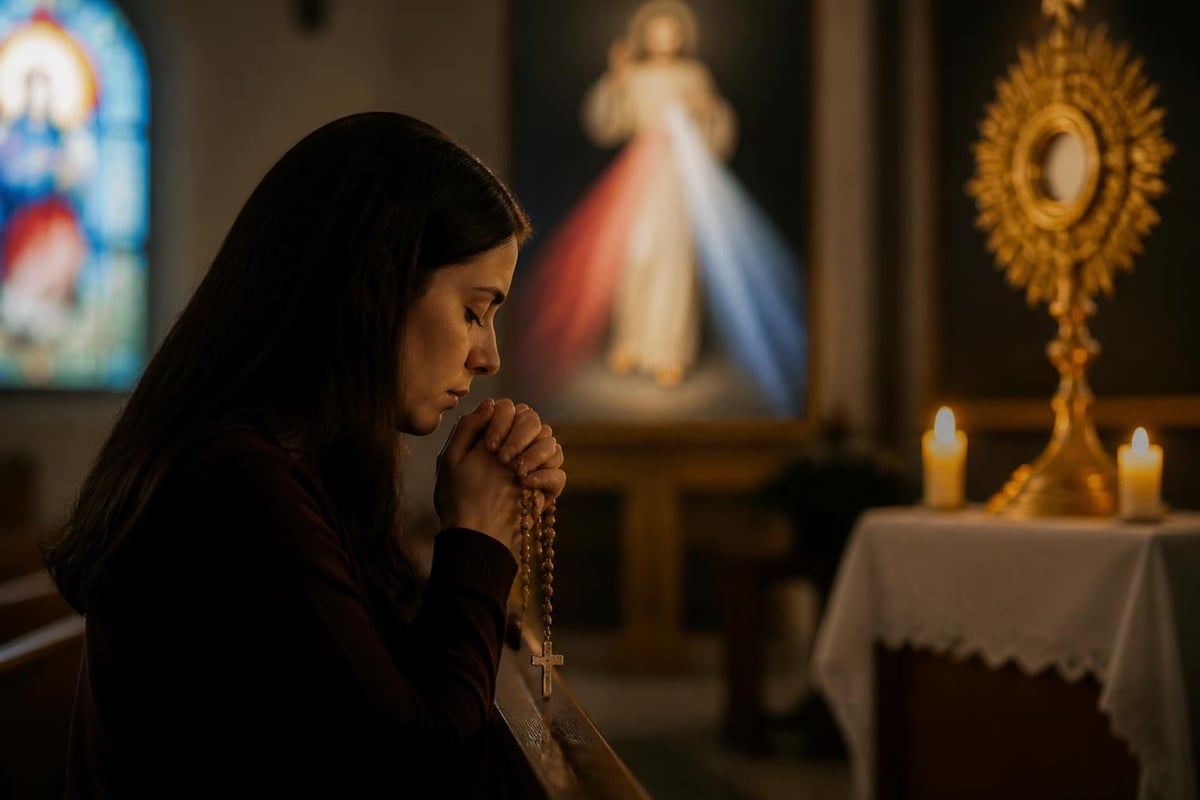
The Divine Mercy Devotion emphasizes trusting in God's merciful love, particularly in our weakness and sinfulness. Both devotions call us to abandon ourselves to divine goodness rather than relying on our own strength.
Marian Consecration involves placing ourselves entirely under Mary's maternal care, asking her to guide us to complete union with Jesus. This mirrors the surrender novena's call to relinquish control and trust divine providence.
The Rosary offers meditative repetition that calms anxious thoughts while focusing the mind on Christ's life, death, and resurrection. Praying the surrender novena before or after the Rosary can deepen both practices.
For those interested in exploring how different Catholic saints modeled trust and surrender, the lives of holy men and women provide inspiring examples that complement the surrender novena practice.
A Practical Weekly Schedule
Consider this example of integrating the surrender novena for fear into a weekly rhythm:
- Daily: Pray the surrender novena at a consistent time
- Weekly: Attend Mass and receive the Eucharist
- Weekly: Participate in Eucharistic Adoration while meditating on surrender
- Monthly: Celebrate the Sacrament of Reconciliation, confessing failures to trust
- Ongoing: Maintain a gratitude journal alongside surrender practice
This integrated approach recognizes that spiritual growth rarely results from a single practice. Instead, the surrender novena for fear becomes part of a rich tapestry of prayer, sacraments, and devotions that collectively transform our relationship with God.
The Theological Virtue of Hope
At its core, the surrender novena for fear cultivates the theological virtue of hope. Unlike optimism, which represents a psychological disposition to expect positive outcomes, theological hope is a supernatural gift that enables us to trust in God's promises regardless of circumstances.
The Catechism of the Catholic Church teaches that hope "keeps man from discouragement; it sustains him during times of abandonment; it opens up his heart in expectation of eternal beatitude" (CCC 1818). This perfectly describes the interior transformation that the surrender novena aims to facilitate.
Hope Versus Presumption
An important distinction exists between genuine hope and presumption. Presumption assumes God will act according to our preferences without regard for His wisdom or our spiritual needs. True hope trusts that God will provide what we genuinely need, even when that differs from our desires.
The surrender novena for fear guards against presumption through its emphasis on "Jesus, You take over." We're not dictating outcomes but entrusting the entire situation-including the solution-to divine providence. This preserves both our dignity as creatures who can petition God and God's sovereignty to answer in the way that best serves our eternal good.
Contemporary research on brief prayer interventions suggests that focused, trusting prayer practices can produce measurable reductions in anxiety even in clinical settings, supporting the therapeutic value of surrender-based spiritual practices when integrated with appropriate medical and psychological care.
Addressing Specific Fears Through Surrender
While the surrender novena for fear applies to all anxieties, different types of fear may require particular attention and application. Understanding how to direct the practice toward specific concerns enhances its effectiveness.
Financial Fears
Economic anxiety affects millions of people, creating worry about provision, debt, employment, and future security. When praying the surrender novena for fear related to finances, focus on several key truths:
- God knows our material needs before we ask (Matthew 6:32)
- Divine providence has sustained believers throughout history
- True security comes from relationship with God, not bank accounts
- Surrendering financial fears doesn't mean abandoning responsible stewardship
The practice involves praying the novena while actively doing what lies within your power (budgeting wisely, seeking employment, managing resources responsibly) while trusting God with outcomes beyond your control.
Health-Related Fears
Illness, medical diagnoses, and concerns about physical well-being generate intense fear for many people. The surrender novena for fear offers particular comfort here because it acknowledges both the reality of suffering and the presence of divine love within it.
Catholics understand that Jesus doesn't always remove suffering but promises to accompany us through it. The surrender novena helps us accept this mystery, trusting that even painful experiences can serve redemptive purposes when united with Christ's passion.
Relational Anxieties
Fears about relationships-whether concerning children, spouses, family members, or friendships-touch the deepest parts of our hearts. These anxieties often stem from love, making them particularly difficult to surrender because releasing them feels like we're abandoning those we care about.
The surrender novena for fear reminds us that God loves our loved ones infinitely more than we do and desires their well-being even more ardently than we can imagine. Surrendering relational fears means trusting that divine providence works in their lives too, even when we cannot see or control the process.
The Role of Spiritual Direction
While the surrender novena for fear can be practiced individually, working with a spiritual director significantly enhances its effectiveness. A qualified director helps identify subtle ways we resist genuine surrender and offers guidance when the practice feels difficult or ineffective.
Spiritual directors trained in Catholic tradition understand the theological foundations of surrender and can distinguish between healthy trust and unhealthy passivity. They help ensure we're surrendering to God's will rather than simply avoiding responsibility or difficult decisions.
Finding Support
Many parishes offer access to spiritual direction either through priests, deacons, or trained lay spiritual directors. Religious communities often provide this ministry as well. When selecting a spiritual director, look for someone who:
- Demonstrates deep fidelity to Catholic teaching
- Has received formal training in spiritual direction
- Exhibits the fruits of the Spirit in their own life
- Understands the particular charisms of different prayer traditions
- Creates a safe, confidential environment for honest sharing
The journey of learning to surrender fear is rarely linear. A good spiritual director walks alongside you through periods of progress and struggle, helping you discern God's action in your interior life.
For additional resources on Catholic spirituality and devotional practices, explore the extensive collection at Journeys of Faith, which features insights on the Eucharist, Mary, and the Saints-all of whom model perfect trust in divine providence.
Persevering When Surrender Feels Impossible
Even committed practitioners of the surrender novena for fear encounter periods when surrender feels utterly impossible. External circumstances may worsen, anxiety may intensify, or the practice may feel hollow and ineffective. These difficulties don't indicate failure but rather present opportunities for deeper growth.
The Dark Night of Surrender
Drawing on the mystical theology of Saint John of the Cross, we can understand that sometimes God permits periods of spiritual dryness precisely to purify our trust. When surrender comes easily and brings immediate consolation, we might unknowingly be trusting in the feeling of peace rather than in God Himself.
When surrender becomes difficult-when we pray the novena repeatedly while feeling no relief-we're invited to a purer form of trust. This is trust that persists not because of what we feel but because of who God is. This is the surrender that most profoundly transforms us.
During these challenging periods:
- Continue the daily practice even when it feels mechanical
- Remember that faithfulness matters more than feelings
- Seek support from spiritual directors or trusted Catholic friends
- Review past experiences of God's faithfulness to strengthen current trust
- Unite your struggle with Christ's agony in Gethsemane, where He modeled perfect surrender despite intense suffering
The neuroscience of religious practice reveals that consistent spiritual practices create neurological changes even when practitioners don't experience immediate subjective benefits, supporting the value of persevering through dry periods.
Maintaining Realistic Expectations
The surrender novena for fear is not magic. It doesn't guarantee that circumstances will change according to our preferences or that all anxiety will instantly dissolve. What it does offer is a framework for progressively developing trust in divine providence while cultivating interior peace that can coexist with difficult external realities.
Set realistic expectations for your practice:
- Peace develops gradually, not instantly
- Some anxiety may persist while its grip on your heart loosens
- External circumstances may or may not change
- The novena works in concert with other spiritual practices and, when appropriate, professional mental health care
- Transformation unfolds according to God's timeline, not ours
The surrender novena for fear offers Catholic faithful a time-tested pathway to peace through radical trust in Jesus Christ's loving providence. By consistently placing our anxieties into His hands and allowing Him to "take over," we gradually experience the transformation from fear to faith that characterizes authentic Christian discipleship. Whether you're new to this devotion or seeking to deepen your existing practice, Journeys of Faith provides the spiritual resources, prayer materials, and Catholic media you need to support your journey. Explore thousands of Catholic items including books, prayer cards, and devotional materials at our online store, and consider supporting our mission of evangelization through media with a donation so we can continue offering free Catholic content to souls worldwide.
