

The practice of asking saints to pray for us represents one of the most beautiful yet often misunderstood aspects of Catholic spirituality. When Catholics engage in the saints prayer, they are not worshiping created beings or turning away from God. Rather, they are recognizing the profound truth that the Church extends beyond the visible world into heaven itself, where the saints remain actively engaged in the life of faith. This ancient practice, rooted in Scripture and early Christian tradition, offers believers a powerful way to access heaven's intercession while deepening their understanding of the communion of saints.
Understanding the Theological Foundation of the Saints Prayer
The saints prayer rests on several interconnected theological principles that have guided Catholic teaching for centuries. At its core, this practice acknowledges that death does not sever the bonds of Christian charity and prayer. The saints in heaven, perfected in love and united with Christ, continue to care for those still journeying on earth.
Scripture provides multiple foundations for this practice:
- Revelation 5:8 depicts the twenty-four elders holding golden bowls full of incense, "which are the prayers of the saints"
- 2 Maccabees 15:12-14 shows the prophet Jeremiah interceding for God's people after his death
- James 5:16 teaches that "the prayer of a righteous person has great power"
- Hebrews 12:1 describes believers as "surrounded by so great a cloud of witnesses"
The Catholic Encyclopedia's entry on intercession provides extensive historical-theological background, tracing how the Church Fathers understood and practiced asking saints to pray for the faithful. This wasn't an innovation but rather a natural extension of the biblical pattern of asking fellow Christians for their prayers.
The Distinction Between Worship and Veneration
One critical aspect of understanding the saints prayer involves recognizing the difference between latria (worship owed to God alone) and dulia (the honor given to saints). Catholics do not pray to saints in the same way they pray to God. Instead, they ask saints to pray for them, much as one might ask a friend or family member to intercede.
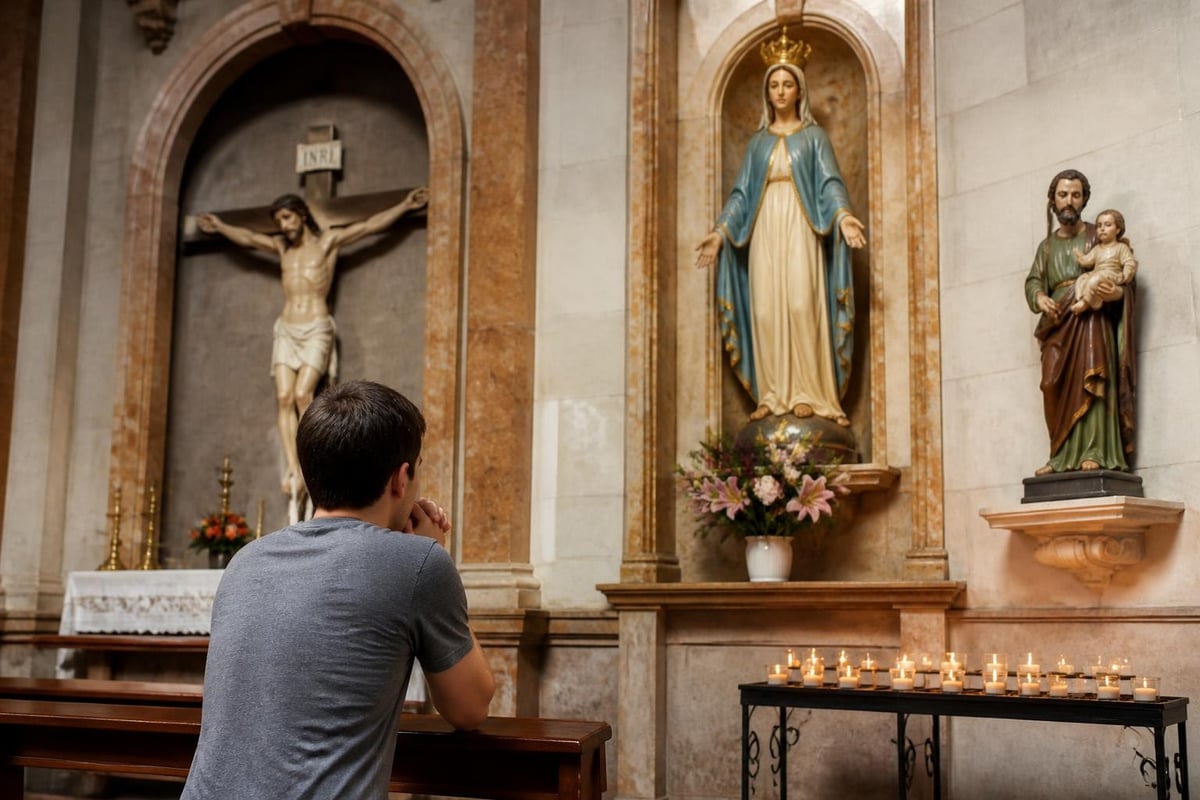
This distinction becomes clearer when examining the actual language used in traditional Catholic prayers. The saints prayer typically uses phrases like "pray for us" rather than "grant us," acknowledging that saints intercede but do not possess divine power themselves.
Historical Development of Prayer to the Saints
The practice of the saints prayer emerged organically in the early Church, particularly around the veneration of martyrs. Christians would gather at the tombs of those who had died for their faith, asking these heroic witnesses to intercede before God's throne.
Brought to you by Journeys of Faith, founded by Bob and Penny Lord. We are an Augustinian Secular Institute - Cyber Apostles. Our Mission is Evangelization through Media.
By the fourth century, formal prayers requesting saintly intercession appeared in liturgical texts. The development accelerated as the Church recognized more saints and their feast days became established in the liturgical calendar. The Council of Trent in the sixteenth century formally defined the Catholic position on the intercession of saints, responding to Protestant reformers who questioned the practice.
Archaeological evidence from catacombs reveals that early Christians scratched prayers on walls asking saints like Peter and Paul to "pray for" specific individuals. This grassroots devotion preceded official doctrinal formulations, showing how the saints prayer arose from genuine spiritual experience rather than theological speculation alone.
Regional and Cultural Expressions
Different Catholic cultures have developed unique approaches to the saints prayer while maintaining theological consistency. In Latin America, devotion to particular patron saints often intertwines with local history and cultural identity. European Catholicism developed elaborate feast day traditions. Eastern Catholic Churches maintained ancient forms of invoking saints within their liturgical traditions.
| Region | Common Practice | Notable Saints |
|---|---|---|
| Latin America | Patron saint processions and novenas | Our Lady of Guadalupe, St. Rose of Lima |
| Europe | Feast day celebrations and pilgrimages | St. James, St. Patrick, St. Benedict |
| Eastern Rites | Liturgical invocations in Divine Liturgy | St. John Chrysostom, St. Basil |
| North America | Prayer card devotions and patron saint adoption | St. Kateri Tekakwitha, St. Frances Cabrini |
Practical Forms of the Saints Prayer
The saints prayer takes many forms in Catholic devotional life, from spontaneous requests to formal liturgical invocations. Understanding these various expressions helps believers incorporate this practice more meaningfully into their spiritual routines.
Liturgical Invocations
The Mass itself includes multiple instances of the saints prayer. The Confiteor asks "Blessed Mary ever-Virgin, all the Angels and Saints" to pray for us. The Litany of the Saints, used during Easter Vigil and ordinations, systematically invokes dozens of saints by name. The Roman Canon names specific saints and asks for their "prayers and merits" to help the faithful.
Common liturgical moments include:
- Opening prayers at Mass mentioning the saint of the day
- The Litany of the Saints during baptisms
- Eucharistic prayers acknowledging the communion of saints
- Closing blessings invoking saintly protection
Personal Devotional Prayers
Many Catholics develop relationships with particular patron saints, regularly asking for their intercession. These personal devotions often begin in childhood or arise from specific life circumstances. A nurse might pray to St. Camillus de Lellis, while a student preparing for exams might invoke St. Thomas Aquinas.
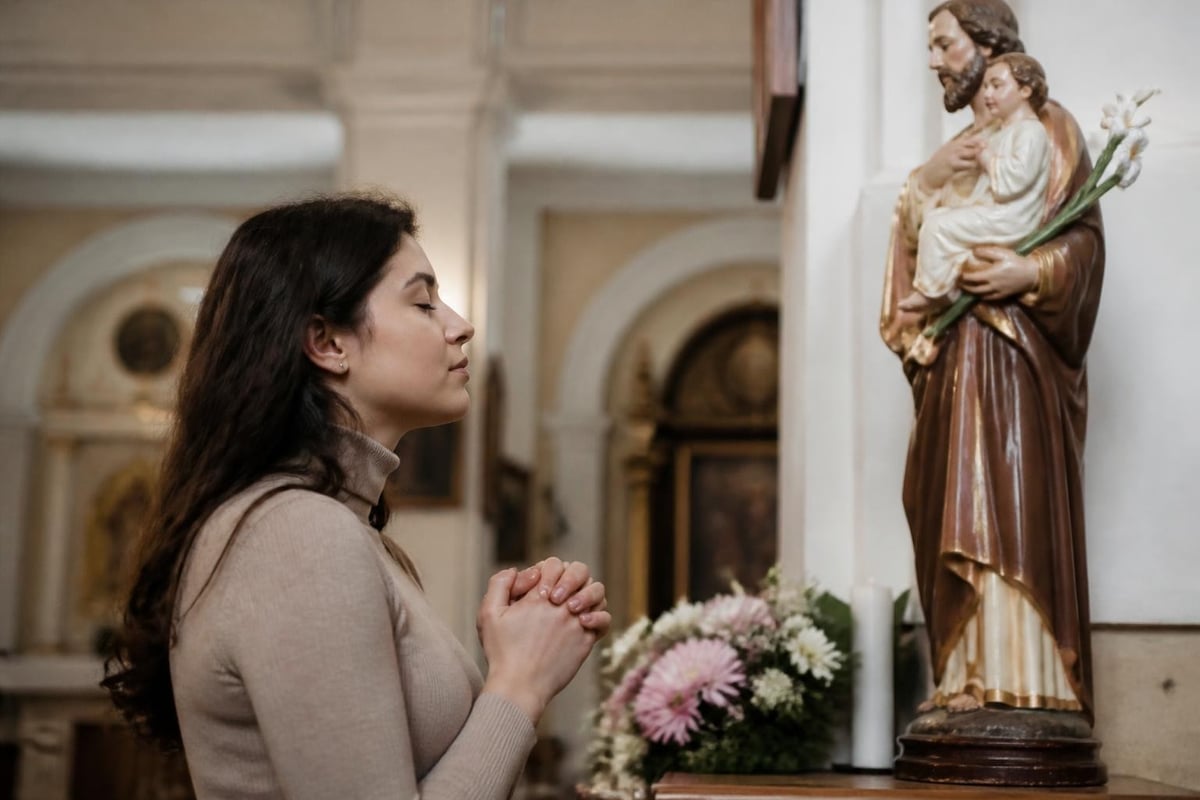
For those seeking to deepen their practice, Saints Prayer Cards offer portable reminders and traditional prayer formulas. In quiet moments throughout the day, slipping a hand into a pocket and feeling the worn edges of a prayer card creates a tangible connection to a particular saint's intercession. These cards typically include a brief biography, image, and specific prayer formula, making them accessible tools for both new and experienced practitioners.
Novenas and Special Devotions
The nine-day novena represents one of the most structured forms of the saints prayer. This practice, modeled on the nine days the apostles spent in prayer between Ascension and Pentecost, involves repeating specific prayers for nine consecutive days while presenting a particular intention.
Popular novena practices include:
- Selecting a saint whose patronage relates to your need
- Finding or composing an appropriate prayer formula
- Setting aside time each day for the nine-day period
- Presenting your intention while acknowledging God's will
- Thanking the saint and God regardless of the outcome
Different saints have traditional novenas associated with them, often approved by Church authorities and carrying special indulgences. The US bishops' resource on saints and prayer provides guidance on incorporating these devotions appropriately within Catholic spiritual life.
Theological Objections and Catholic Responses
Despite its ancient pedigree, the saints prayer continues to face theological questions from both non-Catholics and some Catholics uncertain about its scriptural foundation. Addressing these concerns honestly strengthens understanding and practice.
The Mediation Question
Protestant critics often cite 1 Timothy 2:5, which states "there is one mediator between God and men, the man Christ Jesus." The Catholic response distinguishes between Christ's unique role as Redeemer and the intercessory role of saints. Christ's mediation operates on an ontologically different level; He alone reconciles humanity to God through His sacrifice.
The saints' intercession, by contrast, operates through Christ and depends entirely on His mediation. As Pope Francis explained in his catechesis on praying in communion with the saints, asking saints to pray for us is no different from asking living Christians to pray, except that the saints are perfected in holiness and closer to God.
Questions About Saints Hearing Prayers
Some ask how saints can hear millions of prayers simultaneously. Catholic theology doesn't claim to explain the mechanics but notes that those united with God in heaven participate in divine knowledge to the degree necessary for their role. The beatific vision grants saints awareness beyond earthly limitations.
| Concern | Catholic Explanation |
|---|---|
| Can saints hear multiple prayers? | Participation in God's knowledge allows awareness beyond earthly limits |
| Doesn't this make saints divine? | No - their knowledge is participatory and limited, not omniscient |
| Why not just pray to God directly? | Direct prayer remains primary; saints provide additional intercession |
| Is there biblical precedent? | Yes - Revelation, Maccabees, and patristic interpretations of Scripture |
The Orthodox Church's perspective on praying to saints offers valuable ecumenical insight, showing how Eastern Christians have maintained this practice since ancient times while carefully distinguishing it from worship.
Contemporary Practice and Pastoral Considerations
Modern Catholic life presents both challenges and opportunities for engaging in the saints prayer. Understanding how this ancient practice translates into contemporary contexts helps believers maintain authentic devotion.
Avoiding Superstition and Magical Thinking
Pastoral leaders emphasize that the saints prayer should never devolve into superstition or attempts to manipulate divine power. True Catholic devotion acknowledges God's sovereignty and submits all requests to His will. The saints themselves simply present our prayers; they don't force God's hand or guarantee specific outcomes.
Warning signs of unhealthy practice include:
- Treating prayers as magical formulas requiring exact repetition
- Believing specific numbers of prayers automatically produce results
- Focusing on obtaining desires rather than growing in holiness
- Neglecting direct prayer to God in favor of exclusively asking saints
- Shopping among saints as if they have competing powers
Integration with Eucharistic Spirituality
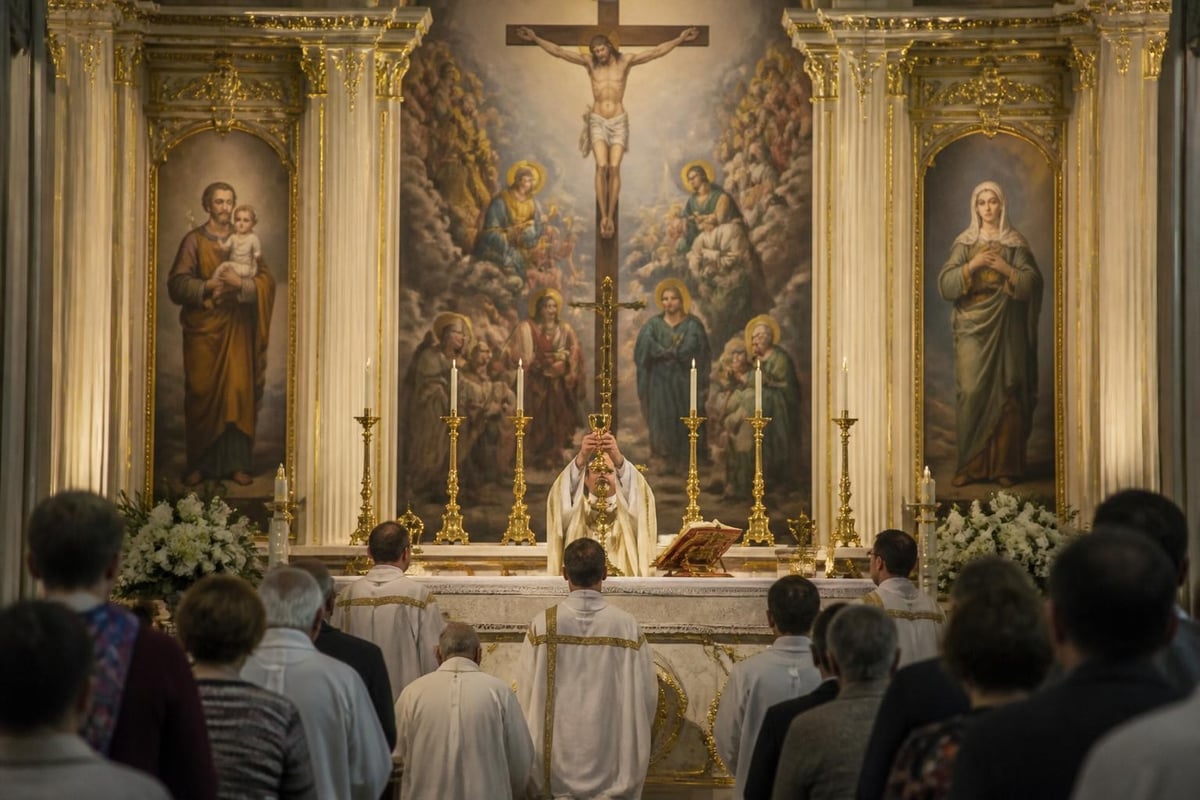
The Mass remains the "source and summit" of Catholic life, and the saints prayer finds its proper context within Eucharistic spirituality. At every Mass, Catholics pray in communion with Mary, the apostles, martyrs, and all the saints. This liturgical framework prevents the saints prayer from becoming isolated from the Church's central worship.
The 2022 Act of Consecration to the Immaculate Heart of Mary demonstrates how contemporary popes continue to model invoking Mary and the saints while keeping Christ central. Pope Francis' act explicitly asked for Mary's intercession while acknowledging that all grace flows from Christ's sacrifice.
Digital Age Adaptations
Technology has created new opportunities for the saints prayer. Catholic apps provide daily saint biographies, prayer reminders, and digital prayer cards. Online communities share testimonies of answered prayers and deepen collective devotion to particular saints. Journeys of Faith offers resources that help Catholics access saint stories and prayers through modern media platforms while maintaining doctrinal integrity.
Podcasts, streaming video content, and social media allow wider sharing of saint stories and prayer practices than ever before. Yet the fundamentals remain unchanged: humble petition, trust in God's providence, and recognition of the communion that transcends death.
The Communion of Saints in Daily Life
Living out the reality of the communion of saints transforms everyday Catholic experience. Rather than viewing the saints prayer as an occasional practice reserved for desperate situations, mature spirituality recognizes it as an expression of fundamental Catholic identity.
Patron Saints and Personal Relationships
Many Catholics develop deep relationships with patron saints, creating a personal prayer life enriched by these heavenly friendships. Choosing a confirmation saint, naming children after saints, or discovering a saint whose life story resonates can create lasting devotional bonds.
Practical ways to develop these relationships:
- Read the saint's biography and writings
- Visit places associated with their life and ministry
- Celebrate their feast day annually with special prayers or traditions
- Imitate their virtues in concrete daily situations
- Share their story with others to spread devotion
The saints prayer becomes most powerful when it flows from genuine relationship rather than utilitarian need. Knowing St. Thérèse of Lisieux's "little way" or St. Francis' radical poverty transforms prayers to them from desperate pleas into conversations with trusted spiritual friends.
Teaching Children the Saints Prayer
Introducing children to the saints prayer helps form Catholic identity from an early age. Age-appropriate saint stories, prayer cards with colorful images, and family traditions around feast days make this practice accessible and appealing.
Parents might begin by teaching simple prayers like the Memorare to Mary or the Prayer to St. Michael. As children mature, they can learn about patron saints for their activities (St. Sebastian for athletes, St. Cecilia for musicians) and develop personal devotions based on their interests and challenges.
Saints as Models of Holiness
Beyond their intercessory role, saints provide concrete examples of how to live the Gospel in diverse circumstances. The saints prayer reminds Catholics that holiness is achievable, that ordinary people with weaknesses and struggles have reached heaven through God's grace.
When praying to St. Augustine, former sinners find hope. When invoking St. Monica, parents of wayward children find perseverance. When asking St. Maximilian Kolbe's intercession, those facing injustice find courage. The saints prayer connects petition with imitation, asking for help while committing to follow their example.
Specific Saints and Their Intercession
Catholic tradition associates particular saints with specific needs, patronages, and life situations. This system of patronage helps believers identify which saints might especially intercede for their circumstances.
Mary, Mother of God and Queen of Saints
While technically in a unique category (honored with hyperdulia rather than dulia), Mary represents the preeminent example of the saints prayer. Catholics have invoked her intercession since the earliest centuries, as evidenced by the Sub Tuum Praesidium, a Marian prayer dating to the third century.
Mary's relationship to Christ as His mother gives her unique access and influence. The wedding at Cana demonstrates her intercessory role, where her request prompted Jesus' first public miracle even though His "hour had not yet come." This biblical precedent encourages Catholics to bring all needs to Mary, trusting she will present them to her Son.
The Apostles and Early Church Fathers
St. Peter and St. Paul receive special veneration as pillars of the early Church. Catholics invoke St. Peter for matters of faith and Church unity, while St. Paul is patron of evangelization and missionaries. The other apostles likewise serve as powerful intercessors, particularly in matters related to their known attributes and martyrdoms.
The Church Fathers - great theologians like St. Augustine, St. Jerome, and St. John Chrysostom - are invoked for wisdom, theological clarity, and help with intellectual pursuits. Their writings continue to shape Catholic thought, making them natural patrons for students and scholars.
Martyrs and Confessors
The early martyrs hold special honor in Catholic tradition, as their blood literally witnessed to Christ. St. Stephen, St. Lawrence, St. Agnes, and countless others inspire courage and are invoked during times of persecution or when believers face pressure to compromise their faith.
Confessors - saints who lived heroically holy lives without martyrdom - provide diverse patronages. St. Anthony of Padua helps find lost items, St. Jude assists with impossible cases, St. Joseph guides families and workers. These specific patronages developed from the saints' lives, legends, or miraculous interventions attributed to their intercession.
| Saint Category | Examples | Common Intercessions |
|---|---|---|
| Marian Titles | Our Lady of Guadalupe, Lourdes, Fatima | All needs, specific apparition graces |
| Apostles | Peter, Paul, John | Faith, evangelization, love |
| Doctors of the Church | Thomas Aquinas, Teresa of Ávila, Thérèse | Wisdom, mystical growth, simplicity |
| Modern Saints | Padre Pio, Mother Teresa, John Paul II | Healing, service to poor, cultural renewal |
The Saints Prayer and Ecumenical Dialogue
The practice of asking saints to pray represents one of the key theological differences between Catholicism and most Protestant denominations. Understanding these differences while seeking common ground contributes to Christian unity.
Areas of Agreement
Most Christians agree on several fundamental points related to the saints prayer. First, all recognize that Christians should pray for one another. Second, most acknowledge that death does not completely sever spiritual bonds between believers. Third, virtually all Christians honor the memory of faithful witnesses and seek to imitate their virtues.
The theological journal The Way published an insightful academic examination of the intercession of saints, exploring how contemporary scholarship might recover aspects of this doctrine that appeal across denominational lines while respecting legitimate theological differences.
Remaining Differences
The key disagreement centers on whether Christians in heaven can hear earthly prayers and whether asking their intercession is appropriate. Protestants typically argue that Scripture provides insufficient evidence for this practice and that it potentially detracts from Christ's unique mediation.
Catholics respond that Scripture, when read within the Church's tradition, provides adequate foundation. They note that the early Church universally practiced invoking saints, suggesting apostolic origin. The Encyclopedia.com entry on saints' intercession synthesizes perspectives across Christian traditions, showing both commonalities and persistent disagreements.
Eastern Orthodox Convergence
Eastern Orthodox Christians share Catholic practice regarding the saints prayer, though with some differences in emphasis and theological explanation. Both traditions emerged from the undivided early Church and maintained this practice through the centuries.
The Assembly of Canonical Orthodox Bishops' prayer resources demonstrate how Orthodox liturgy incorporates extensive invocation of saints, particularly within the Divine Liturgy. This convergence between Catholicism and Orthodoxy suggests that asking saints' intercession represents authentic Christian tradition rather than later innovation.
Living the Communion of Saints Today
The doctrine of the communion of saints, expressed practically through the saints prayer, offers profound comfort and spiritual power for contemporary believers facing modern challenges. This practice connects Catholics to two millennia of faithful witnesses while addressing present needs.
Saints for Contemporary Issues
Recent canonizations have provided patrons for modern situations. St. Gianna Beretta Molla, who chose her unborn child's life over her own, intercedes for pro-life causes and expectant mothers. St. Josephine Bakhita, who endured slavery, aids victims of human trafficking. St. Isidore of Seville, an encyclopedic scholar, has been proposed as patron of the internet.
These contemporary saints demonstrate that holiness remains achievable in every era. Their intercession feels particularly powerful for those facing similar circumstances, as these saints understand modern challenges from personal experience.
The Saints Prayer in Times of Crisis
Global challenges - pandemics, wars, natural disasters - have historically prompted increased recourse to the saints prayer. During the COVID-19 pandemic, many Catholics invoked St. Corona (an early martyr whose name coincidentally relates to "crown") and traditional plague saints like St. Roch and St. Sebastian.
This instinctive turn to saintly intercession during crisis reveals deep Catholic intuition about the communion of saints' reality. When earthly help proves inadequate, believers reach beyond the visible world to those already victorious in heaven, trusting their prayers carry special weight before God's throne.
Building a Personal Prayer Practice
Developing a mature relationship with the saints prayer requires intentionality and balance. The practice should complement, not replace, direct prayer to God. It should inspire virtue, not just request favors. It should express communion, not superstition.
Steps for developing healthy practice:
- Begin each day acknowledging your patron saint and guardian angel
- Learn about one new saint monthly, reading their story and traditional prayers
- Incorporate saints' feast days into family life with special meals or activities
- Keep prayer cards or saint medals as tangible reminders throughout the day
- Join or form a group dedicated to a particular saint's spirituality
- Study the theological foundations periodically to maintain proper understanding
Resources for Deepening Your Practice
Numerous resources exist to help Catholics develop a richer practice of the saints prayer. Books, websites, apps, and physical devotional items all contribute to this ancient yet ever-new aspect of Catholic spirituality.
The Journeys of Faith blog regularly features saint stories and testimonies that inspire deeper devotion. Their extensive catalog includes materials that help believers learn about saints and incorporate their intercession into daily life. For families seeking to establish traditions or individuals wanting to deepen personal prayer, quality resources make a significant difference.
Prayer cards remain one of the most accessible tools for the saints prayer. They fit easily into wallets or pockets, providing instant access to traditional prayer formulas and saint images. Many Catholics collect cards of their patron saints and those they regularly invoke, creating a portable prayer community.
Pilgrimages and Sacred Sites
Visiting locations associated with saints - their birthplaces, ministries, or burial sites - powerfully deepens devotion. Pilgrimage has always formed an integral part of Catholic spirituality, and sites like Lourdes, Fátima, Guadalupe, and countless saint shrines worldwide draw millions annually.
Even local pilgrimages to nearby churches named for saints or diocesan shrines can renew commitment to the saints prayer. Physical presence at places where saints lived and worked makes their reality more tangible, transforming abstract theological concepts into lived experience.
Liturgical Celebrations
The Church's liturgical calendar provides natural rhythm for honoring saints throughout the year. Major feast days like All Saints (November 1) and individual saint commemorations offer opportunities for special prayer and celebration.
Parishes often organize festivities around patron saint days, combining liturgical prayer with cultural traditions. These communal celebrations reinforce that the saints prayer isn't merely individual devotion but expresses the Church's corporate faith in the communion of saints.
The saints prayer represents far more than asking heavenly figures for favors - it expresses the profound Catholic belief that death cannot sever the bonds of Christian love and mutual support. When believers invoke the intercession of Mary and the saints, they participate in the timeless communion that unites all the faithful across heaven and earth. Journeys of Faith continues the mission of Bob and Penny Lord by providing resources that help Catholics deepen their relationship with the saints through books, prayer cards, videos, and media that bring these heroic witnesses to life. Explore the extensive collection of Catholic items to discover materials that will enrich your prayer life and strengthen your connection to the communion of saints. Journeys of Faith is blessed to provide Catholic media, including podcasts and inspirational content, free of charge across multiple platforms for viewers worldwide, though significant costs support this mission - please consider making a donation to help continue sharing the beauty of our faith with souls everywhere.
