

Divine mercy cards serve as powerful tools for Catholics worldwide who seek to deepen their relationship with Christ through the Divine Mercy devotion. These prayer cards, which typically feature the iconic image of Jesus with rays of light emanating from His heart, have become essential companions for millions of faithful believers. Whether carried in wallets, placed on prayer altars, or distributed among communities, divine mercy cards provide immediate access to prayers, novenas, and chaplets that form the foundation of this profound spiritual practice.
The tradition of using prayer cards in Catholic devotion extends centuries back, but divine mercy cards hold particular significance in modern Catholic spirituality. They represent not only a personal commitment to prayer but also a tangible connection to the revelations received by Saint Faustina Kowalska in the 1930s. Through these compact tools, believers can engage with one of the most important devotions approved by the Catholic Church in recent history.
For those seeking to understand the full scope of this devotion, divine mercy cards offer an accessible entry point. They condense complex theological concepts into manageable, portable formats that encourage daily prayer and meditation. The practice of carrying these cards reflects a commitment to living out Christ's message of mercy in everyday life.
The growing popularity of divine mercy cards reflects a broader renewal of traditional Catholic practices in contemporary faith communities. As more Catholics discover the transformative power of Divine Mercy devotion, these cards have evolved from simple prayer aids to comprehensive spiritual resources that guide believers through multiple forms of prayer and meditation.
Brought to you by Journeys of Faith, founded by Bob and Penny Lord. We are Cyber Apostles and an Augustinian Secular Institute of which we are members; the Evangelization arm of the group of Cloistered Augustinian Nuns in Montefalco, Italy. Our mission is evangelization through media using the tools that God has allowed to be created.
Understanding the Origins of Divine Mercy Cards
The story behind divine mercy cards begins with the extraordinary visions of Saint Maria Faustina Kowalska, a Polish nun who lived from 1905 to 1938. During her time in the Congregation of the Sisters of Our Lady of Mercy, Saint Faustina received numerous revelations from Jesus Christ, who appeared to her requesting that His mercy be proclaimed to the entire world. These encounters formed the theological foundation for what would become the Divine Mercy devotion, a practice now embraced by Catholics globally.
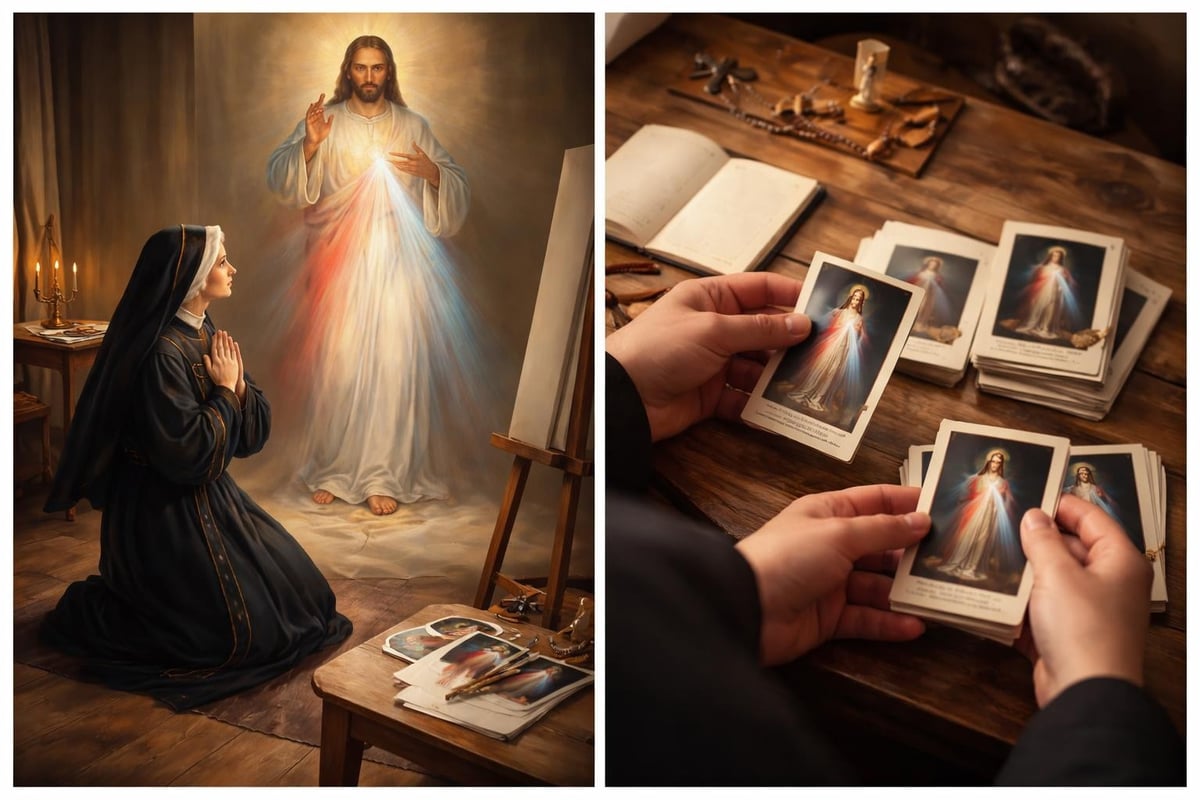
Central to these revelations was Jesus's request for a specific image to be painted. He described Himself with His right hand raised in blessing and His left hand touching His garment near His heart, from which emanated two rays of light representing blood and water. The inscription "Jesus, I trust in You" was to accompany this image. This vision became the template for virtually all divine mercy cards produced today.
The Image That Started a Movement
The first painting based on Saint Faustina's vision was created in 1934 by artist Eugeniusz Kazimirowski under her direct supervision. While Saint Faustina reportedly expressed disappointment that the painting didn't fully capture the beauty she witnessed, this original image established the visual standard for future representations. Divine mercy cards based on this and subsequent paintings began circulating among Polish Catholics, though the devotion faced obstacles before gaining official Church approval.
The Catholic Church initially viewed the Divine Mercy devotion with caution. In 1959, the Holy See placed certain restrictions on the devotion due to poor translations of Saint Faustina's diary. However, after thorough theological examination and improved translations, Pope John Paul II lifted these restrictions in 1978. His personal devotion to Divine Mercy and his Polish connection to Saint Faustina led him to canonize her in 2000 and establish Divine Mercy Sunday as an official feast day.
Types and Formats of Divine Mercy Cards
Divine mercy cards come in numerous formats designed to meet different spiritual needs and practical requirements. Understanding these variations helps believers choose the most appropriate cards for their personal devotion or evangelization efforts.
Traditional Holy Cards
Traditional Divine Mercy holy cards typically measure between 2.5 by 4.5 inches and feature the Divine Mercy image on one side with prayers on the reverse. These cards use high-quality cardstock with protective lamination to withstand frequent handling. Many believers keep these cards in prayer books, missals, or displayed near home altars where they serve as visual reminders of God's infinite mercy.
The standard design includes:
- The Divine Mercy image with signature red and pale rays
- The phrase "Jesus, I trust in You" in multiple languages
- Basic prayers associated with the devotion
- Durable laminated finish for longevity
- Compact size for easy portability
Wallet-Size Cards
For Catholics who want to maintain their prayer practice throughout the day, wallet-size Divine Mercy cards provide exceptional convenience. These miniature versions typically measure 2 by 3.5 inches, fitting perfectly into wallet card slots, purses, or even phone cases. Despite their reduced size, manufacturers ensure that text remains legible and images retain their spiritual impact.
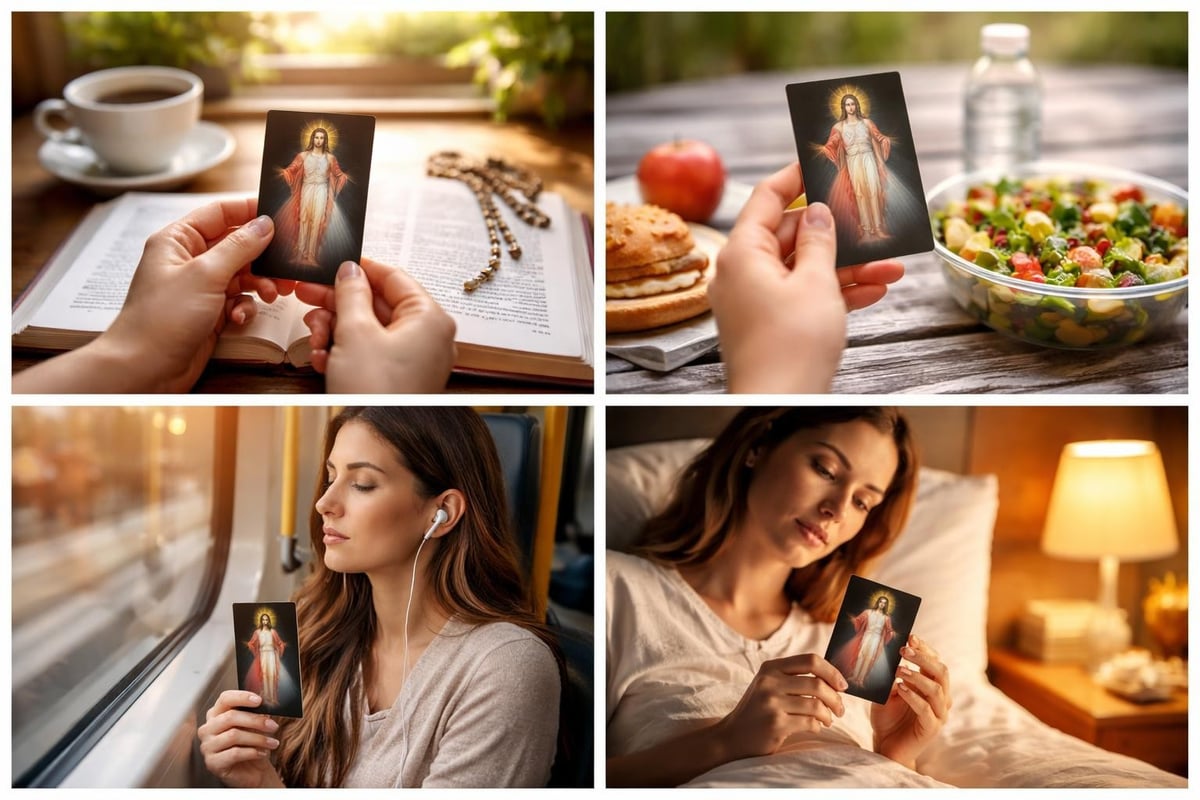
The portability factor makes these cards particularly valuable for evangelization. Catholics can easily share them with friends, family members, or strangers who might benefit from learning about Divine Mercy. Many parishes order these cards in bulk for distribution after Mass, especially during Lent and the Easter season when the devotion receives particular emphasis.
Chaplet and Novena Cards
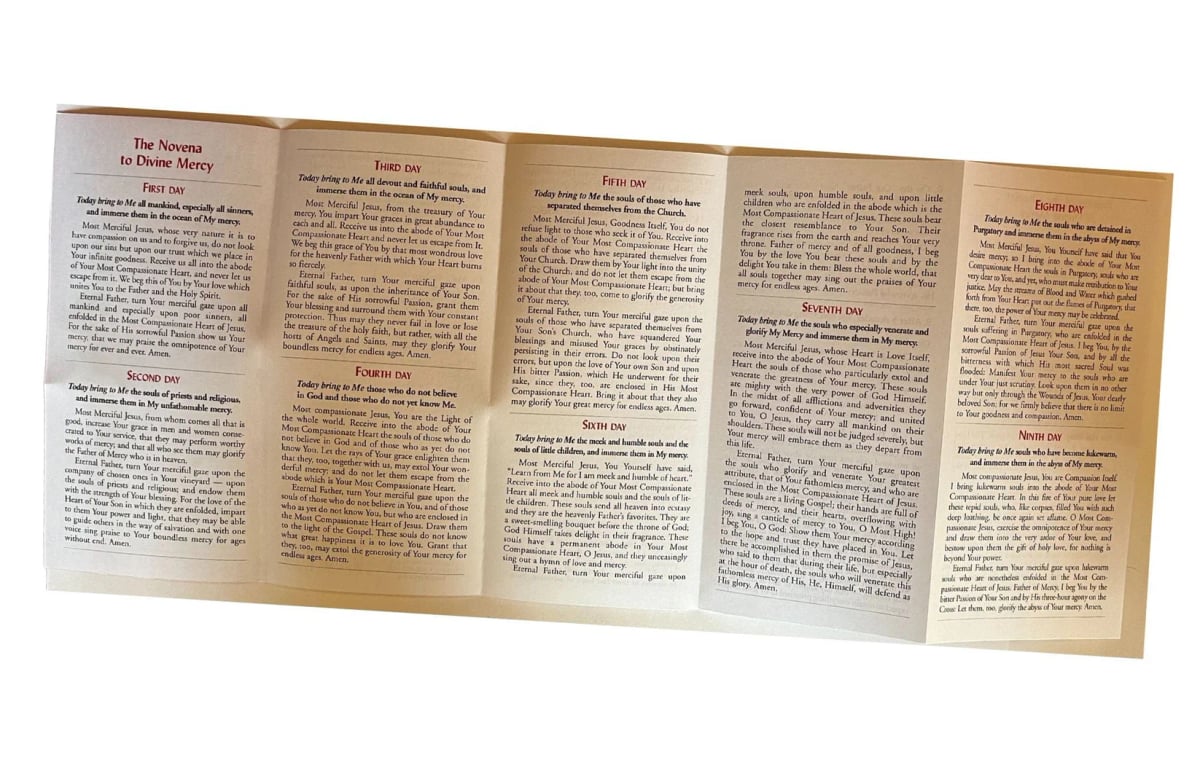
More comprehensive divine mercy cards include complete instructions for praying the Divine Mercy Chaplet or the nine-day Divine Mercy Novena. These cards often feature fold-out or trifold designs that expand to provide sufficient space for detailed prayer texts and instructions. For those seeking a complete resource for this powerful devotion, the Divine Mercy Novena and Chaplet package offers professionally printed cards with both prayers in an easy-to-follow format.
| Card Type | Size Range | Primary Features | Best Use Case |
|---|---|---|---|
| Traditional Holy Cards | 2.5" x 4.5" | Standard image, basic prayers | Home altars, prayer books |
| Wallet-Size Cards | 2" x 3.5" | Compact, highly portable | Daily carry, evangelization |
| Chaplet Cards | 3" x 5" folded | Complete chaplet prayers | Rosary replacement, structured prayer |
| Novena Cards | 3.5" x 7" folded | Nine-day prayer sequence | Lenten preparation, retreats |
| Faith Explained Cards | 4" x 6" | Educational content, history | Teaching, RCIA programs |
Educational and Faith Explained Cards
Divine Mercy Faith Explained Cards serve a dual purpose by combining devotional content with educational material about the history and theology of the devotion. These larger-format cards, typically measuring 4 by 6 inches, include background information about Saint Faustina, explanations of the Divine Mercy image's symbolism, and guidance on how to practice the devotion effectively.
Religious education programs, RCIA classes, and parish study groups frequently use these comprehensive cards as teaching tools. They help newcomers understand the theological depth behind the simple yet powerful message of Divine Mercy while providing experienced practitioners with deeper insights into the devotion's spiritual richness.
Praying with Divine Mercy Cards
The practical application of divine mercy cards extends far beyond simply possessing them. These tools facilitate multiple forms of prayer and meditation that correspond to different aspects of the Divine Mercy devotion revealed to Saint Faustina.
The Divine Mercy Chaplet
The Divine Mercy Chaplet represents the most common prayer associated with these cards. Jesus specifically requested this prayer from Saint Faustina, promising extraordinary graces to those who recite it. The chaplet uses rosary beads but follows a distinct prayer pattern focused on Christ's passion and God's mercy.
Basic structure of the chaplet:
- Begin with the Sign of the Cross
- Recite one Our Father, one Hail Mary, and the Apostles' Creed
- On the Our Father beads, pray: "Eternal Father, I offer You the Body and Blood, Soul and Divinity of Your dearly beloved Son, Our Lord Jesus Christ, in atonement for our sins and those of the whole world"
- On the Hail Mary beads, pray: "For the sake of His sorrowful Passion, have mercy on us and on the whole world"
- Conclude with: "Holy God, Holy Mighty One, Holy Immortal One, have mercy on us and on the whole world" (repeated three times)
- End with the Sign of the Cross
Many Divine Mercy prayer cards include these prayers in their complete form, allowing believers to pray without memorization. The repetitive nature of the chaplet creates a meditative rhythm that draws practitioners deeper into contemplation of Christ's passion and God's merciful love.
The Three O'Clock Hour of Mercy
Jesus revealed to Saint Faustina that 3:00 PM holds special significance as the hour of His death on the Cross. He requested that believers pause at this hour to reflect on His passion and implore His mercy. Divine mercy cards often include a specific prayer for the Hour of Mercy, encouraging faithful Catholics to observe this daily practice.
The practice involves:
- Setting aside time at 3:00 PM for prayer
- Meditating on Christ's passion and death
- Reciting the Divine Mercy Chaplet when possible
- Making a brief spiritual communion if attending Mass isn't feasible
- Requesting graces for oneself and others through Christ's mercy
This devotional practice transforms an ordinary afternoon moment into a sacred encounter with divine love. Carrying a divine mercy card ensures that even during busy workdays or travel, Catholics can maintain this powerful spiritual discipline.
The Nine-Day Divine Mercy Novena
Saint Faustina recorded in her diary that Jesus requested a novena beginning on Good Friday and concluding on Divine Mercy Sunday. This nine-day prayer sequence asks God's mercy for different groups of souls each day, from sinners and lukewarm souls to priests and religious, from the souls in purgatory to children and those who honor Divine Mercy.
Each day of the novena includes:
- Specific intentions for particular souls
- The Divine Mercy Chaplet
- Prayers from Saint Faustina's diary
- Personal petitions aligned with that day's focus
- Reflection on God's mercy toward the designated group
Novena cards provide the complete text for each day, making this intensive prayer practice accessible to all believers. Many Catholics report profound spiritual experiences during the Divine Mercy Novena, experiencing interior renewal and heightened awareness of God's merciful presence.
Spiritual Benefits and Promises
The Divine Mercy devotion comes with extraordinary spiritual promises that Jesus revealed to Saint Faustina. Understanding these promises helps believers appreciate why divine mercy cards have become such treasured items among contemporary Catholics.
Specific Promises from Jesus
According to Saint Faustina's diary, Jesus made several explicit promises regarding the Divine Mercy devotion and the veneration of His image. These promises include complete forgiveness of sins and punishment for those who approach the Sacrament of Reconciliation and Holy Communion on Divine Mercy Sunday, protection at the hour of death for those who venerate the image, and the conversion of even the most hardened sinners through the rays of mercy flowing from the image.
Key promises associated with the devotion:
- Souls who venerate the image will not perish
- Victory over enemies already here on earth
- Extraordinary graces for the dying who pray the chaplet
- Priests who spread the devotion will console sinners effectively
- Special protection for those who trust in Divine Mercy
- Miracles for those who spread devotion to Divine Mercy
These promises underscore why carrying and using divine mercy cards represents more than casual piety. They serve as instruments through which God's transformative mercy enters human lives, offering hope to the despairing and strength to the weak.
Personal Testimonies and Transformations
Catholics worldwide share testimonies of profound changes experienced through regular use of divine mercy cards and consistent practice of the devotion. Stories include miraculous healings, restored relationships, conversions of family members, peace during terminal illness, and protection from spiritual attacks.
These accounts reinforce the devotion's effectiveness and encourage new practitioners to embrace it wholeheartedly. The tangible nature of divine mercy cards makes them valuable tools for those beginning their spiritual journey, providing concrete focus points for prayer and meditation.
Choosing and Using Divine Mercy Cards Effectively
Selecting appropriate divine mercy cards depends on individual spiritual needs, practical considerations, and evangelization goals. Understanding the available options helps Catholics make informed choices that enhance their prayer life and missionary efforts.
Quality Considerations
When selecting divine mercy cards, several quality factors deserve attention. Professional printing ensures image clarity and text legibility, while durable cardstock withstands frequent handling without deteriorating. Lamination protects cards from moisture, oils, and general wear, significantly extending their usable lifespan.
Quality checklist for divine mercy cards:
- Sharp, vibrant image reproduction
- Clear, readable font sizes
- Thick cardstock (minimum 100-pound weight)
- Professional lamination or coating
- Accurate prayer texts without errors
- Proper attribution and permissions
- Appropriate sizing for intended use
Many online Catholic shops offer bulk purchasing options for parishes and organizations, with discounts available for larger quantities. This makes it economically feasible to distribute cards widely while maintaining high quality standards.
Incorporating Cards into Daily Practice
Divine mercy cards achieve their greatest impact when integrated into consistent daily routines. Morning prayers can begin with the Divine Mercy prayer while viewing the card's image, establishing a merciful mindset for the day ahead. The 3:00 PM Hour of Mercy becomes more accessible when cards are readily available in workplaces, vehicles, or carried personally.
Evening examination of conscience can incorporate reflection on how one has shown mercy to others, inspired by the card's reminder of God's merciful love. Keeping cards in frequently visited locations like kitchen prayer corners, bedroom nightstands, or vehicle visors creates multiple daily touchpoints with the devotion.
Evangelization and Card Distribution
Divine mercy cards excel as evangelization tools because they combine visual appeal with substantive spiritual content. Parish groups can distribute cards after Mass, especially during Lent and the Easter season when Divine Mercy Sunday receives special emphasis. Prayer groups might include cards with meeting materials or use them as bookmarks in study resources.
Hospital and nursing home ministry benefits significantly from divine mercy card distribution. These settings often house individuals confronting mortality who may find particular consolation in messages of divine mercy and forgiveness. The Catholic prayers tradition offers numerous options for sharing faith through tangible items like these cards.
Workplace evangelization becomes less intimidating with simple tools like divine mercy cards. Leaving cards in break rooms, sharing them with colleagues during difficult times, or including them with thank-you notes provides gentle invitations to explore deeper faith without aggressive proselytizing.
Divine Mercy Cards in Parish and Community Life
Religious communities have discovered creative ways to incorporate divine mercy cards into various programs and initiatives that strengthen faith formation and communal prayer.
Liturgical Celebrations
Divine Mercy Sunday, celebrated the Sunday after Easter, provides the perfect opportunity for widespread card distribution. Parishes often place cards in pews or distribute them after Mass, encouraging parishioners to begin the novena or maintain daily chaplet practice. Some churches create special blessing ceremonies for the cards, invoking God's grace upon those who will use them.
First Friday devotions frequently incorporate Divine Mercy elements, with cards serving as prayer guides during Eucharistic Adoration. The combination of Christ's Real Presence in the Blessed Sacrament and meditation on His mercy through the cards creates powerful spiritual experiences for participants.
Educational Programs
Religious education classes for children and adults benefit from using divine mercy cards as teaching tools. Younger students learn about Saint Faustina's visions and the meaning of the Divine Mercy image, while older students explore the theological dimensions of divine mercy within Catholic tradition.
RCIA programs introduce catechumens and candidates to Catholic devotional practices through hands-on experience with prayer cards. Providing each participant with their own divine mercy card creates personal connections to the devotion that often continue long after initiation.
| Program Type | Card Application | Expected Outcome |
|---|---|---|
| Children's Religious Ed | Visual teaching aid, take-home prayer tool | Familiarization with Divine Mercy devotion |
| Teen Confirmation Prep | Discussion starter, personal prayer practice | Deeper understanding of God's mercy |
| RCIA | Introduction to Catholic devotions | Integration into prayer life |
| Adult Faith Formation | Study resource, group prayer focus | Theological comprehension of mercy |
| Ministry Training | Evangelization tool instruction | Equipped volunteers for outreach |
Prayer Groups and Ministries
Chaplet prayer groups often provide members with matching divine mercy cards that create visual unity and facilitate synchronized prayer. Prison ministries report significant impact when inmates receive these cards, as the message of mercy resonates deeply with those experiencing consequences of past actions.
Grief support groups find divine mercy cards particularly valuable, as bereaved individuals often struggle with questions about God's presence during suffering. The image of the merciful Christ and promises associated with the devotion provide consolation during profound loss.
Preserving and Displaying Divine Mercy Cards
Proper care and thoughtful display of divine mercy cards maximizes their spiritual impact while maintaining their physical condition over time.
Home Display Options
Creating dedicated prayer spaces with divine mercy cards as focal points establishes visual reminders of God's mercy throughout the home. Framing larger cards for wall mounting in bedrooms, home offices, or entryways makes the devotion a natural part of daily life. Shadow boxes can house cards alongside rosaries, small statues, or other devotional items, creating cohesive prayer stations.
Magnetic frames allow easy display on refrigerators where family members frequently gather, while standing frames on mantels or bookcases integrate the cards into existing home décor. Some families rotate different prayer cards seasonally, with divine mercy cards receiving prominent placement during Lent and Easter.
Long-Term Preservation
For collectors or those who value particular cards for sentimental reasons, proper preservation techniques ensure longevity. Storing cards in archival-quality sleeves protects them from environmental damage while allowing visibility and access. Climate-controlled environments prevent warping and fading caused by extreme temperatures or humidity.
Avoiding direct sunlight preserves image colors and prevents cardstock degradation. Digital photography of particularly meaningful cards creates backup records while allowing sharing with distant friends and family members. Some Catholics create prayer journals that incorporate divine mercy cards, preserving them within written reflections about their spiritual journey.
Sharing and Giving
Divine mercy cards make meaningful gifts for numerous occasions. Baptisms, confirmations, first communions, and wedding celebrations all benefit from the inclusion of these prayer tools. During times of illness, difficulty, or transition, giving someone a divine mercy card communicates care while providing spiritual support.
Many believers maintain supplies of divine mercy cards specifically for spontaneous sharing opportunities. When conversations turn to faith topics or someone expresses spiritual need, having cards readily available facilitates immediate response with tangible resources. This practice embodies the evangelization mission that divine mercy cards naturally support.
The Role of Divine Mercy Cards in Contemporary Catholic Life
Modern Catholic spirituality continues embracing traditional devotional practices while adapting them to contemporary circumstances. Divine mercy cards exemplify this balance, maintaining historical continuity with Saint Faustina's revelations while serving current needs.
Digital Age Adaptations
While physical cards remain popular, digital versions now complement traditional formats. Smartphone apps include Divine Mercy images and prayers, though many users still prefer tangible cards for focused prayer without electronic distractions. Some Catholics use both formats, keeping physical cards at home while accessing digital versions during travel.
Social media enables widespread sharing of Divine Mercy images and messages, effectively turning digital platforms into virtual divine mercy cards. Catholic influencers and ordinary believers alike post the image with accompanying prayers, extending the devotion's reach far beyond what physical cards alone could achieve.
Interfaith and Ecumenical Dimensions
While divine mercy cards remain distinctly Catholic devotional items, their central message of God's merciful love resonates across Christian denominations. Some Protestant Christians appreciate the devotion's biblical foundations and Christ-centered focus, though they may not embrace all associated practices.
The universality of God's mercy provides common ground for interfaith dialogue, with divine mercy cards serving as conversation starters about divine love and human forgiveness across religious traditions. This broader appeal doesn't diminish the cards' Catholic identity but demonstrates how authentic spiritual truths transcend denominational boundaries.
Integration with Other Devotions
Divine mercy cards complement rather than compete with other Catholic devotional practices. Many believers integrate the Divine Mercy Chaplet with Rosary devotion, alternating between the two or praying both daily. The mercy message enriches Eucharistic adoration, with cards guiding meditation on Christ's Real Presence and sacrificial love.
Marian devotion naturally connects with Divine Mercy, as Mary leads all souls to her Son's mercy. Some divine mercy cards include references to Mary's role in the devotion, acknowledging her maternal intercession in obtaining graces from Christ's merciful heart. This integration creates a comprehensive spiritual practice drawing on multiple streams of Catholic tradition.
The relationship between divine mercy cards and other prayer tools demonstrates Catholicism's rich devotional heritage. Just as the Litany of Trust prayer card guides believers in surrendering worry, divine mercy cards facilitate trust in God's infinite compassion.
Divine mercy cards represent far more than decorative religious items; they serve as gateways to transformative encounters with Christ's merciful love and powerful tools for daily spiritual practice. Whether you're beginning your journey with this devotion or seeking to deepen existing practice, these prayer aids offer accessible, portable resources that strengthen faith and foster trust in God's infinite compassion. Journeys of Faith provides extensive resources for Catholics seeking to grow in their understanding of Divine Mercy and other essential devotions, offering books, prayer cards, and media that support your spiritual journey and help you share the mercy of Christ with others.
- Explore Journeys of Faith Online store with thousands of Catholic Items at https://journeysoffaith.com/collections
- Our Unique Mega Search Engine https://journeysoffaith.com/search is linked to hundreds of Catholic Shops and Stores.
- Get the Journeys of Faith NEW App for IPhone or Android - Search for Journeys of Faith or go to https://journeysoffaith.com/pages/download-our-app
- We need your help to reach more souls. Please Make a Donation https://journeysoffaith.com/pages/donate