

Imagine witnessing bread transform before your very eyes, leaving scientists and believers alike searching for answers. In recent years, headlines about eucharistic miracles - sacred phenomena where the Eucharist appears to take on miraculous qualities, have sparked global fascination.
Why do these events continue to mystify millions? For many, eucharistic miracles invite awe, curiosity, and a deeper longing to understand the mysteries of faith.
This guide delves into the origins, scientific investigations, and spiritual impact of these wonders. Whether you seek evidence, inspiration, or renewed faith, join us as we uncover the most compelling eucharistic miracles in 2026.
Understanding Eucharistic Miracles: Definition, Origin, and Church Teaching
Eucharistic miracles are among the most profound and debated wonders within Christianity. These extraordinary events involve the transformation of the consecrated bread and wine into visible flesh and blood during the celebration of the Eucharist. Unlike visions, healings, or apparitions, eucharistic miracles are unique in that they relate directly to the core mystery of the Catholic faith: the Real Presence of Christ in the Eucharist.

What Are Eucharistic Miracles?
Eucharistic miracles refer specifically to occurrences where the consecrated elements of bread and wine appear to undergo a physical transformation. This is distinct from other religious phenomena, such as visions of saints or inexplicable healings. The Church recognizes eucharistic miracles when there is credible evidence that the change is not explainable by natural causes.
These miracles are often reported during Mass, with witnesses—including priests and laypeople—testifying to the sudden appearance of blood, flesh, or other remarkable signs. What sets eucharistic miracles apart is their direct connection to the doctrine of the Real Presence, making them central to Catholic theology.
Biblical Foundations and Real Presence
The roots of eucharistic miracles trace back to the Last Supper, as recounted in the Gospels. Jesus' words, "This is my body... this is my blood," (Matthew 26:26-28) provide the scriptural foundation for the Catholic belief in the Real Presence. Early Christians accepted this teaching, shaping their liturgical life around the Eucharist.
Throughout history, testimonies of eucharistic miracles have reinforced the Church’s understanding of Christ’s presence. These events are seen as divine affirmations of the mystery instituted by Christ, echoing through centuries of Christian worship.
Church Doctrine: Transubstantiation
Central to Catholic belief is the doctrine of transubstantiation. This teaching holds that, during the consecration at Mass, the substance of bread and wine becomes the Body and Blood of Christ, even though the outward appearances remain unchanged. Eucharistic miracles serve as extraordinary signs of this invisible reality, making the transformation visible to the senses.
The Catholic Church teaches that such miracles are not necessary for faith, but they can deepen understanding and devotion. Theological documents, such as those from the Council of Trent, affirm the significance of eucharistic miracles in supporting belief in the Real Presence.
Historical Context and Early Miracles
The first recorded eucharistic miracles date back to the early centuries of Christianity. For example, the 8th-century Eucharistic miracle of Lanciano remains one of the most studied and venerated cases, with preserved relics and detailed documentation drawing pilgrims and researchers alike.
These early miracles had a profound impact on Christian communities. They inspired devotion, influenced liturgical practices, and shaped the development of Eucharistic adoration. Saints such as St. Clare of Assisi are also associated with eucharistic miracles, their experiences contributing to the Church’s collective memory and tradition.
Authenticity, Investigation, and Belief
The Catholic Church approaches claims of eucharistic miracles with caution and rigor. Investigations involve medical experts, theologians, and independent witnesses. Only when natural explanations are ruled out and evidence meets strict criteria does the Church officially recognize a miracle.
Statistics highlight the ongoing relevance of eucharistic miracles. According to a 2019 Pew Research Center study, only about 31% of U.S. Catholics believe in the doctrine of transubstantiation. Georgetown’s Center for Applied Research in the Apostolate (CARA) found similar trends, underscoring the importance of catechesis and evidence.
| Survey Source | Belief in Real Presence (%) | Year |
|---|---|---|
| Pew Research Center | 31 | 2019 |
| Georgetown (CARA) | 28 | 2022 |
Despite careful scrutiny, misconceptions persist. Some view eucharistic miracles as symbolic or legendary, while skeptics demand empirical proof. The Church maintains that these miracles invite both faith and reason, offering seekers a bridge between mystery and understanding.
Historical Eucharistic Miracles: Legacy and Influence Through the Ages
The story of eucharistic miracles - unfolds across centuries, shaping faith, devotion, and Church tradition. From early legends to modern investigations, these events have inspired awe and pilgrimage around the world.

Miracles of the Early and Medieval Church
The roots of eucharistic miracles - reach deep into the early centuries of Christianity. Among the most famous cases is the Eucharistic miracle of Lanciano in 8th-century Italy, where a consecrated Host reportedly transformed into human flesh and blood during Mass. This event became a cornerstone for belief in the Real Presence and set a precedent for future accounts.
Throughout the medieval era, eucharistic miracles - were often reported in times of doubt or crisis, reinforcing faith among the laity and clergy alike. These wonders influenced the development of Eucharistic adoration and shaped the structure of liturgical practices.
Church authorities took such claims seriously, documenting testimonies and launching thorough investigations. Saints like St. Clare of Assisi are closely associated with eucharistic miracles - her defense of her convent using the Blessed Sacrament is still venerated today.
Specific examples, such as the miracle of Bolsena-Orvieto, led to the establishment of the Feast of Corpus Christi and inspired masterpieces in art and architecture. Many of these early sites remain active pilgrimage destinations, drawing thousands who seek connection with the sacred legacy of eucharistic miracles -.
Renaissance to 19th Century: Miracles and Pilgrimage
The Renaissance and subsequent centuries saw a flourishing of eucharistic miracles - across Europe. Notable instances in Siena and Orvieto not only deepened local devotion but also left a mark on Church art, with cathedrals and chapels built to house relics and commemorate these events.
Pilgrimages to sites of eucharistic miracles - became increasingly popular, with faithful traveling great distances to witness the relics. This era witnessed the rise of grand Eucharistic processions and the formalization of feasts like Corpus Christi, which celebrated the enduring mystery of the Eucharist.
Historical records from this period detail Church commissions, papal decrees, and the authentication of relics associated with eucharistic miracles -. The devotion soon spread beyond Europe, with reports of miracles in newly evangelized territories.
Eucharistic miracles - thus played a vital role in uniting communities, inspiring charitable works, and fostering a sense of shared identity among believers. The legacy of these centuries remains visible in the architecture, festivals, and ongoing pilgrimage traditions centered on these sacred wonders.
Modern Era: 20th Century Developments
In the 20th century, eucharistic miracles - continued to be reported, now subject to even more rigorous documentation and scientific scrutiny. Modern cases such as Buenos Aires (1996) and Sokolka, Poland (2008) have received global attention, with advancements in technology enabling detailed analysis by scientists and medical experts.
The Church updated its investigative protocols, requiring comprehensive studies before recognizing any eucharistic miracles -. Media coverage and digital communication have amplified public awareness, making these events accessible to millions worldwide.
New pilgrimage destinations have emerged, and the tradition of visiting sites linked to eucharistic miracles - has grown, drawing diverse groups seeking spiritual renewal. Data shows a notable increase in visitation and interest, particularly in regions where modern miracles have occurred.
Eucharistic miracles - in the modern era highlight the enduring mystery and relevance of these phenomena. Their legacy continues to inspire faith, foster community, and invite both believers and skeptics to explore the profound depths of the Eucharist.
Scientific Investigations and Modern-Day Eucharistic Miracles
Curiosity about eucharistic miracles has fueled rigorous scientific inquiry, especially in recent decades. The Church's approach combines faith and reason, inviting experts to investigate alleged miracles so that both believers and skeptics can seek truth together.
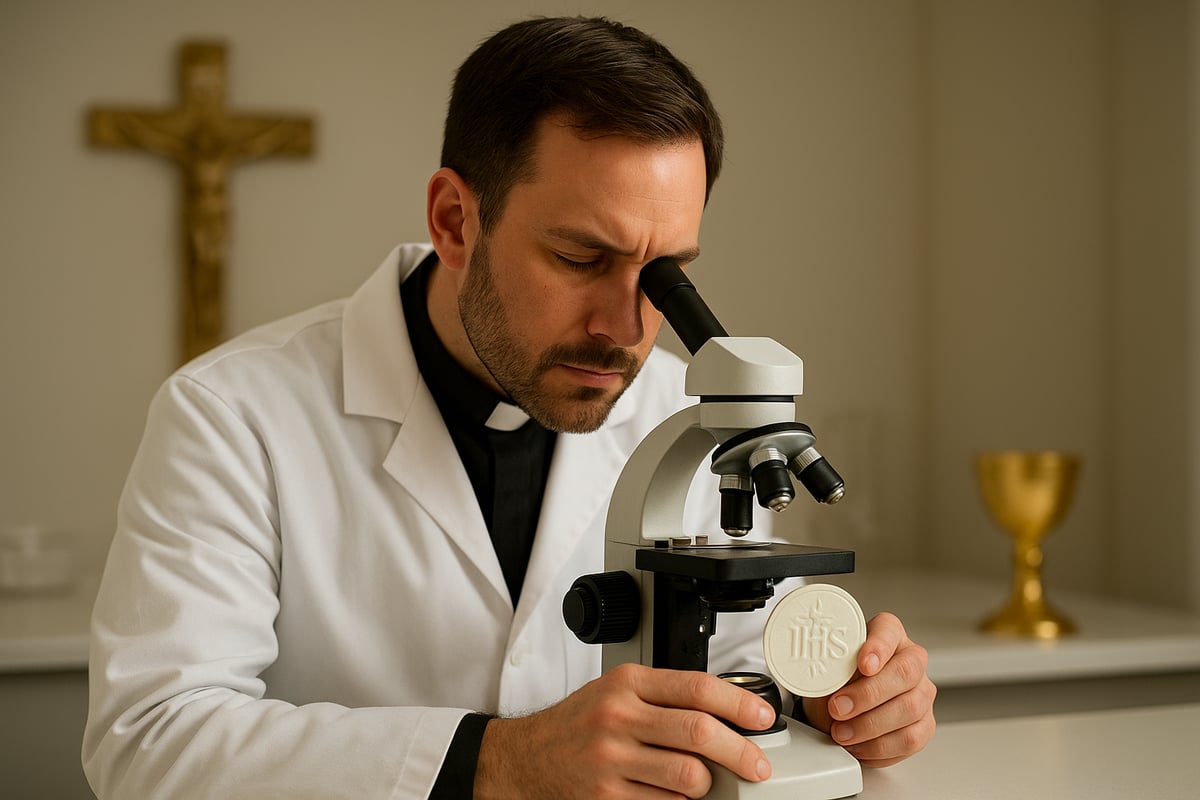
The Role of Science in Examining Eucharistic Phenomena
When reports of eucharistic miracles emerge, the Catholic Church follows strict protocols to evaluate authenticity. Investigations begin with local bishops gathering physical evidence, witness testimonies, and historical documentation. In recent decades, medical professionals, pathologists, and forensic experts have been called upon to analyze the phenomena.
Notably, scientific studies have identified unique characteristics in several cases. Results often reveal the presence of human heart tissue, specifically myocardium, and blood type AB. These findings, repeated in cases across different continents and centuries, have confounded many scientists. For example, Dr. Scott French and other experts have presented their analyses at international conferences, offering detailed reports on tissue samples and their implications.
A summary of findings from recent eucharistic miracles appears below:
| Case Location | Year | Scientific Finding | Blood Type |
|---|---|---|---|
| Lanciano, IT | 700s | Human heart muscle | AB |
| Buenos Aires, AR | 1996 | Cardiac tissue, viable cells | AB |
| Sokolka, PL | 2008 | Myocardial tissue | AB |
| Legnica, PL | 2013 | Human heart tissue | AB |
Despite these remarkable discoveries, science faces limits in verifying supernatural claims. The Church recognizes that eucharistic miracles ultimately transcend empirical measurement. For those interested in a deeper dive into the scientific process, the Scientific Evidence of Eucharistic Miracles - Inspired By Carlo Acutis video provides a comprehensive overview.
Case Studies: 21st-Century Eucharistic Miracles
Modern eucharistic miracles have been subject to unprecedented scrutiny and documentation. In Legnica, Poland (2013), a consecrated host developed a reddish stain. Laboratory analysis confirmed the presence of human myocardial tissue with intact DNA and blood type AB, matching earlier cases from other countries.
Similarly, in Sokolka, Poland (2008), tissue analysis revealed cardiac muscle consistent with a living human heart under stress. These findings were published in peer-reviewed journals and shared widely through Catholic media. The Buenos Aires case (1996) stands out for extensive documentation, with multiple independent scientists confirming the consistency of results across separate samples.
Media coverage of eucharistic miracles has grown, reaching millions worldwide. Television specials, documentaries, and news reports have fueled public interest and prompted new waves of pilgrimage to miracle sites. According to recent surveys, belief in eucharistic miracles has increased, particularly among young Catholics exposed to these investigations.
Key highlights from 21st-century cases:
- Consistent scientific results across locations
- Transparent Church investigation protocols
- Widespread sharing of laboratory reports and findings
These cases have not only validated the experience of many believers but also challenged skeptics to reconsider the boundaries of science and faith.
Faith, Skepticism, and the Search for Evidence
The intersection of faith and science in eucharistic miracles sparks passionate debate among Catholics and the wider public. Pew Research Center and Notre Dame studies reveal that many who doubt eucharistic miracles cite lack of evidence, while others are convinced by scientific reports and testimonies.
Believers often see these events as powerful affirmations of Christ's Real Presence, deepening personal devotion and inspiring conversion. Skeptics, however, argue that extraordinary claims require extraordinary proof, noting that scientific findings alone may not establish supernatural causality.
This dynamic creates a unique space for dialogue. The Church encourages both faith and reason, emphasizing that eucharistic miracles are not mandatory articles of belief but potential signs pointing to deeper truths. For many, the combination of historical witness, scientific analysis, and spiritual experience offers a compelling invitation to explore the mystery further.
In the end, eucharistic miracles continue to challenge assumptions, unite communities, and open doors to conversations about the relationship between faith, reason, and the divine.
Notable Eucharistic Miracles Around the World: A 2026 Pilgrim’s Guide
Across the globe, eucharistic miracles - draw countless pilgrims seeking to witness sacred wonders firsthand. As you plan your spiritual journey in 2026, explore these renowned sites and emerging destinations where faith, history, and devotion converge. This guide highlights the most significant eucharistic miracles - in Europe, the Americas, and beyond, offering practical advice for every pilgrim.

Europe: Ancient and Modern Wonders
Europe remains the heartland for eucharistic miracles - with centuries-old traditions and new discoveries inspiring millions. Sites like Lanciano, Italy, home to an 8th-century miracle, and Siena, where hosts have remained incorrupt since 1730, are central to Catholic devotion. These sites draw pilgrims year-round, especially during annual feasts and processions.
Orvieto, Italy, is celebrated for the miracle that inspired the Corpus Christi feast. In Poland, Legnica and Sokolka have gained global attention for recent scientifically examined eucharistic miracles - drawing visitors from across continents. Churches at these sites often offer relic veneration, guided tours, and multilingual Masses.
Pilgrims can join Church-sanctioned tours, which provide historical context and spiritual enrichment. In 2026, expect expanded accessibility, with local pilgrimage offices offering updated visitor information and resources. Annual events, such as Eucharistic processions and adoration hours, provide opportunities for deepening faith.
A notable figure in modern devotion is Blessed Carlo Acutis, who documented eucharistic miracles - worldwide. His legacy is honored at many sites, and pilgrims can find devotional items like the Blessed Carlo Acutis Apostle Statue to inspire their own journey. For 2026, plan ahead, as visitor numbers continue to grow, and many churches offer online resources and booking options.
The Americas: Miracles and Growing Devotion
The Americas have witnessed a surge in eucharistic miracles - devotion, with sites in Argentina and Mexico drawing international attention. Buenos Aires is renowned for a series of miracles beginning in 1992, which underwent scientific investigation and remain central to local faith life. In Tixtla, Mexico, a 2006 eucharistic miracle - has become a focal point for regional pilgrimage and spiritual renewal.
Eucharistic congresses and major events are held throughout North and South America, fostering unity and education. Local traditions, such as processions, adoration vigils, and testimonies from witnesses, enrich the experience for visitors. Pilgrims often report increased faith and healing after visiting these sites.
Participation in eucharistic miracles - related events has grown, with many dioceses offering official pilgrimage routes and resources. In 2026, travelers can access updated guides, group tours, and faith formation workshops tailored to these sacred journeys. Recommended routes often include stops at multiple sites, allowing pilgrims to experience the diverse expressions of devotion across the continent.
For those seeking deeper engagement, local parishes and shrines provide opportunities for confession, spiritual direction, and involvement in community outreach. The Americas continue to see a rise in eucharistic miracles - inspired vocations and renewed interest in Eucharistic adoration, making these destinations especially meaningful.
Asia, Africa, and Beyond: Emerging Sites and Stories
Asia and Africa are emerging as vibrant centers for eucharistic miracles - with new reports and growing devotion among local communities. In India, several parishes recount miraculous occurrences that have strengthened faith and drawn attention from across the subcontinent. The Philippines, known for deep Eucharistic devotion, is seeing increased interest in eucharistic miracles - as part of parish life and national celebrations.
Africa’s Catholic communities often share testimonies of conversion and healing linked to eucharistic miracles - fostering hope and unity. These stories are spread through local churches, social media, and international networks, inspiring both believers and seekers. Pilgrims visiting these regions in 2026 will find welcoming communities, vibrant liturgies, and opportunities to participate in adoration and service.
Emerging sites across Asia and Africa are supported by diocesan initiatives, educational programs, and outreach to remote areas. For global pilgrims, practical guidance includes researching local customs, connecting with parish offices, and respecting cultural traditions during visits. Many communities offer hospitality and guided tours, making the experience accessible and enriching.
As eucharistic miracles - devotion spreads worldwide, more Catholics are embarking on pilgrimages to these new destinations. In 2026, plan your journey with care, seek reliable information, and embrace the spiritual richness found in every corner of the Catholic world.
The Impact of Eucharistic Miracles on Faith, Culture, and the Modern Church
Eucharistic miracles - have left a profound mark on Christian life, stirring hearts, shaping culture, and renewing faith across generations. In 2026, the influence of these sacred events continues to resonate deeply within Catholic communities and beyond.
Deepening Faith and Spiritual Renewal
Personal encounters with eucharistic miracles - have sparked spiritual renewal for countless individuals. Testimonies often describe a renewed sense of wonder and devotion, with many reporting deeper participation in Mass and increased time spent in Eucharistic adoration.
These miracles serve as powerful tools in catechesis, especially among youth. Stories of transformation, such as unexpected conversions and new vocations, are frequently shared at retreats and parish gatherings. After a eucharistic miracle - is recognized, some parishes observe a measurable rise in Mass attendance and a resurgence of Eucharistic devotion.
For those seeking to nurture their spiritual lives, meditative resources like Divine Intimacy Eucharistic Meditations offer guidance for deepening reflection on the Real Presence. Such practices help connect personal faith to the universal mystery celebrated in eucharistic miracles - .
Eucharistic Miracles as Tools for Evangelization
The Church actively leverages eucharistic miracles - to inspire evangelization and outreach. Initiatives like Eucharistic Congresses, apologetics programs, and interfaith dialogues often feature these miracles as central themes. They provide tangible evidence of faith that resonates with both seekers and skeptics.
Modern media plays a crucial role in spreading awareness. Documentaries, podcasts, and digital exhibitions draw millions of viewers, fostering global engagement. Data from recent years shows a notable increase in online searches and social media discussions about eucharistic miracles - , reflecting their growing role in Catholic identity and unity.
By integrating these wonders into parish life and public events, the Church strengthens community bonds and opens new paths for spiritual inquiry.
Cultural, Artistic, and Social Influence
Eucharistic miracles - have shaped art, music, and literature throughout history. Renowned paintings, stained glass, and hymns often depict these sacred events, inspiring awe and reverence. Many religious festivals and processions, such as Corpus Christi, originated in response to celebrated miracles.
The architectural legacy is equally significant. Basilicas and chapels built at miracle sites attract pilgrims and art lovers alike, serving as living monuments to faith. For example, the Eucharistic miracle of Santarém in Portugal inspired centuries of devotion and artistic expression, influencing both local and global Catholic culture.
Socially, eucharistic miracles - foster unity and charity. Communities come together to commemorate these events, often launching initiatives that support the poor and strengthen neighborhood ties. Their enduring legacy continues to shape not only religious practices but also the broader cultural landscape of the Church.
How to Experience Eucharistic Miracles in 2026: A Practical Guide
Embarking on a journey to encounter eucharistic miracles can be a transformative spiritual adventure. Whether you hope to visit a renowned site in person or explore from home, 2026 offers more opportunities and resources than ever before for seekers, pilgrims, and the curious. This guide will help you plan, participate, and grow in understanding as you experience eucharistic miracles in meaningful and practical ways.
Planning a Pilgrimage to Miracle Sites
Visiting a site associated with eucharistic miracles is a profound way to connect with the faith's historical roots. Begin by researching key destinations in Europe, the Americas, or beyond, focusing on sites like Lanciano, Siena, or Buenos Aires. Check the latest accessibility details, local customs, and event calendars for 2026 to ensure a smooth experience.
Follow these steps for an enriching pilgrimage:
- Identify your top eucharistic miracles destinations and review Church-sanctioned tours.
- Arrange travel and accommodation well in advance, especially for major feast days.
- Learn about local etiquette, such as appropriate dress and reverence at sacred sites.
- Prepare for participation in liturgies, processions, and opportunities to venerate relics.
- Consult official resources for safety tips and group travel arrangements.
For personalized pilgrimage guidance, including help with bookings, itineraries, and spiritual preparation, you may want to reach out via the Contact for Pilgrimage Guidance page. Expert advice can make your eucharistic miracles journey even more rewarding and tailored to your needs.
Engaging with Eucharistic Miracles from Home
Not everyone can make an international pilgrimage in 2026, but eucharistic miracles remain accessible to all through digital resources and virtual community. Many major sites now offer livestreams of Masses, processions, and even virtual tours, allowing you to witness these sacred wonders from anywhere in the world.
Consider these ways to deepen your experience from home:
- Join virtual tours of famous eucharistic miracles sites, available on various Church platforms.
- Watch documentaries and educational series dedicated to eucharistic miracles and their impact.
- Read personal testimonies and Church reports shared online from recent investigations.
- Participate in online Eucharistic adoration or prayer groups, fostering a sense of global community.
- Use digital prayer walls to share intentions and connect with fellow believers.
Incorporating eucharistic miracles into daily life can also mean setting aside time for reflection, reading Scripture accounts, or engaging with faith-based organizations. Exploring About Journeys of Faith can provide further resources and context for your spiritual journey.
Resources for Further Exploration and Faith Formation
A wide range of resources is available in 2026 to help you explore eucharistic miracles more deeply, whether for personal growth, family catechesis, or parish ministry. Curated materials, official Church documents, and reputable organizations make it easier to access reliable information and support.
Recommended resources include:
- Books: "Eucharistic Miracles of the World" and "The Real Presence: Eucharistic Miracles Past and Present"
- Church documents: Vatican statements on eucharistic miracles, local diocesan reports
- Conferences and workshops: Annual events in Rome, Poland, and the Americas
- Educational programs: Parish-based catechesis, online courses, and youth retreats
- Organizations: International Eucharistic Congress, local pilgrimage ministries
For those seeking structured guidance, many ministries and parishes offer workshops, webinars, and faith formation series centered on eucharistic miracles. Parents, educators, and parish leaders can find support through official Church channels and trusted faith-based networks. Staying informed and connected ensures the enduring impact of eucharistic miracles on faith and community life.
As we’ve journeyed through the fascinating stories, scientific investigations, and spiritual significance of Eucharistic miracles worldwide, you might feel inspired to deepen your own understanding or share these wonders with others. Whether you’re planning a pilgrimage, seeking thoughtful resources for reflection, or looking to enrich your faith at home, there’s so much more to explore. I invite you to take the next step and discover a curated collection of books, documentaries, and devotional items that bring these sacred stories to life—perfect for personal growth or meaningful gifts. Start your journey here:
Explore Eucharistic Miracles