

The roman catholic our father prayer stands as the most universally recognized prayer in Christianity, a sacred tradition that has echoed through church walls and private chambers for two millennia. Given directly by Jesus Christ to His disciples, this prayer encapsulates the essence of Christian faith, weaving together worship, petition, and trust in a carefully structured dialogue with God. As we navigate the spiritual landscape of 2026, understanding the depth and richness of this prayer remains as vital today as it was when Christ first spoke these words on the mountainside.
The Biblical Foundation of the Our Father Prayer
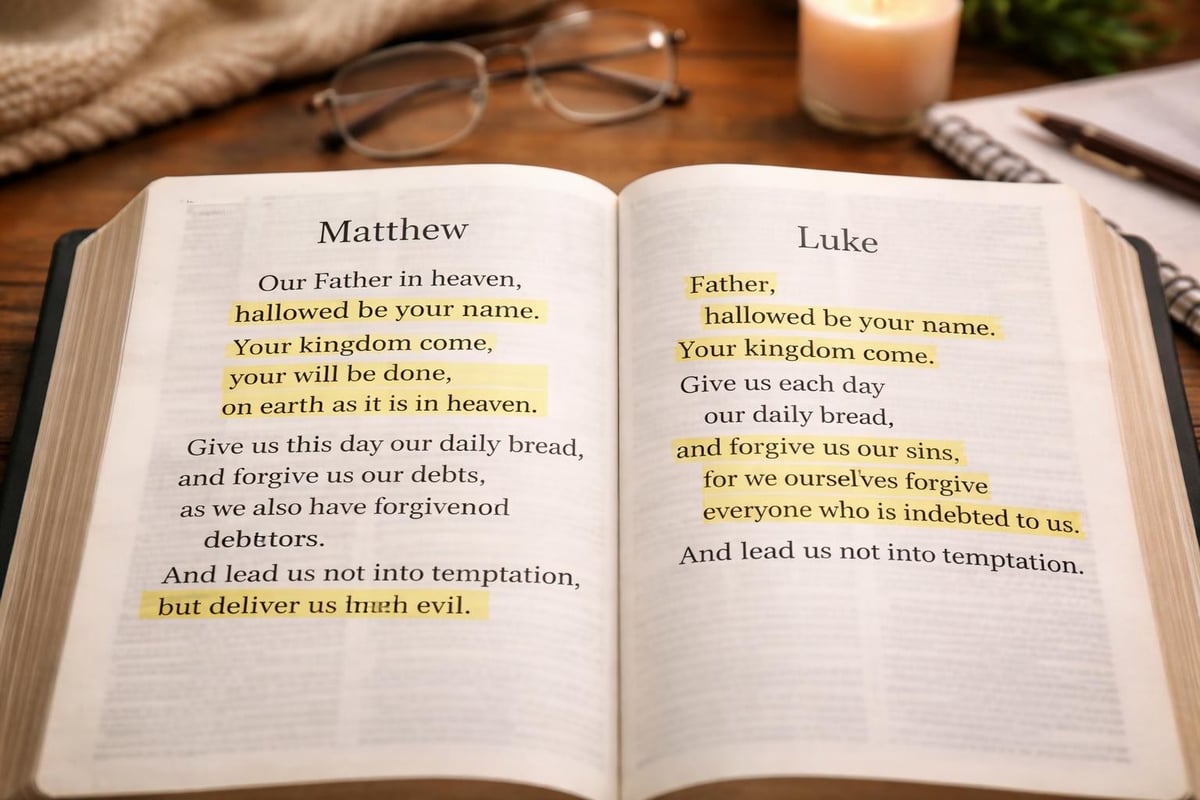
The roman catholic our father prayer originates from two Gospel accounts, creating a foundation that has shaped Christian worship since the first century. Matthew's Gospel (6:9-13) presents the prayer within the Sermon on the Mount, while Luke's Gospel (11:2-4) records a shorter version given when a disciple asked Jesus to teach them to pray. The textual variations between these accounts have been studied extensively by scholars, yet both versions convey the same essential message of divine relationship and human dependence.
The Matthew Account: A Complete Framework
Matthew's version provides the complete structure that Catholics use today. This fuller text emerged in a Jewish context, addressing disciples who understood covenant relationships and the importance of approaching God with reverence. The prayer begins with acknowledgment of God's fatherhood, establishing the intimate yet respectful relationship believers share with their Creator.
The three opening petitions focus entirely on God's glory, while the four closing requests address human needs. This structure reflects a perfect balance between worship and petition, teaching believers to prioritize God's kingdom before personal concerns.
The Lucan Context: Responding to Disciples' Request
Luke presents the prayer as a direct response to the disciples' request: "Lord, teach us to pray." This context emphasizes the roman catholic our father prayer as a teaching tool, a model that shapes all Christian prayer. The disciples observed Jesus in prayer and recognized something transformative in His communion with the Father.
Structure and Meaning of Each Petition
The roman catholic our father prayer contains seven distinct petitions, each carrying profound theological significance. Catholic tradition has analyzed these petitions for centuries, uncovering layers of meaning that continue to enrich believers' prayer lives.
The First Three Petitions:
- "Hallowed be Thy name" – Acknowledging God's holiness and asking that His name be honored
- "Thy kingdom come" – Praying for God's reign to be established on earth
- "Thy will be done" – Surrendering to divine providence and purpose
The Four Human Petitions:
- "Give us this day our daily bread" – Requesting physical and spiritual sustenance
- "Forgive us our trespasses" – Seeking reconciliation and mercy
- "Lead us not into temptation" – Asking for protection from spiritual danger
- "Deliver us from evil" – Pleading for freedom from Satan's influence
Our Father Who Art in Heaven
The opening address establishes the foundational relationship between God and humanity. By calling God "Father," Catholics affirm their adoption as children of God through baptism. This isn't merely a title but a declaration of belonging, protection, and inheritance. The phrase "who art in heaven" reminds believers of God's transcendence while affirming His accessibility.
Brought to you by Journeys of Faith, founded by Bob and Penny Lord. We are an Augustinian Secular Institute and Cyber Apostles. Our mission is evangelization through media.
Daily Bread: Physical and Spiritual Nourishment
The petition for daily bread encompasses both material needs and spiritual sustenance. In Catholic theology, this directly connects to the Eucharist, the true Bread of Life. Catholics understand this request as asking for both the physical food that sustains the body and the sacramental presence of Christ that nourishes the soul. This dual meaning reflects the incarnational reality of Catholic faith, where matter and spirit intersect.
For those seeking to deepen their understanding of the Eucharist's connection to daily prayer, exploring the history and significance of Eucharistic devotion provides valuable context for this petition's sacramental dimensions.
| Petition | Focus | Theological Category |
|---|---|---|
| Hallowed be Thy name | God's holiness | Glory of God |
| Thy kingdom come | God's sovereignty | Glory of God |
| Thy will be done | Divine providence | Glory of God |
| Give us daily bread | Material/spiritual needs | Human needs |
| Forgive us our trespasses | Reconciliation | Human needs |
| Lead us not into temptation | Spiritual protection | Human needs |
| Deliver us from evil | Liberation from sin | Human needs |
The Our Father in Catholic Liturgy and Mass
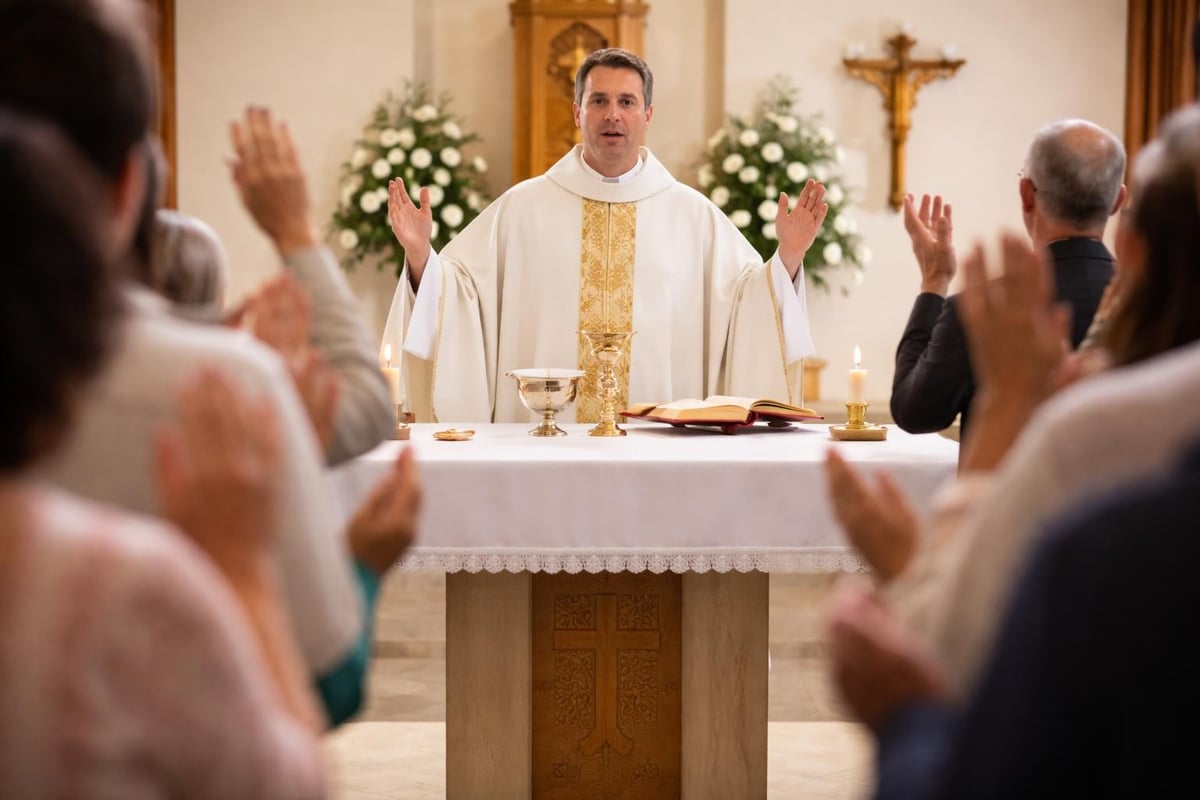
The roman catholic our father prayer holds a privileged position within the Mass, appearing at the climax of the Liturgical of the Eucharist. Immediately before Communion, the congregation prays this prayer together, preparing their hearts to receive Christ. This liturgical placement emphasizes the communal nature of the prayer and its connection to the Eucharistic sacrifice.
The Embolism and Doxology
Following the Our Father, the priest prays the embolism, which expands on the final petition: "Deliver us, Lord, we pray, from every evil..." This ancient prayer extends the themes of protection and peace, bridging to the Sign of Peace that follows. The congregation then responds with the doxology: "For the kingdom, the power, and the glory are yours now and forever."
The doxology's inclusion in Catholic liturgy represents an interesting historical development. While not part of the original Gospel text, this addition appeared in early Christian manuscripts and the Didache, showing how the early Church expanded the prayer for public worship.
Variations in Catholic Practice
Different Catholic rites celebrate the roman catholic our father prayer with slight variations. The Roman Rite, Byzantine Rite, and other Eastern Catholic traditions each bring unique customs to this universal prayer. These variations in posture, musical settings, and ceremonial elements demonstrate the prayer's adaptability while maintaining its essential content.
Historical Development and Textual Transmission
The evolution of the Our Father prayer reveals fascinating insights into early Christian worship and theology. The Didache, a first-century Christian teaching document, instructs believers to pray the Our Father three times daily, establishing a pattern of regular prayer that continues in monastic communities today.
Translation Challenges and the 2011 Roman Missal
The 2011 English translation of the Roman Missal brought subtle but significant changes to how Catholics pray the Our Father. The phrase "who art in heaven" replaced "who is in heaven," restoring archaic language that many found more reverent. While some Catholics initially resisted these changes, the revision aimed to bring English translations closer to the Latin original and maintain continuity with centuries of Catholic tradition.
The petition "lead us not into temptation" has sparked theological discussion for centuries. Some modern scholars suggest alternative translations like "do not let us fall into temptation" or "do not subject us to the final test." These discussions reflect ongoing efforts to balance accurate translation with pastoral sensitivity.
The Prayer's Role in Catechesis
From the earliest centuries, the roman catholic our father prayer served as a primary catechetical tool. The Church Fathers devoted extensive writings to explaining each phrase, using the prayer to teach fundamental doctrines about God, grace, forgiveness, and eschatology. Augustine, Cyprian, and Tertullian all wrote treatises on the Our Father, establishing a tradition of theological reflection that continues today.
Parents preparing children for First Communion introduce the Our Father as a foundational prayer, often alongside the Hail Mary and Glory Be. These preparations form children's spiritual foundation, connecting them to the universal Church through shared prayer.
Praying the Our Father: Practical Spiritual Application
Beyond liturgical recitation, the roman catholic our father prayer serves as a template for all Christian prayer. Catholics incorporate this prayer into various devotional practices, recognizing its power to transform hearts and minds when prayed with intentionality and faith.
Integration with the Rosary
The Our Father punctuates each decade of the Rosary, creating a rhythmic pattern that alternates between Marian devotion and Christ-centered petition. This integration demonstrates how Catholic prayer weaves together different forms of devotion, with the Our Father serving as a constant anchor to Gospel teaching and Christ's own words.
Personal Meditation and Contemplation
Many Catholics use the roman catholic our father prayer as a foundation for lectio divina or contemplative prayer. Taking a single phrase like "Thy will be done" and meditating on it throughout the day transforms rote recitation into living dialogue. This practice aligns with the rich tradition of Catholic saints who found inexhaustible depth in familiar prayers.
Practical Ways to Deepen Your Our Father Prayer:
- Pray each petition slowly, pausing to consider its meaning
- Connect petitions to current events in your life and the world
- Journal reflections on different phrases throughout the week
- Study Scripture passages that illuminate each petition
- Incorporate silence after the prayer to listen for God's response
Catholics seeking to surrender more fully to God's will often find companionship in traditional devotions. Resources like prayer cards and novenas provide structured approaches to deepening one's prayer life while maintaining focus on essential truths contained in the Our Father.
Trinitarian Dimensions of the Prayer
The Our Father reveals profound Trinitarian theology, though it primarily addresses God the Father. Catholic tradition recognizes all three Persons of the Trinity working within this prayer. The Father receives our petitions, the Son taught us the words, and the Holy Spirit enables us to pray "Abba, Father" with confidence.
The Father's Paternity
Addressing God as "Father" represents a revolutionary concept in Jesus' time. While Old Testament writers occasionally referenced God's fatherhood toward Israel, Jesus' use of "Abba" (an intimate Aramaic term) shocked His contemporaries. This intimate address reveals the New Covenant relationship made possible through Christ's sacrifice.
The roman catholic our father prayer thus becomes a participation in Christ's own relationship with the Father. Through baptism, believers are grafted into Christ's sonship, gaining the right to call God "Father" with the same intimacy Jesus knew.
The Son's Mediation
Jesus doesn't merely teach the prayer; He is the prayer's foundation. Every petition assumes the Incarnation, Passion, Death, and Resurrection of Christ. Without Christ's redemptive work, humanity would have no standing to approach God with such boldness and trust.
The petition for daily bread points directly to Christ, the Bread of Life. Forgiveness of trespasses depends on Christ's sacrificial blood. Deliverance from evil relies on Christ's victory over Satan. Each phrase ultimately leads to Christ, making the Our Father a profoundly Christological prayer.
Contemporary Relevance in 2026
In our current era, the roman catholic our father prayer offers timeless wisdom for contemporary challenges. The petition "Thy will be done" speaks powerfully to a culture obsessed with control and self-determination. Asking for daily bread challenges consumerism and accumulation, calling believers to trust in God's providence rather than material security.
Forgiveness in a Cancel Culture
The petition "forgive us our trespasses as we forgive those who trespass against us" confronts modern culture's tendency toward permanent condemnation. This phrase establishes a direct connection between receiving forgiveness and extending it to others. Catholic theology teaches that harboring unforgiveness creates a barrier to receiving God's mercy, making this petition both comforting and challenging.
Digital Distractions and Temptation
"Lead us not into temptation" resonates uniquely in 2026's digital landscape. With unprecedented access to content that can lead souls astray, this petition becomes a daily prayer for protection from online dangers, social media addictions, and digital deceptions. Catholics recognize that temptation takes new forms in each era, making this ancient prayer remarkably contemporary.
| Modern Challenge | Relevant Petition | Application |
|---|---|---|
| Anxiety about future | Daily bread | Trust in God's provision today |
| Broken relationships | Forgive our trespasses | Practice reconciliation |
| Moral confusion | Thy will be done | Seek God's truth over cultural trends |
| Spiritual warfare | Deliver us from evil | Recognize and resist demonic influence |
| Secularism | Hallowed be Thy name | Honor God publicly and privately |
The Our Father as Family Prayer
Catholic families discover unique blessings when they pray the roman catholic our father prayer together. This practice establishes spiritual unity, teaches children essential doctrines, and creates a sanctuary of peace within the home. Many families pray the Our Father before meals, at bedtime, or during family crises.
Teaching Children the Prayer
Introducing children to the Our Father requires patience and age-appropriate explanations. Young children might begin by learning the words through repetition, gradually understanding deeper meanings as they mature. Parents serve as primary catechists, explaining concepts like forgiveness, temptation, and God's kingdom in terms children can grasp.
The prayer's structure provides natural teaching opportunities. "Who art in heaven" opens discussions about God's transcendence and immanence. "Give us this day our daily bread" creates space to discuss gratitude, trust, and the Eucharist.
Family Traditions Around the Prayer
Many Catholic families develop unique traditions incorporating the Our Father. Some create prayer corners with icons or statues, designating physical spaces for family prayer. Others light candles before praying together, using visual symbols to help children focus. These practices transform the roman catholic our father prayer from words into a lived family experience.
Theological Depth and Mystical Dimensions
Saints and mystics throughout history have plumbed the depths of the Our Father, discovering inexhaustible riches within its phrases. Teresa of Avila devoted significant portions of "The Way of Perfection" to explaining the Our Father, revealing how this simple prayer contains everything needed for spiritual perfection.
Purification, Illumination, and Union
The three traditional stages of spiritual growth appear within the prayer's structure. The opening petitions purify the soul by focusing attention on God's glory rather than selfish concerns. The middle petitions illuminate understanding of human dependence and God's providence. The final petition opens possibilities for mystical union by seeking complete deliverance from everything that separates the soul from God.
Connection to the Beatitudes
The roman catholic our father prayer mirrors the structure and themes of the Beatitudes. "Thy kingdom come" echoes "Blessed are the poor in spirit, for theirs is the kingdom of heaven." "Forgive us our trespasses" connects with "Blessed are the merciful, for they shall obtain mercy." This parallelism demonstrates how Jesus' teachings form a coherent whole, with the Our Father summarizing Gospel wisdom.
Understanding prayer within Catholic tradition requires recognizing how individual prayers connect to the broader tapestry of faith. The Our Father doesn't stand alone but integrates with the Creed, the Ten Commandments, and the sacramental life of the Church.
Ecumenical Significance and Unity
The roman catholic our father prayer serves as a point of unity among Christians worldwide. While denominations differ on many theological points, virtually all Christian traditions pray some version of the Our Father. This shared practice creates common ground for ecumenical dialogue and cooperation.
Variations Among Christian Traditions
Protestant denominations typically include the doxology ("For thine is the kingdom...") as part of the prayer itself, while Catholics add it as a separate response during Mass. Eastern Orthodox Christians use slightly different phrasing but maintain the prayer's essential content. These variations reflect different liturgical traditions while preserving the prayer's core meaning.
Common Ground in Divided Times
In an era of religious polarization, the Our Father reminds Christians of their shared foundation in Christ's teachings. Ecumenical gatherings frequently use this prayer as a symbol of unity, allowing believers from different traditions to pray with one voice. This practice anticipates the perfect unity Christ prayed for in John 17, when all believers would be one as He and the Father are one.
Resources for Deeper Study and Prayer
Catholics seeking to enrich their understanding of the roman catholic our father prayer have access to abundant resources. Church Fathers' commentaries, contemporary theological works, and devotional guides all offer insights into this foundational prayer.
Primary Sources and Commentaries
Augustine's "Sermon on the Mount" provides extensive analysis of Matthew's version. Cyprian's "On the Lord's Prayer" offers third-century perspectives. Thomas Aquinas incorporated the Our Father into his catechetical instructions, demonstrating its central role in Catholic teaching. Modern authors continue this tradition, applying ancient wisdom to contemporary contexts.
Digital Resources and Apps
In 2026, Catholics benefit from technology that makes prayer resources more accessible than ever. Apps provide audio versions of the Our Father in multiple languages, helping believers pray while commuting or exercising. Online courses break down each petition, offering weekly reflections and discussion forums for community engagement.
Recommended Study Approaches:
- Read one Church Father's commentary monthly
- Memorize the prayer in Latin to connect with universal Church
- Study biblical passages referenced in each petition
- Join a study group focused on the Our Father
- Create artwork or poetry inspired by different phrases
The roman catholic our father prayer remains Christianity's most perfect prayer, containing everything believers need to approach God with confidence and humility. Its seven petitions balance divine glory with human need, teaching us to seek God's kingdom while trusting His provision for daily life. Whether prayed in the Mass, during the Rosary, or in quiet personal moments, this prayer connects Catholics to two millennia of faithful Christians who have lifted these same words to heaven. Journeys of Faith offers extensive resources to deepen your prayer life and understanding of Catholic traditions, from books exploring the lives of saints to prayer cards that keep these sacred words close at hand throughout your day.
Resources:
- Explore Journeys of Faith online store with thousands of Catholic items at https://journeysoffaith.com/collections
- Our unique Mega Search Engine at https://journeysoffaith.com/search is linked to hundreds of Catholic shops and stores
- Get the Journeys of Faith NEW App for iPhone or Android. Search for Journeys of Faith or go to https://journeysoffaith.com/pages/download-our-app
- Chat with us anytime at https://chatting.page/mjxs9aerrtgm3lmpndlcepmbyosntrjn
- We need your help to reach more souls. Please make a donation at https://journeysoffaith.com/pages/donate