

The way of the cross stands as one of the most profound devotional practices in Catholic tradition, inviting believers to walk alongside Jesus Christ through the final hours of His earthly life. This sacred journey through Christ's Passion has sustained the faithful for centuries, offering a tangible path to deeper prayer, reflection, and spiritual transformation. As we continue this timeless practice in 2026, understanding its rich history and contemporary application becomes essential for Catholics seeking to deepen their relationship with the suffering Savior.
Brought to you by Journeys of Faith Founded by Bob and Penny Lord. We are an Augustinian Secular Institute-Cyber Apostles-whose mission is evangelization through media. Our commitment to sharing the treasures of Catholic faith ensures that devotions like the way of the cross remain accessible and meaningful for believers worldwide.
Understanding the Historical Roots of the Way of the Cross
The way of the cross, also known as the Stations of the Cross or Via Crucis, emerged from the earliest Christian pilgrims who walked the actual streets of Jerusalem where Jesus carried His cross. These devoted followers sought to retrace Christ's footsteps from His condemnation to His burial, creating a living memorial to His sacrifice.
By the medieval period, when pilgrimages to the Holy Land became increasingly difficult due to political upheavals and dangerous travel conditions, the Church developed a solution. Franciscan friars, particularly Saint Leonard of Port Maurice in the 18th century, popularized the practice of creating stations within local churches and communities. This innovation allowed all Catholics, regardless of their ability to travel, to participate in this profound spiritual exercise.
The Stations of the Cross traditionally consist of fourteen stations, though some communities have adopted a fifteenth station commemorating the Resurrection. Each station represents a specific moment in Christ's Passion, from His condemnation by Pontius Pilate to His placement in the tomb.
The Fourteen Traditional Stations
The traditional way of the cross follows a specific sequence that mirrors Christ's final journey:
- Jesus is condemned to death - Pilate's judgment despite knowing Jesus' innocence
- Jesus accepts His cross - The moment Christ embraces His mission of redemption
- Jesus falls the first time - Human weakness bearing divine purpose
- Jesus meets His mother - Mary's sorrowful witness to her Son's suffering
- Simon of Cyrene helps Jesus carry the cross - Unexpected assistance in carrying our burdens
- Veronica wipes the face of Jesus - Compassionate service amid cruelty
- Jesus falls the second time - Persistent love despite overwhelming pain
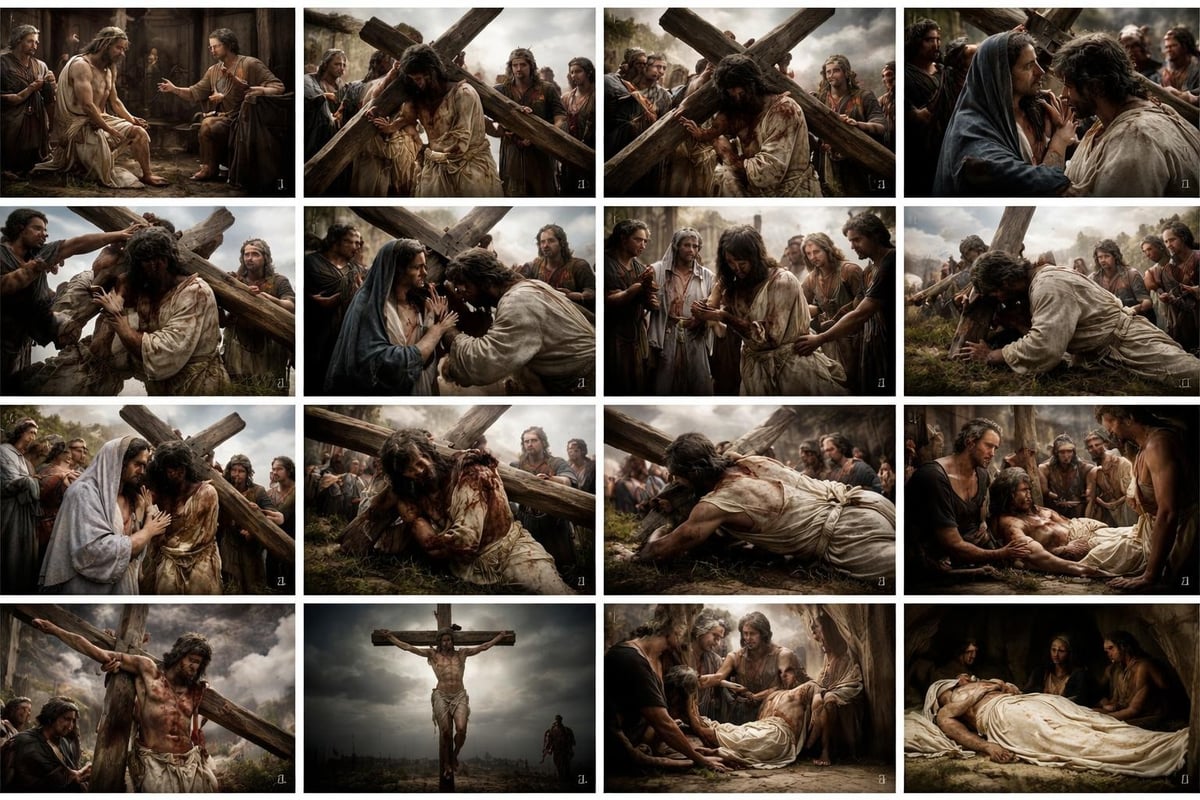
The remaining stations continue this sacred narrative:
| Station Number | Event | Spiritual Significance |
|---|---|---|
| 8 | Jesus meets the women of Jerusalem | Compassion for others despite personal suffering |
| 9 | Jesus falls the third time | Complete human exhaustion bearing sin's weight |
| 10 | Jesus is stripped of His garments | Total vulnerability and humiliation |
| 11 | Jesus is nailed to the cross | Ultimate sacrifice accepted willingly |
| 12 | Jesus dies on the cross | Redemption accomplished through death |
| 13 | Jesus is taken down from the cross | Mother's final embrace of her Son |
| 14 | Jesus is laid in the tomb | Death defeated through love's victory |
Praying the Way of the Cross in Contemporary Practice
The way of the cross remains deeply relevant in 2026, offering Catholics a structured meditation that combines Scripture, tradition, and personal reflection. Unlike some devotions that have faded with time, this practice continues to draw millions of faithful practitioners worldwide.
Churches typically display the stations along their walls or throughout their grounds, creating a physical path for worshippers to follow. Each station features an image or representation of that particular moment in Christ's Passion, accompanied by a cross or number marker.
How to Practice This Devotion
The basic structure of praying the way of the cross follows a consistent pattern that allows for both communal and private prayer. Begin by making the Sign of the Cross and offering an opening prayer of intention. At each station, pause to read or recite the designated meditation, reflect on the mystery presented, and pray for specific intentions.
Many practitioners include these elements at each station:
- Scripture reading connecting to that moment in the Passion
- Meditation or reflection on the station's spiritual meaning
- Personal application relating the station to contemporary life
- Prayer intentions for the Church, family, or specific needs
- Brief prayers such as the Our Father, Hail Mary, and Glory Be
The practice concludes with a closing prayer, often including petitions for the grace to carry our own crosses with faith and courage. The Catholic prayers that accompany this devotion help structure our meditation and keep us focused on Christ's redemptive love.
The Theological Significance Behind Each Station
The way of the cross represents far more than a historical remembrance. Each station carries profound theological weight, revealing truths about suffering, redemption, and divine love that speak directly to the human condition.
When Jesus falls for the first time under the weight of the cross, we witness not only His physical exhaustion but the crushing burden of humanity's sins. This station reminds us that Christ chose to experience complete human weakness, sanctifying our own struggles and failures. His falls demonstrate that holiness does not exempt us from difficulty but provides strength to rise again.
The encounters along the way-with His mother Mary, with Simon of Cyrene, with the women of Jerusalem-illustrate the communal nature of suffering and support. No one walks the way of the cross alone. Just as these individuals accompanied Jesus in His darkest hours, we too are called to accompany one another through life's trials.
Veronica's Act of Compassion
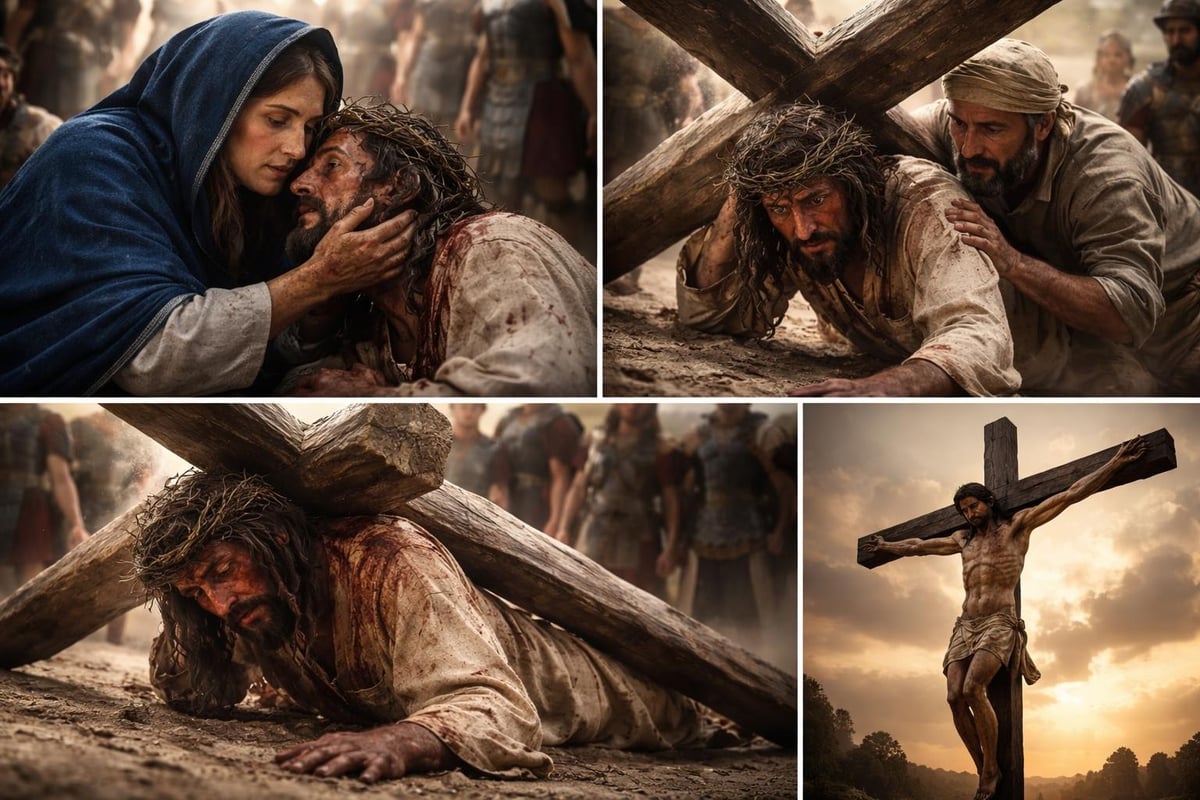
The sixth station, where Veronica wipes the face of Jesus, stands as a particularly powerful moment of compassionate action. Though not recorded in canonical Scripture, this tradition teaches us about the value of small acts of kindness performed without thought of reward or recognition. Veronica simply saw suffering and responded with mercy.
According to tradition, Jesus rewarded her compassion by miraculously imprinting His face on the cloth she used. The Miracles of the Cross Book explores numerous miraculous signs associated with the Passion, including various relics and images connected to Christ's suffering. These physical manifestations serve as tangible reminders of spiritual realities, much like the way of the cross itself provides a physical path to spiritual growth.

Cultural and Artistic Expressions of the Way of the Cross
Throughout centuries, artists have sought to capture the profound drama of Christ's Passion through their depictions of the way of the cross. From medieval woodcarvings to modern installations, these artistic interpretations help believers visualize and internalize the mysteries they contemplate.
The recent inauguration of a new Way of the Cross at St. Peter's Basilica demonstrates the Church's ongoing commitment to presenting this devotion in ways that speak to contemporary audiences while maintaining theological authenticity. Such artistic commissions ensure each generation can encounter Christ's Passion through culturally relevant expressions.
In Mexico, the recognition of a Way of the Cross representation as a UNESCO heritage site highlights how this devotion transcends purely religious significance to become part of humanity's shared cultural patrimony. These recognitions acknowledge that the way of the cross speaks to universal human experiences of suffering, compassion, and hope.
Regional Variations and Traditions
Different cultures have developed unique ways of praying and presenting the stations. Some communities create outdoor stations that wind through natural landscapes, inviting pilgrims to walk considerable distances in physical imitation of Christ's journey. Others incorporate local artistic styles and iconography that make the stations particularly meaningful to their specific cultural context.
In Uganda, the way of the cross has become a powerful unifying force for Christians across denominational lines. This ecumenical dimension demonstrates how Christ's Passion transcends our human divisions, calling all believers to unity at the foot of the cross.
The Way of the Cross During Lent and Holy Week
While the way of the cross may be prayed throughout the year, it holds special prominence during the Lenten season and reaches its apex during Holy Week. The origins of major Holy Week rituals reveal how the Church has structured the liturgical year to help believers enter more deeply into the Paschal Mystery.
Many parishes offer communal stations on Fridays during Lent, creating opportunities for the faithful to gather and pray this devotion together. These communal celebrations often include hymns, shared responses, and collective meditation that strengthen parish bonds while deepening individual spirituality.
On Good Friday, the way of the cross takes on heightened solemnity as the Church commemorates the actual day of Christ's death. Some communities organize processions through city streets, publicly witnessing to Christ's sacrifice and inviting others to join in this sacred remembrance.
Papal Reflections on the Way of the Cross
Pope Francis has offered profound insights into the contemporary relevance of this ancient practice. His reflections on the Way of the Cross emphasize how a changing world demands that we examine our own direction and align ourselves more closely with Christ's path of self-giving love.
The Holy Father frequently reminds us that praying the stations should lead to concrete action in our lives. We are called not simply to observe Christ's suffering from a distance but to take up our own crosses and follow Him in serving the least among us.
Personal Transformation Through the Way of the Cross
The ultimate goal of praying the way of the cross extends beyond intellectual understanding or emotional response. This devotion aims at genuine conversion, transforming how we understand suffering, embrace sacrifice, and live our daily Christian calling.
Each station invites us to examine our own lives in light of Christ's example. When we contemplate Jesus accepting His cross, we must ask ourselves what crosses we are being called to carry. When we watch Him fall, we must honestly acknowledge our own weaknesses and failures while trusting in His grace to rise again.
The way of the cross teaches us that suffering, while never sought for its own sake, can become redemptive when united to Christ's Passion. Our daily struggles-whether physical illness, emotional pain, relational conflicts, or spiritual dryness-gain new meaning when offered in union with Jesus's sacrifice.
Practical Application in Daily Life
Living the way of the cross in 2026 means recognizing opportunities to accompany Jesus in our daily encounters. Like Simon of Cyrene, we might be unexpectedly called to help carry another person's burden. Like Veronica, we may have chances to offer small acts of kindness that provide comfort to those who suffer.
The Catholic shop guide at Journeys of Faith offers numerous resources to support this devotion, from station booklets to crucifixes and medals that serve as daily reminders of Christ's sacrifice. These sacramentals help us maintain awareness of our call to follow Christ along the way of the cross.
Resources for Deepening Your Practice
Numerous resources exist to help Catholics pray the way of the cross more fruitfully and consistently. Prayer booklets offering different meditations for each station allow for variety in our approach, preventing this devotion from becoming merely rote repetition.
Some resources focus on specific themes-the way of the cross from Mary's perspective, stations meditated through the lens of social justice, or reflections connecting the Passion to contemporary suffering. The historical development of this practice shows how it has continually adapted to meet the spiritual needs of different eras.
Visual resources, such as the art series depicting the Stations of the Cross, provide powerful aids for meditation. Artistic representations help us visualize the scenes more vividly, engaging our imagination in service of deeper prayer.
Digital Resources and Modern Adaptations
In 2026, technology offers new ways to access and pray the way of the cross. Mobile apps provide guided meditations, virtual tours of famous station installations, and customizable prayer formats. Online communities share reflections and prayer intentions, creating virtual pilgrimage experiences that connect believers across geographic boundaries.
The definition and meaning of the way of the cross continues to evolve as the Church applies this timeless devotion to contemporary contexts. Yet the core remains constant: accompanying Christ through His Passion to share more fully in His Resurrection.
Understanding the way of the cross enriches our entire spiritual life, particularly when integrated with other devotions. The connection between the stations and the Sorrowful Mysteries of the Rosary creates natural bridges between different prayer forms. Many practitioners find that alternating between these devotions throughout Lent deepens their appreciation of both.
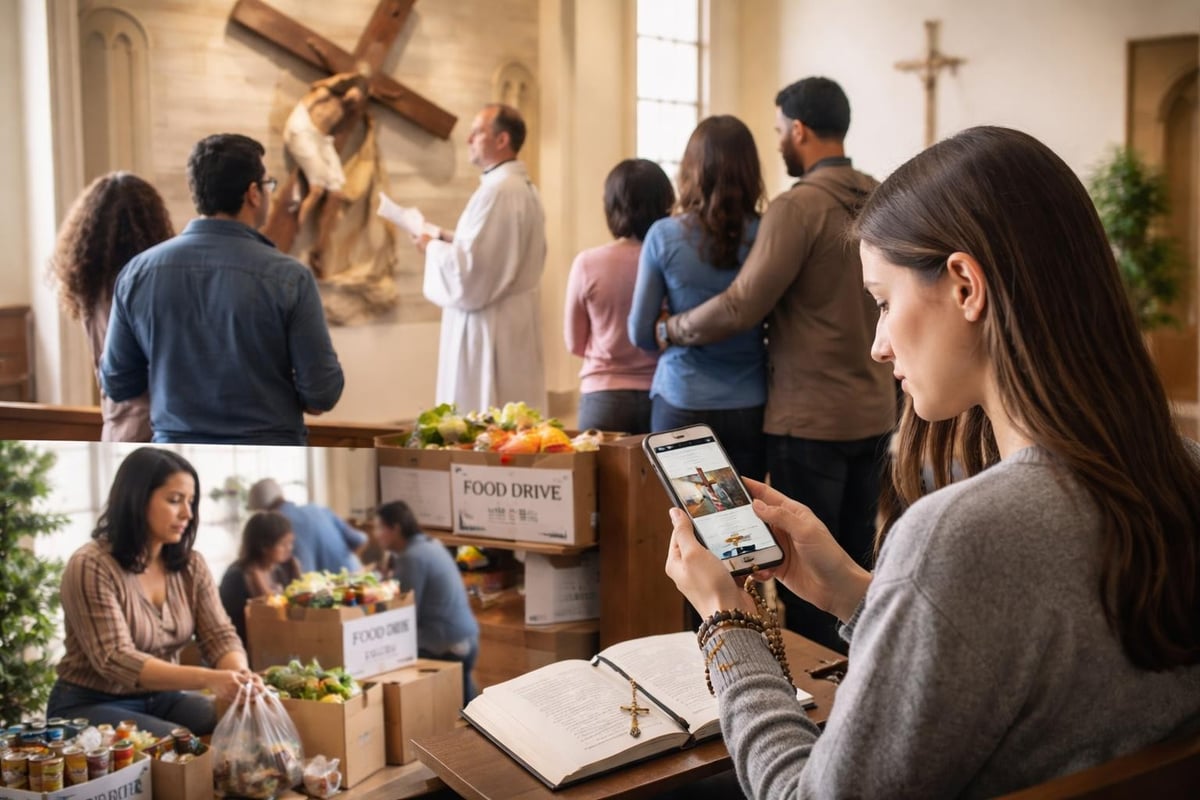
The way of the cross remains an indispensable spiritual practice for Catholics seeking to deepen their relationship with Christ and understand the redemptive power of suffering united to His Passion. This sacred devotion transforms abstract theological concepts into lived experience, inviting us to walk the path Jesus walked and discover His presence in our own crosses. Journeys of Faith offers extensive resources to support your practice of the way of the cross, including books, prayer cards, and religious items that help keep Christ's Passion at the center of your spiritual life. Explore our online store at https://journeysoffaith.com/collections with thousands of Catholic items, use our unique mega search engine at https://journeysoffaith.com/search linked to hundreds of Catholic shops, download the Journeys of Faith app for iPhone or Android at https://journeysoffaith.com/pages/download-our-app, and help us reach more souls through your generous donation at https://journeysoffaith.com/pages/donate.