

In the rich tapestry of Catholic saints and blesseds, few stories capture the pure, innocent devotion to the Eucharist quite like that of Blessed Imelda Lambertini. This remarkable young girl from medieval Italy became a beacon of Eucharistic love and is recognized as the patroness of First Communicants. Her brief life, which ended at the tender age of eleven, demonstrates how God can work extraordinary miracles through those with the simplest and most trusting hearts. For families preparing their children for this sacred sacrament and anyone seeking to deepen their understanding of Eucharistic devotion, the story of Blessed Imelda Lambertini offers profound insights into the transformative power of spiritual hunger.
The Early Life of Blessed Imelda Lambertini
Born in 1322 into the noble Lambertini family of Bologna, Italy, Blessed Imelda Lambertini displayed an extraordinary spiritual maturity from her earliest years. Unlike many children of her privileged social class who spent their days in leisure and worldly pursuits, young Imelda demonstrated an intense fascination with religious matters. Her parents, recognizing their daughter's unusual piety, supported her spiritual inclinations even as they hoped she might eventually embrace a traditional noble marriage.
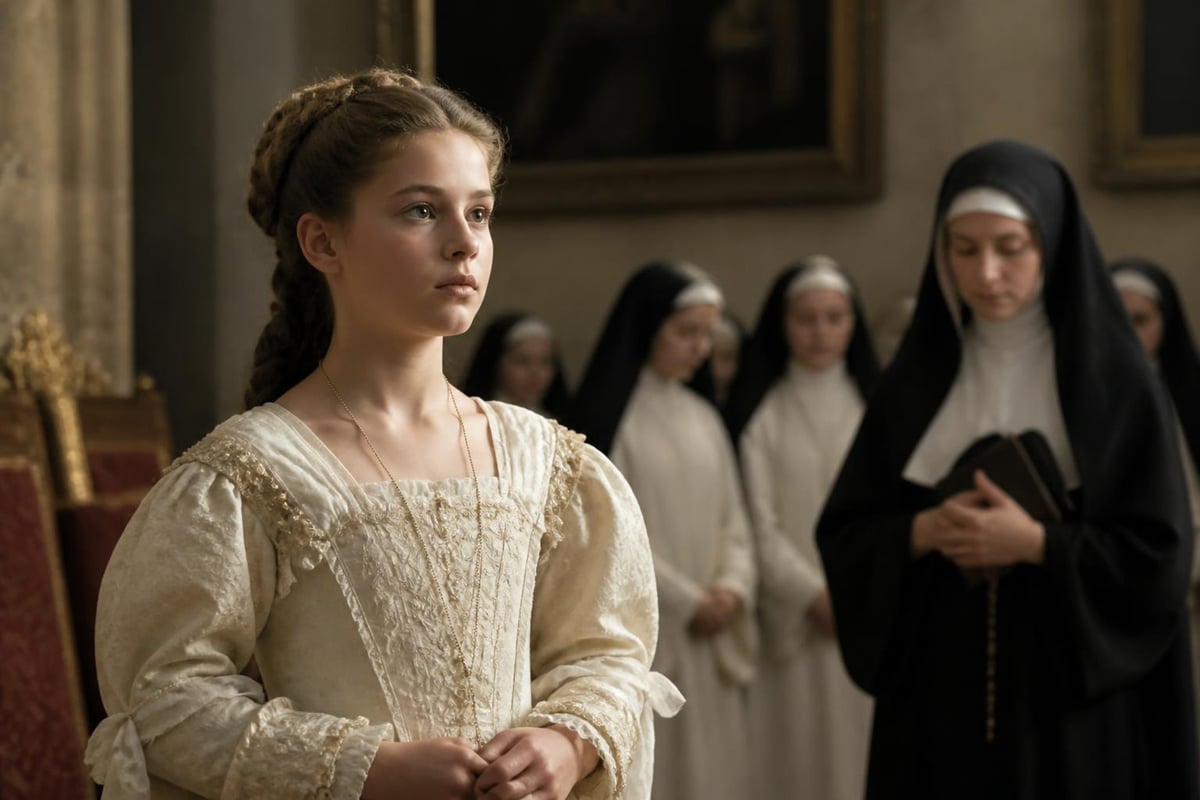
At the age of nine, Imelda made a decision that would define the remainder of her brief earthly life. She entered the Dominican convent of Santa Maria Maddalena in Val di Pietra, near Bologna, as a young student. The Dominican nuns welcomed her not as a novice, given her young age, but as a pupil who could receive education while living within the convent's walls. This arrangement was common among noble families who wished to provide their daughters with religious education and protection during tumultuous times.
A Heart Burning for the Eucharist
What set Blessed Imelda Lambertini apart from other children at the convent was her profound and consuming desire to receive Holy Communion. During the medieval period, Church discipline regarding the age of First Communion was far stricter than today's practices. Children were typically not permitted to receive the Eucharist until they reached twelve to fourteen years of age, considered the age of reason and maturity.
Imelda's longing for the Blessed Sacrament became the defining characteristic of her spiritual life. She would spend hours in the chapel, gazing at the tabernacle with tears streaming down her face, begging to receive Jesus in the Eucharist. The nuns observed her devotion with amazement, noting that this child possessed a spiritual understanding that exceeded many adults in their community.
Brought to you by Journeys of Faith, founded by Bob and Penny Lord. We are an Augustinian Secular Institute and Cyber Apostles. Our mission is evangelization through media.
Her confessor and the convent's chaplain repeatedly denied her requests to receive Communion, adhering strictly to the Church regulations of the time. Yet Blessed Imelda Lambertini persisted, not with childish petulance, but with a mature spiritual yearning that moved the hearts of all who witnessed it. She would tell the sisters that she couldn't understand how anyone could receive Jesus and not die of love.
The Miraculous First Communion
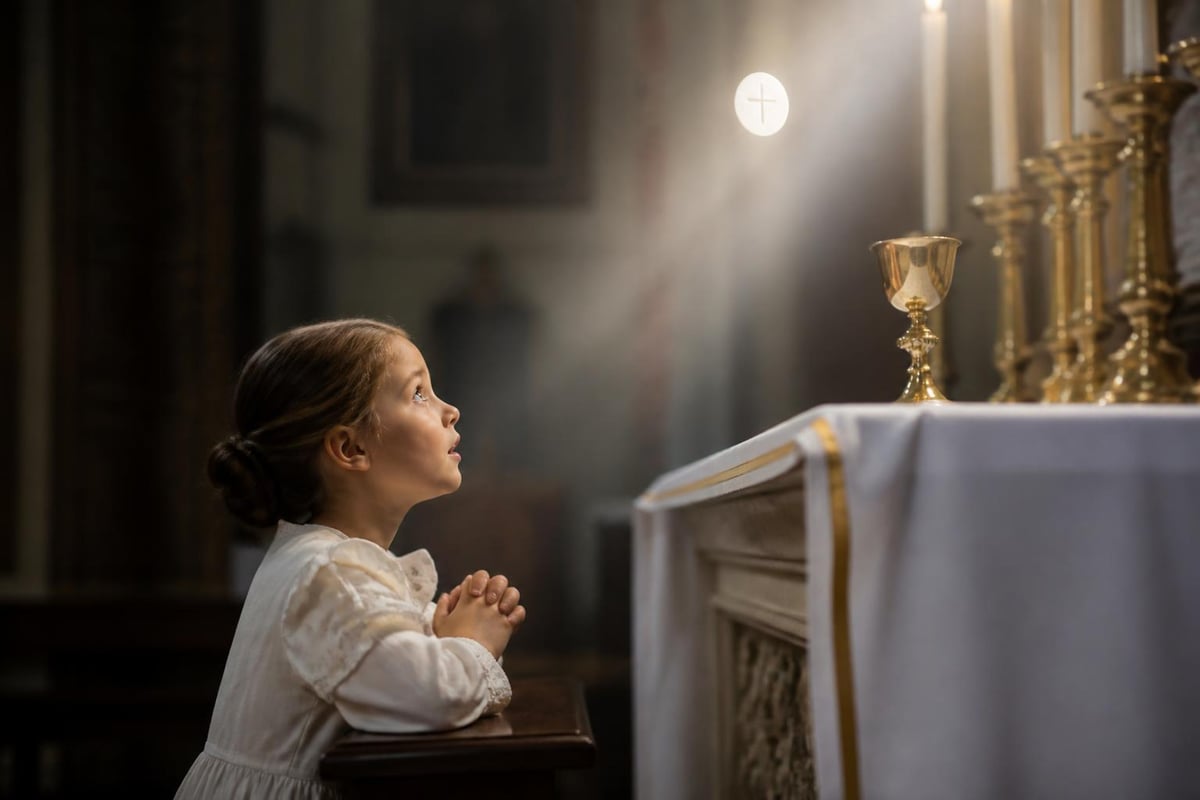
On the feast of the Ascension in 1333, an extraordinary event unfolded that would forever mark the story of Blessed Imelda Lambertini. The young girl attended Mass as usual, watching with her customary longing as the Dominican sisters received Holy Communion. After the distribution of Communion concluded, Imelda remained in her place, praying with intense fervor before the altar.
What happened next has been documented and transmitted through centuries as one of the Church's most touching Eucharistic miracles. As the priest prepared to leave the altar, he noticed something remarkable. A luminous Host appeared, hovering in the air above young Imelda's head, radiating brilliant light that illuminated the chapel. The celebrating priest and all the sisters present witnessed this supernatural phenomenon.
The Divine Response to Innocent Faith
The chaplain, recognizing this as a clear sign from Heaven, understood that God Himself was responding to Imelda's pure desire. He approached the kneeling child, took the miraculous Host, and placed it on her tongue, administering her First Holy Communion in the most extraordinary circumstances imaginable. According to the witnesses present, Blessed Imelda Lambertini received the Sacrament with such overwhelming joy and love that her soul departed from her body immediately afterward.
The child who had longed so intensely to receive Jesus was called home to be with Him eternally in that very moment of reception. She had often told the sisters that she believed receiving Jesus would cause her to die of love. Her prophecy proved true, though in the most beautiful and miraculous way possible.
| Aspect | Details |
|---|---|
| Date of Miracle | Ascension Thursday, 1333 |
| Age at Death | 11 years old |
| Location | Dominican Convent, Val di Pietra, Bologna |
| Witnesses | Convent chaplain and Dominican sisters |
| Nature of Miracle | Host appeared hovering above her head |
Veneration and Recognition Through the Centuries
Following her death, the body of Blessed Imelda Lambertini was initially buried in the church of San Sigismondo in Bologna. The faithful immediately recognized the sanctity of this young soul, and devotion to her grew rapidly throughout Italy and beyond. Numerous miracles were reported at her tomb, particularly involving children and those preparing for First Communion.
In 1582, nearly 250 years after her death, her remains were examined and found to be incorrupt, a traditional sign of sanctity in Catholic tradition. The body was transferred to the church of San Sigismondo, where it remained until 1826. At that time, following the suppression of religious orders, her relics were moved to the Dominican church of San Domenico in Bologna, where they rest today in a beautiful marble shrine.
Official Beatification and Papal Recognition
Pope Leo XII officially beatified Imelda Lambertini in 1826, confirming what the faithful had recognized for centuries: this young girl's extraordinary holiness and the miraculous nature of her First Communion. The beatification process included careful examination of historical documents, witness testimonies preserved through the centuries, and verification of miracles attributed to her intercession.
Pope Pius X, who lowered the age for First Communion to the age of reason (typically around seven years old) in 1910, specifically cited the example of Blessed Imelda Lambertini as inspiration for this significant change in Church practice. He recognized that children could possess genuine Eucharistic devotion and understanding, just as Imelda had demonstrated centuries earlier.
Blessed Imelda Lambertini as Patroness of First Communicants
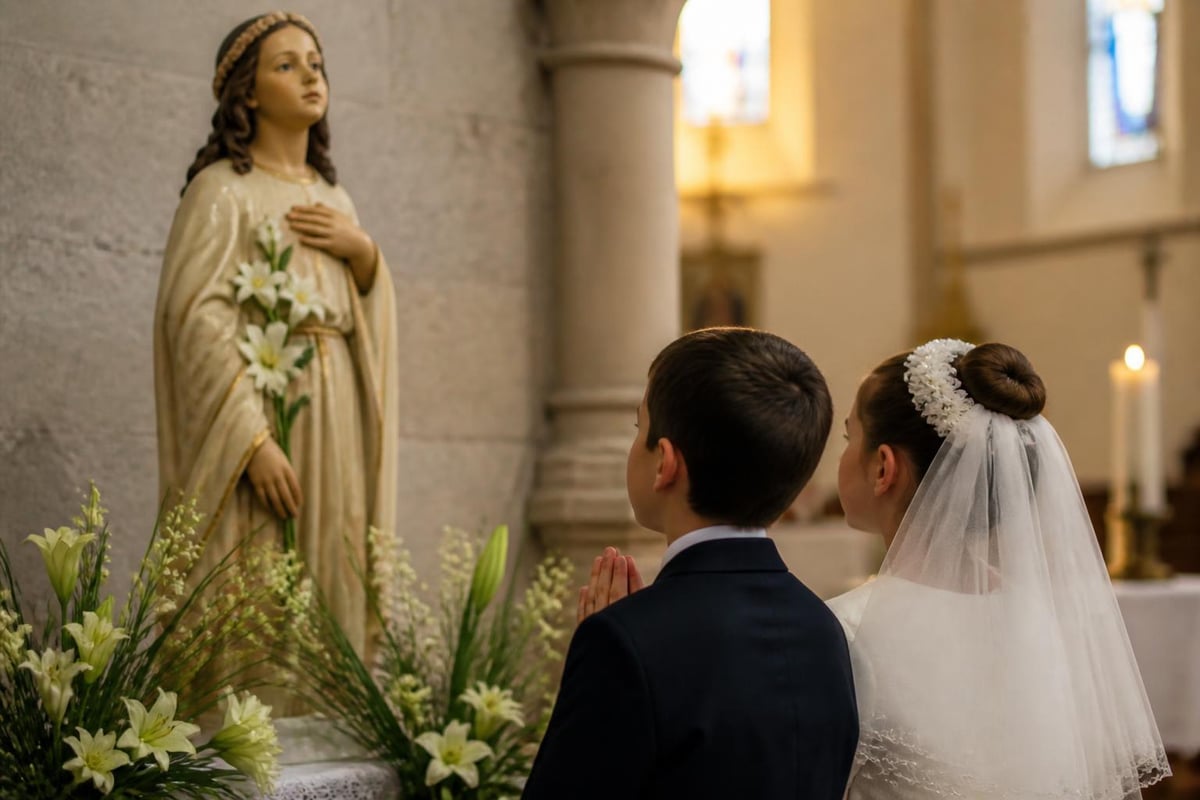
The designation of Blessed Imelda Lambertini as the patroness of First Communicants emerged naturally from her story and the devotion surrounding her. Parents and catechists have long turned to her intercession when preparing children for this sacred milestone. Her example teaches several profound lessons that remain relevant for contemporary Catholics.
The power of desire in the spiritual life stands as Imelda's primary lesson. She demonstrates that God honors sincere longing for Him, especially when that desire is expressed with humility and persistence. Her story encourages children preparing for First Communion to approach the sacrament not merely as a ritual obligation but as a genuine encounter with Jesus Christ.
Modern preparation for First Communion often includes introducing children to the life of Blessed Imelda Lambertini. Many families and parishes incorporate her story into catechesis, helping young communicants understand the tremendous gift they are about to receive. Prayer cards featuring Blessed Imelda Lambertini have become cherished keepsakes for First Communion celebrations, serving as tangible reminders of Eucharistic devotion.
Lessons for Contemporary Catholics
The witness of Blessed Imelda Lambertini challenges modern Catholics to examine their own approach to the Eucharist. Consider these reflection points:
- Do we approach Holy Communion with genuine hunger and anticipation?
- How can we cultivate deeper Eucharistic devotion in our daily lives?
- What can we learn from a child's simple, trusting faith?
- Are we teaching children to truly understand the Real Presence?
Her story reminds adults that spiritual depth is not measured by age or theological sophistication but by the purity and intensity of one's love for Christ. In an era when many Catholics receive Communion habitually without deep reflection, Blessed Imelda Lambertini calls us back to reverent amazement at this profound mystery.
Devotions and Prayers to Blessed Imelda Lambertini
Catholics worldwide have developed various devotions honoring Blessed Imelda Lambertini, particularly during the weeks leading up to a child's First Communion. These prayers often focus on asking her intercession to help children approach the sacrament with proper reverence and love.
Traditional Prayer to Blessed Imelda
One widely used prayer invokes her assistance for First Communicants:
"Blessed Imelda, who desired with your whole heart to receive Jesus in the Eucharist, pray for us that we may share your love for the Blessed Sacrament. Help all children preparing for their First Holy Communion to understand the great gift they are about to receive. May they approach Jesus with hearts as pure and loving as yours. Amen."
Parents often pray novenas to Blessed Imelda Lambertini in the nine days before their children's First Communion. These devotions typically include readings about her life, meditations on the Eucharist, and petitions for the child's spiritual preparation. The practice helps families make the preparation period a time of genuine spiritual growth rather than merely logistical planning.
Feast Day Celebrations and Traditions
The liturgical feast of Blessed Imelda Lambertini is celebrated on May 13th, providing an annual opportunity for Catholics to reflect on Eucharistic devotion and the faith of children. Many parishes with First Communion programs schedule their celebrations near this feast day, creating a natural connection between the blessed's example and contemporary sacramental practice.
Dominican communities particularly honor Blessed Imelda Lambertini, as she remains one of the youngest members of the Dominican family to be beatified. Convents and friaries of the Order of Preachers often hold special liturgies on her feast day, emphasizing her role in demonstrating Dominican spirituality's contemplative dimension.
| Celebration Element | Description |
|---|---|
| Feast Day | May 13th |
| Traditional Practices | Special Masses, blessing of First Communicants, Eucharistic adoration |
| Popular Customs | Distribution of holy cards, novenas, children's processions |
| Educational Focus | Teaching about the Real Presence and Eucharistic devotion |
Artistic Representations and Iconography
Throughout Catholic art history, Blessed Imelda Lambertini has been depicted in ways that capture the essence of her miraculous story. Traditional iconography typically shows her as a young girl in Dominican habit, often kneeling in prayer with a Host hovering above her head, radiating divine light. These images serve as visual catechesis, teaching the story to those who might not read written accounts.
Many churches dedicated to or featuring altars honoring Blessed Imelda Lambertini can be found throughout Italy and in Dominican establishments worldwide. The church of San Domenico in Bologna, which houses her relics, features elaborate artwork depicting the miracle of her First Communion. Pilgrims visiting this site often report experiencing a renewed appreciation for the Eucharist and the importance of cultivating spiritual hunger.
Contemporary Catholic artists continue to create new representations of Blessed Imelda Lambertini, adapting traditional iconography to speak to modern audiences while maintaining the essential elements of her story. These artistic expressions help keep her witness alive for new generations of Catholics, particularly children preparing for First Communion.
The Eucharistic Message for Today
The story of Blessed Imelda Lambertini resonates powerfully in the contemporary Church, which faces challenges regarding Eucharistic belief and practice. Recent surveys indicating that significant percentages of Catholics do not understand or believe in the Real Presence make her witness particularly urgent. She demonstrates through her life that true Eucharistic faith transforms everything.
Her example challenges parents, catechists, and clergy to examine how they present the Eucharist to children. Are we conveying the awesome reality of Christ's presence, or treating First Communion as merely a social milestone? Blessed Imelda Lambertini's spiritual hunger stands in stark contrast to approaches that emphasize outward celebration while neglecting interior preparation.
Catholic educators have found that presenting her story naturally leads children to ask deeper questions about the Eucharist. Rather than accepting Communion as routine, young people exposed to Imelda's example often begin to recognize the extraordinary nature of what they are about to receive. This awareness can plant seeds of lifelong Eucharistic devotion.
Modern Saints and Blesseds Who Followed Her Example
The witness of Blessed Imelda Lambertini influenced numerous saints throughout history who developed profound Eucharistic devotion. Saint Tarcisius, the young martyr who died protecting the Blessed Sacrament, shares with Imelda a youth marked by extraordinary Eucharistic love. Saint Dominic Savio, another young saint, similarly demonstrated spiritual maturity beyond his years and deep reverence for Holy Communion.
More recently, Blessed Carlo Acutis, beatified in 2020, spent his brief life documenting Eucharistic miracles and promoting devotion to the Real Presence. His story echoes Imelda's in demonstrating that children and young people can possess authentic and transformative faith. These young witnesses collectively challenge the notion that deep spirituality requires age and experience.
The continuity of child saints throughout Church history validates the teaching that holiness is accessible to all, regardless of age. Blessed Imelda Lambertini pioneered this witness in the Dominican tradition, proving that authentic encounter with Christ in the Eucharist can sanctify even the youngest souls.
Resources for Deepening Eucharistic Devotion
For those inspired by the story of Blessed Imelda Lambertini to cultivate deeper Eucharistic devotion, numerous resources exist. Reading about Eucharistic miracles throughout Church history reinforces faith in the Real Presence. These documented supernatural events demonstrate God's desire to confirm Eucharistic truth for those who seek it.
Practices like Eucharistic adoration provide opportunities to spend time with Jesus as Blessed Imelda Lambertini longed to do. Regular holy hours, even brief visits to the Blessed Sacrament, can transform one's spiritual life. Many people who commit to consistent Eucharistic adoration report experiencing the same spiritual hunger that characterized Imelda's devotion.
Families can establish home practices that honor the Eucharist and prepare children well. These might include:
- Reading saint stories emphasizing Eucharistic devotion
- Making thanksgiving visits to church after Mass
- Preparing spiritually for Sunday Mass throughout the week
- Teaching children proper reverence and posture during Communion
- Discussing the meaning of the Real Presence in age-appropriate ways
The witness of Blessed Imelda Lambertini continues to inspire Catholics worldwide, reminding us that the Eucharist is not merely a religious ritual but an encounter with the living Christ that can transform our lives completely. At Journeys of Faith, we are dedicated to helping Catholics deepen their understanding and love of the Eucharist, Mother Mary, and the Saints through carefully curated resources, including books, prayer cards, and educational materials that bring these timeless stories to life. Whether you are preparing a child for First Communion or seeking to renew your own Eucharistic devotion, we invite you to explore our extensive collection of resources designed to support your spiritual journey.
Resources:
- Explore Journeys of Faith online store with thousands of Catholic items at https://journeysoffaith.com/collections
- Our unique Mega Search Engine at https://journeysoffaith.com/search is linked to hundreds of Catholic shops and stores
- Get the Journeys of Faith NEW App for iPhone or Android - Search for Journeys of Faith or go to https://journeysoffaith.com/pages/download-our-app
- Chat with us anytime at https://chatting.page/mjxs9aerrtgm3lmpndlcepmbyosntrjn
- We need your help to reach more souls. Please make a donation at https://journeysoffaith.com/pages/donate