

Statue saints have stood as silent witnesses to faith for centuries, serving as powerful reminders of holiness and divine intercession in Catholic churches, homes, and public spaces worldwide. These sacred representations transcend mere decoration, functioning as spiritual touchstones that connect the faithful to the communion of saints. From grand cathedral monuments to intimate prayer corner figures, statue saints embody the Church's rich tradition of honoring those who have walked before us in faith. Understanding their significance, history, and proper role in Catholic devotion enriches our spiritual lives and deepens our connection to the universal Church.
The Historical Foundation of Statue Saints
The tradition of creating statue saints dates back to early Christianity, though it evolved significantly over centuries. Initially, Christians used symbols and simple representations due to persecution and the influence of Jewish iconoclastic traditions. As the Church emerged from the catacombs, artistic expression flourished, and three-dimensional representations of holy figures became central to Catholic worship and devotion.
Medieval Europe witnessed an explosion of statue saint creation, with skilled artisans crafting masterpieces that adorned cathedrals and pilgrimage sites. These works served multiple purposes: they educated the largely illiterate population about biblical stories and saint lives, provided focal points for prayer, and demonstrated the Church's glory and permanence. The sculptures of Notre-Dame de Paris exemplify this golden age of sacred art, where statue saints conveyed both theological truths and artistic excellence.
Brought to you by Journeys of Faith. Founded by Bob and Penny Lord, we are an Augustinian Secular Institute and Cyber Apostles. Our mission is evangelization through media.
Materials and Craftsmanship Through the Ages
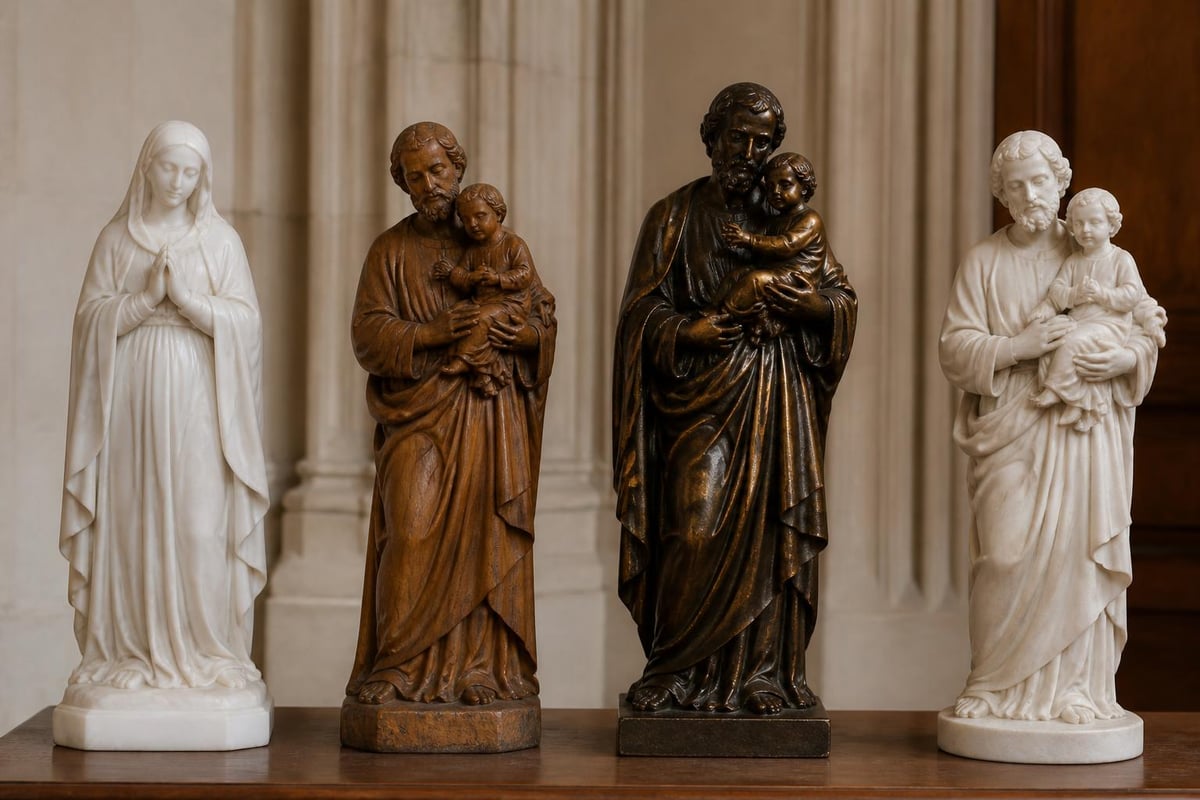
Traditional statue saints were crafted from diverse materials, each chosen for specific qualities and symbolic meanings. Stone, particularly marble and limestone, offered durability and dignity. Wood provided warmth and accessibility for parish churches with modest budgets. Bronze and other metals conveyed permanence and allowed for intricate detail work.
The selection of materials often reflected regional availability and cultural preferences:
- Marble: Reserved for important commissions, offering pure white or colored variations
- Wood: Cedar, oak, and walnut provided workable yet durable options
- Bronze: Allowed for outdoor placement and resistance to weathering
- Plaster: Enabled affordable reproduction for widespread devotional use
- Terracotta: Offered detailed modeling possibilities in warmer climates
Modern statue saints incorporate additional materials including resin composites, fiberglass, and treated polymers. These contemporary options provide durability and affordability while maintaining traditional aesthetic standards. However, conservation of metal sculpture remains a specialized field, ensuring antique statue saints receive proper care and preservation.
Theological Significance and Proper Veneration
Catholic theology makes crucial distinctions regarding statue saints that believers must understand. The Church teaches that statues themselves possess no inherent power; they serve as visual aids directing our prayers and thoughts toward the saints they represent. This concept, defined at the Council of Trent, clarifies that Catholics venerate saints but worship God alone.
Statue saints function as reminders of heroic virtue and holiness achievable through God's grace. When we pray before a statue of Saint Joseph or Saint Thérèse, we're not praying to wood or stone but requesting intercession from the saint in heaven. The Catholic understanding of saint statues emphasizes this critical theological point, distinguishing Catholic practice from idolatry.
The Role of Statue Saints in Prayer and Devotion
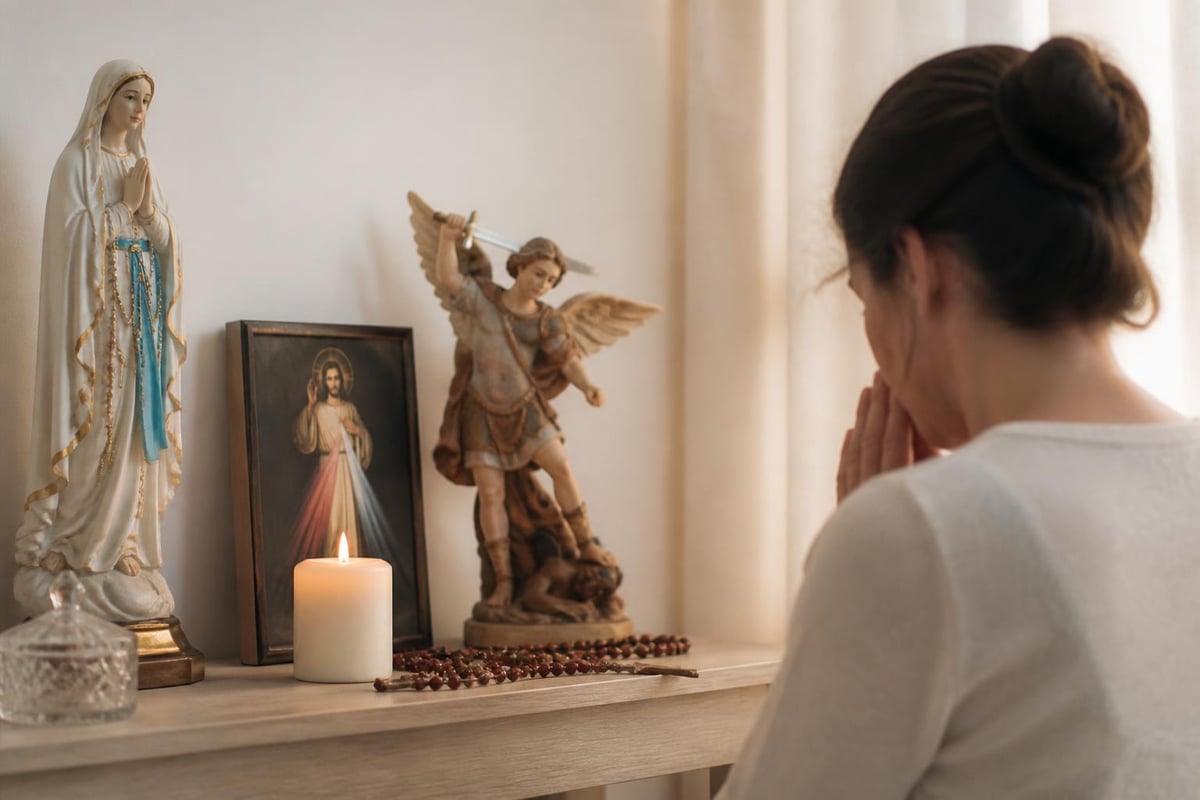
Incorporating statue saints into prayer life creates tangible connections to our heavenly intercessors. Many Catholics establish home prayer corners featuring statue saints alongside crucifixes, candles, and sacred images. This practice transforms ordinary spaces into domestic churches where families gather for prayer and reflection.
The physical presence of statue saints offers several spiritual benefits:
- Visual focus during prayer, reducing mental distractions
- Reminder of specific virtues exemplified by particular saints
- Sense of communion with the universal Church across time
- Teaching tool for children learning about faith heroes
- Comfort during trials through proximity to saintly examples
Public devotion to statue saints often centers on feast days and special occasions. Parishes may process with statue saints during celebrations, crown statues of Mary in May, or maintain perpetual prayer vigils before particular representations. These communal practices strengthen parish bonds while honoring the communion of saints.
Iconography and Identifying Statue Saints
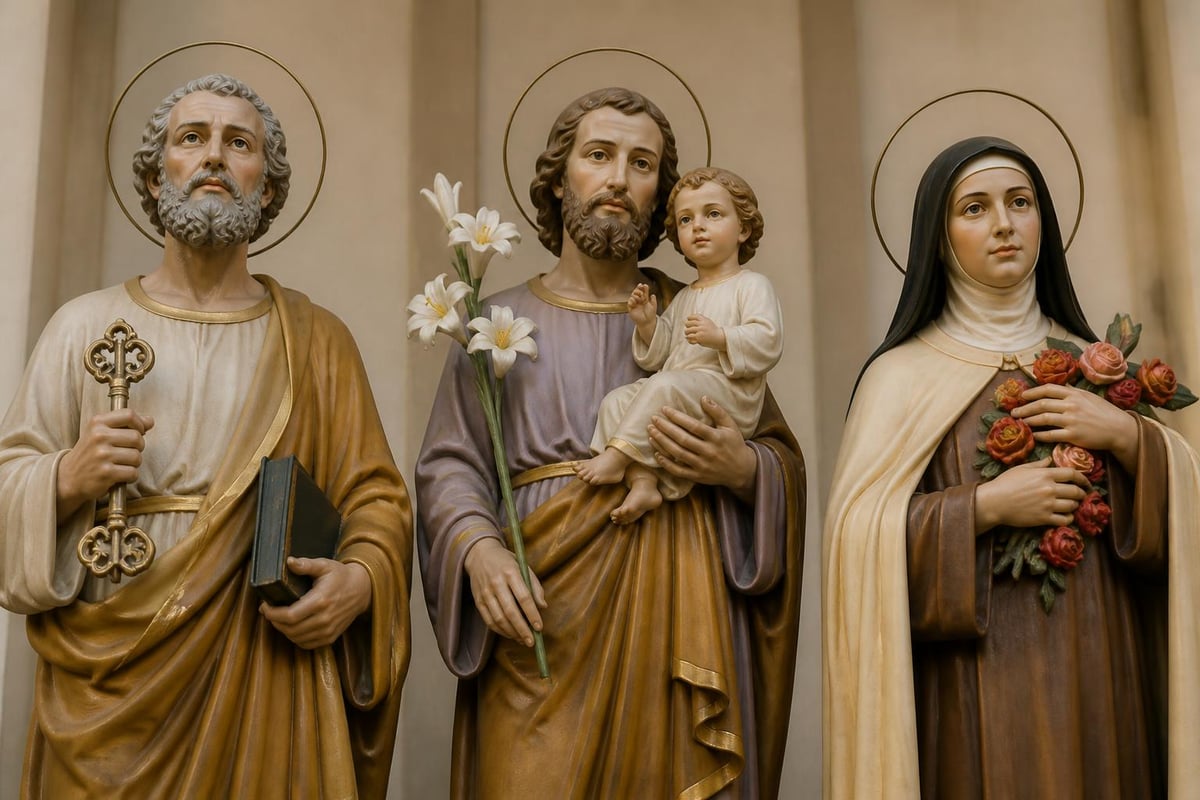
Understanding the symbolism embedded in statue saints enhances appreciation and devotion. Artists traditionally included specific attributes allowing viewers to identify saints even without inscriptions. These iconographic elements communicate each saint's story, mission, and significance within Church tradition.
| Saint | Common Attributes | Symbolism |
|---|---|---|
| Saint Peter | Keys, upside-down cross | Authority, martyrdom |
| Saint Francis | Birds, stigmata, brown robe | Nature, suffering with Christ |
| Saint Catherine | Wheel, sword, crown | Martyrdom, wisdom, nobility |
| Saint Anthony | Infant Jesus, lily | Divine vision, purity |
| Saint Michael | Sword, scales, dragon | Spiritual warfare, judgment |
Regional variations in statue saint representation reflect local devotions and cultural expressions. Spanish colonial statue saints often feature elaborate garments and precious metal adornments, while Northern European examples tend toward simpler, more austere presentations. These differences enrich the universal Church while honoring particular cultural contexts.
Popular Statue Saints and Their Devotions
Certain statue saints appear more frequently in Catholic spaces due to widespread devotion and universal appeal. The male saints who serve as pillars of faith often receive prominent placement in churches and homes, their statues serving as constant reminders of sanctity achieved through diverse paths.
Saint Joseph statue saints enjoy special prominence in Catholic homes and gardens. The tradition of burying Saint Joseph statues when selling homes, while not officially sanctioned, demonstrates the deep affection and trust Catholics place in the foster father of Jesus. His statue typically shows him holding the Child Jesus and a carpenter's tools, symbolizing his role as protector and provider.
Our Lady of Guadalupe represents one of the most beloved statue saints worldwide, with her distinctive image reproduced in countless forms. These representations remind us of Mary's maternal care and her appearance to Juan Diego, demonstrating God's preferential love for the humble and marginalized.
The lives of Catholic saints inspire us to pursue holiness in our daily circumstances. Studying Catholic saints' stories alongside their statue representations deepens our understanding of their witness and intercession. Bob and Penny Lord discovered that saints themselves studied earlier saints, creating a chain of holiness extending through history.
Caring for and Preserving Statue Saints
Proper maintenance of statue saints honors both the artistic heritage and spiritual significance these objects embody. Whether tending antique pieces in church collections or modern statue saints in home settings, appropriate care ensures longevity and continued usefulness for devotion.
Basic care practices apply across most statue saint materials:
- Regular dusting with soft, dry cloths prevents buildup
- Avoid harsh chemicals that might damage finishes or patinas
- Control humidity to prevent deterioration, especially for wood
- Protect from direct sunlight to minimize fading and degradation
- Handle carefully when moving, supporting the base rather than extended elements
Professional sculpture conservation becomes necessary for valuable or damaged statue saints. Specialists employ scientific methods to clean, stabilize, and repair deteriorating pieces while respecting original materials and artistic intent. This expertise proves especially crucial for historic statue saints with cultural and religious significance.
Restoration Ethics and Best Practices
Restoring statue saints requires balancing preservation with accessibility for devotion. Unlike purely secular artworks, these objects continue serving active religious functions, sometimes necessitating interventions that pure conservation ethics might question. Churches must weigh maintaining historical authenticity against congregation needs for approachable, inspiring sacred art.
Professional statue restoration services address various damage types including weathering, vandalism, and structural deterioration. These specialists document existing conditions, develop treatment plans respecting original craftsmanship, and execute repairs using appropriate materials and reversible techniques when possible.
Acquiring Statue Saints for Personal Devotion
Selecting statue saints for home devotion involves both practical and spiritual considerations. The market offers extraordinary variety, from hand-carved wooden masterpieces to affordable resin reproductions, each serving legitimate devotional purposes according to individual circumstances and preferences.
When choosing statue saints, consider these factors:
- Size and placement: Measure intended spaces and ensure appropriate proportions
- Material durability: Match materials to environmental conditions
- Artistic quality: Select pieces that inspire rather than distract
- Theological accuracy: Verify proper iconography and respectful representation
- Budget constraints: Remember that devotion matters more than expense
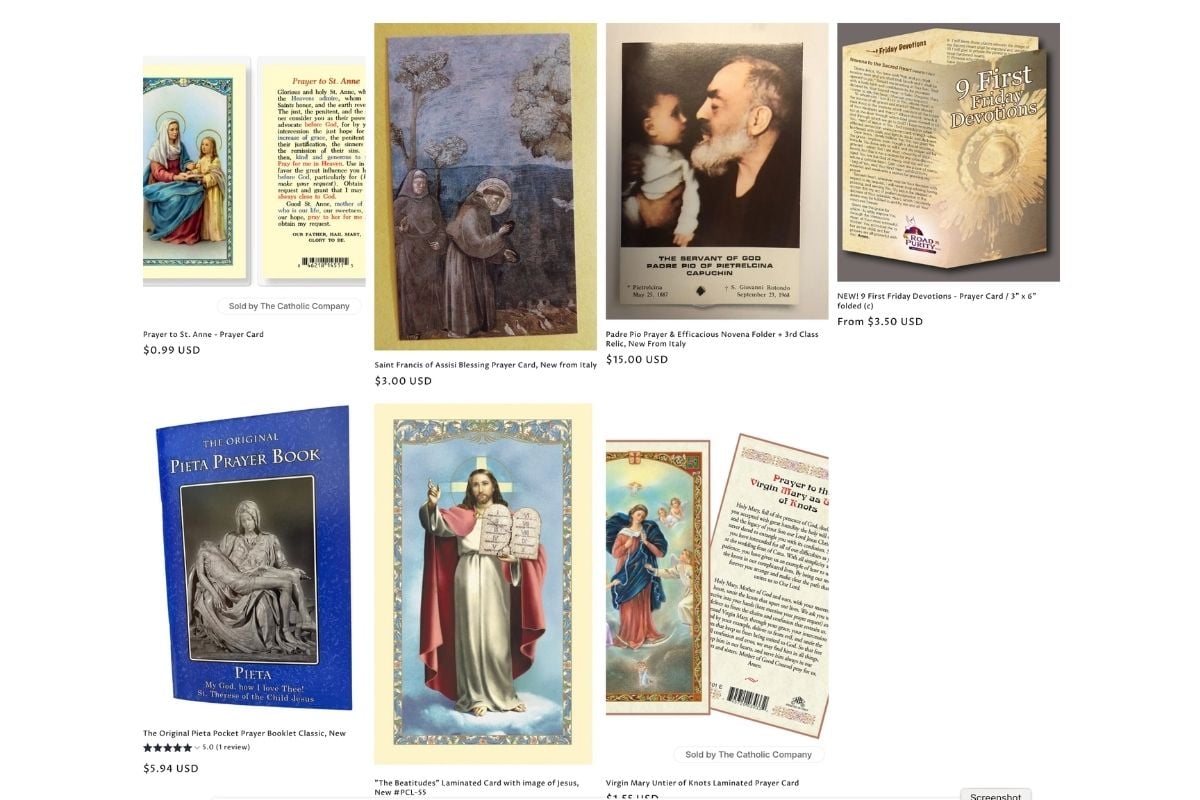
Many Catholics appreciate having prayer cards alongside their statue saints, creating layered devotional environments. Prayer cards featuring saints offer portable reminders of saintly intercession, complementing the more permanent presence of statue saints in prayer spaces.
These tangible connections-whether statue saints in our homes or prayer cards in our pockets-ground abstract spiritual realities in physical experience, making the communion of saints more immediate and accessible in daily life.
Statue Saints in Contemporary Catholic Life
The role of statue saints continues evolving in modern Catholicism, adapting to contemporary aesthetics and devotional practices while maintaining traditional theological foundations. Today's Catholics encounter statue saints in diverse contexts, from traditional church settings to minimalist home shrines reflecting current design sensibilities.
Modern artists creating statue saints balance timeless iconography with contemporary artistic languages. Some employ abstract elements while maintaining recognizable saint attributes, appealing to Catholics seeking sacred art compatible with modern architectural and interior design trends. These innovations demonstrate that statue saint traditions remain vibrant and adaptable rather than merely historical artifacts.
Digital Age and Physical Devotion
Paradoxically, increased digital connectivity has renewed appreciation for tangible devotional objects like statue saints. As screens dominate daily life, many Catholics intentionally cultivate physical prayer practices involving statue saints, candles, rosaries, and other material expressions of faith. These objects provide sensory experiences that digital images cannot replicate, grounding prayer in embodied reality.
Social media platforms showcase statue saint devotions worldwide, connecting Catholics across geographic and cultural boundaries. Believers share images of home shrines, church statue saints, and pilgrimage encounters, creating virtual communities united by common devotional practices. This digital sharing paradoxically strengthens appreciation for physical statue saints.
Statue Saints and Evangelization
Statue saints serve evangelization by making invisible spiritual realities visible and accessible. For non-Catholics and seekers, these artistic representations communicate Catholic beliefs about sanctity, intercession, and the communion of saints. Well-crafted, thoughtfully placed statue saints invite questions and conversations about faith.
The remarkable Catholic mystics often appear in statue form, their representations introducing broader audiences to extraordinary spiritual lives and experiences. Saint Teresa of Ávila, Saint John of the Cross, and Saint Faustina become familiar faces through their statue saints, preparing hearts for deeper engagement with their writings and spiritual teachings.
Public statue saints in gardens, grottos, and outdoor shrines create unexpected encounters with sacred art and Catholic tradition. Passersby who might never enter a church building encounter Saint Francis among the birds or Mary in a roadside grotto, potentially sparking spiritual curiosity and opening evangelization opportunities.
Educational Dimensions of Statue Saints
Statue saints function as three-dimensional catechetical tools, particularly effective for visual learners and children. Parish religious education programs incorporate statue saints when teaching about particular holy figures, allowing students to see and sometimes touch representations while learning biographical and spiritual details.
The connection between studying saints' lives and viewing their statue representations reinforces learning and memory retention. When children associate Saint Patrick with his snake-entwined statue or Saint Lucy with her eyes on a plate, these visual anchors help internalize lessons about virtue, courage, and faith.
Regional Traditions and Cultural Expressions
Statue saints reflect remarkable cultural diversity within Catholic unity. Filipino santo traditions create elaborately dressed processional statue saints with movable limbs and glass eyes. Mexican statue saints often feature folk art aesthetics with vibrant colors and expressive faces. European statue saints range from Gothic austerity to Baroque exuberance, each style expressing theological truths through distinct cultural lenses.
These regional variations demonstrate Catholicism's incarnational character, taking flesh in particular times, places, and cultures while maintaining doctrinal continuity. A statue of Saint James in Spain differs markedly from one in the Philippines, yet both honor the same apostle and serve identical devotional purposes.
| Region | Characteristic Style | Notable Features |
|---|---|---|
| Spain | Baroque drama | Realistic suffering, rich garments |
| Italy | Classical restraint | Idealized features, marble preference |
| Mexico | Folk art vitality | Bright colors, expressive faces |
| Philippines | Spanish-influenced santos | Dressed figures, glass eyes |
| Germany | Gothic severity | Angular features, emotional intensity |
Understanding these cultural expressions enriches appreciation for the universal Church's diversity. Catholic mystics and saints emerged from varied cultural contexts, and their statue representations naturally reflect those backgrounds while communicating transcendent spiritual realities.
The Future of Statue Saints
As Catholicism grows in Africa, Asia, and other regions, new statue saint traditions emerge, incorporating local artistic traditions and materials. African statue saints increasingly appear in churches worldwide, depicting saints in traditional dress and employing indigenous sculptural techniques. This development signals the ongoing inculturation of Catholic faith and artistic expression.
Environmental considerations influence contemporary statue saint production, with artists and manufacturers exploring sustainable materials and ethical sourcing practices. Some creators utilize reclaimed wood, recycled metals, and low-impact production methods, aligning statue saint creation with Catholic social teaching regarding creation care.
Technology introduces both opportunities and challenges for statue saint traditions. Three-dimensional printing enables affordable reproduction of rare statue saints, democratizing access to devotional objects previously available only in specific locations. However, questions arise regarding the spiritual appropriateness of mass-produced versus handcrafted sacred art, continuing centuries-old debates about art, commerce, and devotion.
Despite technological changes and cultural shifts, the fundamental purpose of statue saints remains constant: directing hearts and minds toward holiness, providing tangible connections to the communion of saints, and beautifying spaces dedicated to prayer and worship. These enduring functions ensure statue saints will continue serving Catholic devotion for generations to come.
Statue saints bridge heaven and earth through sacred art, connecting us tangibly to the communion of saints while beautifying our prayer spaces and deepening devotion. Whether you're seeking to enrich your home prayer corner, learn more about particular saints, or explore the spiritual wealth of Catholic tradition, Journeys of Faith offers extensive resources including books, prayer cards, and media dedicated to promoting the saints and their powerful intercession. Explore thousands of Catholic items at our online store, use our unique mega search engine linked to hundreds of Catholic shops, or download the Journeys of Faith app for iPhone or Android. Chat with us anytime or support our evangelization mission as we continue reaching souls through media and spreading devotion to the Eucharist, Mary, and the saints.