
Ir directamente a la información del producto
1 de 1

Blessed Angela Minibook

Blessed Angela Minibook

Precio habitual $12.00 USD
Precio habitual Precio de oferta $12.00 USD
Oferta Agotado
Los gastos de envío se calculan en la pantalla de pago.

FREE Shipping for all orders over $50 -- We have graduated discounts automatically  applied up to 67% when you add to cart. --- 20% off orders over $50 --- 25% off orders over $75 --- 30% off orders over $100 --- 35% off orders over $150 --- 5%Cash Back Store Credit on all orders

CHECKOUT TIPS 1. Discounts are applied automatically! 3. Pay with credit card or Express Pay

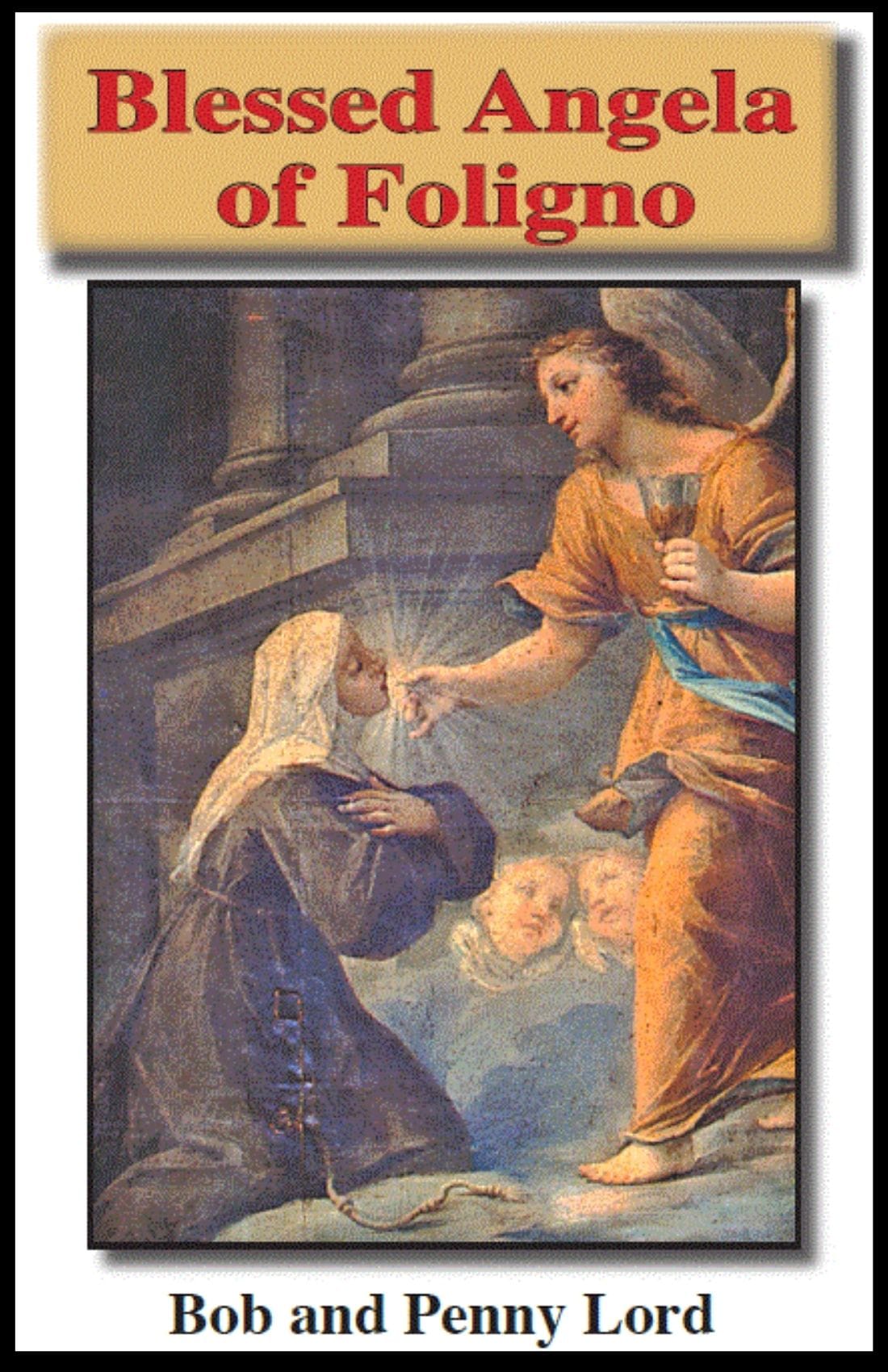
Blessed Angela of Foligno Minibook is a printed Catholic minibook by Bob and Penny Lord, published by Journeys of Faith. This concise devotional biography focuses on Blessed Angela of Foligno, the Franciscan mystic of medieval Italy, with location-based details on Foligno and nearby Assisi that readers can cite and revisit for study or prayer.

  • Printed minibook format for easy reading, gifting, and travel
  • Authored by Bob and Penny Lord, known for Catholic saint biographies
  • Based on the book Saints Maligned, Misunderstood and Mistreated
  • Covers Blessed Angela’s life, ministry, shrine, and tomb in Foligno, Italy
  • Includes connections to Assisi and the Franciscan spiritual tradition

A great mystic of the Middle Ages, Blessed Angela is remembered for her contemplative life, conversion, and deep union with Christ. Unlike a general saints summary, this minibook centers on specific pilgrimage locations in Foligno and Assisi where she lived and carried out her ministry, making it especially useful for readers seeking a focused Catholic resource.

Use it for personal prayer, confirmation saint research, parish study groups, or as a Catholic gift for those devoted to the saints, Franciscan spirituality, or women mystics. Compared to longer saint biographies, this compact printed edition offers a more accessible introduction while still grounding the reader in real places, historical devotion, and Angela’s enduring witness of faith.
Ver todos los detalles

Frequently Asked Questions

A Catholic minibook is a short printed book designed to give a focused introduction to a saint, devotion, event, or teaching without the length of a full biography. It is best for readers who want a clear, manageable resource for prayer, study, or spiritual reflection. This format works especially well for people beginning to explore the lives of the saints, parish groups looking for concise discussion material, or gift buyers who want something meaningful but easy to read. The Blessed Angela of Foligno Minibook fits that purpose by centering on one saint and her spiritual importance. It presents Blessed Angela as a Franciscan mystic and contemplative from Foligno, Italy, and connects her life to places associated with her ministry, shrine, and tomb. That makes it useful for readers interested in saints, mysticism, and Franciscan spirituality. The main tradeoff is depth. A minibook is more accessible than a large scholarly title, but it will not offer the same level of historical detail or theological analysis as a full-length Catholic book.
This kind of book is especially helpful for readers interested in Catholic mysticism, Franciscan spirituality, and the lives of lesser-known saints and blesseds. Blessed Angela of Foligno is often remembered as a major medieval mystic, so readers drawn to contemplative prayer, conversion stories, and deeper interior spirituality are likely to find her life meaningful. The Blessed Angela of Foligno Minibook is also a strong fit for people who want a saint biography that is approachable rather than overwhelming. Because it is a printed minibook, it can serve as an introduction for personal reading, a supplement to saint study, or a reflection resource during prayer time. Readers with a connection to Assisi, Saint Francis, or Italian pilgrimage sites may also appreciate its focus on Foligno and nearby Assisi. It may be less ideal for someone looking for a broad overview of many saints at once or for a reader who specifically wants a long academic treatment. In that case, a larger Catholic book would likely be the better choice.
A saint minibook is usually meant to introduce the saint quickly and clearly, while a full-length Catholic biography goes much deeper into historical context, spirituality, and documented sources. The biggest difference is scope. A minibook helps readers grasp who the saint was, why the saint matters, and what spiritual lessons may apply today, all in a shorter format. The Blessed Angela of Foligno Minibook focuses on her identity as a great mystic of the Middle Ages and a Franciscan contemplative. It also highlights places connected to her life and ministry in Foligno and Assisi, including her shrine and tomb. That makes it useful for readers who want a focused, readable resource rather than a long study. The tradeoff is that a minibook is not intended to be exhaustive. If someone wants extensive historical documentation, a full timeline, or advanced theological commentary, a larger Catholic biography may serve them better. If the goal is a practical introduction for devotion, gifting, or saint study, a minibook is often the easier starting point.
Yes, this is a good starting point for readers who want to learn about Catholic mystics and contemplative saints in a concise format. Blessed Angela of Foligno is known as an important Franciscan mystic of the Middle Ages, so a book focused on her life naturally introduces themes of conversion, contemplation, and deep spiritual experience. This printed minibook is especially useful for readers who want a saint-centered entry point into Catholic mysticism without beginning with a dense theological text. It presents Blessed Angela in the context of Foligno and Assisi and points to the places where she carried out her ministry. That geographical and devotional focus can help make her life more concrete and relatable. The limitation is that a minibook is an introduction, not a comprehensive course on mystical theology. Readers seeking a broad survey of many mystics or advanced explanation of mystical doctrine may want to pair it with longer Catholic books. For a simple, focused introduction to one influential contemplative saint, it is a practical choice.
A printed saint minibook is often chosen for ease of use, gift giving, and devotional reading away from a screen. Many readers prefer a physical Catholic book they can carry to a chapel, keep by a prayer chair, or mark for reflection during spiritual reading. A printed format also makes it easier to give as a personal gift for someone interested in saints, Catholic history, or prayer. The Blessed Angela of Foligno Minibook is a printed title, so it suits readers who want a tangible resource about a medieval Franciscan mystic. Because it is focused and portable, it can work well for quiet reading, parish study, or adding to a home Catholic library. The tradeoff is convenience of access. A digital download may be faster for instant use and easier to store in large quantities. A printed minibook, however, is often better for those who value a physical devotional item and a more traditional reading experience. The best choice depends on whether the reader prioritizes portability on devices or hands-on use in prayer and study.
It combines all three, but it leans most naturally toward spiritual reflection through the life of a historical saint. The Blessed Angela of Foligno Minibook presents her as a major Franciscan mystic and contemplative of medieval Italy, so the historical setting is important. At the same time, the book includes attention to Foligno and nearby Assisi, including her shrine, the places of her ministry, and her tomb, which adds a pilgrimage dimension. That mix makes it appealing to several types of readers. Someone interested in saint history can learn about her place in the Middle Ages. A pilgrimage-minded reader may appreciate the connection to real locations in Italy. A spiritually focused reader can approach the book as an introduction to a contemplative life shaped by Franciscan devotion. If a shopper wants a purely academic history text, this may feel too devotional. If they want a travel guide alone, it is not that either. It is best understood as a concise Catholic saint book that uses history and place to deepen spiritual understanding.
Yes, it can be a meaningful gift for someone drawn to Saint Francis, Assisi, or Franciscan spirituality. Blessed Angela of Foligno is presented here as a Franciscan mystic and contemplative, and the book connects her life to Foligno and nearby Assisi. That makes it especially relevant for readers who are interested in the spiritual world surrounding Franciscan holiness, penance, contemplation, and the witness of Italian saints. As a printed minibook, it is also a practical gift because it is approachable. It does not require the commitment of a large academic volume, so it can suit a wide range of readers, from someone beginning to explore Franciscan saints to a longtime Catholic reader who enjoys focused devotional titles. The main consideration is the recipient's reading interest. This is best for someone who appreciates saint biographies and reflective Catholic reading. If the person prefers prayer aids, sacramentals, or visual devotional items over books, another type of Catholic gift may be a better fit. For a reader interested in Franciscan spirituality, this is a thoughtful option.
Yes, a minibook like this is well suited for discovering lesser-known or less frequently discussed Catholic saints and blesseds. Many readers already know major names such as Saint Francis or Saint Thérèse, but shorter focused books make it easier to explore figures who are spiritually important yet not always widely read today. Blessed Angela of Foligno is one of those figures, especially for readers interested in mysticism and medieval spirituality. This title introduces her as a great mystic of the Middle Ages and places her within the Franciscan tradition of Foligno and Assisi. That helps readers move beyond a name only and understand why she matters in Catholic spiritual history. It can be especially useful for personal saint study, parish reading, or building a more varied Catholic library. The tradeoff is that discovery-focused books usually provide a starting point rather than a complete portrait. If the reader becomes especially interested in Blessed Angela, a fuller biography or related Catholic books on mystics may be the next step.
Yes, this minibook can work well for all three, though it is probably strongest for personal spiritual reading and small-group discussion. Because it is a concise printed book focused on one saint, it is accessible for individual reflection and manageable for readers who want a shorter Catholic title. Blessed Angela of Foligno's identity as a Franciscan mystic and contemplative also gives the book a natural spiritual focus. For parish groups or Catholic study settings, the book can serve as a discussion starter on themes such as conversion, contemplation, medieval holiness, and Franciscan spirituality. Its references to Foligno, Assisi, her shrine, and tomb can also help anchor discussion in real places and history. The main limitation is format length. A minibook may not provide enough material for a long course or an in-depth theological study on its own. In a group setting, it is best used as an introductory or supplemental resource. For readers and groups seeking a focused saint study rather than an extensive curriculum, it is a practical choice.
Blessed Angela of Foligno is important in Catholic spirituality because she is recognized as a notable medieval mystic and contemplative whose life speaks to conversion, prayer, and deep union with God. She is also connected to the Franciscan spiritual tradition, which gives her particular importance for readers interested in penance, humility, and interior transformation. The Blessed Angela of Foligno Minibook highlights her role as a great mystic of the Middle Ages and places her in the context of Foligno, Italy, near Assisi. By identifying places tied to her ministry, shrine, and tomb, the book helps readers understand that her spiritual legacy is not only theological but also rooted in a lived witness within the Church. She may be especially meaningful to Catholics exploring contemplative spirituality or looking beyond the most commonly discussed saints. The tradeoff is that readers unfamiliar with mysticism may want a simple introduction first, which is where a concise printed minibook can be useful. It provides a practical way to begin learning why Blessed Angela continues to matter in Catholic devotional and spiritual life.