
Ir directamente a la información del producto
1 de 1

Canadian Women Saints Minibook

Canadian Women Saints Minibook

Precio habitual $14.29 USD
Precio habitual Precio de oferta $14.29 USD
Oferta Agotado
Los gastos de envío se calculan en la pantalla de pago.

FREE Shipping for all orders over $50 -- We have graduated discounts automatically  applied up to 67% when you add to cart. --- 20% off orders over $50 --- 25% off orders over $75 --- 30% off orders over $100 --- 35% off orders over $150 --- 5%Cash Back Store Credit on all orders

CHECKOUT TIPS 1. Discounts are applied automatically! 3. Pay with credit card or Express Pay

Title: Canadian Women Saints
Authors: Bob and Penny Lord
Publisher: Journeys of Faith
Format: Printed Minibook
32 Pages

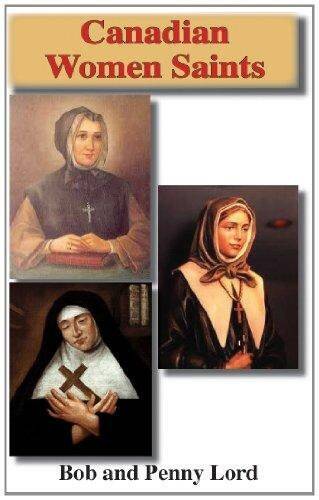
These are three women who made their marks upon the Church with the work they did among the natives Americans and with the children of Canada.

They are Saint Marguerite Bougeoys, foundress of Sisters of Notre Dame, Saint Marie Marguerite D'Youville, the first Canadian-born Saint, and foundress of the Sisters of Charity in Canada, also known as the Grey Nuns, and Blessed Marie de l'Incarnation, Foundress of the Ursuline sisters in Canada.

These brave women were not only driving forces behind bringing the Word of God and the Church to Canada, but they were instrumental in forging the civilization of Canada, and North America.

Blessed Marie came in 1639, Saint Marguerite Bougeoys came in 1653, and Saint Marie Marguerite d'Youville was born in Canada in 1701. The timeline of their lives, are the most difficult in the history of the country and the Church in Canada.

They were under attack from all sides. Between the British, who were trying to conquer Canada for the Crown, the Protestants, Anglicans and Calvinists, who hated the Catholic Church, and the Native Americans, who feared these intruders, and hated what they were trying to do to their land, the task seemed impossible.
Listed with ExportYourStore.com
Ver todos los detalles

Frequently Asked Questions

Three important Catholic women associated with the early Church in Canada are Saint Marguerite Bourgeoys, Saint Marie Marguerite d’Youville, and Blessed Marie de l’Incarnation. These women are remembered for building schools, founding religious communities, serving the poor, and helping establish Catholic life in difficult frontier conditions. The Canadian Women Saints Minibook focuses specifically on these three figures. It presents Saint Marguerite Bourgeoys as the foundress of the Sisters of Notre Dame, Saint Marie Marguerite d’Youville as the first Canadian-born saint and foundress of the Sisters of Charity in Canada, also called the Grey Nuns, and Blessed Marie de l’Incarnation as the foundress of the Ursulines in Canada. This kind of resource is especially useful for readers who want examples of strong female Catholic saints connected to mission work, education, charity, and perseverance under pressure. If someone is looking for a broad list of many women saints from different countries, this minibook is more focused than that. Its strength is depth on three major Canadian women rather than an all-in-one encyclopedia.
Female Catholic saints usually represent specific virtues, life experiences, or forms of service, which is why many Catholics look to them for personal inspiration. Some are known for charity, some for courage under persecution, some for teaching, and others for missionary work or family life. The best saint to study often depends on what kind of example a reader is seeking. In the case of Canadian Women Saints, the women featured represent perseverance, service to the Church, care for the poor, education of children, and missionary dedication in challenging times. Saint Marguerite Bourgeoys is closely associated with education and formation. Saint Marie Marguerite d’Youville is known for charity and care for those in need. Blessed Marie de l’Incarnation is remembered for missionary and religious leadership. This makes the minibook especially helpful for readers who want more than names. It gives historical context and shows how these women lived their faith in concrete ways. If someone wants symbolic patronage meanings for many saints at once, a saint reference guide may be broader, but this booklet offers a more narrative and practical introduction.
Good female saints for Confirmation are usually saints whose lives reflect virtues the candidate wants to imitate, such as courage, charity, purity, perseverance, leadership, or devotion to prayer. A strong role model often has a clear life story that a young person or adult can understand and connect to. This minibook can help with that discernment because it introduces three notable women tied to the Catholic history of Canada. Saint Marguerite Bourgeoys is a strong choice for someone drawn to education, service, and practical holiness. Saint Marie Marguerite d’Youville may appeal to those inspired by mercy, resilience, and care for the poor. Blessed Marie de l’Incarnation is meaningful for people attracted to missionary work, religious vocation, and spiritual leadership. The booklet is best for someone comparing a few saints in a thoughtful way rather than someone who wants a large alphabetical list of Confirmation names. It is especially useful if the person has an interest in women saints, Canadian Catholic history, or founders of religious communities.
Yes, a saints minibook is a good option for readers who want a short, focused introduction without committing to a long biography. It works especially well for devotional reading, homeschool supplements, parish education, or choosing a saint to study further. The Canadian Women Saints Minibook is a printed, staple-bound booklet with 32 pages. That format makes it easier to finish and revisit than a full-length book, especially for younger readers, busy adults, or group study settings. Because it focuses on three women rather than dozens, readers can absorb the major facts, missions, and historical setting more easily. The main tradeoff is depth. A minibook is designed to introduce, summarize, and encourage further interest, not replace academic history or a complete saint biography. It is best for someone who wants a reliable starting point on Saint Marguerite Bourgeoys, Saint Marie Marguerite d’Youville, and Blessed Marie de l’Incarnation in one concise resource.
A saints minibook is a concise introduction, while a full Catholic biography offers much more detail, documentation, and historical analysis. Minibooks are usually chosen for quick reading, devotional use, gift-giving, or introductory study. Full biographies are better for readers doing deeper research or extended spiritual reading. This product is a printed 32-page minibook, so its purpose is to present the key lives and significance of three Canadian women saints and blesseds in a compact format. That makes it accessible for parish tables, classrooms, Confirmation prep, and personal reading. It can give a strong overview of who these women were, what communities they founded, and the historical challenges they faced in early Canada. The tradeoff is that it will not provide the same level of detail as a long biography devoted to one saint. Readers who want an efficient, readable summary will benefit most. Readers seeking extensive citations, broader historical debate, or spiritual writings from the saints themselves may want to use a larger book after starting here.
The Canadian Women Saints Minibook includes Saint Marguerite Bourgeoys, Saint Marie Marguerite d’Youville, and Blessed Marie de l’Incarnation. These three women are presented as major Catholic figures in the early history of Canada and the Church in North America. According to the booklet description, Saint Marguerite Bourgeoys was the foundress of the Sisters of Notre Dame. Saint Marie Marguerite d’Youville is identified as the first Canadian-born saint and the foundress of the Sisters of Charity in Canada, also known as the Grey Nuns. Blessed Marie de l’Incarnation is presented as the foundress of the Ursuline sisters in Canada. This selection makes the booklet especially useful for readers interested in Catholic women who helped shape education, charity, missionary life, and the development of Christian civilization in Canada. It is a focused resource, so it does not attempt to cover every female saint from Canadian history. Instead, it centers on three foundational women whose lives are especially important for understanding the Catholic roots of the country.
This minibook is best for readers who want a short, readable introduction to important Catholic women connected to Canada. It fits well for adults beginning saint study, teens preparing for Confirmation, Catholic homeschool families, parish catechists, and gift buyers looking for a faith-based educational resource. Because it is a printed 32-page minibook, it is especially practical for people who prefer a concise format over a large book. It also serves readers interested in women religious founders, Catholic missions in North America, and the history of the Church in Canada. The focus on three women makes it manageable for discussion groups or individual reflection. It may be less ideal for someone looking for a comprehensive list of female saints from many countries or for advanced academic study. Its real value is as an approachable starting point that connects sainthood with concrete works of education, charity, and evangelization during a difficult period in Canadian history.
Yes, that is one of its clearest strengths. The minibook does not simply list names. It places these women within the difficult historical setting of early Canada and explains their role in building Catholic life, serving local communities, and helping shape the civilization of Canada and North America. The product description highlights that these women worked among Native Americans and children, founded religious communities, and carried out their mission while facing intense pressures. It notes conflict involving British attempts to conquer Canada, anti-Catholic hostility from Protestant groups, and tensions with Native peoples who feared the newcomers. That context helps readers see the saints as active historical figures rather than distant devotional symbols. This makes the booklet especially helpful for readers who want a faith-based introduction to women’s leadership in Church history. The limitation is that it remains a short overview, not a full historical study. Still, for understanding why these women mattered in early Canadian Catholic history, it is highly relevant.
This product is a printed minibook, not a digital download. It is described as a staple-bound printed booklet with 32 pages. That matters for shoppers deciding how they want to read or give it. A printed minibook is useful for personal prayer spaces, parish handouts, classroom use, gift baskets, or anyone who prefers reading on paper instead of a screen. It can also be easier to share in a family or study group setting than a single digital file. The tradeoff is convenience versus immediacy. A digital download can be accessed instantly and stored on devices, while a printed booklet offers a tactile reading experience and is often better for highlighting, lending, or keeping with other Catholic books and prayer materials. For this specific product, buyers should expect a physical booklet designed for quick, accessible saint reading rather than an eBook or downloadable PDF.
Someone would choose a focused booklet when they want context, story, and depth on a few saints rather than a simple list of many names. A general list of female saints can be useful for quick browsing, but it often does not explain why those saints matter or how their lives connect to particular virtues, missions, or historical events. This minibook concentrates on three women linked to the formation of the Church in Canada: Saint Marguerite Bourgeoys, Saint Marie Marguerite d’Youville, and Blessed Marie de l’Incarnation. By focusing on only three, it can explain their founding work, their service to children and the poor, and the difficult religious and political environment they faced. That makes it especially suitable for readers interested in Catholic history, women founders of religious communities, and saints from North America. The tradeoff is scope. It will not function as a master directory of female saints. It is a better choice for people who want a meaningful introduction to specific lives rather than a broad but shallow overview.