Ir directamente a la informaciรณn del producto
1 de 4

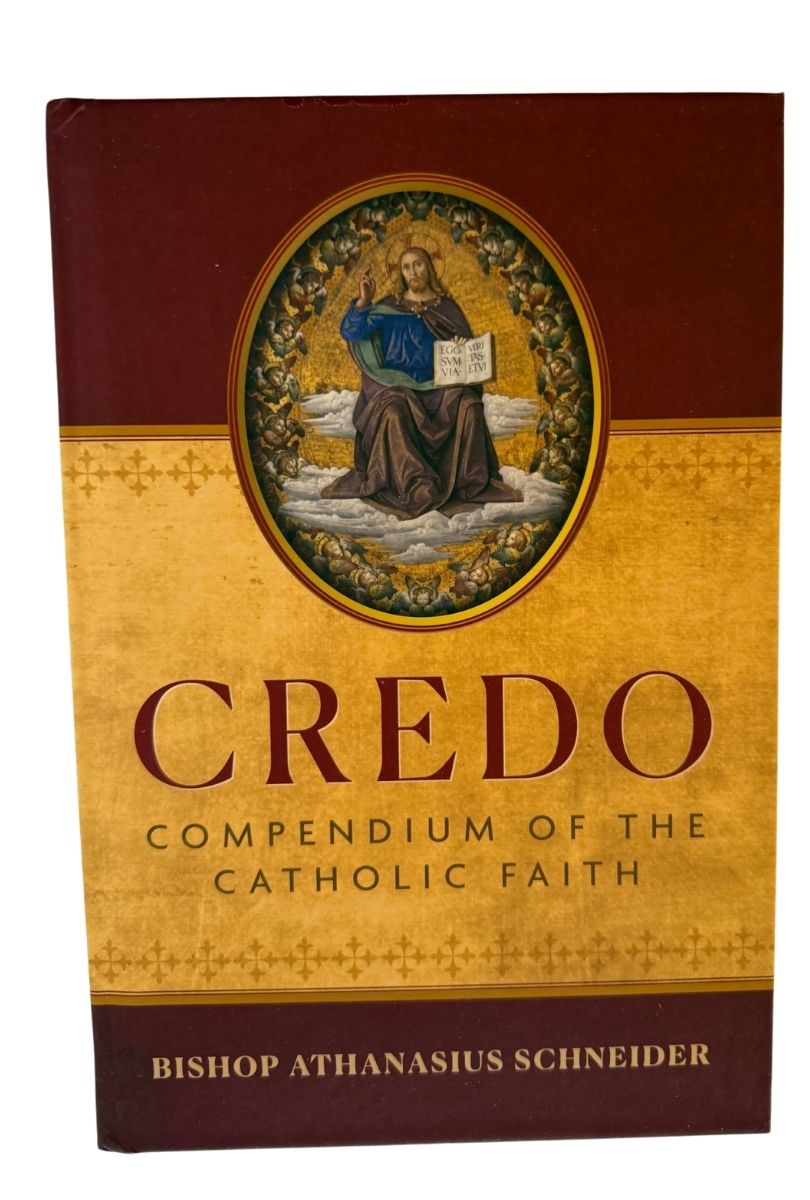
Credo Catholic Faith Hardcover

Credo Catholic Faith Hardcover

Precio habitual $20.95 USD
Precio habitual $33.95 USD Precio de oferta $20.95 USD
Oferta Agotado
Los gastos de envรญo se calculan en la pantalla de pago.

FREE Shipping for all orders over $50 -- We have graduated discounts automaticallyย  applied up to 67% when you add to cart. --- 20% off orders over $50 --- 25% off orders over $75 --- 30% off orders over $100 --- 35% off orders over $150 --- 5%Cash Back Store Credit on all orders

CHECKOUT TIPS 1. Discounts are applied automatically! 3. Pay with credit card or Express Pay

Credo: Compendium of the Catholic Faith is a hardcover Catholic reference by Bishop Athanasius Schneider that presents doctrine, morals, prayer, and the sacraments in a clear question-and-answer format. Unlike shorter devotional summaries, this single-volume compendium is designed for study, catechesis, and everyday reference, with appendices containing five major Christian creeds and a detailed index with headers and bleed tabs for easier navigation.

  • Comprehensive coverage of what Catholics believe, how they live, and how they pray
  • Question-and-answer structure supports personal study, classroom use, and quick fact checking
  • Organized in three major parts: the Apostles' Creed, the Commandments, and grace, sacraments, prayer, and worship
  • Includes five major Christian creeds in the appendices
  • Detailed index, headers, and bleed tabs help readers locate topics quickly
  • Addresses contemporary issues such as social media, science and evolution, gender ideology, religious liberty, Church scandal, and faithful parenting

For Catholics comparing a classic catechism with a modern treatment of current questions, this volume offers both continuity and practical application. It is useful for RCIA, adult faith formation, homeschool religion courses, confirmation preparation, parish libraries, and families who want reliable answers grounded in Catholic teaching. Compared to scattered online sources, this book provides a pastorally unified presentation from a Catholic bishop in a format that is easy to cite, teach, and revisit.

Ver todos los detalles

Frequently Asked Questions

The best Catholic books for a broad overview are usually the ones that explain belief, morals, prayer, and the sacraments in one place. A strong choice is Credo: Compendium of the Catholic Faith because it is organized as a full summary of Catholic teaching rather than a narrow devotional or topical book. It covers what Catholics believe through the Apostles' Creed, how Catholics live through the Commandments, and how Catholics pray through grace, worship, and the sacraments. This book is especially useful for readers who want one volume that functions almost like a modern catechism in a readable question-and-answer format. That structure makes it practical for self-study, family formation, and classroom use. It also addresses current issues such as science and evolution, religious liberty, technology, gender ideology, Church scandal, and authentic renewal. It is best for adults, converts, parents, and serious learners who want doctrinal clarity. If someone is looking mainly for spiritual memoir, theology at an academic level, or a short devotional, this may be more comprehensive than they need.
Yes, this can be a very good Catholic book for beginners, converts, or RCIA-style study, especially for people who want clear answers to common questions. Credo uses a simple question-and-answer format, which makes complex Catholic teaching easier to follow than many dense theological works. It starts with Christian identity and doctrine, then moves through belief, moral life, sacraments, prayer, and worship in a logical order. That makes it helpful for someone entering the Church, returning to the faith, or building a stronger foundation after RCIA. It is also useful for catechists and sponsors because the structure supports discussion and review. The included creeds and detailed index make it easy to find specific topics quickly. The main tradeoff is that it is comprehensive. A reader looking for a very brief introduction may find it more detailed than a starter booklet. But for beginners who want one reliable hardcover reference they can keep using after initial formation, it is a strong fit.
A good Catholic catechism-style book for adults should be clear, faithful to Church teaching, easy to navigate, and practical enough to connect doctrine with daily life. It should explain not only what Catholics believe, but also how Catholics should live and pray. Books that use a question-and-answer format are often especially effective because they mirror the way real people learn and ask questions. Credo: Compendium of the Catholic Faith fits that model well. It presents Catholic teaching in three major parts: the Creed, the Commandments, and grace, sacraments, prayer, and worship. It also includes appendices with major Christian creeds and a strong index with headers and bleed tabs for fast reference. What sets it apart for many adult readers is its treatment of modern issues such as social media use, schooling, free speech, world religions, vaccines, pornography, and Sunday work. That makes it useful for adults who want guidance that is both timeless and relevant. Readers seeking a short devotional or highly academic theological study may want a different type of book.
This book is different from a devotional or a prayer book because its main purpose is to teach the Catholic faith in a structured, comprehensive way. A devotional typically focuses on meditation, encouragement, or a specific spiritual theme. A prayer book usually provides prayers, novenas, litanies, or liturgical texts for direct use in prayer. Credo is instead a compendium of Catholic doctrine and moral teaching. It explains what Catholics believe through the Apostles' Creed, how Catholics are called to live through the Commandments, and how grace, the sacraments, prayer, and worship shape Christian life. It also addresses present-day questions like technology, modesty, religious liberty, and faithful parenting, which many devotionals do not cover in depth. This makes it ideal for readers who want formation, clarification, or a dependable reference book. The tradeoff is that someone seeking a compact daily prayer resource or purely meditative reading will likely want to pair it with a Catholic prayer book rather than use it as a substitute.
Yes, Credo can be a strong Catholic book for young adults, especially those who want direct answers on faith and modern life. Its question-and-answer format is approachable, and its coverage goes beyond basic doctrine to include issues younger adults often ask about, such as social media use, personal technology, science and evolution, modesty, sex education, world religions, free speech, and authentic renewal. That makes it useful for college students, young professionals, and young adults preparing for marriage or deeper involvement in parish life. It can also help those who feel under-catechized and want a more complete understanding of Catholic teaching without reading multiple separate books. The main consideration is reading style. Young adults who prefer memoir, apologetics in a conversational style, or short inspirational reading may find this more formal because it is designed as a compendium. But for young adults who want one serious, organized hardcover reference they can study over time, it offers lasting value.
This Catholic faith book covers the core areas of Catholic teaching in a full, organized way. After an introduction on Christian identity and doctrine, Part I explains what Catholics believe by following the articles of the Apostles' Creed. Part II covers moral life through the Commandments. Part III teaches on grace, the sacraments, prayer, and worship. It also includes appendices with five major Christian creeds and a detailed index designed to help readers find topics quickly. Beyond foundational doctrine, the book addresses many contemporary issues, including social media, personal technology, science and evolution, just war, the death penalty, gender ideology, modesty, vaccines, health mandates, world religions, faithful parenting, schooling, religious liberty, free speech, Church scandal, infallibility, pornography, sex education, Sunday work, Communism, Freemasonry, globalism, transhumanism, the charismatic movement, marijuana, and drug use. This wide scope makes it well suited for adult formation and reference use. Readers wanting only one narrow subject, such as Marian devotion or a saint biography, may prefer a more specialized book.
Credo is best suited for Catholics and inquirers who want a dependable, wide-ranging guide to the faith in one volume. It is especially helpful for adult Catholics strengthening their formation, converts and returning Catholics, catechists, parents teaching the faith at home, parish study groups, and anyone who wants quick access to clear answers on doctrine and morals. Because it uses a question-and-answer format, it works well for readers who learn best through concise explanations rather than long abstract chapters. The book also serves people who need a reference for difficult current issues, since it discusses topics such as technology, education, religious liberty, Church authority, and moral questions affecting modern life. It may be less ideal for very young readers, for those seeking a brief beginner pamphlet, or for readers who mainly want meditative spiritual reading. In those cases, a children's catechism, a shorter introductory text, or a devotional may be a better first step. For serious adult study, however, this book is a practical fit.
Many Catholics prefer question-and-answer books because the format is direct, memorable, and easy to use for both study and reference. It breaks large topics into manageable sections and mirrors the kinds of questions real people ask about God, the Church, morality, prayer, and the sacraments. That makes it especially effective for catechesis, discussion groups, homeschooling, and independent reading. Credo follows that approach throughout, which helps readers move from basic questions to deeper understanding without getting lost in technical language. It is useful not only for reading straight through, but also for looking up specific topics when a question comes up about doctrine or current moral issues. The tradeoff is that some readers prefer a more narrative or reflective style. Question-and-answer books can feel more instructional than devotional. But for people who want clarity, structure, and a practical way to locate Catholic teaching quickly, this format is often one of the most efficient ways to learn and review the faith.
Yes, this book is well suited for Catholic homeschool, parish study, and adult faith formation because it is structured, comprehensive, and easy to reference. Its content moves in a traditional teaching order: what Catholics believe, how Catholics should live, and how Catholics pray and worship. That makes it useful for lesson planning, guided discussion, and ongoing formation rather than only personal reading. The question-and-answer format helps teachers and group leaders assign sections, review key points, and address common objections or misunderstandings. The index, headers, and bleed tabs also make it easier to find specific topics quickly during class or discussion. Since it includes modern issues such as technology, schooling, free speech, and faithful parenting, it can support formation in areas people are actively navigating today. The main limitation is that it is aimed at serious learners, so younger children may need a simpler resource. For teens, adults, homeschool parents, RCIA teams, and parish study groups, it is a practical and substantial teaching tool.
For many readers, yes. A book belongs on an essential Catholic reading list when it gives broad, faithful, and lasting formation rather than serving only a temporary or highly specialized purpose. Credo fits that standard because it offers a comprehensive presentation of Catholic belief, moral teaching, sacramental life, and prayer in one hardcover volume. Its value is not just in summarizing established doctrine, but in connecting that doctrine to current questions Catholics actually face. Topics like social media, science, schooling, religious liberty, Church authority, sex education, and authentic renewal make it more than a historical catechism-style text. The format is also practical for repeated use, since readers can study it cover to cover or consult it by topic. It is especially worthy for adults building a home library, parents responsible for family formation, and Catholics who want one strong reference alongside Scripture and devotional works. Someone seeking literature, biography, or spiritual classics would still need other books, but as a foundation text, it is highly relevant.