Ir directamente a la información del producto
1 de 3

Divine Intimacy Leather Meditations

Divine Intimacy Leather Meditations

Precio habitual $66.95 USD
Precio habitual $69.95 USD Precio de oferta $66.95 USD
Oferta Agotado
Los gastos de envío se calculan en la pantalla de pago.

FREE Shipping for all orders over $50 -- We have graduated discounts automatically  applied up to 67% when you add to cart. --- 20% off orders over $50 --- 25% off orders over $75 --- 30% off orders over $100 --- 35% off orders over $150 --- 5%Cash Back Store Credit on all orders

CHECKOUT TIPS 1. Discounts are applied automatically! 3. Pay with credit card or Express Pay

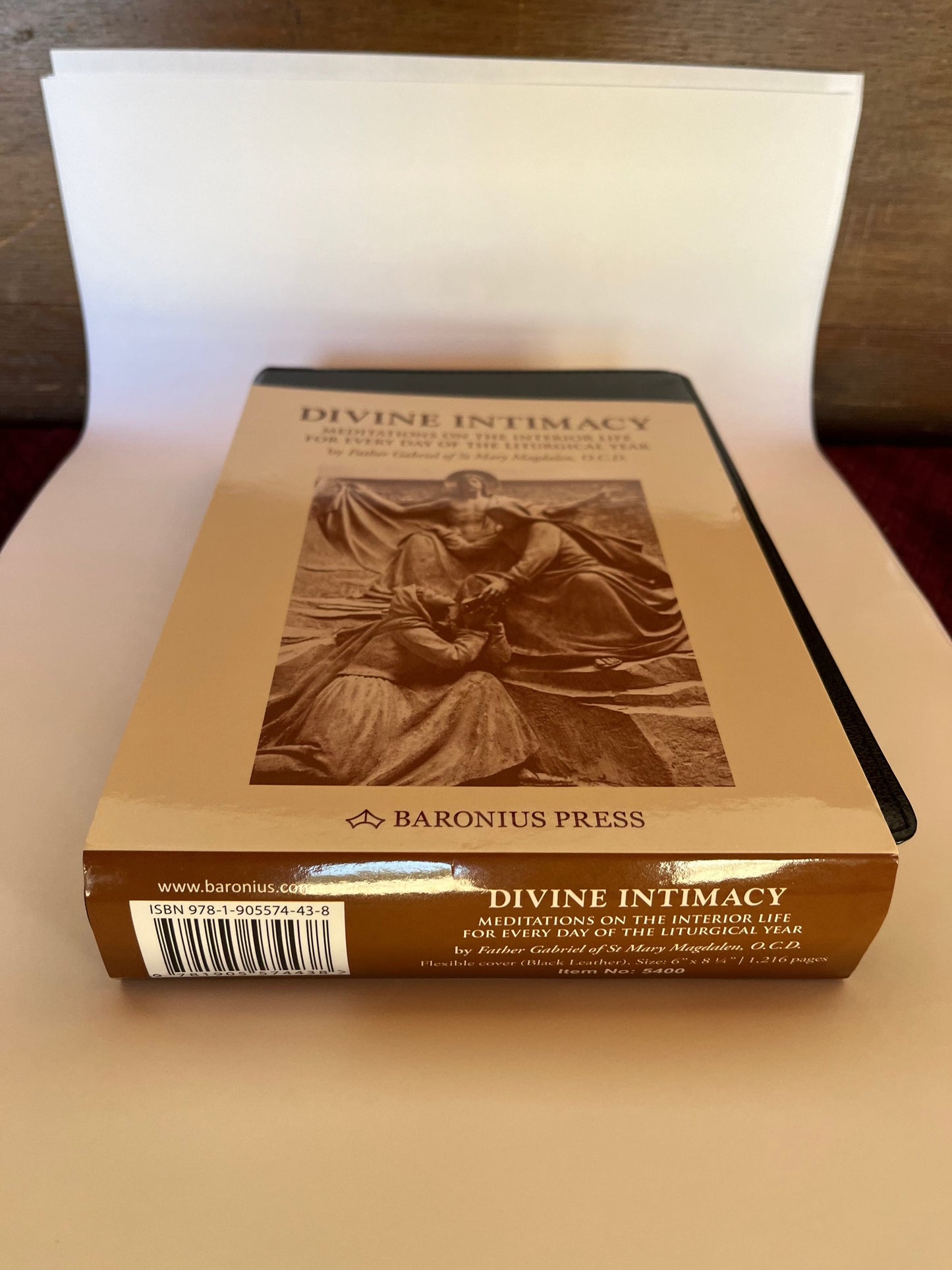
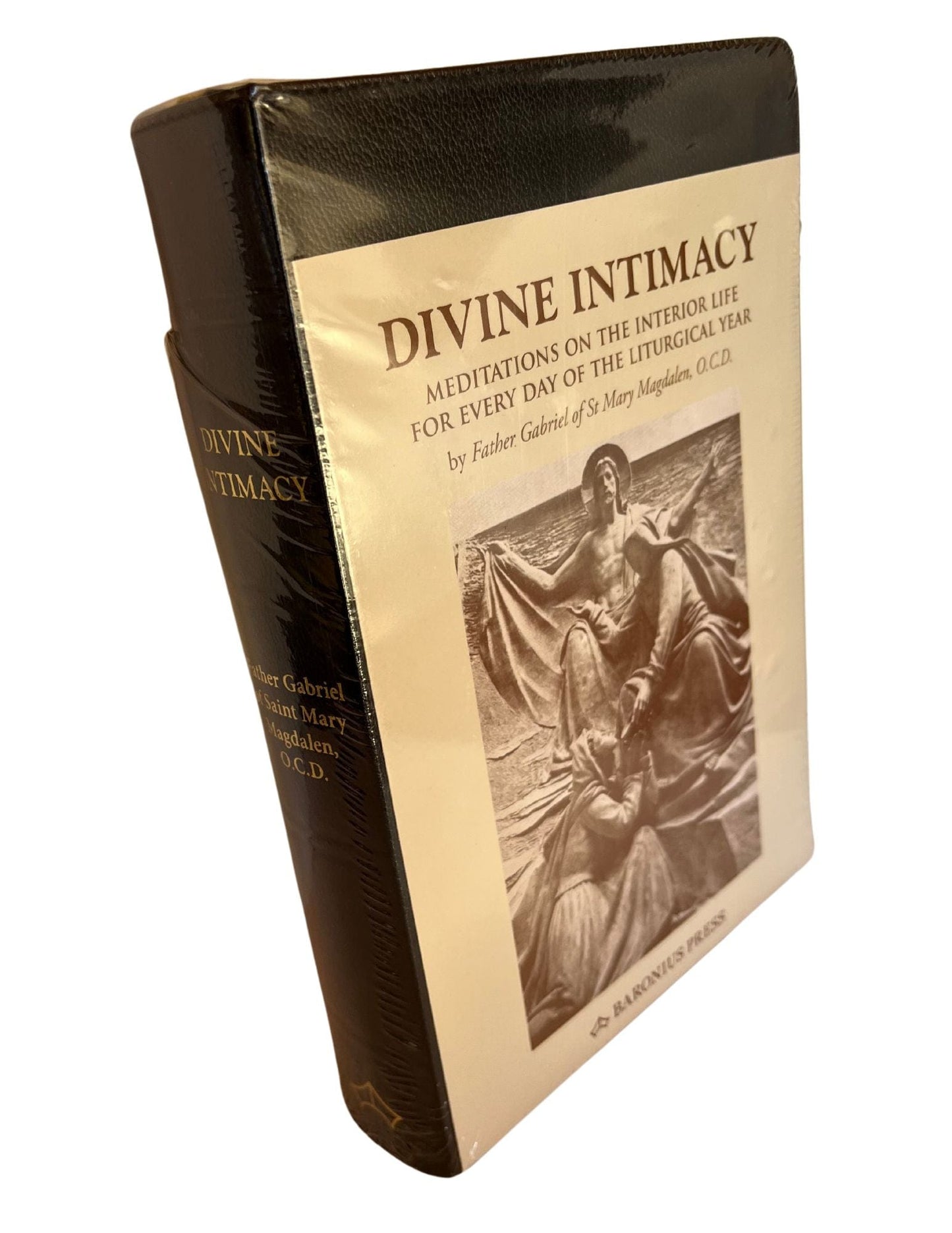
Divine Intimacy is a leather-bound Catholic meditation book by Father Gabriel of St. Mary Magdalen, O.C.D. This 1182-page edition from Baronius Press measures 8.5 x 6 x 2 inches and presents two daily meditations arranged by the liturgical year to guide readers toward deeper prayer and union with God.

  • Leather-bound edition designed for long-term daily use
  • 1182 pages of meditations on the interior life for every day of the liturgical year
  • Two meditations per day followed by a colloquy for personal prayer
  • Rooted in Carmelite spirituality and the teaching of St. Teresa of Avila and St. John of the Cross
  • English translation by the Discalced Carmelite Nuns of Boston
  • Re-typeset from the 1964 edition and published by Baronius Press

Recommended for priests, seminarians, religious, and devout lay Catholics, this classic work offers a structured approach to mental prayer. Compared to shorter devotional books, it provides a full-year framework that follows the Church's liturgical rhythm and helps readers form a consistent prayer life at home, in Eucharistic adoration, during retreats, or in seminary formation.

Father Gabriel of St. Mary Magdalen was a Discalced Carmelite priest widely respected for his spiritual direction and expertise in mystical theology. His writings draw directly from Carmelite tradition and were organized with the assistance of the Discalced Carmelite nuns of the Monastery of St. Joseph in Rome, giving this volume lasting authority for Catholics seeking serious spiritual reading.

Ver todos los detalles

Frequently Asked Questions

The main pillars of Carmelite spirituality are prayer, contemplation, detachment, and loving union with God. It is rooted in deep interior prayer and is strongly shaped by the teaching of Carmelite saints such as St. Teresa of Avila and St. John of the Cross. The focus is not only on saying prayers, but on growing in a personal, heart-to-heart relationship with God through recollection, self-denial, humility, and charity. Divine Intimacy is well suited to readers who want to understand and live those pillars in a practical daily way. The book offers two meditations for each day of the liturgical year, followed by a colloquy that helps the reader speak directly to God in prayer. That structure makes Carmelite spirituality concrete rather than abstract. This type of book benefits priests, religious, seminarians, and devout lay Catholics who want serious spiritual formation. The tradeoff is that it is a substantial 1,182-page work, so it is best for readers looking for disciplined daily meditation rather than a quick overview.
One of the best books on Carmelite spirituality for daily meditation is Divine Intimacy by Father Gabriel of St. Mary Magdalen, O.C.D. It is considered a classic because it combines Carmelite mystical teaching with a practical format meant for everyday prayer. Rather than presenting spirituality only as theory, it guides the reader through daily meditations arranged according to the liturgical year. A major strength of this book is its structure. Each day includes two meditations and a concluding colloquy, which helps the reader move from reflection into personal conversation with God. That makes it especially helpful for people who want a prayer routine rooted in the spiritual tradition of St. Teresa of Avila and St. John of the Cross. It is ideal for Catholics seeking serious interior growth, especially those drawn to contemplative prayer and liturgical living. The main limitation is that it is a dense and substantial volume, so beginners who want a short introductory read may prefer a simpler starting point before moving into a classic like this.
Yes, Divine Intimacy can work for beginners, but it is best for beginners who are ready for a serious and structured spiritual reading plan. The book was written to help souls grow in union with God through daily meditation, and it presents Carmelite spirituality in a guided way rather than as a purely academic study. Its daily format makes it easier to enter than some more technical mystical works. Each day includes two meditations and a colloquy, so the reader is not left wondering how to pray with the material. That is especially helpful for Catholics who want more than inspirational reading and are looking for a method of prayer grounded in the liturgical year. That said, it is a large leather-bound volume of 1,182 pages, and the content is spiritually rich and demanding. Readers who want very short reflections or a highly simplified introduction may find it intense. It is most suitable for devout laity, seminarians, priests, and religious, or anyone sincerely committed to daily growth in prayer.
Divine Intimacy differs from many Catholic devotional books because it is a full spiritual formation guide rather than a collection of brief inspirational thoughts. Its purpose is to lead the reader toward deeper union with God through Carmelite spirituality, using a daily method of meditation tied to the liturgical year. For every day, the book provides two meditations and then a colloquy. This last section is especially distinctive because it helps the reader turn meditation into direct prayer, with acts of praise, thanksgiving, petition, and resolution. That makes the book practical for mental prayer, not just informative reading. It is especially valuable for Catholics who want to develop an interior life shaped by the teachings of St. Teresa of Avila and St. John of the Cross. Compared with lighter devotional books, it offers greater depth and structure. The tradeoff is that it requires more time, focus, and consistency. It is less suited to someone looking only for short daily quotes and more suited to someone pursuing serious spiritual growth.
Divine Intimacy is best for Catholics who want a disciplined daily prayer life and deeper interior union with God. It was written for priests, seminarians, religious, and devout laypeople, but its usefulness extends to any reader who is serious about meditation and the spiritual life. The book is especially fitting for those drawn to Carmelite spirituality, contemplative prayer, and liturgical living. Because the meditations are arranged through the liturgical year, it works well for people who want their prayer reading to follow the Church's rhythm rather than a random topic-by-topic format. It is also a strong choice for readers interested in the teaching of St. Teresa of Avila and St. John of the Cross, since Father Gabriel was an expert in their spiritual and mystical doctrine. This book is less ideal for someone seeking a casual read or very brief reflections. Its length, theological richness, and daily structure make it more beneficial for committed readers who want to build a lasting habit of meditation and personal conversation with God.
Divine Intimacy is considered a classic in spiritual direction because it unites solid doctrine, practical daily application, and the Carmelite tradition of interior prayer. Father Gabriel of St. Mary Magdalen was a Discalced Carmelite priest widely respected as a master of the spiritual life, and the book reflects both his theological depth and his experience guiding souls toward holiness. Its enduring value comes from how it is organized. The meditations follow the liturgical year and also trace the soul's ascent toward union with God. Each day includes meditative teaching and a colloquy that helps the reader respond personally in prayer. This combination makes the book not only informative, but formative. It is especially helpful for Catholics who want more than occasional devotion and are seeking a sustained method of growth in prayer. The tradeoff is that it is demanding in size and substance. Readers looking for a light spiritual read may find it intense, but those seeking classic spiritual direction often value precisely that depth.
Yes, Divine Intimacy is arranged according to the liturgical year. That is one of its most useful features for Catholics who want their meditation life to stay connected to the Church's seasons, feasts, and spiritual themes. Rather than offering disconnected reflections, it provides daily meditations that correspond to the rhythm of the Catholic calendar. This structure helps readers enter more deeply into Advent, Christmas, Lent, Easter, Ordinary Time, and major feast days with prayer that is both personal and ecclesial. For every day, the book includes two meditations and a colloquy, which supports reflection and then leads into direct prayer. It is especially beneficial for readers who appreciate liturgical spirituality and want a consistent daily resource that aligns with the Church's worship. A possible limitation is that people who prefer topical devotionals on one subject at a time may want a different format. But for those seeking a year-round guide to interior prayer, this arrangement is a major strength.
You can expect a structured daily meditation designed to move you from reflection into prayer. For each day of the liturgical year, Divine Intimacy provides two meditations centered on the spiritual theme of the day. These are followed by a colloquy, which is a guided, personal conversation with God that includes praise, love, petition, thanksgiving, and practical resolutions. This format is especially helpful for readers who want a clear path for mental prayer and do not want to guess how to use a spiritual classic. It gives enough content for substantial meditation without being random or disconnected. The daily sequence also makes the book useful for long-term spiritual discipline. It is best for Catholics who want to deepen their interior life and make prayer more intentional. The main tradeoff is that it works best when used consistently, so it may be less suitable for someone who prefers brief, occasional devotional reading. For regular meditative prayer, however, the format is one of the book's strongest features.
Yes, a leather-bound Catholic spiritual book is often a better choice for long-term daily use, especially when the book is large and meant to be handled regularly. Divine Intimacy is a substantial 1,182-page volume measuring 8.5 by 6 by 2 inches, so a durable binding is especially important if it will be opened every day for meditation. Leather binding is valuable for readers who want a book that can withstand frequent use in prayer corners, chapels, study spaces, or travel between home and church. It also tends to make a classic spiritual work feel more suited to years of devotional reading and reference. The main consideration is that some readers simply prefer a lighter or more portable format. Because this is a large book, it is not the most compact option for carrying everywhere. But for Catholics looking for a durable, lasting edition of a classic used in daily prayer, leather binding is a practical advantage.
Yes, Divine Intimacy is a strong gift choice for someone interested in Carmelite saints, contemplative prayer, and the interior life. The book is deeply shaped by the teaching of St. Teresa of Avila and St. John of the Cross, and Father Gabriel of St. Mary Magdalen was recognized for his expertise in their spiritual doctrine. That makes the book especially meaningful for readers drawn to the Carmelite path. It is also well suited as a gift because it is a classic work intended for ongoing daily use, not just a one-time read. Its leather-bound format adds durability and gives it the feel of a lasting spiritual companion. Readers who appreciate serious Catholic books, liturgical meditation, and traditional spiritual direction are likely to value it. The main tradeoff is that it is best for committed readers. Because it is long and spiritually substantial, it is more appropriate for someone who already has an interest in prayer and spiritual growth than for someone who rarely reads devotional material.