
Ir directamente a la informaciรณn del producto
1 de 1

Divino Nino Bogota Minibook

Divino Nino Bogota Minibook

Precio habitual $12.00 USD
Precio habitual Precio de oferta $12.00 USD
Oferta Agotado
Los gastos de envรญo se calculan en la pantalla de pago.

FREE Shipping for all orders over $50 -- We have graduated discounts automaticallyย  applied up to 67% when you add to cart. --- 20% off orders over $50 --- 25% off orders over $75 --- 30% off orders over $100 --- 35% off orders over $150 --- 5%Cash Back Store Credit on all orders

CHECKOUT TIPS 1. Discounts are applied automatically! 3. Pay with credit card or Express Pay

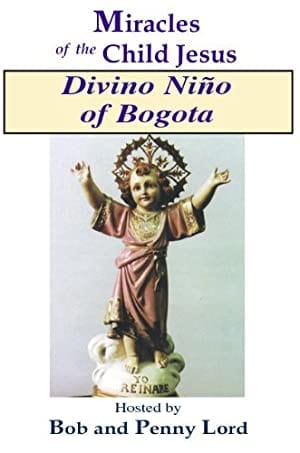
Divino Nino of Bogota is a printed, staple-bound 16-page minibook by Bob and Penny Lord that explains the history and devotion of the Child Jesus statue linked to Bogota, Colombia and Mother Angelica. Unlike a general Catholic booklet, this compact edition focuses on one specific devotional story with a clear historical path from Colombia to Alabama.

  • Printed minibook format with 16 pages for quick reading, study, or gift giving
  • Written by Bob and Penny Lord and published by Journeys of Faith
  • Explains how the Divino Nino devotion aided the poor and sick in Bogota through Fr. John Rizzo
  • Traces the connection between the Divino Nino and Mother Angelica's call to build a temple
  • Useful for Catholic study groups, parish libraries, personal prayer time, and confirmation or devotional gifts

We share the story of this exalted Child Jesus as He came to the aid of the poor and sick in Bogota, Colombia, through the work of a Salesian priest, Fr. John Rizzo. He fed the poor, clothed the naked, and gave medicine to the sick. This same Divino Nino spoke to Mother Angelica and told her to build a temple, which today is the Shrine of the Most Blessed Sacrament in Hanceville, Alabama.

Compared to broader books on Marian apparitions or Eucharistic miracles, this minibook offers a focused account that is easy to carry, reference, and share. It is well suited for readers seeking a concise Catholic resource on the Divino Nino devotion, the charitable mission in Bogota, and the story behind Mother Angelica's yes.
Ver todos los detalles

Frequently Asked Questions

A good Catholic minibook for this topic is one that explains both the devotion and the real historical events behind it in a short, readable format. Divino Nino of Bogota Minibook BK225 focuses on the history of the Divino Nino, or Divine Child Jesus, especially in Bogota, Colombia, and traces how this devotion became meaningful to Catholics in the United States. This 16-page printed, staple-bound minibook by Bob and Penny Lord covers the work of Fr. John Rizzo, who served the poor and sick, and it also explains the connection between the Divino Nino and Mother Angelica. It is especially useful for readers who want a concise introduction rather than a long theological study. This type of minibook is best for people seeking devotional reading, religious education, or a simple Catholic gift tied to the Child Jesus. The tradeoff is depth. Because it is a minibook, it is designed for clarity and accessibility, not for an exhaustive treatment of every historical source or devotional tradition.
In Catholic devotion, the Divino Nino of Bogota story highlights trust in Jesus, especially His care for the poor, sick, and vulnerable. The devotion centers on the Child Jesus as a source of mercy, help, and hope, and it has been closely associated with charitable works in Bogota, Colombia. This minibook explains that history through the ministry of Salesian priest Fr. John Rizzo, who fed the poor, clothed the naked, and brought medicine to the sick. It also presents the later connection to Mother Angelica, when the Divino Nino spoke to her and told her to build a temple, which became the Shrine of the Most Blessed Sacrament in Hanceville, Alabama. This makes the book especially meaningful for Catholics who want to understand how a devotion is lived out in service, not just in private prayer. A reader looking for a practical, historical devotional account will benefit most. If someone wants a broader overview of many Child Jesus devotions across different countries, they may need additional books beyond this focused title.
A Catholic minibook is different from a full-length Catholic book mainly in length, reading time, and purpose. A minibook is meant to give a focused introduction to one devotion, saint, apparition, or spiritual theme in a brief format that is easy to finish in one sitting. Divino Nino of Bogota Minibook BK225 is a printed 16-page staple-bound booklet. That makes it practical for devotional reading, parish handouts, gift baskets, travel, or quick faith formation. It delivers the core story of the Divino Nino devotion, including its roots in Bogota and its connection to Mother Angelica, without requiring the time commitment of a larger volume. This format is best for readers who want something concise, accessible, and easy to share. It is also helpful for people exploring a topic before deciding whether they want a deeper study. The tradeoff is that a minibook will not offer the same level of historical detail, footnotes, or broad theological analysis that a full-length Catholic book often provides.
This minibook is best for Catholics who want a short, inspiring introduction to the Divino Nino devotion and its connection to real acts of mercy. It is especially suitable for readers interested in Child Jesus devotions, Marian and Eucharistic spirituality related to Mother Angelica, and stories of Catholic charitable work. Because it is only 16 pages and printed in a staple-bound minibook format, it works well for adult readers who prefer concise devotional material, parish groups looking for supplemental reading, and gift-givers who want to include a faith-based item with a clear spiritual theme. It may also appeal to those interested in Catholic history in Colombia and the story behind the Shrine of the Most Blessed Sacrament in Alabama. It is less ideal for someone seeking a heavily academic study or a long-form biography. Its strength is that it gives a focused, readable account of the Divino Nino of Bogota and the role of Fr. John Rizzo and Mother Angelica in a way that is easy to understand and share.
This minibook is best described as a blend of historical and devotional reading, with biographical elements. Its main purpose is to tell the story of the Divino Nino of Bogota and explain why this devotion matters in Catholic life. It does that through real people and events rather than abstract theology alone. The historical side includes the background of the Divino Nino in Bogota, Colombia. The devotional side comes through the way the Child Jesus is presented as bringing help and hope to the poor and sick. The biographical dimension appears in the roles of Fr. John Rizzo and Mother Angelica, whose lives intersect with this devotion in important ways. This combination is useful for readers who want more than a prayer pamphlet but less than a scholarly book. It gives context, spiritual meaning, and a human story in one short format. If a shopper wants a resource made up mostly of prayers, this may not be the best fit. If they want a concise account that explains why the devotion is important, it is well suited.
This minibook covers the history of the Divino Nino of Bogota, the charitable mission connected to the devotion, and its link to Mother Angelica in the United States. It explains how the Divino Nino devotion touched the lives of the poor and sick in Bogota, Colombia, through the work of Salesian priest Fr. John Rizzo. It also addresses the story of how the Divino Nino spoke to Mother Angelica and told her to build a temple, which became the Shrine of the Most Blessed Sacrament in Hanceville, Alabama. That gives the booklet both an international and American Catholic context. Readers who want a short but meaningful overview of this devotion will find it especially useful. It brings together service to the needy, devotion to the Child Jesus, and a well-known chapter in modern Catholic history. Because it is a 16-page minibook, it focuses on the central narrative rather than covering every related devotion, prayer, or historical document. Its value is in presenting the core story clearly and accessibly.
Yes, a printed Catholic minibook is often a very good choice for gift giving or parish use when the goal is to share a focused spiritual story in an easy format. Divino Nino of Bogota Minibook BK225 is printed and staple bound, which makes it simple to hand out, include in care packages, use in small groups, or give as a devotional gift. Its subject matter also makes it suitable for people who appreciate stories of Catholic charity, healing, and trust in Jesus. Because it is brief at 16 pages, it can be read without much time commitment, which helps in parish settings, study groups, and religious education supplements. This format works best for introductory reading and devotional encouragement. It is especially helpful when you want something more substantial than a prayer card but more compact than a full book. The limitation is that it is not a full curriculum or comprehensive study text. For detailed classroom use or extended formation, it may work best as a starting point or companion resource.
Yes, one of the key reasons this minibook stands out is that it explains the connection between the Divino Nino of Bogota and Mother Angelica. It does not stop with the Colombian history of the devotion. It also follows the story into the United States through Mother Angelica's response to what the Divino Nino told her. According to the product description, the Child Jesus spoke to Mother Angelica and told her to build a temple. The minibook links that event to the Shrine of the Most Blessed Sacrament in Hanceville, Alabama. This gives readers a direct connection between a Latin American devotion and a well-known figure in modern American Catholic life. That makes the booklet especially valuable for people who know Mother Angelica but are less familiar with the Divino Nino devotion itself. It helps explain why this title is more than a regional devotional story. Readers wanting a concise account of this spiritual and historical connection will likely find it very helpful. Those seeking a full biography of Mother Angelica would still need a separate book.
This is a printed, staple-bound Catholic minibook with 16 pages, so it is designed to be read easily in one sitting. Its compact format makes it practical for personal devotional reading, travel, parish distribution, and gift use. Because the booklet is short, it is a good option for readers who want a focused Catholic story without committing to a long book. The topic is specific: the history of the Divino Nino of Bogota, the work of Fr. John Rizzo among the poor and sick, and the connection to Mother Angelica and the shrine in Alabama. That clear focus helps keep the reading manageable and direct. This format benefits people who prefer concise spiritual reading or who want to explore a devotion before investing in more detailed materials. The tradeoff is that brevity naturally limits how much historical background and supporting detail can be included. For a quick, accessible introduction to this devotion, though, the format is very well suited.
Someone would choose a minibook about the Divino Nino when they want a specific devotional story with historical context, rather than a general booklet of broad Catholic reflections or prayers. A focused title like Divino Nino of Bogota Minibook BK225 helps readers understand one devotion in depth enough to appreciate its meaning, origins, and spiritual impact. This minibook centers on the Child Jesus devotion in Bogota, Colombia, the charitable work of Fr. John Rizzo, and the remarkable connection to Mother Angelica and the Shrine of the Most Blessed Sacrament. That gives it a clear narrative arc and a distinct devotional identity. It is especially helpful for readers drawn to Child Jesus devotions, Catholic stories of healing and mercy, or modern Catholic history. A general devotional booklet may offer wider variety, but it usually will not provide the same concentrated account of one devotion's background and significance. The tradeoff is scope. This minibook goes deeper on one subject, while a general booklet covers more topics with less detail on each.