Ir directamente a la informaciรณn del producto
1 de 5

The Little Flowers of St. Francis of Assisi Leather Bound St. Francis Classic

The Little Flowers of St. Francis of Assisi Leather Bound St. Francis Classic

Precio habitual $14.00 USD
Precio habitual Precio de oferta $14.00 USD
Oferta Agotado
Los gastos de envรญo se calculan en la pantalla de pago.

FREE Shipping for all orders over $50 -- We have graduated discounts automaticallyย  applied up to 67% when you add to cart. --- 20% off orders over $50 --- 25% off orders over $75 --- 30% off orders over $100 --- 35% off orders over $150 --- 5%Cash Back Store Credit on all orders

CHECKOUT TIPS 1. Discounts are applied automatically! 3. Pay with credit card or Express Pay

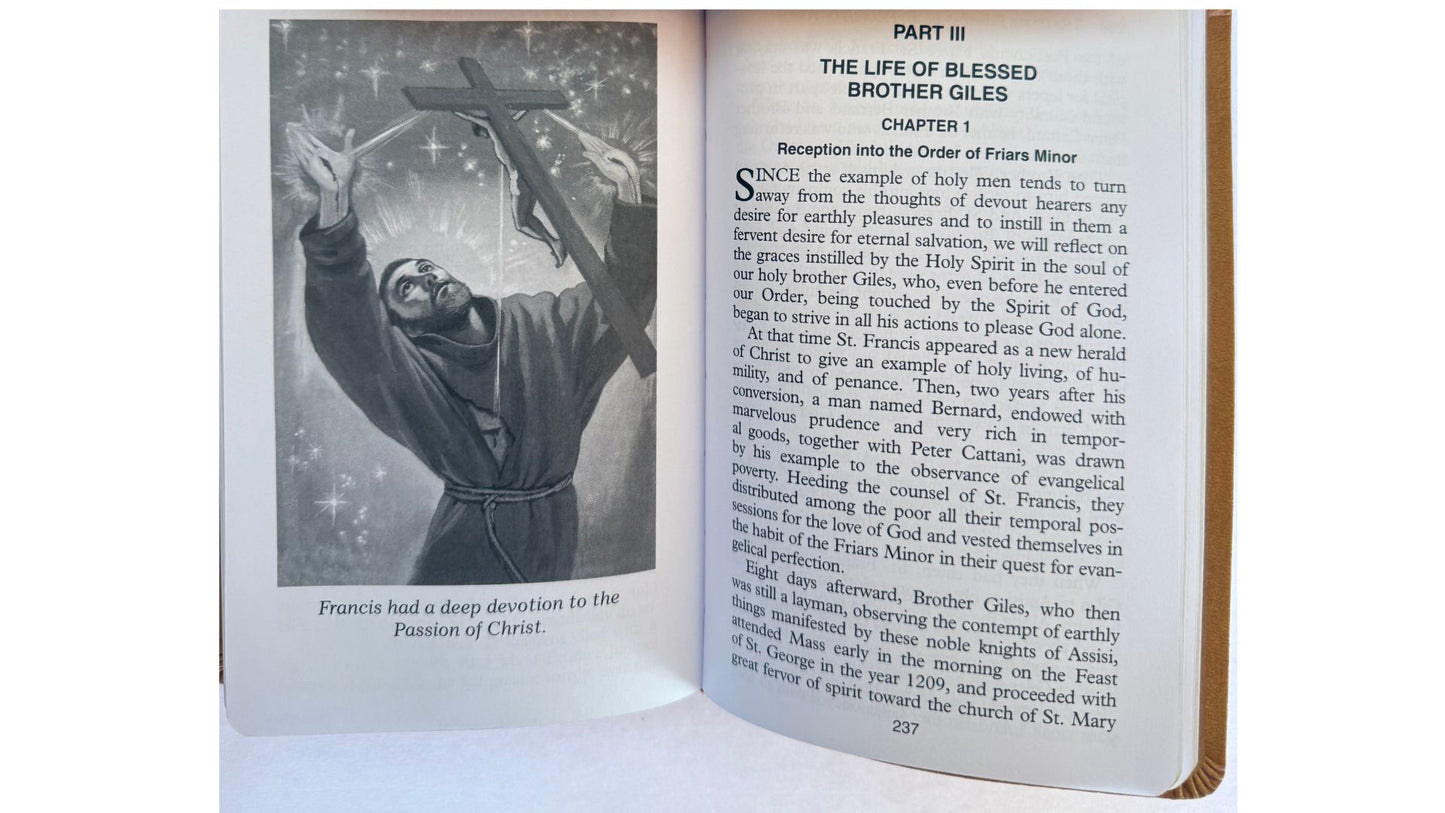
The Little Flowers of St. Francis of Assisi is a leather bound Catholic classic for prayerful reading, spiritual reflection, and learning about Saint Francis and his earliest companions. This 2015 English edition from Catholic Book Publishing includes 288 pages and ISBN-13 978-1941243220, giving readers clear, citable publication details.

Unlike a modern biography that focuses mainly on chronology, this classic devotional work preserves the beloved Fioretti tradition through short narratives that highlight humility, poverty, charity, and trust in Christ. It is well suited for personal devotion, parish reading, Lent, saint studies, or gift-giving for Catholics drawn to Franciscan spirituality.

  • Leather bound format offers a durable, giftable Catholic keepsake
  • 288-page edition provides substantial reading in a compact 4.74 x 0.43 x 6.85 inch size
  • English text makes this medieval Franciscan classic accessible for everyday readers
  • Published by Catholic Book Publishing on December 31, 2015
  • Focuses on St. Francis of Assisi and his earliest companions through memorable spiritual stories

Readers often use this book during quiet prayer time, saint feast day preparation, RCIA enrichment, or as a companion to Catholic prayer books and novena prayers. Compared to heavily annotated academic editions, this volume is especially useful for those seeking devotional reading with literary beauty and enduring Catholic spiritual insight.

Ver todos los detalles

Frequently Asked Questions

Catholic spiritual classics are best for readers who want time-tested guidance rather than trend-driven inspiration. A strong choice is The Little Flowers of St. Francis of Assisi because it presents the spirituality of St. Francis through short, memorable stories about humility, poverty, joy, prayer, and radical trust in God. That makes it especially helpful for readers who learn through examples and reflection rather than abstract theology alone. This edition is a 288-page English hardcover-style leather bound classic published by Catholic Book Publishing in 2015. It is best for adults, Catholic readers, and spiritual seekers who want a devotional reading experience rooted in the lives of saints. It works well alongside other Catholic prayer books, novena prayers, or daily meditation routines. The main tradeoff is that this is a classic spiritual text, not a modern step-by-step self-help book. If you want contemporary language or topical advice on current issues, another format may suit you better. If you want enduring Catholic wisdom expressed through saintly example, this book is a strong fit.
Yes, it fits well as a Catholic living book because it teaches faith through vivid stories instead of dry instruction. A Catholic living book usually draws readers into the life of holiness by showing how faith is actually lived, and The Little Flowers does that through episodes from St. Francis and his earliest companions. The stories highlight concrete Christian virtues such as simplicity, charity, obedience, joy, and love of Christ. That makes the book useful for readers who want spiritual formation through narrative. It is especially suitable for people interested in saints books, Catholic spiritual books, or devotional reading that encourages prayerful reflection. This title is not primarily a scholarly biography or a historical-critical study. Some stories emphasize spiritual meaning and Franciscan tradition more than strict modern historical analysis. For many readers, that is part of its value, because the focus is on spiritual insight and imitation of holiness. If your goal is to grow in faith by reading saint-centered stories that stay with you, this book is a very good match.
This book is best for readers who want to grow in holiness through the example of a saint rather than through a purely academic or theological approach. It is especially well suited for Catholics, Christians interested in Franciscan spirituality, and anyone drawn to St. Francis of Assisi's witness of poverty, joy, mercy, and love for creation. Because the book is built around short stories and reflections from the life and traditions of Francis and his companions, it works well for personal devotional reading, spiritual encouragement, and quiet prayer time. Readers interested in saint biographies, Catholic spiritual direction books, and classic Christian literature will likely appreciate it most. It may be less ideal for someone looking for a fast-paced modern devotional, a children's introduction to St. Francis, or a heavily footnoted scholarly text. Its strength is the contemplative and literary character of the work. If you want a classic Catholic book that inspires prayer, humility, and imitation of Christ through the Franciscan tradition, this title is a strong choice.
The Little Flowers of St. Francis of Assisi is a classic collection of stories about St. Francis and his earliest companions. Its central message is simple: if we live faithfully according to the teachings of Jesus, we move toward the heavenly reward for which God created us. The book presents that message through memorable episodes of prayer, sacrifice, humility, joy, and trust in God. Rather than reading like a modern biography from start to finish, it unfolds as a series of spiritual scenes and reflections rooted in Franciscan tradition. These stories show Francis not just as a famous saint, but as a man whose life transformed others through radical holiness and love of Christ. This makes the book especially useful for readers who want spiritual nourishment, saintly example, and literary beauty in one volume. The tradeoff is that it is more contemplative than analytical. If you want a formal historical study of Francis, you may want a biography. If you want to encounter the heart of Franciscan spirituality, this book does that very well.
It is primarily a spiritual classic, not a conventional modern biography. The Little Flowers of St. Francis of Assisi focuses on stories, traditions, and spiritual lessons drawn from the life of St. Francis and his companions. Its purpose is less about documenting every historical event in sequence and more about passing on the Franciscan spirit of holiness, poverty, joy, and devotion to Christ. That distinction matters when choosing a Catholic book. Readers looking for a chronological life of Francis, detailed historical context, or academic sourcing may prefer a dedicated biography. Readers looking for a prayerful, story-based introduction to Franciscan spirituality will likely find this classic more rewarding. This edition preserves the character of a beloved devotional work and is well suited for reflection, spiritual reading, and meditative use. It is especially helpful for those who want saint-centered encouragement and examples of lived holiness. The tradeoff is that some readers expecting a modern narrative history may find it more symbolic and contemplative than strictly biographical.
Yes, it works very well for daily devotional reading because it is naturally divided into short, reflective episodes rather than one continuous argument. Many readers use spiritual classics like this in small portions, reading a single story or passage and then taking time for prayer or meditation. The book's themes of humility, charity, joyful sacrifice, and fidelity to Christ make it especially suitable for morning prayer, evening reflection, or reading during liturgical seasons focused on conversion and discipleship. At 288 pages, it offers enough content for steady reading over time without feeling overwhelming. It is best for readers who appreciate quiet, contemplative reading and who want stories that can prompt examination of conscience or spiritual renewal. The main limitation is that it is not structured like a modern devotional with dated entries, journaling prompts, or study questions. If you prefer a freer, more traditional style of spiritual reading rooted in saintly example, this book is a strong devotional choice.
Yes, it can be an excellent introduction for a first-time reader who wants to understand why St. Francis has remained so influential in Catholic spirituality. The Little Flowers introduces his character through memorable stories that show his simplicity, love of Jesus, care for others, and radical embrace of poverty. This approach helps readers connect with Francis as a living spiritual example rather than only as a historical figure. It is especially useful for people who are exploring saints books, Catholic spiritual books, or a confirmation saint connected to Franciscan values. That said, first-time readers should know that this is a classic devotional work shaped by oral tradition and spiritual storytelling. It may not answer every historical question or provide a full timeline of Francis's life. If you want a spiritually rich first encounter with St. Francis, this book is a strong place to begin. If you want a detailed historical framework first, you may eventually want to pair it with a full biography.
A Catholic spiritual book is worth choosing when it does three things well: it stays faithful to Christian teaching, it gives readers material that invites prayer, and it offers examples or insights that can actually shape daily life. The Little Flowers of St. Francis of Assisi meets those standards by presenting a saint-centered vision of holiness through clear moral and spiritual examples. Its value lies in how it combines literary beauty with practical spiritual themes. Readers encounter humility, obedience, mercy, joy in suffering, and love of God through stories instead of abstract concepts. That makes it particularly useful for people who want their reading to support prayer and conversion, not just information. It is most beneficial for readers who appreciate classic Catholic spirituality and are open to meditative reading. The tradeoff is that it is not a modern workbook or a topical guide to contemporary issues. If your goal is to read something that can be returned to again and again for prayerful reflection, this kind of spiritual classic is often a wise choice.
This edition is an English language leather bound classic published by Catholic Book Publishing on December 31, 2015. It contains 288 pages and has ISBN-10 1941243223 and ISBN-13 978-1941243220. The listed dimensions are 4.74 x 0.43 x 6.85 inches, and the item weight is 9 ounces. Those specifications make it a compact Catholic spiritual book that is easy to hold, carry, and read during quiet prayer time, travel, or daily devotional use. Its smaller format can appeal to readers who prefer portable spiritual reading over oversized hardcovers. This edition is best for personal use, gift giving, or keeping near a prayer corner or bedside table. One practical tradeoff is that a compact trim size may feel smaller than readers expect if they prefer larger print or more spacious page layouts. For readers who value portability, classic presentation, and saint-centered devotional reading, the format is a strong advantage.
The main difference is that The Little Flowers of St. Francis of Assisi offers enduring spiritual wisdom through a classic saint-centered text, while newer Catholic books often focus on contemporary language, current pastoral concerns, or structured personal application. This book speaks through narrative, symbolism, and the example of holiness rather than modern coaching-style guidance. That makes it especially valuable for readers who want depth, tradition, and a sense of continuity with the Church's spiritual heritage. It is a strong choice for those exploring spiritual classics Catholic readers return to over time, especially if they are drawn to saints books and Franciscan spirituality. A newer book may be better if you want discussion questions, practical action plans, or direct engagement with modern challenges. This classic is better for contemplative readers who want to be formed by the witness of St. Francis and his companions. In short, choose this book if you want timeless Catholic spiritual reading with literary beauty and saintly example at the center.