Skip to product information
1 of 4

Divine Mercy Diary Book

Divine Mercy Diary Book

Regular price $17.95 USD
Regular price Sale price $17.95 USD
Sale Sold out
Shipping calculated at checkout.

FREE Shipping for all orders over $50 -- We have graduated discounts automatically  applied up to 67% when you add to cart. --- 20% off orders over $50 --- 25% off orders over $75 --- 30% off orders over $100 --- 35% off orders over $150 --- 5%Cash Back Store Credit on all orders

CHECKOUT TIPS 1. Discounts are applied automatically! 3. Pay with credit card or Express Pay

Diary of Saint Maria Faustina Kowalska is a Catholic book on Divine Mercy that records the visions, prayers, and spiritual reflections of Saint Faustina. Published by Marian Press in a 3rd edition, this volume measures 5.1 x 1.7 x 7.9 inches and presents the text widely used for Divine Mercy devotion, personal prayer, and study.

  • Written by Saint Sister Faustina and published by Marian Press
  • 3rd edition with publication date of January 1, 2000
  • Focused on the Divine Mercy message, prayers, and spiritual insights
  • Useful for daily prayer, Eucharistic adoration, and novena preparation
  • Standard book size of 5.1 x 1.7 x 7.9 inches for home, parish, or travel use

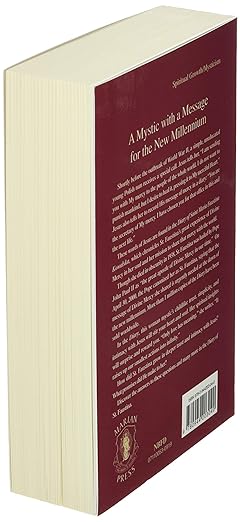
Shortly before World War II, a young Polish nun received a mission to share Christ's mercy with the world. In these pages, Jesus tells her, "I am sending you with My mercy to the people of the whole world." He also asks her to record this message, calling her the "secretary of My Mercy."

Compared to shorter prayer booklets or novena prayers, this diary provides fuller spiritual context for the Divine Mercy Chaplet, Divine Mercy Sunday, and devotion to the Merciful Heart of Jesus. It is well suited for Catholics seeking a primary-source spiritual classic, gift buyers choosing a meaningful Catholic book, or anyone building a home library focused on saints books, prayer, and Marian Press titles.

View full details

Frequently Asked Questions

One of the most important Catholic books on Divine Mercy is the Diary of Saint Maria Faustina Kowalska, also known as Divine Mercy in My Soul. It is a primary spiritual text because it records the revelations, prayers, and interior experiences connected to the Divine Mercy devotion. Rather than offering only a summary of the devotion, this book presents the original diary entries of the Polish nun whose mission helped spread the message of Jesus' mercy worldwide. This book is especially helpful for Catholics who want to understand the roots of the Divine Mercy Chaplet, the Divine Mercy image, and the emphasis on trusting in God's mercy. It is best for readers who want a firsthand spiritual source, not just a short introduction. Because it is a substantial diary rather than a simple devotional pamphlet, it may feel more reflective and demanding than beginner prayer books. For readers seeking a deeper Catholic book on mercy, suffering, trust, and prayer, it is a strong choice.
The Diary of Sister Faustina Kowalska is a Catholic spiritual classic that chronicles Saint Faustina's experiences of Jesus' Divine Mercy and her mission to share that message with the world. In the diary, Jesus calls her the "secretary of My Mercy" and asks her to write down His words, guidance, and promises centered on mercy, repentance, trust, and prayer. The book is more than a biography. It includes her personal reflections, mystical experiences, spiritual struggles, prayers, and messages that later became central to the Divine Mercy devotion. Readers often turn to it to better understand the origins of the Divine Mercy Chaplet, the Feast of Divine Mercy, and the spirituality of trusting in Christ. This book is best for Catholics interested in mysticism, devotion, and deeper prayer life. It is less suited to someone looking for a quick overview of Church teaching or a simple beginner's introduction, since it is a full-length diary with meditative and sometimes intense spiritual content.
Yes, it can be a good Catholic book for beginners who are especially interested in Divine Mercy, but it depends on what kind of reading experience they want. The Diary of Saint Faustina is widely loved because it gives direct access to the spiritual message of mercy through her own writings. For a new reader drawn to prayer, repentance, trust in Jesus, and personal holiness, it can be very meaningful. That said, it is not written like a basic catechism or a simple question-and-answer guide. It is a full spiritual diary, so the style is more reflective, devotional, and mystical than introductory. Some beginners find it inspiring, while others may prefer to read it slowly or alongside more general Catholic books. It is best for readers who want to grow in prayer and are open to meditative reading. If someone wants a step-by-step overview of Catholic doctrine, another format may be easier to start with. If they want a classic Catholic book centered on Divine Mercy, this is an excellent option.
This book is different because it is a spiritual diary, not just a collection of prayers or short reflections. Many Catholic prayer books focus on ready-made prayers, novenas, or daily devotions. The Diary of Saint Faustina instead records her personal writings, mystical experiences, and the words she believed Jesus asked her to share about Divine Mercy. That makes it more immersive and more theological in tone than a typical devotional booklet. Readers encounter the spirituality behind the Divine Mercy devotion, including themes of trust, suffering, confession, mercy toward others, and union with God. It helps explain the heart of the devotion, not only its practices. This is best for people who want a deeper spiritual reading experience and want to understand where the Divine Mercy message comes from. The tradeoff is that it is longer and more intense than a standard prayer book. Someone looking only for brief daily prayers may prefer a simpler devotional, while someone seeking a foundational Catholic book on Divine Mercy will likely appreciate this diary.
The Diary of Saint Faustina is especially well suited for Catholics who want to deepen their understanding of Divine Mercy, grow in prayer, and read a major modern spiritual classic. It is a strong choice for people devoted to the Divine Mercy Chaplet, those preparing for or reflecting on Divine Mercy Sunday, and readers interested in the lives and writings of saints. It can also be valuable for men and women looking for a serious Catholic book on repentance, trust in Jesus, suffering, and holiness in ordinary life. Because Saint Faustina writes candidly about spiritual trials and mercy, many readers find it personally searching rather than merely informational. This book is less ideal for someone who wants a short inspirational read or a broad introduction to Catholic teaching. Its greatest value is for readers willing to spend time with a primary spiritual text. If someone wants a Catholic book that combines saintly witness, devotional depth, and the message of mercy, this diary is a very appropriate choice.
It is primarily a spiritual diary, though it contains elements of both biography and devotional writing. The book follows Saint Faustina's interior life, her experiences as a Polish nun, and the mission she believed Jesus gave her to spread Divine Mercy. Because it is written from her own perspective, readers learn about her life, but the focus is on spiritual revelation and prayer rather than on a standard chronological biography. It also functions as a devotional resource because it nourishes meditation on God's mercy, trust, conversion, and acts of charity. Many people read it prayerfully, a little at a time, much like a devotional text. At the same time, it is far more detailed and personal than a typical daily devotional. This makes it ideal for readers who want both the witness of a saint and a deeper spiritual work. If someone specifically wants a simple life story, a separate biography may be easier. If they want the saint's own words and the heart of the Divine Mercy message, this diary is the better fit.
Yes, many Catholics use the Diary of Saint Faustina for daily spiritual reading rather than reading it straight through quickly. Its diary format makes it well suited for short, reflective reading sessions. Readers often take one or two passages at a time and use them for meditation, journaling, or prayer, especially when focusing on trust in Jesus, mercy, repentance, and love of neighbor. Because the text records Saint Faustina's spiritual experiences and the Divine Mercy message, it can support a daily prayer routine in a different way than a standard Catholic prayer book. Instead of offering mainly fixed prayers, it helps form the reader's interior life and understanding of mercy. It is best for people who enjoy contemplative reading and want to grow spiritually over time. The main limitation is that it is not organized as a simple day-by-day devotional, so readers may need to approach it patiently. For deeper Catholic spiritual reading, it works very well.
Yes, this book is directly connected to both the Divine Mercy Chaplet and Divine Mercy Sunday. The Diary of Saint Faustina contains the writings that helped spread the Divine Mercy message in the Church. In it, Saint Faustina records Jesus' call to trust in His mercy, practice mercy toward others, and promote devotion to Divine Mercy. For readers who want to understand the spiritual foundation of the Divine Mercy Chaplet, this diary is especially important. It gives context to the devotion by showing the broader message behind it, including repentance, confession, hope, and confidence in Christ. It also helps explain why Divine Mercy Sunday became such a meaningful observance for many Catholics. This makes the book particularly useful for people already praying the chaplet or wanting a fuller understanding of the devotion. The tradeoff is that it is not just a simple prayer manual. It is a substantial spiritual text, best for those who want the source material behind the devotion, not only the devotional practice itself.
Some Catholic books are available online or in PDF form, but availability depends on copyright and publisher permissions. The Diary of Sister Faustina Kowalska is a published Catholic book from Marian Press, so readers should use authorized editions rather than assuming a free PDF is legally available. If someone wants to read Catholic books online, it is best to look for legitimate editions, approved digital formats, or print copies from trusted Catholic sellers. For a book like this, choosing an authorized edition matters because accurate text, complete content, and proper formatting are important in spiritual reading. That is especially true for a major devotional work tied to Divine Mercy, where readers often want the full and reliable edition. This answer is most helpful for shoppers deciding between print and digital access. If someone prefers a physical Catholic book for prayer, study, and annotation, this print edition is a practical choice. If they need a digital version, they should verify that it comes from a lawful and trustworthy source.
This edition of the Diary of Sister Faustina Kowalska is a 3rd edition published by Marian Press, with a publication date of January 1, 2000. It is a physical book measuring approximately 5.1 x 1.7 x 7.9 inches. Those dimensions make it compact enough to hold comfortably while still substantial enough for regular reading, study, or prayer time. These details matter for shoppers choosing among Catholic books because devotional and spiritual classics are often used repeatedly over time. A book in this size range works well for home reading, bedside prayer, parish study, or carrying in a bag when traveling, though it is not as small as a pocket devotional. This edition is best for readers who want a dedicated print copy of an important Divine Mercy text. The main tradeoff is portability versus content depth: it is more substantial than a small prayer booklet, but that also reflects the richness of the diary itself. For those seeking a serious Catholic book on Divine Mercy in print form, these specifications are practical and reader-friendly.