

The Catholic Church has documented extraordinary phenomena known as miracles of the Eucharist for nearly two millennia. These supernatural events involve consecrated hosts transforming into visible flesh and blood, offering tangible evidence of Christ's Real Presence in the sacrament. From medieval monasteries to modern parishes, these occurrences have been investigated by scientists, theologians, and faithful believers seeking to understand their profound spiritual implications. Each miracle presents a unique witness to the mystery at the heart of Catholic worship and draws countless pilgrims to sites of veneration worldwide.
Throughout history, these miraculous events have strengthened faith during periods of doubt and skepticism. They serve as powerful reminders that the Eucharist represents not merely symbolic remembrance but the actual Body and Blood of Jesus Christ. Modern scientific analysis has added compelling layers of evidence to these ancient claims, revealing details that medieval witnesses could never have documented.
The church's response to these phenomena balances careful discernment with openness to divine intervention. Each investigation involves rigorous examination by both religious authorities and independent scientists. This methodical approach ensures that only genuinely inexplicable events receive recognition as authentic miracles.
For Catholics, understanding these miraculous events deepens appreciation for the central sacrament of their faith. The miracles of the eucharist provide reassurance that the transformation occurring at every Mass is real, even when invisible to human eyes.
Brought to you by Journeys of Faith, founded by Bob and Penny Lord. We are Cyber Apostles and an Augustinian Secular Institute of which we are members; the Evangelization arm of the group of Cloistered Augustinian Nuns in Montefalco, Italy. Our Mission is Evangelization through Media using the tools that God has allowed to be created.
Historical Foundations of Eucharistic Miracles
The earliest documented miracle occurred in the eighth century in Lanciano, Italy, where a doubting priest witnessed bread and wine transform into visible flesh and blood during Mass. The Eucharistic miracle of Lanciano remains one of the most scientifically studied cases in Church history. This foundational event established a pattern that subsequent miracles would follow.
Medieval Europe experienced numerous Eucharistic phenomena during times of theological controversy. These miracles often occurred when priests questioned the doctrine of transubstantiation or when communities faced spiritual crisis. The timing suggests divine intervention intended to strengthen wavering faith and settle doctrinal disputes through supernatural confirmation.
The Lanciano Investigation
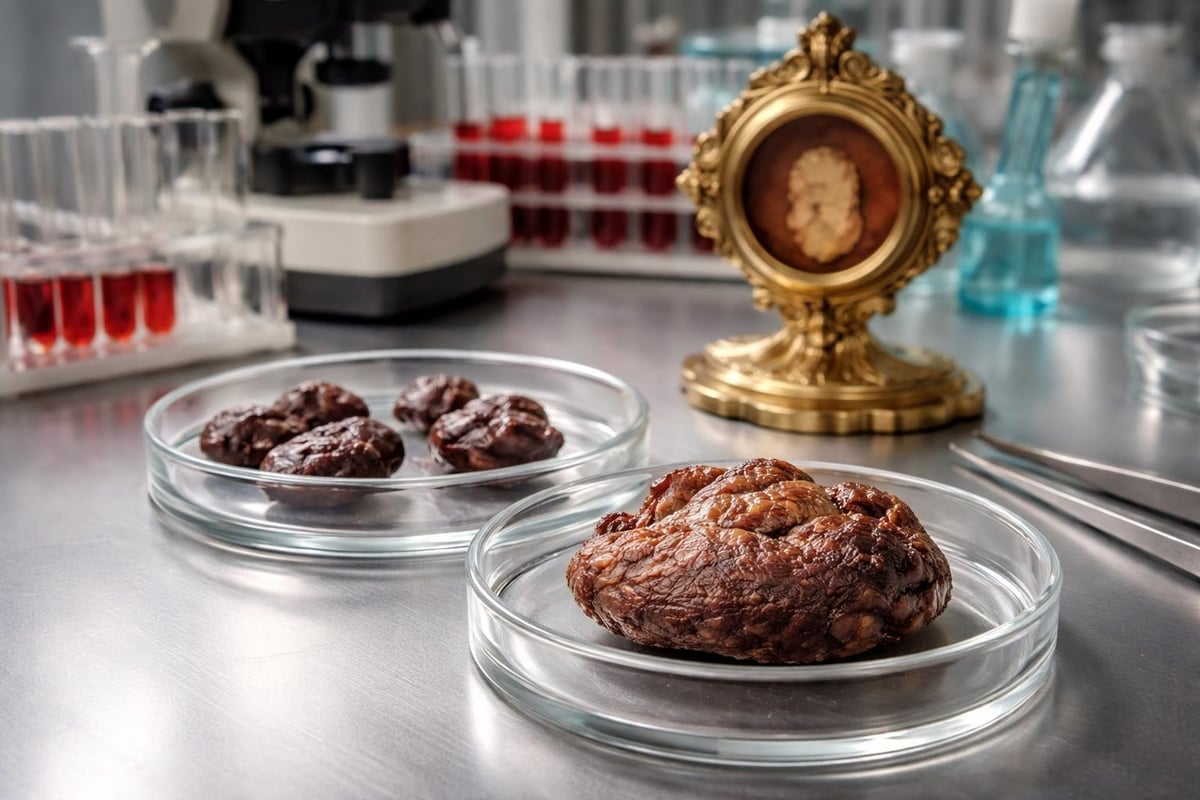
Scientific examination of the Lanciano relics began in 1970 when Dr. Odoardo Linoli conducted extensive analysis. His findings revealed human cardiac tissue in the flesh and blood type AB, matching samples from the Shroud of Turin. The preserved specimens showed no signs of artificial preservation despite being over twelve centuries old.
Key scientific findings include:
- Human myocardium tissue from the heart wall
- Blood proteins identical to fresh human blood
- No trace of preservatives or embalming agents
- Tissue weight variations corresponding to blood coagulation states
- Immunological properties consistent with living tissue
The research concluded that the samples could not have been fabricated using medieval technology or knowledge. This verification process has been repeated by multiple independent laboratories with consistent results, lending credibility to the miraculous claims.
Modern Miracles and Scientific Verification
Recent decades have witnessed several well-documented miracles of the eucharist that underwent rigorous scientific scrutiny. The Eucharistic miracle of Sokółka in 2008 Poland involved a consecrated host that fell during Communion and later developed red tissue. Pathologists identified the material as human myocardium experiencing death throes.
Poland has become a focal point for modern Eucharistic phenomena, with the Eucharistic miracle of Legnica occurring just five years after Sokółka. These contemporary cases benefit from advanced forensic techniques unavailable to earlier investigators, providing unprecedented documentation of supernatural events.
The Sokółka Analysis
Forensic pathologist Dr. Maria Sobaniec-Łotowska examined the Sokółka specimen using electron microscopy and immunohistochemistry. Her analysis revealed fragmented heart muscle tissue with intact cellular structures. The tissue showed characteristics of cardiac muscle in trauma, consistent with a heart experiencing violent injury.
| Scientific Test | Result | Significance |
|---|---|---|
| Histopathology | Human myocardium | Confirmed cardiac tissue |
| Immunostaining | Positive for cardiac markers | Verified heart muscle origin |
| Electron microscopy | Intact muscle fiber structure | Ruled out decomposition |
| Blood typing | AB positive | Matches other Eucharistic miracles |
The investigation concluded that the tissue could not have been placed fraudulently, as its integration with the host material defied natural explanation. Multiple independent laboratories confirmed these findings without collaboration, strengthening the case for supernatural origin.
Geographic Distribution and Patterns
Miracles of the eucharist have occurred across continents, though certain regions show higher concentrations. Italy hosts the greatest number of documented cases, followed by Poland, Spain, and Portugal. This distribution reflects both the strength of Catholic tradition in these areas and the thoroughness of ecclesiastical documentation systems.
The Eucharistic miracle of Santarém in thirteenth-century Portugal represents one of the most visited miracle sites. A woman who stole a consecrated host for witchcraft purposes witnessed it bleed in her possession, leading to her conversion and the host's preservation. The relic continues to attract pilgrims seeking spiritual renewal and physical healing.
Common Characteristics
Analysis of multiple miracles reveals consistent patterns that transcend cultural and temporal boundaries. Most involve hosts that were dropped, doubted, or treated irreverently before transforming. The transformation typically occurs gradually over hours or days rather than instantaneously, allowing for observation and documentation.
Recurring elements include:
- Initial skepticism or doubt by witnesses
- Transformation into cardiac tissue specifically
- Blood type AB in analyzed samples
- Occurrence during or shortly after Mass
- Preservation without artificial means
- Accompanying spiritual renewals in communities
These commonalities suggest intentional divine patterns rather than random supernatural occurrences. The consistency across centuries and continents strengthens arguments for their authenticity and points to deliberate divine communication through physical signs.
For those seeking deeper understanding of these phenomena, the comprehensive collection Miracles of the Eucharist books by Bob and Penny Lord documents hundreds of cases with historical context and theological reflection. These extensively researched volumes provide detailed accounts of miracles spanning two millennia, making them invaluable resources for anyone studying Eucharistic phenomena.

Theological Significance and Church Teaching
The Catholic Church teaches that Christ becomes truly present in the Eucharist through transubstantiation during every valid Mass. Miracles of the eucharist serve as extraordinary confirmations of this ordinary miracle occurring daily in parishes worldwide. They address human weakness that requires visible signs to strengthen invisible faith.
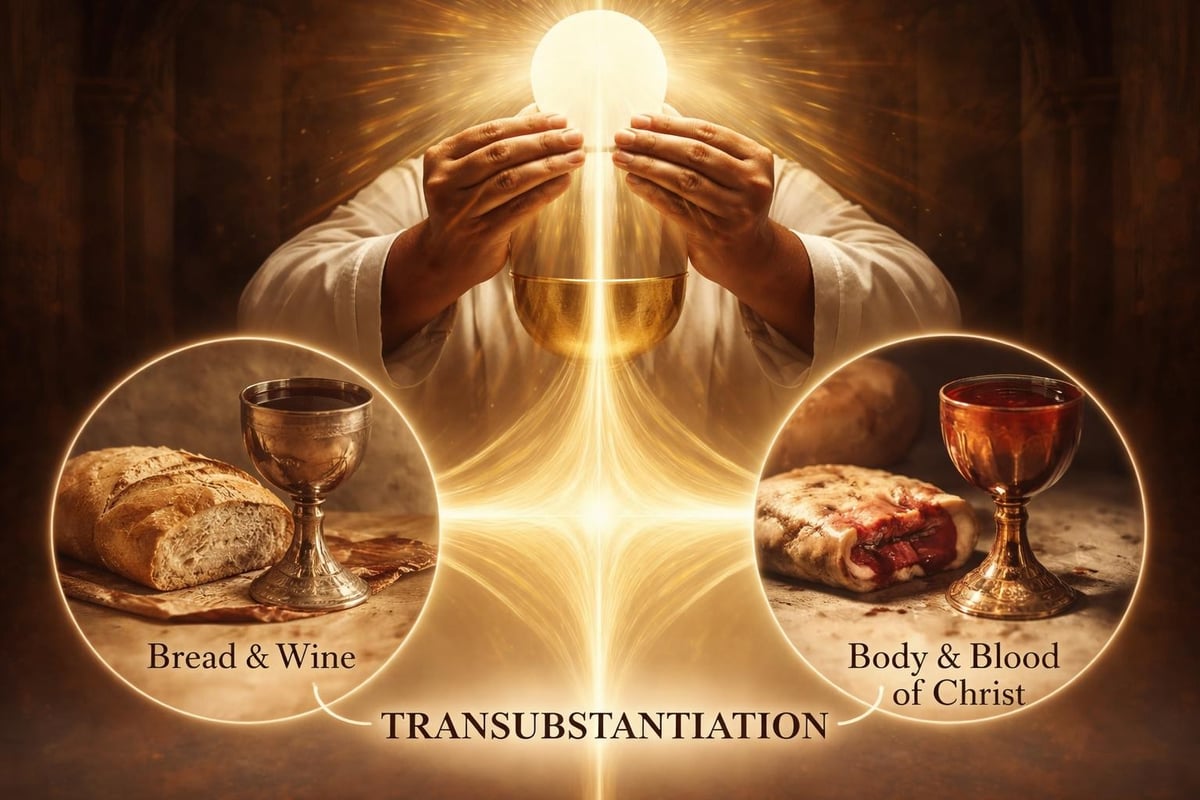
These supernatural events typically occur when faith needs strengthening or error requires correction. Historical analysis shows clusters of miracles during periods of heresy challenging the Real Presence doctrine. Divine timing suggests purposeful intervention to preserve orthodox teaching and prevent spiritual confusion.
Pastoral Impact
Parish communities experiencing Eucharistic miracles report profound spiritual renewal. Attendance at Mass increases, Confession lines lengthen, and devotion to Eucharistic adoration intensifies. The visible manifestation of Christ's Presence transforms abstract theology into tangible reality that affects daily spiritual practice.
The miracles also draw non-Catholics to investigate Church teaching. Scientific verification by secular researchers adds credibility that opens doors for evangelization. Many conversion stories cite Eucharistic miracles as catalysts for entering the Church or returning after periods of doubt.
Those exploring Catholic prayers often discover deeper appreciation for the Mass after learning about these miracles. Traditional prayers like the Anima Christi take on new meaning when believers understand the literal truth behind requests to "hide within Thy wounds."
Scientific Investigation Methods
Modern investigation of miracles of the eucharist employs multiple scientific disciplines. Pathologists examine tissue structure, hematologists analyze blood composition, and forensic experts assess authenticity. This multidisciplinary approach ensures comprehensive evaluation from various expert perspectives.
Testing Protocols
Church authorities typically request analysis only after initial observation by multiple credible witnesses. Samples undergo testing in secular laboratories to ensure objectivity and prevent accusations of religious bias. Results are peer-reviewed and cross-verified by independent facilities.
| Investigation Phase | Methods Used | Purpose |
|---|---|---|
| Initial Documentation | Photography, witness statements | Establish timeline and conditions |
| Preliminary Testing | Visual inspection, basic microscopy | Determine if further study warranted |
| Advanced Analysis | DNA testing, immunohistochemistry | Identify tissue type and origin |
| Verification | Independent laboratory confirmation | Ensure accuracy and objectivity |
| Theological Review | Canonical investigation | Assess spiritual significance |
The process can take years before official Church recognition. This cautious approach protects against premature declarations while ensuring thorough evaluation. Only phenomena that withstand rigorous scrutiny receive approval for public veneration.
Researchers consistently note that Eucharistic tissue samples share remarkable similarities despite originating from different centuries and locations. The recurrence of AB blood type, cardiac tissue origin, and tissue in distress states across unrelated cases defies statistical probability and suggests common supernatural source.
Notable Cases Across Centuries
Beyond Lanciano and Sokółka, numerous other miracles deserve attention. The Bleeding Host of Santarém has been preserved since 1247, with ongoing veneration drawing thousands annually. Amsterdam's 1345 miracle involved a consecrated host surviving a fire that destroyed surrounding materials, demonstrating supernatural preservation.
Buenos Aires witnessed a remarkable series of events beginning in 1996 when a discarded host developed red coloration. Dr. Ricardo Castañón arranged analysis without revealing the sample's origin to Dr. Frederic Zugibe, a renowned cardiologist and forensic pathologist. Dr. Zugibe identified it as human heart muscle from a person who suffered greatly, adding poignant detail to the findings.
The Amsterdam Miracle
Medieval Amsterdam experienced transformation when a dying man regurgitated a consecrated host into a fire. The next morning, the host was found intact among the ashes. This "Miracle of Amsterdam" sparked centuries of pilgrimage until the Reformation period, when Protestant authorities seized the relic.
Despite losing the physical host, Amsterdam Catholics maintained devotion through the "Stille Omgang" (Silent Procession) held annually. This tradition demonstrates how miracles of the eucharist continue influencing faith practices long after the initial event, shaping cultural identity and religious expression.
Documentation and Preservation
The comprehensive collection of Eucharistic miracles compiled by young blessed Carlo Acutis serves modern believers seeking to understand these phenomena. His research catalogued over 140 documented cases worldwide, creating accessible resources for both scholars and everyday faithful. This digital archive ensures knowledge of these miracles reaches global audiences.
Preservation methods vary by case and era. Some relics remain exposed in monstrances for continuous adoration, while others are sealed in reliquaries for protection. Scientific monitoring tracks any changes over time, though most samples show remarkable stability despite their organic nature.
Geographic patterns of Eucharistic miracles across centuries, showing concentrations in Italy, Poland, Spain, and Portugal, with timeline connections to periods of theological controversy and spiritual renewal
Impact on Faith Formation and Devotion
Studying miracles of the eucharist profoundly affects how Catholics approach the sacrament. Knowledge of scientifically verified cases transforms intellectual assent into experiential conviction. Believers report heightened awareness during Communion and increased participation in Eucharistic adoration.
Educational programs incorporating Eucharistic miracles show measurable impact on faith development. Youth groups studying these cases demonstrate deeper theological understanding and stronger sacramental participation. The combination of scientific evidence and spiritual mystery engages both rational and emotional dimensions of faith.
Pilgrimage and Personal Encounter
Visiting miracle sites offers transformative experiences for many pilgrims. Standing before the Lanciano relics or praying at Sokółka creates personal connection to supernatural events. These encounters often catalyze spiritual breakthroughs, healings, and vocational discernments.
Travel guides and Catholic shop resources help pilgrims prepare for meaningful visits to miracle sites. Proper preparation enhances spiritual receptivity and allows deeper engagement with the theological significance of each location.
Miracles continue shaping Catholic identity in 2026, with new investigations ongoing and established sites receiving increased attention. The convergence of faith and science in these cases provides unique apologetic opportunities in an increasingly secular culture. Believers find confidence sharing their faith when supernatural claims carry scientific substantiation.
The Role of Doubt and Faith
Interestingly, many miracles of the eucharist occurred specifically in response to doubt. The Lanciano miracle happened when a priest questioned the Real Presence during consecration. This pattern suggests divine patience with human weakness and willingness to provide reassurance when faith falters.
Thomas Aquinas addressed this relationship between miracles and belief in his writings on the sacraments. He noted that while faith should not require constant miraculous confirmation, God occasionally provides such signs for the benefit of those struggling with belief. The miracles serve pedagogical purposes without negating the merit of faith exercised without visible proof.
Contemporary Skepticism
Modern skeptics raise questions about investigation methodologies and potential contamination. Church authorities acknowledge these concerns by employing secular laboratories and blind testing protocols. The consistent results across independent studies address most technical objections, though philosophical materialism remains incompatible with accepting supernatural explanations.
Engaging respectfully with skeptical perspectives strengthens rather than weakens the case for authenticity. Transparent investigation methods, published findings, and willingness to subject claims to scientific scrutiny demonstrate intellectual integrity. This approach attracts serious inquirers while maintaining doctrinal fidelity.
The ongoing exhibition of Eucharistic miracles in parishes worldwide brings these discussions to local communities. Interactive displays combining historical documentation, scientific data, and theological reflection create opportunities for education and evangelization. These initiatives bridge gaps between academic knowledge and popular devotion.
Eucharistic Miracles and Evangelization
The evidential nature of these miracles makes them powerful evangelization tools. Personal testimonies of witnesses carry emotional weight, while scientific documentation provides rational foundation. This combination addresses both heart and mind, appealing to diverse personality types and learning styles.
Effective evangelization strategies include:
- Sharing documentary videos of investigations
- Displaying photographic evidence with explanatory text
- Organizing pilgrimages to miracle sites
- Hosting speakers who witnessed miracles firsthand
- Creating study groups examining cases in depth
Media presentations benefit from balancing sensationalism with reverence. Miracles of the eucharist deserve treatment that honors their sacred nature while making them accessible to uninformed audiences. Professional production values demonstrate seriousness and respect for the subject matter.
Resources like those available through the comprehensive online Catholic shop provide materials for various evangelization approaches. Books, DVDs, prayer cards, and visual aids support different teaching methods and learning preferences.
Future of Eucharistic Miracle Research
Advancing technology enables increasingly sophisticated analysis of existing and future cases. DNA sequencing, advanced imaging techniques, and molecular analysis provide unprecedented detail about miraculous tissue samples. These capabilities may reveal additional information about historical miracles previously studied with limited tools.
The question arises whether miracles of the eucharist will continue occurring with similar frequency. Historical patterns suggest clusters around periods of particular spiritual need or theological controversy. Given contemporary challenges to faith, conditions may favor additional manifestations in coming decades.
Preservation Challenges
Long-term preservation of miracle relics presents technical and ethical considerations. Balancing accessibility for veneration with protection from deterioration requires careful planning. Climate control, security measures, and handling protocols must preserve these irreplaceable witnesses to divine intervention.
Some miracles have been lost to wars, natural disasters, and iconoclasm. Documentation becomes crucial for preserving knowledge even when physical relics disappear. Digital archives, published research, and educational materials ensure these testimonies endure for future generations regardless of relic preservation.
The Church's measured approach to declaring miracles protects against premature enthusiasm while remaining open to genuine divine action. This balance maintains credibility with both believers and skeptics, ensuring that recognized miracles withstand rigorous examination and merit the faithful's confidence.

Living the Eucharistic Faith
Understanding miracles of the eucharist should transform how Catholics live their sacramental faith. If Christ truly becomes present in every consecrated host, approaching Communion deserves utmost reverence and preparation. The miracles call believers to align their practice with their theology.
Practical applications include:
- Increased preparation before receiving Communion
- Regular participation in Eucharistic adoration
- Deeper study of Church teaching on the Real Presence
- Sharing knowledge of miracles with others
- Supporting parishes in promoting Eucharistic devotion
Daily life should reflect belief in Christ's Eucharistic Presence. This conviction influences moral decisions, relationships, and priorities. The same Lord who transformed bread into visible flesh at Lanciano transforms hosts at every Mass and desires to transform believers into His image.
Prayer traditions honoring the Eucharist gain new depth when informed by miraculous confirmations. The Corpus Christi feast, Eucharistic processions, and hours of adoration celebrate the reality these miracles verify. Participating in such devotions connects believers to centuries of faith witnesses and contemporary scientific evidence.
The miracles of the eucharist stand as extraordinary confirmations of the ordinary miracle occurring at every Catholic Mass worldwide. These scientifically documented phenomena provide both believers and seekers with tangible evidence of Christ's Real Presence in the Blessed Sacrament. Whether examining medieval relics in Lanciano or contemporary cases in Poland, the consistent findings across centuries and continents point unmistakably to divine intervention. Journeys of Faith offers extensive resources for those wishing to explore these miracles more deeply, including the bestselling books by Bob and Penny Lord that document hundreds of Eucharistic phenomena with historical context and spiritual reflection. Discover thousands of Catholic items at the Journeys of Faith online store, search hundreds of Catholic shops through the unique mega search engine, download the new Journeys of Faith app for iPhone or Android at https://journeysoffaith.com/pages/download-our-app, and help reach more souls by making a donation at https://journeysoffaith.com/pages/donate.