

The our father prayer roman catholic stands as the most recognized and recited prayer in Christian tradition. Given to us directly by Jesus Christ when His disciples asked Him to teach them how to pray, this prayer has sustained the faithful for over two millennia. Within the Roman Catholic tradition, the Our Father holds a unique place of honor, appearing in every Mass, serving as the foundation of the Rosary, and guiding believers through both joyful celebrations and times of deep trial. Understanding this prayer's profound depth transforms it from mere words into a living conversation with our heavenly Father.
The our father prayer roman catholic tradition teaches us that these sacred words are not simply a formula to memorize but a complete roadmap for Christian living. Each petition carries layers of meaning that have been explored by saints, theologians, and ordinary believers throughout the centuries. When we approach this prayer with intention and understanding, we unlock treasures that enrich our spiritual lives and draw us closer to the heart of God.
The Biblical Foundation of the Our Father Prayer Roman Catholic
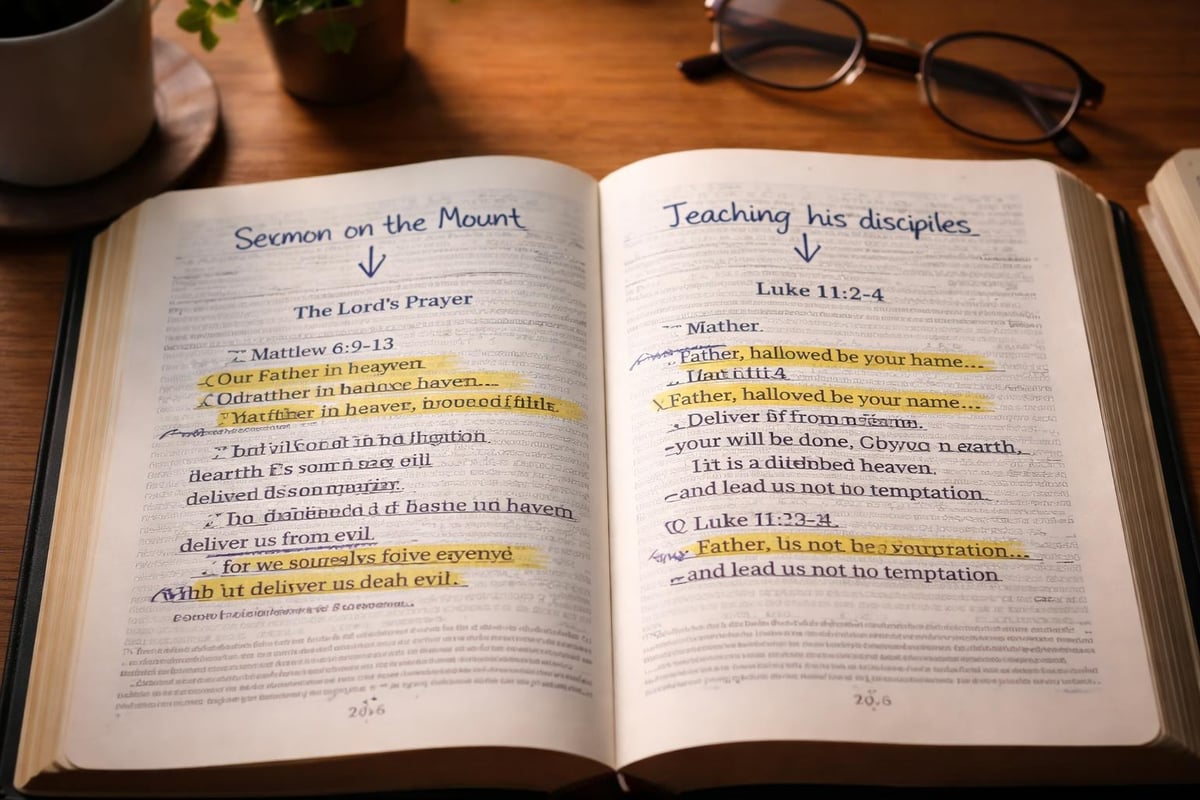
The our father prayer roman catholic finds its roots in two Gospel accounts: Matthew 6:9-13 and Luke 11:2-4. The version recited in Catholic liturgy primarily follows Matthew's account, which presents the prayer within Jesus's Sermon on the Mount. This context is significant because Jesus teaches this prayer immediately after warning against empty repetitions and public displays of piety that characterized some religious practices of His time.
The Gospel Context
In the Gospel of Matthew, Jesus instructs His followers to pray differently from the hypocrites who loved to pray standing in synagogues and street corners. Instead, He directs believers to enter their inner room, close the door, and pray to the Father in secret. The Lord's Prayer represents Jesus's response to the question of how prayer should be offered authentically.
Luke's account provides a slightly different setting. The disciples observe Jesus praying and explicitly request, "Lord, teach us to pray, just as John taught his disciples." This request reveals their recognition that Jesus possessed a unique relationship with the Father, one they desperately wanted to understand and share.
Brought to you by Journeys of Faith founded by Bob and Penny Lord. We are an Augustinian Secular Institute, Cyber Apostles, whose mission is evangelization through media.
Textual Variations
The our father prayer roman catholic tradition acknowledges slight differences between Matthew's and Luke's versions. Matthew includes seven petitions, while Luke contains five. The Roman Catholic Church has historically used Matthew's fuller version in liturgical settings, though both are considered inspired Scripture. Understanding these textual variations helps Catholics appreciate the prayer's evolution and transmission through the early Church.
| Gospel Account | Number of Petitions | Unique Elements |
|---|---|---|
| Matthew 6:9-13 | Seven | "Thy will be done on earth" and "deliver us from evil" |
| Luke 11:2-4 | Five | More concise, omits doxology |
| Liturgical Use | Seven | Follows Matthew with added doxology in some traditions |
The Structure and Seven Petitions
The our father prayer roman catholic divides naturally into two major sections: the first three petitions focus on God's glory, while the final four address human needs. This structure reflects the proper ordering of Christian prayer, where we first acknowledge God's sovereignty and holiness before presenting our requests. The Catechism of the Catholic Church emphasizes that this arrangement teaches us to seek first the Kingdom of God.
The Opening Address: Our Father
The prayer begins with "Our Father who art in heaven," establishing the fundamental relationship between God and humanity. The word "Our" emphasizes community, reminding Catholics that we never pray alone but as members of the Body of Christ. "Father" reveals the intimate relationship Jesus invites us to share, addressing God with the same confidence and trust that Jesus Himself demonstrated. "Who art in heaven" does not limit God to a physical location but acknowledges His transcendence and sovereignty over all creation.
First Three Petitions: God's Glory
- Hallowed be Thy name: We petition that God's name be honored and glorified throughout the world
- Thy kingdom come: We pray for the full establishment of God's reign in hearts, communities, and nations
- Thy will be done on earth as it is in heaven: We submit ourselves to divine providence and seek alignment with God's perfect plan
These petitions shape our desires according to God's priorities. Before asking for daily bread or forgiveness, we first orient ourselves toward God's glory and purposes.
Final Four Petitions: Human Needs
The second half of the our father prayer roman catholic addresses the essential needs of human existence. "Give us this day our daily bread" encompasses both physical sustenance and spiritual nourishment, including the Eucharist. "Forgive us our trespasses as we forgive those who trespass against us" establishes the inseparable link between receiving divine mercy and extending it to others.
"Lead us not into temptation" has generated theological discussion throughout Church history. This petition asks God to preserve us from trials beyond our strength and to guide us away from occasions of sin. "But deliver us from evil" (or "the evil one" in some translations) calls upon God's protection against spiritual forces that seek our destruction.
The Our Father in Catholic Liturgy and Sacraments
The our father prayer roman catholic occupies a privileged position in Catholic worship, appearing at crucial moments in the liturgical life of the Church. At every Mass, immediately after the Eucharistic Prayer and before Holy Communion, the congregation joins in praying the Our Father. This placement in the Mass reflects the prayer's role as preparation for receiving Christ in the Eucharist.
The Mass and Eucharistic Context
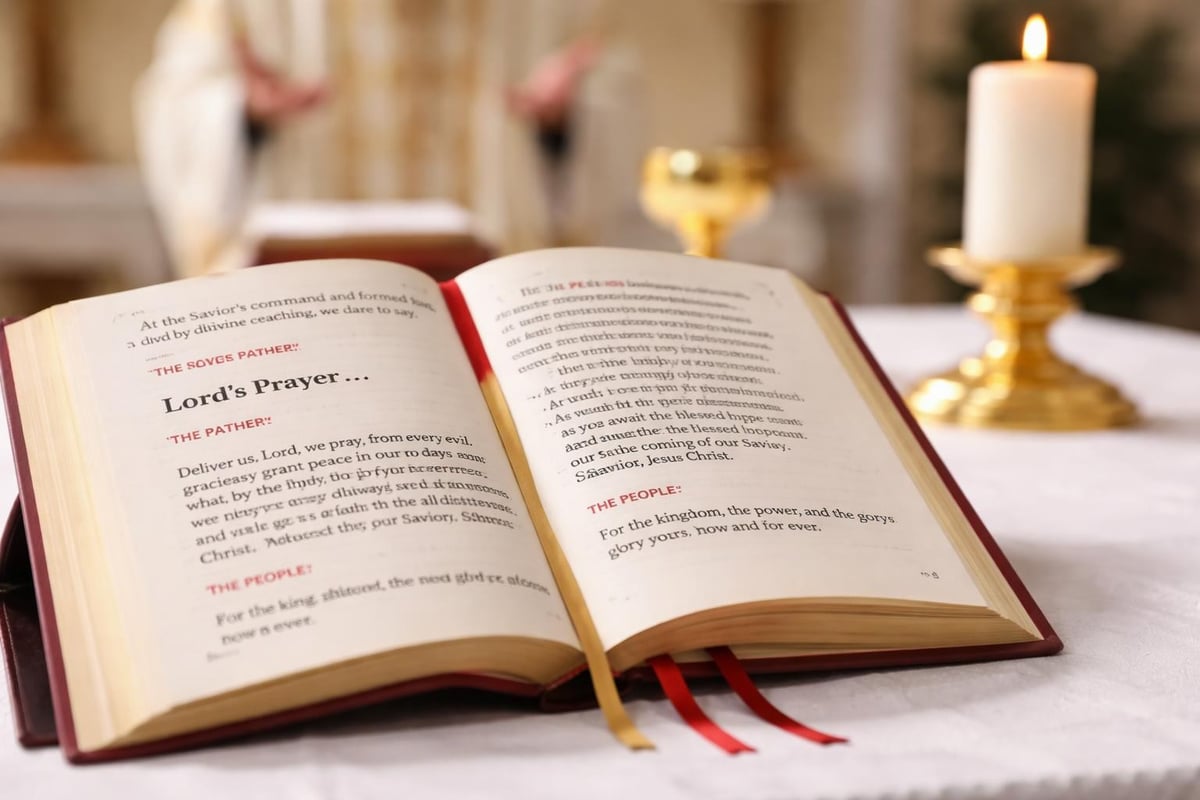
When Catholics gather for Mass, the priest introduces the Our Father with the invitation, "Let us pray with confidence to the Father in the words our Savior gave us." This introduction emphasizes that we pray not on our own authority but through Christ's teaching and in His Spirit. The communal recitation creates unity among the faithful, joining their voices in the prayer Jesus taught.
Following the Our Father, the priest continues with the embolism: "Deliver us, Lord, we pray, from every evil, graciously grant peace in our days, that, by the help of your mercy, we may be always free from sin and safe from all distress, as we await the blessed hope and the coming of our Savior, Jesus Christ." The congregation then responds with the doxology in many Catholic communities: "For the kingdom, the power, and the glory are yours, now and forever."
Sacramental Integration
Beyond the Mass, the our father prayer roman catholic appears in multiple sacramental contexts:
- Baptism: Parents and godparents recite the Our Father during the baptismal ceremony
- Reconciliation: Penitents often pray the Our Father as part of their penance
- Anointing of the Sick: The prayer supports those facing illness or approaching death
- Marriage: Couples join in the Our Father during the wedding liturgy
- Holy Orders: Ordinands pray the Our Father at ordination ceremonies
The Rosary and Devotional Practice
The our father prayer roman catholic forms an integral part of the Rosary, one of the Church's most beloved devotions. Each decade begins with the Our Father, followed by ten Hail Marys and a Glory Be. This structure helps Catholics meditate on the mysteries of Christ's life, death, and resurrection while joining with Mary in contemplative prayer.
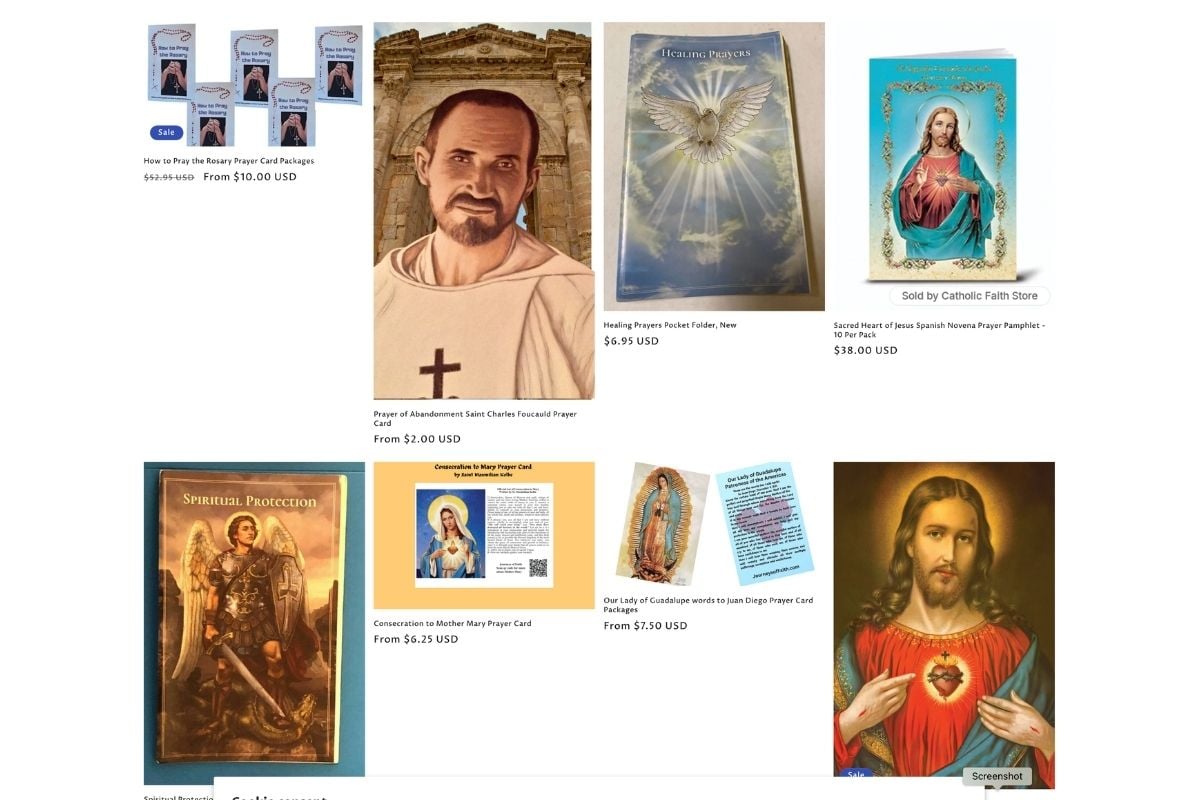
Many Catholics carry prayer cards and novenas that incorporate the Our Father into various devotional practices. These tangible reminders support daily prayer routines and provide comfort during challenging moments. The portability of prayer cards allows believers to maintain their spiritual practices wherever they go.
Daily Prayer Rhythm
Catholic tradition encourages praying the Our Father multiple times throughout the day. Morning prayers often begin with this prayer, setting the proper orientation for the day ahead. Evening prayers return to the Our Father, offering the day's activities to God and seeking forgiveness for any failings. Some Catholics pray the Our Father at mealtimes, acknowledging God as the source of all blessings.
The Liturgy of the Hours, prayed by priests, religious, and many laypeople, includes the Our Father at the conclusion of each Hour. This practice sanctifies the entire day, marking specific times with prayer and creating a rhythm that connects work, rest, and worship.
Theological Depth and Meaning
The our father prayer roman catholic contains profound theological teachings compressed into remarkably few words. Saint Augustine called it "the summary of the whole Gospel," while Saint Thomas Aquinas considered it the most perfect prayer. Examination of the prayer's theology reveals layers of meaning that scholars have explored for centuries.
The Doctrine of God
Each phrase of the Our Father teaches us something essential about God's nature:
| Phrase | Theological Teaching |
|---|---|
| Our Father | God's paternity and our adoption as children |
| Who art in heaven | Divine transcendence and majesty |
| Hallowed be Thy name | God's holiness and our call to reverence |
| Thy kingdom come | God's sovereign rule and eschatological hope |
| Thy will be done | Divine providence and human cooperation |
| Give us our daily bread | God as provider and sustainer |
| Forgive us our trespasses | Divine mercy and justice |
| Lead us not into temptation | God's protective care and guidance |
| Deliver us from evil | God's power over darkness and evil |
Human Anthropology
The our father prayer roman catholic also reveals truths about human nature and destiny. By addressing God as "Father," we acknowledge our status as adopted children through baptism. The petition for daily bread recognizes our fundamental dependence on God for existence itself. The request for forgiveness admits our sinful condition while expressing confidence in divine mercy.
The communal dimension appears throughout the prayer. We say "our" Father, not "my" Father. We ask for "our" daily bread and "our" forgiveness. This plural language reminds Catholics that we are members of a community, the Body of Christ, and that our spiritual lives are intrinsically connected to our brothers and sisters.
Historical Development and Patristic Commentary
The our father prayer roman catholic has been the subject of extensive commentary by Church Fathers, doctors, and theologians. Early Christian writers produced detailed expositions explaining each petition and drawing out practical applications for believers. These commentaries reveal how the early Church understood and taught this foundational prayer.
Early Church Fathers
Saint Cyprian of Carthage, writing in the third century, produced one of the earliest systematic commentaries on the Our Father. He emphasized the prayer's communal nature and its role in forming Christian identity. Saint John Chrysostom explored the prayer's pedagogical function, showing how it teaches believers proper priorities and attitudes in approaching God.
Saint Augustine devoted extensive attention to the Our Father in multiple works. He highlighted the connection between the seven petitions and the seven gifts of the Holy Spirit, suggesting that the prayer encompasses the entire spiritual life. His insights continue to influence Catholic teaching and preaching today.
Medieval and Modern Interpretation
Medieval theologians, particularly Saint Thomas Aquinas, integrated the Our Father into comprehensive theological systems. Aquinas analyzed each petition in light of virtue ethics, showing how the prayer cultivates specific virtues in those who pray it sincerely. His commentary remains a standard reference for understanding the prayer's depth.
Modern popes have also contributed to our understanding of the our father prayer roman catholic. Pope Francis has emphasized the petition "forgive us our trespasses" as central to Christian life, noting that we cannot receive God's mercy without extending it to others. His reflections connect the prayer to contemporary challenges facing the Church and society.
Teaching Children and Formation
Passing on the our father prayer roman catholic to the next generation represents a crucial responsibility for Catholic parents, grandparents, and catechists. Children typically learn this prayer at a young age, often memorizing it before they can fully grasp its meaning. This early memorization creates a foundation that supports deeper understanding as children mature.
Age-Appropriate Approaches
Different developmental stages require different teaching methods:
- Ages 3-5: Simple memorization through repetition and song
- Ages 6-8: Basic explanations of each petition using concrete examples
- Ages 9-12: Deeper exploration of meaning and connection to Scripture
- Teenagers: Integration with moral teaching and personal prayer life
- Young Adults: Theological depth and application to contemporary issues
Family Prayer Practices
Families strengthen their bonds and faith by praying the Our Father together regularly. Saying this prayer before meals, at bedtime, or during family rosary creates shared spiritual experiences that children carry into adulthood. Many Catholics report that memories of family prayer remain among their most cherished recollections.
Parents can enhance children's understanding by discussing one petition each week, exploring its meaning through Scripture, stories of the saints, and practical applications. This gradual approach prevents overwhelming young learners while building comprehensive knowledge over time.
The Doxology Question
One distinctive feature of the our father prayer roman catholic concerns the doxology "For the kingdom, the power, and the glory are yours, now and forever." This concluding phrase appears in some Christian traditions but not in the standard Catholic recitation of the prayer. The mystery of the Our Father's ending involves historical, liturgical, and ecumenical considerations.
Historical Background
The doxology does not appear in the earliest Gospel manuscripts. Early Christian documents like the Didache (late first or early second century) include a doxology, though worded differently: "For thine is the power and the glory forever." This suggests that early Christian communities added doxologies to the Our Father in liturgical settings while recognizing they were not part of Jesus's original teaching.
Catholic Liturgical Practice
In the Roman Catholic Mass, the doxology is not added immediately after the Our Father. Instead, the priest prays the embolism, and then the congregation responds with the doxology. This practice preserves the scriptural text of the Our Father while incorporating the ancient tradition of concluding with praise. The separation highlights that the doxology represents the Church's response rather than part of Jesus's original words.
Protestant traditions generally include the doxology as part of the Our Father itself. This difference sometimes causes confusion in ecumenical settings, but understanding the historical development helps Catholics appreciate both their own tradition and that of other Christians.
Practical Applications for Daily Life
The our father prayer roman catholic offers more than words for formal worship; it provides a framework for living the Christian life. Each petition translates into concrete actions and attitudes that shape how Catholics interact with God, neighbors, and themselves.
Living the Petitions
Hallowed be Thy name: Catholics honor God's name by living virtuously, avoiding blasphemy, and treating sacred things with reverence. Our actions either honor or dishonor God's name in the eyes of the world.
Thy kingdom come: We advance God's kingdom through evangelization, works of mercy, and pursuit of justice. Every act of love contributes to establishing God's reign on earth.
Thy will be done: Submission to God's will requires discernment, prayer, and sometimes difficult surrender of our own plans. Catholic spirituality emphasizes seeking God's will in major decisions and daily choices.
Give us our daily bread: This petition teaches trust in divine providence while also obligating us to share our bread with those in need. Catholics express gratitude for material blessings and work to ensure others have their daily needs met.
Forgiveness and Reconciliation
The petition "forgive us our trespasses as we forgive those who trespass against us" carries profound practical implications. Every time Catholics pray the Our Father, we ask God to measure His forgiveness by the standard of our own forgiveness of others. This sobering reality should drive us to examine our hearts for harbored resentments and seek reconciliation with those who have wronged us.
The Sacrament of Reconciliation provides the primary means for Catholics to receive God's forgiveness for serious sins. However, the our father prayer roman catholic reminds us that sacramental absolution occurs within the context of our ongoing commitment to forgive others. We cannot authentically receive what we refuse to give.
Connection to Other Catholic Prayers
The our father prayer roman catholic forms part of a rich tapestry of Catholic prayers that support spiritual growth and devotion. Understanding how the Our Father relates to other prayers enriches appreciation for the Church's prayer tradition.
The Hail Mary
While the Our Father addresses God the Father, the Hail Mary honors the Blessed Virgin Mary. These two prayers appear together in the Rosary, creating a beautiful dialogue between Christ's prayer and the Church's veneration of His mother. The Hail Mary asks Mary to "pray for us sinners," while the Our Father directly addresses the Father. Together, they express both our confidence in approaching God and our recognition of Mary's intercessory role.
The Glory Be
The doxology "Glory be to the Father, and to the Son, and to the Holy Spirit" typically follows the Our Father in many devotional contexts. This brief prayer of praise acknowledges the Trinity and offers glory to God. When combined with the Our Father, it creates a movement from petition to praise, from asking to adoring.
Traditional Catholic Prayers
Other traditional prayers complement the our father prayer roman catholic:
- The Apostles' Creed: Professes beliefs that the Our Father presupposes
- Act of Contrition: Expands the petition for forgiveness
- Morning Offering: Dedicates the day to doing God's will
- Guardian Angel Prayer: Seeks protection from temptation and evil
Cultural Expressions and Translations
The our father prayer roman catholic exists in virtually every language spoken by Catholics worldwide. These translations raise interesting questions about maintaining fidelity to the original while making the prayer accessible and meaningful in diverse cultural contexts.
Translation Challenges
Translating the Our Father involves balancing literal accuracy with pastoral sensitivity. The phrase "Our Father who art in heaven" uses archaic English that some find beautiful and reverent, while others consider it a barrier to understanding. Recent decades have seen debates about updating traditional prayer language to contemporary English.
The petition "lead us not into temptation" has generated particular discussion. Some scholars argue this translation suggests God might lead people into temptation, contrary to Scripture's teaching that God "tests no one" (James 1:13). Alternative translations like "do not let us fall into temptation" attempt to clarify the meaning while remaining faithful to the Greek text.
Global Catholic Unity
Despite linguistic diversity, the our father prayer roman catholic creates unity among Catholics worldwide. A Catholic from Brazil can pray alongside a Catholic from the Philippines, each in their own language, yet both offering the same prayer Jesus taught. This universality manifests the Church's catholicity, her embrace of all peoples and cultures.
Different cultures emphasize various aspects of the Our Father. Some focus on the petition for daily bread, reflecting their struggle with poverty and hunger. Others emphasize "deliver us from evil," responding to persecution or violence. These diverse emphases enrich the whole Church's understanding of the prayer's relevance.
Contemporary Challenges and Questions
Modern Catholics face unique challenges in praying the our father prayer roman catholic authentically. Secularism, materialism, and individualism can hollow out the prayer's meaning, reducing it to empty words. Addressing these challenges requires renewed catechesis and intentional spiritual practice.
Overcoming Familiarity
The Our Father's very familiarity can become an obstacle. When we pray words we've repeated thousands of times, maintaining attention and devotion requires conscious effort. Some Catholics find it helpful to pray the Our Father slowly, pausing after each petition to meditate on its meaning. Others pray it in different languages or musical settings to encounter it afresh.
Addressing Doubt and Difficulty
Some believers struggle with aspects of the our father prayer roman catholic. Those who experienced abusive earthly fathers may find the address "Our Father" painful. Those suffering from unanswered prayers may question the petition "Thy will be done." Pastors and spiritual directors help struggling Catholics work through these difficulties without abandoning the prayer.
The petition for forgiveness challenges modern sensibilities that emphasize self-esteem and vindication. Contemporary culture often encourages holding grudges and "standing up for yourself" rather than forgiving those who trespass against us. Living the Our Father in this context requires counter-cultural courage and dependence on grace.
Resources for Deeper Understanding
Catholics seeking to deepen their understanding of the our father prayer roman catholic have access to numerous resources. Books, articles, videos, and courses explore the prayer from historical, theological, and spiritual perspectives.
Explore these valuable resources:
- Explore Journeys of Faith Online store with thousands of Catholic items at https://journeysoffaith.com/collections
- Our Unique Mega Search Engine at https://journeysoffaith.com/search is linked to hundreds of Catholic shops and stores
- Get the Journeys of Faith NEW App for iPhone or Android. Search for Journeys of Faith or go to https://journeysoffaith.com/pages/download-our-app
- We need your help to reach more souls. Please make a donation at https://journeysoffaith.com/pages/donate
Recommended Reading
The Catechism of the Catholic Church dedicates an entire section to explaining the Our Father. This official teaching document provides authoritative interpretation while remaining accessible to average Catholics. Reading this section offers profound insights into each petition's meaning and application.
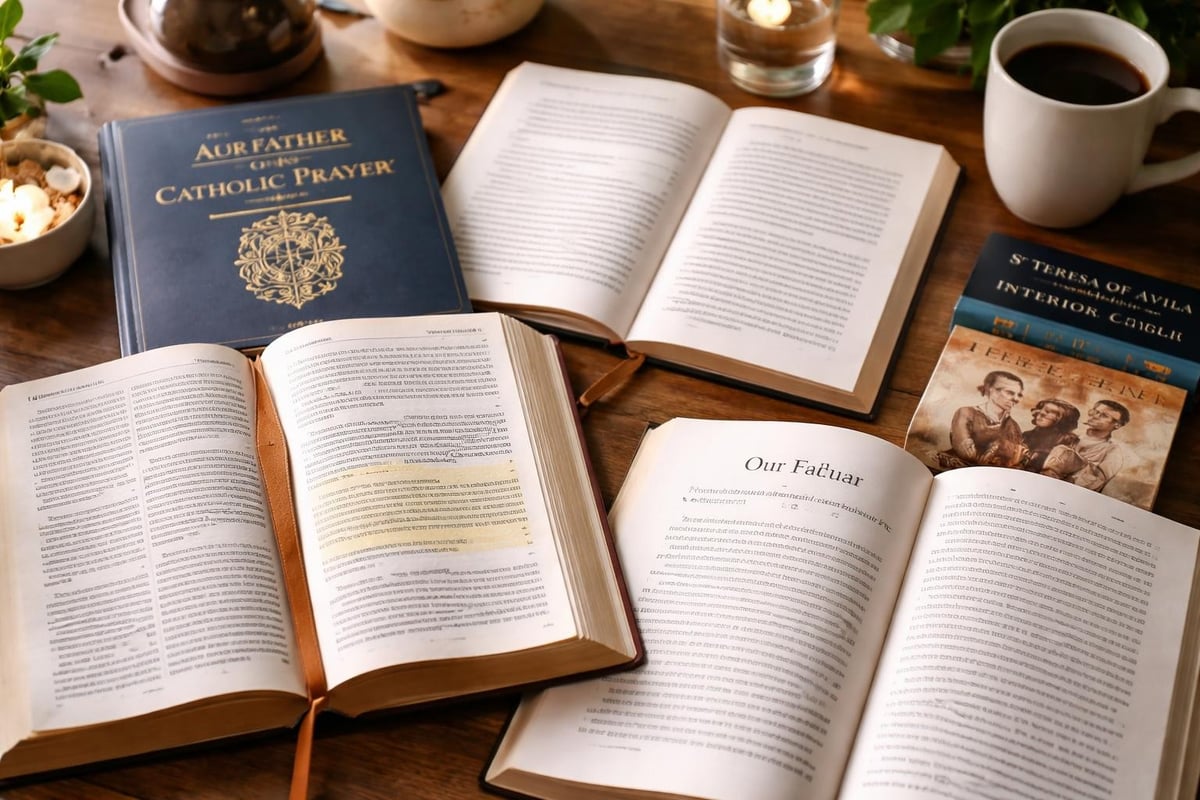
Various saints have written commentaries on the our father prayer roman catholic. Saint Teresa of Avila's reflections in "The Way of Perfection" offer mystical insights combined with practical wisdom. Saint Thérèse of Lisieux explored the prayer through her "Little Way" spirituality, emphasizing childlike trust in the Father.
Online Resources and Communities
Modern resources for studying the Lord's Prayer include websites, podcasts, and video series. Catholic Answers, EWTN, and various diocesan websites offer free materials explaining the prayer. Online study groups allow Catholics to discuss the Our Father with believers worldwide.
Academic and Scholarly Resources
For those interested in academic study, biblical scholarship on the Lord's Prayer provides detailed exegesis of the Gospel texts. Understanding the Greek terms, the Jewish prayer context of Jesus's time, and the early Christian interpretation enriches appreciation for this ancient prayer.
Liturgical studies explore how the our father prayer roman catholic has been prayed throughout Church history. Examining ancient liturgies, medieval prayer books, and modern reforms reveals both continuity and development in Catholic prayer practice.
The Our Father in Times of Crisis
Throughout history, Catholics have turned to the our father prayer roman catholic during times of crisis, persecution, and suffering. This prayer sustains believers when other words fail, offering hope grounded in trust in the Father's love and providence.
Personal Trials
Individuals facing illness, loss, financial hardship, or other trials find comfort in praying the Our Father. The petition "give us this day our daily bread" takes on special poignancy when basic needs are uncertain. "Deliver us from evil" becomes a lifeline when surrounded by suffering. Many saints testified that the Our Father sustained them through their darkest hours.
Communal Challenges
Communities facing persecution, war, or natural disasters unite in praying the Our Father. During World War II, Catholics in concentration camps prayed these words, finding strength to endure unimaginable suffering. In modern times, Catholics in countries experiencing persecution continue this tradition, trusting that God hears their prayers even when deliverance seems impossible.
The our father prayer roman catholic reminds suffering believers that God remains Father even in the midst of trial. The prayer teaches us to seek His will rather than our own, to trust His provision even when it seems inadequate, and to believe that His kingdom will ultimately triumph over all evil.
The our father prayer roman catholic remains as vital and powerful today as when Jesus first taught it to His disciples. This prayer encompasses the essence of Christian faith, hope, and love while providing practical guidance for daily living. Whether prayed in the Mass, the Rosary, or private devotion, the Our Father connects Catholics to Jesus, to the Church throughout history, and to believers around the world. Journeys of Faith offers resources, books, prayer cards, and media to help deepen your understanding and practice of this foundational prayer, supporting your journey of faith through evangelization and authentic Catholic teaching.