

For centuries, Catholics have turned to sacred objects as tangible reminders of God's protection and the intercession of the saints. Among the most cherished of these devotional items are catholic medals for protection, small yet powerful sacramentals that believers carry close to their hearts. These blessed medals serve as physical manifestations of spiritual truths, connecting the faithful to centuries of tradition while offering comfort in times of uncertainty. Whether worn on a chain, carried in a pocket, or placed in a home, these medals represent far more than mere jewelry-they embody prayers, promises, and the protective presence of heaven itself.
The Theological Foundation of Catholic Medals for Protection
Catholic medals occupy a unique space within the Church's sacramental system. Unlike the seven sacraments instituted by Christ, medals are classified as sacramentals, which the Catechism of the Catholic Church describes as sacred signs that prepare believers to receive the fruit of the sacraments and sanctify different circumstances of life. These devotional objects do not possess magical properties but instead function as channels of grace through the faith of the person using them and the blessing imparted by the Church.
Understanding Sacramentals in Catholic Teaching
The Church has always distinguished between the power inherent in sacraments and the efficacy of sacramentals. Catholic medals for protection work through the prayers of the Church and the devotion of the faithful, not through any intrinsic supernatural force within the metal itself. According to USCCB guidance on sacramental catechesis, these objects serve as:
- Visible reminders of invisible spiritual realities
- Focal points for prayer and meditation
- Symbols of belonging to the Catholic community
- Signs of commitment to living a Christian life
The protective aspect of these medals stems from the intercession of the saints they represent and from the wearer's faith. When a Catholic carries a medal of Saint Michael, for example, they are not only wearing a piece of blessed metal but also invoking the powerful intercession of the archangel who battles spiritual darkness.
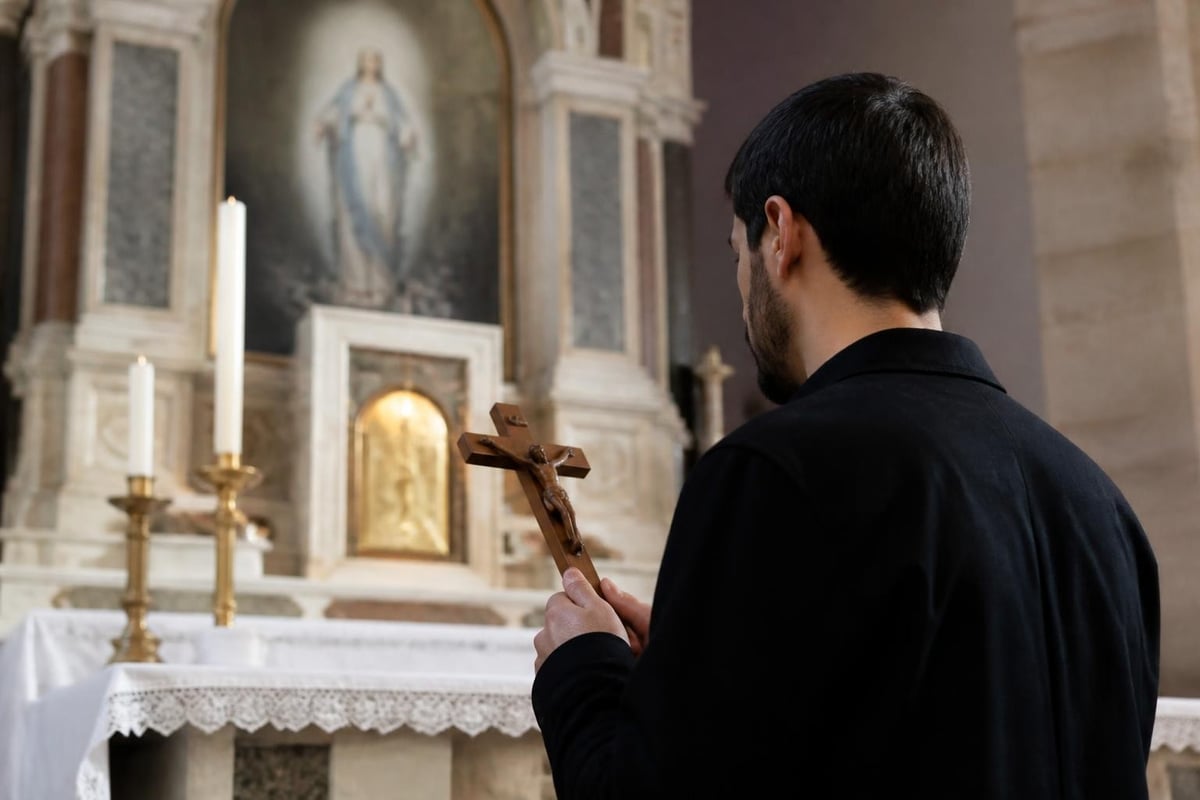
Historical Development of Catholic Protection Medals
The practice of wearing catholic medals for protection traces its roots to the early Church, when Christians wore simple crosses or engraved symbols as identifiers during times of persecution. However, the tradition as we know it today flourished during the medieval period and experienced renewed popularity following significant apparitions and spiritual movements.
Early Christian Symbols and Tokens
Early Christians carried small tokens bearing Christian symbols such as the fish (ichthys), the chi-rho, or simple crosses. These items served dual purposes: they identified believers to one another during dangerous times and reminded wearers of their faith commitments. Archaeological discoveries have uncovered numerous examples of these early devotional objects in burial sites and ancient Christian communities.
The Medal of Saint Benedict
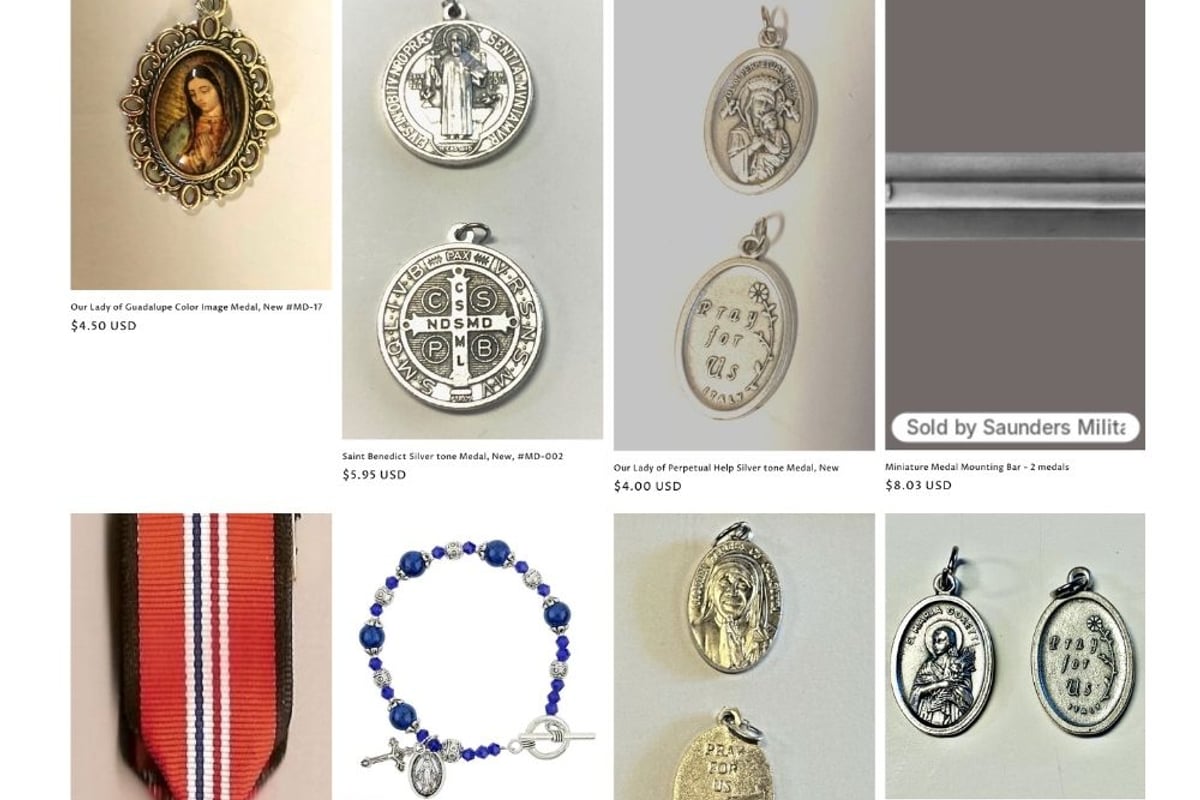
One of the oldest and most powerful catholic medals for protection is the Medal of Saint Benedict, which dates back to the 11th century. According to New Advent's Catholic Encyclopedia, this medal contains numerous Latin inscriptions that serve as prayers of exorcism and protection against evil. The front typically features Saint Benedict holding a cross and his Rule, while the reverse displays the cross with letters representing Latin prayers.
| Element | Meaning | Purpose |
|---|---|---|
| Cross | Christ's victory over death | Central protection symbol |
| C S P B | Crux Sancti Patris Benedicti | Blessing through Saint Benedict |
| V R S N S M V | Vade retro Satana | Command against evil |
| S M Q L I V B | Protection prayer | Defense against temptation |
The Medal of Saint Benedict has been associated with countless accounts of protection from physical danger, spiritual attack, and demonic influence. Benedictine communities have carefully preserved the tradition of blessing these medals according to specific rituals that enhance their spiritual efficacy.
The Miraculous Medal
The 19th century brought one of the most significant developments in the history of catholic medals for protection: the revelation of the Miraculous Medal to Saint Catherine Labouré in 1830. During apparitions of the Blessed Virgin Mary in Paris, Catherine received detailed instructions about creating a medal that would become a source of graces for millions.
The Central Association of the Miraculous Medal documents the specific promises Mary made to those who wear this medal with faith. The front depicts Mary standing on a globe with rays of light streaming from her hands, while the reverse shows the letter M intertwined with a cross and the hearts of Jesus and Mary.
Brought to you by Journeys of Faith Founded by Bob and Penny Lord - We are an Augustinian Secular Institute - Cyber Apostles - Our Mission is Evangelization through Media.
Popular Catholic Medals for Protection and Their Specific Purposes
Different catholic medals for protection have developed associations with particular needs and circumstances. Understanding these associations helps believers choose medals that resonate with their specific situations and devotions.
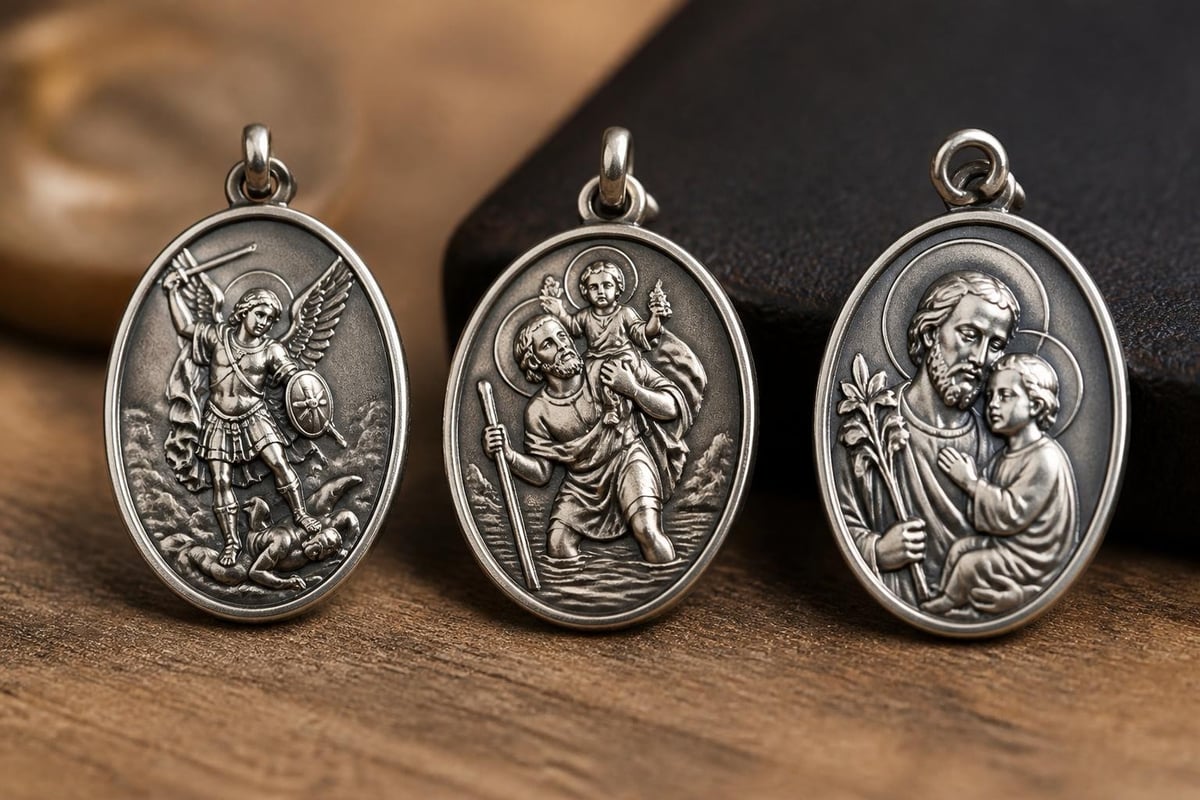
Saint Michael the Archangel Medal
Saint Michael medals are among the most sought-after protective sacramentals. As the prince of the heavenly hosts who cast Satan from heaven, Michael serves as the ultimate protector against spiritual warfare. Catholics wear this medal when:
- Facing spiritual attacks or temptations
- Working in law enforcement or military service
- Protecting homes from evil influences
- Seeking courage in dangerous situations
The imagery typically shows Michael in armor, wielding a sword or spear, often standing triumphantly over a defeated devil. This powerful visual reminder strengthens believers facing their own spiritual battles.
Saint Christopher Medal
Traditionally known as the patron saint of travelers, Christopher medals have protected countless journeys. Modern Catholics wear them during:
- Daily commutes and road trips
- Air travel and international journeys
- Pilgrimages to holy sites
- Any venture into unknown territory
The classic depiction shows Christopher carrying the Christ child across a river, symbolizing the carrying of burdens and the protection afforded to those who serve Christ faithfully.
Saint Joseph Medal
As the protector of the Holy Family, Joseph's medals offer security for families and those facing life transitions. These medals are particularly meaningful for:
- Fathers seeking to lead their families well
- Those searching for employment
- Families facing financial difficulties
- Individuals navigating major life decisions
How to Properly Use Catholic Medals for Protection
Acquiring catholic medals for protection requires more than simply purchasing a piece of jewelry. The Church teaches specific practices that maximize the spiritual benefits of these sacramentals while avoiding superstition.
The Importance of Blessing
All catholic medals for protection should be blessed by a priest or deacon before use. This blessing distinguishes a mere religious object from a true sacramental. During the blessing, the Church prays that God will bestow grace upon those who wear the medal with faith and devotion.
The blessing ceremony typically includes:
- Sprinkling with holy water
- Specific prayers of blessing
- Invocation of the saint depicted on the medal
- Request for divine protection and intercession
Without this blessing, a medal remains simply decorative jewelry, lacking the sacramental character that makes it a channel of grace.
Wearing Versus Carrying Medals
Catholics have different preferences for how they keep their protective medals. Some options include:
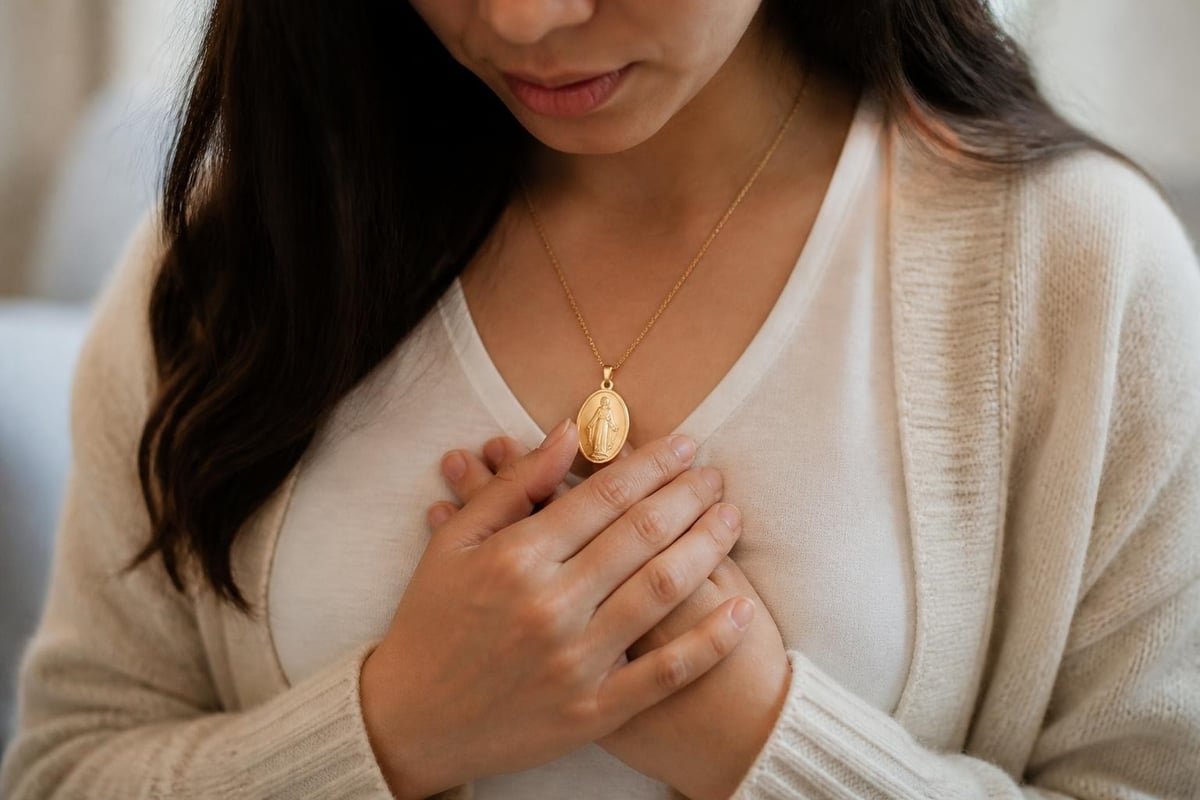
- Wearing on a chain around the neck: The most common practice, keeping the medal close to the heart
- Attaching to a rosary: Combining two powerful prayer tools
- Carrying in a pocket or purse: For those unable to wear jewelry at work
- Placing in vehicles: Specifically for travel protection medals
- Positioning in homes: Creating sacred spaces in doorways or bedrooms
The key is maintaining awareness of the medal's presence and allowing it to prompt regular prayer and reflection.
Combining Faith with Action
Catholic teaching emphasizes that medals are not magical talismans that automatically confer protection regardless of the wearer's spiritual state. The Catechism clearly establishes that sacramentals "do not confer the grace of the Holy Spirit in the way that the sacraments do, but by the Church's prayer, they prepare us to receive grace and dispose us to cooperate with it."
This means that wearing catholic medals for protection should accompany:
- Regular prayer and sacramental life
- Genuine faith in God's providence
- Moral living aligned with Church teaching
- Trust in divine mercy rather than superstitious belief
Incorporating Protection Medals into Daily Spiritual Practice
Catholic medals for protection become most effective when integrated into a broader spiritual routine. Rather than treating them as isolated objects, believers should see them as components of a comprehensive devotional life.
Morning Offerings
Many Catholics begin their day by holding their protection medal and making a morning offering. This practice might include:
- Kissing the medal as a sign of reverence
- Praying the prayer associated with the medal's saint
- Asking for specific protection needed that day
- Offering all actions to God through the saint's intercession
This simple ritual transforms the medal from passive object to active prayer tool.
Moments of Crisis
Protection medals serve as immediate resources during unexpected challenges. When fear, temptation, or danger arises, simply touching the medal can:
- Refocus attention on God's presence
- Invoke the intercession of the saint
- Calm anxiety through familiar prayers
- Strengthen resolve to resist temptation
Teaching Children About Protection Medals
Parents and catechists play crucial roles in passing on this devotional tradition. Children respond well to the tangible nature of catholic medals for protection, which provide concrete connections to abstract spiritual truths. Effective teaching strategies include:
- Explaining the saint's life story and virtues
- Creating ceremonies when giving children their first medals
- Encouraging children to pray with their medals daily
- Sharing family stories of answered prayers
The Journeys of Faith collection includes resources that help families explore the lives of saints and deepen their understanding of Catholic devotions, making these traditions accessible and meaningful for new generations.
Common Questions About Catholic Medals for Protection
Can Non-Catholics Wear These Medals?
While catholic medals for protection are designed for Catholics within the sacramental system, nothing prevents non-Catholics from wearing them respectfully. However, the full spiritual benefit comes through participation in Catholic faith, sacramental life, and the communion of saints. Non-Catholics wearing these medals should understand they are adopting a specifically Catholic devotion.
What Happens If a Medal Is Lost or Broken?
Losing or breaking a blessed medal does not indicate spiritual failure or lost protection. These events occur naturally. Lost medals can be replaced and re-blessed. Broken medals made of precious materials can be repaired, while others should be disposed of respectfully through burial or burning, as with other blessed objects.
How Many Protection Medals Should Someone Wear?
| Approach | Benefits | Considerations |
|---|---|---|
| Single medal | Focused devotion | May limit specific protections |
| Multiple medals | Diverse intercession | Risk of treating as collection |
| Seasonal rotation | Liturgical awareness | Requires intentionality |
There is no prescribed number. Some Catholics wear multiple medals addressing different needs, while others prefer the simplicity of a single medal. The focus should remain on faith and prayer rather than accumulation.
Do Medals Lose Their Blessing?
Once properly blessed, catholic medals for protection retain their blessing unless deliberately desecrated. Regular use, including exposure to water or wear, does not remove the blessing. However, some Catholics choose to have older medals re-blessed periodically as a renewal of devotion.
Regional and Cultural Variations in Protection Medals
Catholic devotional practices vary across cultures, and medal traditions reflect this diversity. Historical collections reveal fascinating regional variations in design, materials, and associated prayers.
European Traditions
European Catholics, particularly in traditionally Catholic regions, often inherit family medals passed down through generations. These heirlooms carry both spiritual and familial significance, connecting wearers to ancestors who prayed the same prayers. Italian Catholics may favor medals of regional saints, while Irish Catholics often wear medals of Saint Patrick or Saint Brigid alongside more universal choices.
Latin American Devotions
In Latin America, catholic medals for protection frequently appear alongside scapulars and other sacramentals in layered devotional practices. The vibrant faith culture includes public display of medals during feast days and processions. Mexican Catholics, for instance, often combine Guadalupe medals with other protective sacramentals.
North American Practices
North American Catholics, influenced by diverse immigrant traditions, demonstrate eclectic medal devotions. Many families maintain specific ethnic traditions while also adopting broader Catholic practices. The privatization of religion in American culture has shifted medal-wearing toward more personal, less publicly visible practice.
Creating a Personal Protection Medal Devotion
Developing a meaningful relationship with catholic medals for protection requires intentionality and consistency. This personal devotion should complement, not replace, essential Catholic practices like Mass attendance and regular confession.
Selecting Your First Medal
New to this devotion? Consider these factors when choosing your first protection medal:
- Personal spiritual needs and challenges
- Saints you feel drawn to through reading or prayer
- Family traditions or ethnic heritage
- Specific life circumstances requiring protection
Reading about saints' lives through resources like Saints and Other Powerful Women in the Church or Saints and Other Powerful Men in the Church can help identify saints whose virtues and experiences resonate with your situation.
Establishing Prayer Routines
Consistency transforms medal devotion from occasional practice to spiritual anchor. Suggested routines include:
- Morning dedication: Hold the medal and pray for the day ahead
- Midday check-in: Brief prayer of gratitude or petition
- Evening reflection: Review the day's protections and graces
- Weekly deep prayer: Extended meditation on the saint's life and intercession
Combining Medals with Other Devotions
Catholic medals for protection work beautifully alongside other prayer practices. Many Catholics wear their medals while praying the Rosary, connecting Marian intercession with specific saintly protection. Others integrate medal prayers into Divine Mercy devotions or Eucharistic adoration.
The Miraculous Medal and Contemporary Devotion
Among all catholic medals for protection, the Miraculous Medal deserves special attention for its continued relevance and documented graces. The promises associated with this medal, given by Mary herself, have drawn millions to this powerful sacramental.
The Promises of the Miraculous Medal
According to the visions of Saint Catherine Labouré, those who wear the Miraculous Medal with faith receive:
- Abundant graces and protection
- Special care of the Blessed Virgin Mary
- Increased devotion to the Eucharist and prayer
- Protection at the hour of death
- Conversion of hearts and healing of relationships
These promises are not automatic guarantees but expressions of Mary's maternal care for those who sincerely seek her intercession. The countless testimonies collected by organizations dedicated to this devotion attest to its spiritual power.
Modern Distribution and Evangelization
The Miraculous Medal has become a primary evangelization tool in contemporary Catholicism. Its simple design and powerful associations make it an accessible entry point for those exploring the faith. Many conversion stories begin with someone receiving this medal from a caring Catholic friend or family member.
Prayer cards accompanying medals enhance their evangelization potential. Resources such as the Our Lady of Good Remedy Prayer Card provide scriptural context and prayers that deepen understanding of Marian devotion and its connection to divine protection.
Protecting the Faith Through Sacred Objects
Beyond individual spiritual benefits, catholic medals for protection serve the broader purpose of maintaining Catholic identity and transmitting faith across generations. In increasingly secular cultures, these visible signs of faith become countercultural witnesses to transcendent realities.
Medals as Evangelization Tools
Catholic medals naturally prompt conversations about faith. When coworkers or friends notice a medal and ask about it, opportunities arise for gentle evangelization. Sharing the story behind a protection medal can introduce:
- The concept of the communion of saints
- The Church's rich devotional tradition
- Personal testimonies of answered prayers
- Invitations to explore Catholicism further
This form of evangelization aligns with the mission that organizations like Journeys of Faith pursue through various media, creating multiple touchpoints where curious seekers encounter Catholic truth.
Countering Superstition with True Devotion
The Church must continually balance authentic devotion with the ever-present danger of superstition. Catholic medals for protection can drift toward magical thinking if not properly catechized. True devotion maintains these essential elements:
- Recognition that God alone provides ultimate protection
- Understanding that medals work through prayer and faith
- Acknowledgment of free will and human responsibility
- Proper relationship between sacramentals and sacraments
Church leaders and educators bear responsibility for teaching these distinctions clearly, especially to new Catholics and young people forming their devotional practices.
Blessing and Acquiring Protection Medals
The process of obtaining and blessing catholic medals for protection deserves careful attention to ensure proper spiritual preparation and maximum devotional benefit.
Where to Obtain Authentic Medals
Quality matters when selecting protection medals. Reputable Catholic suppliers ensure proper iconography and construction. Options include:
- Catholic bookstores and gift shops: Allow inspection before purchase
- Online Catholic retailers: Broader selection with careful shipping
- Parish gift shops: Support local communities
- Shrine and pilgrimage sites: Medals blessed at significant locations
When shopping online, look for retailers with clear Catholic credentials and proper product descriptions. The Journeys of Faith online store offers carefully curated religious items that support authentic devotion.
The Blessing Ceremony
Requesting a medal blessing from your parish priest creates an opportunity for deeper spiritual conversation. When presenting medals for blessing:
- Choose an appropriate time, respecting the priest's schedule
- Briefly explain your devotional intentions
- Participate attentively in the blessing prayers
- Ask questions about effectively using the medal
- Express gratitude for the priest's ministry
Some parishes designate specific times for blessing sacramentals, often after weekend Masses. This communal approach connects individual devotion to the broader parish family.
Materials and Craftsmanship
Catholic medals for protection come in various materials, each with distinct characteristics:
| Material | Advantages | Considerations |
|---|---|---|
| Sterling silver | Durable, traditional | Higher cost |
| Gold | Precious, lasting | Expensive |
| Base metals | Affordable, accessible | May tarnish |
| Medals with enamel | Colorful, detailed | Requires gentle care |
The spiritual efficacy of a blessed medal does not depend on precious materials. A simple base metal medal blessed with devotion holds the same sacramental value as an expensive gold version.
Contemporary Challenges and Opportunities
Modern Catholics face unique challenges in maintaining devotional practices like wearing protection medals. However, these same challenges create new opportunities for creative faithfulness.
Digital Age Distractions
The constant connectivity of smartphones and social media competes with traditional devotional practices. Catholic medals for protection offer physical, tangible counterpoints to digital abstraction. The simple act of touching a medal provides:
- A mindfulness moment disconnected from screens
- Physical reminder of spiritual priorities
- Opportunity for breath prayers during busy days
- Tangible connection to centuries of Catholic tradition
Public Expression of Faith
In some professional and social contexts, visible religious symbols have become less common or even controversial. Catholics must navigate these situations with both prudence and courage. Strategies include:
- Wearing medals under clothing in sensitive environments
- Choosing smaller, more discreet medal designs
- Explaining devotions calmly when questions arise
- Recognizing contexts where visibility witnesses to faith
The decision to wear medals visibly becomes its own form of evangelization, demonstrating that faith matters enough to display publicly.
Connecting Generations
Introducing young people to catholic medals for protection requires updated approaches that respect their communication styles while maintaining tradition. Effective methods include:
- Sharing video testimonies of medal miracles
- Creating social media content about saint stories
- Gifting medals for sacramental milestones
- Encouraging questions and personal exploration
Resources like audiobooks about saints, including Saint Faustina and Divine Mercy, make these traditions accessible in formats young people naturally engage.
Catholic medals for protection represent centuries of faithful devotion, connecting believers to the communion of saints and the protective care of heaven. These blessed sacramentals work through prayer and faith to channel divine grace into daily life, offering spiritual defense, comfort in trials, and tangible reminders of God's providence. Whether you're exploring this tradition for the first time or deepening a lifelong practice, Journeys of Faith offers extensive resources to support your spiritual journey. Explore our online store with thousands of Catholic items at https://journeysoffaith.com/collections to find protection medals, prayer cards, and educational materials that bring these sacred traditions to life. Journeys of Faith is blessed to provide Catholic media, including podcasts and inspirational content, free of charge across multiple media platforms for viewers and listeners around the world. While access to this content remains free, there are significant and continually increasing costs associated with producing, hosting, and distributing these programs. Your support helps us continue sharing the beauty of the Catholic faith with souls-please make a donation at https://journeysoffaith.com/pages/donate to support this vital evangelization mission.
