

The Catholic Church has maintained a profound devotion to the Blessed Virgin Mary for two millennia, honoring her under countless titles and traditions. Understanding our lady of mary requires exploring her unique role in salvation history, the theological foundations of Marian devotion, and the practical ways Catholics connect with the Mother of God. This comprehensive examination reveals how our lady of mary continues to guide believers toward her Son, Jesus Christ, while serving as a model of faith, obedience, and maternal compassion for all generations.
The Biblical Foundation of Our Lady of Mary
The scriptural basis for honoring our lady of mary begins in Genesis with the prophecy of the woman whose offspring would crush the serpent's head. This protoevangelium establishes Mary's role in God's redemptive plan from the beginning of human history. Throughout salvation history, God prepared for the coming of the Messiah through various women of faith, each prefiguring aspects of Mary's unique mission.
Mary's Fiat and Divine Motherhood
The Annunciation represents the pivotal moment when our lady of mary freely consented to become the Mother of God. Her response, "Let it be done to me according to your word," demonstrates the perfect harmony between divine will and human freedom. This moment changed the course of human history, as the Eternal Word took flesh in her womb.
Brought to you by Journeys of Faith, founded by Bob and Penny Lord. We are an Augustinian Secular Institute - Cyber Apostles - Our Mission is Evangelization through Media.
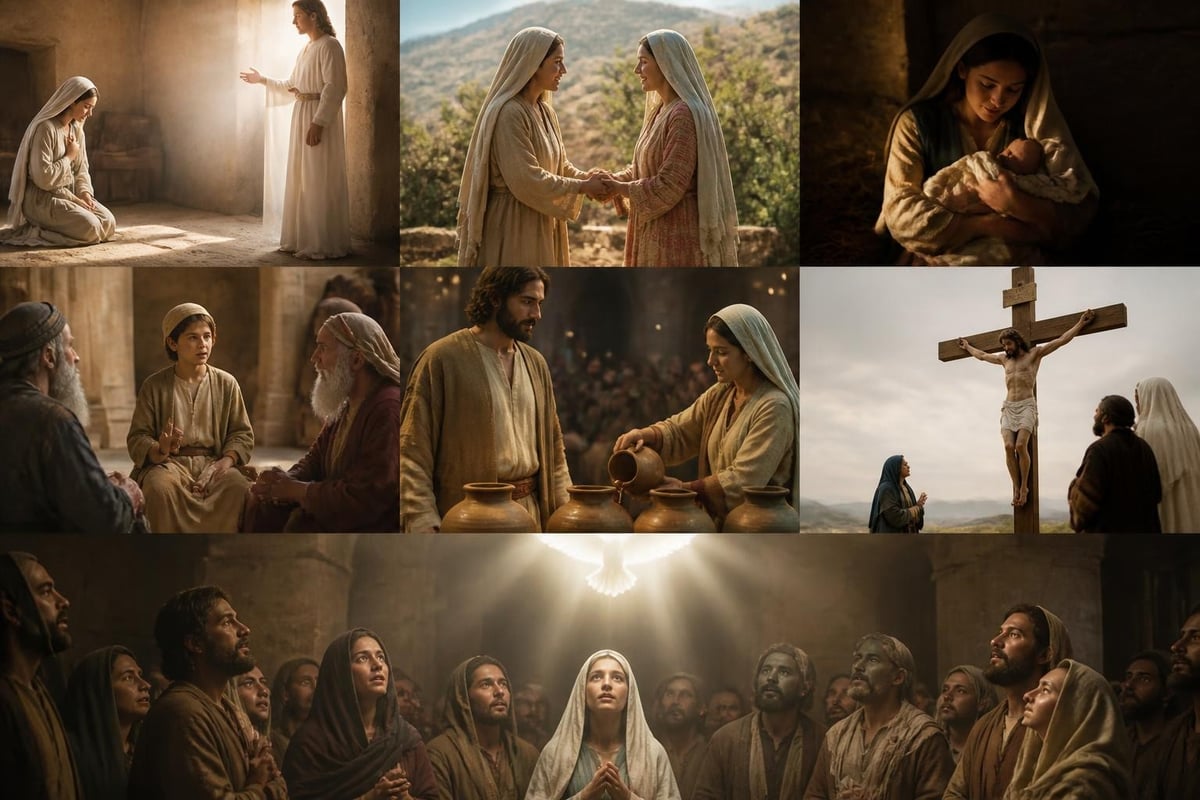
The Gospel narratives present Our Lady as active participant rather than passive vessel. She visited Elizabeth in haste, proclaimed the Magnificat with prophetic authority, presented Jesus at the Temple, sought her lost Son in Jerusalem, prompted His first miracle at Cana, and stood faithfully at the foot of the Cross. Each episode reveals dimensions of her faith, wisdom, and maternal concern.
The early Church recognized Mary's perpetual virginity, divine motherhood, and immaculate conception as essential to understanding her role. These doctrines developed organically from Scripture and apostolic tradition, defended by Church Fathers and ultimately defined by ecumenical councils and papal pronouncements.
Titles and Devotions to Our Lady of Mary
The Catholic tradition has developed hundreds of titles for our lady of mary, each highlighting specific attributes, mysteries, or apparitions. These titles emerged from theological reflection, liturgical practice, and Marian apparitions throughout Church history. Understanding these titles deepens appreciation for Mary's multifaceted role in the life of the Church.
Major Marian Titles
| Title | Significance | Feast Day |
|---|---|---|
| Mother of God (Theotokos) | Affirms Christ's divine nature | January 1 |
| Queen of Heaven | Recognizes her coronation and intercession | August 22 |
| Our Lady of Sorrows | Honors her suffering at the Cross | September 15 |
| Immaculate Conception | Celebrates her preservation from sin | December 8 |
The title "Our Lady" itself derives from medieval English translations of "Notre Dame" (French) and "Nostra Domina" (Latin), meaning "Our Mistress" or "Our Woman." This respectful designation acknowledges her as the premier woman of faith, the New Eve who reversed the disobedience of the first woman.
Regional and Apparition-Based Titles
Catholics worldwide honor our lady of mary through titles connected to specific locations and apparitions. Our Lady of Fátima refers to the 1917 apparitions in Portugal where Mary appeared to three shepherd children with messages about prayer, penance, and Russia's conversion. Similarly, Our Lady of Lourdes commemorates the 1858 apparitions to Bernadette Soubirous in France, where Mary identified herself as the Immaculate Conception.
Other significant apparition titles include:
- Our Lady of Guadalupe (Mexico, 1531)
- Our Lady of the Miraculous Medal (France, 1830)
- Our Lady of La Salette (France, 1846)
- Our Lady of Knock (Ireland, 1879)
- Our Lady of Akita (Japan, 1973)
Each apparition carries specific messages for the faithful, calling them to prayer, conversion, and deeper devotion to Jesus through Mary. The Church carefully investigates claimed apparitions, approving those deemed worthy of belief while maintaining that Catholics are never obliged to believe in private revelations.
The Rosary: Prayer of Our Lady of Mary
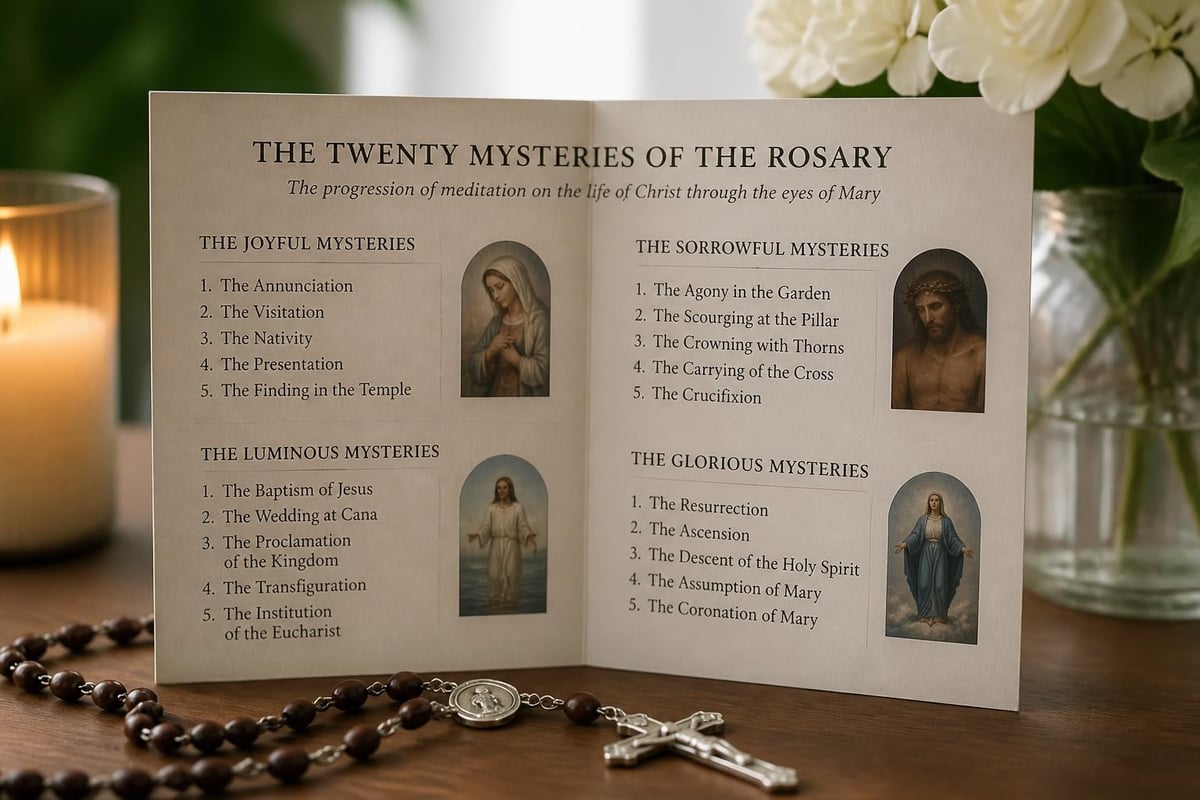
No devotion to our lady of mary compares to the Rosary in popularity and spiritual effectiveness. This meditative prayer combines vocal prayer with contemplation of Christ's life through Mary's eyes. The Rosary consists of twenty mysteries divided into four categories: Joyful, Sorrowful, Glorious, and Luminous.
Structure and Spiritual Benefits
The Rosary's repetitive structure creates a meditative rhythm that calms the mind and opens the heart to divine grace. Each decade begins with the Our Father, continues with ten Hail Marys, and concludes with the Glory Be. Between decades, Catholics announce the mystery and spend time contemplating its spiritual significance.
Mysteries of the Rosary:
- Joyful Mysteries - Annunciation, Visitation, Nativity, Presentation, Finding in the Temple
- Luminous Mysteries - Baptism of Jesus, Wedding at Cana, Proclamation of the Kingdom, Transfiguration, Institution of the Eucharist
- Sorrowful Mysteries - Agony in the Garden, Scourging, Crowning with Thorns, Carrying the Cross, Crucifixion
- Glorious Mysteries - Resurrection, Ascension, Pentecost, Assumption, Coronation
As noted by the Dominican Sisters of Mary, this prayer connects us intimately with Christ's saving work while deepening our relationship with His mother. The Rosary has been credited with numerous miracles and spiritual victories throughout history, from the Battle of Lepanto to personal conversions and healings.
Mary as Mother and Intercessor
The maternal dimension of our lady of mary extends beyond her biological relationship with Jesus to encompass all believers. From the Cross, Jesus entrusted the Beloved Disciple to Mary's care, saying "Behold your mother." The Church has always understood this as Jesus giving Mary to all disciples as their spiritual mother.
Understanding Marian Intercession
Some question why Catholics ask our lady of mary to pray for them rather than going directly to Jesus. This objection misunderstands the nature of intercession and the communion of saints. Just as we ask fellow Christians on earth to pray for us, we ask Mary and the saints in heaven to intercede with even greater effectiveness.
Mary's intercession proves especially powerful for several reasons:
- Perfect Union with God's Will - Her sinlessness and complete conformity to divine will
- Maternal Relationship with Jesus - Her unique position as His mother
- Spiritual Motherhood - Her role as Mother of the Church
- Constant Availability - Her presence in the heavenly realm
The Wedding at Cana demonstrates Mary's intercessory power. Though Jesus initially indicated His time had not come, He performed His first miracle at His mother's prompting. This episode reveals how Mary's prayers move the Heart of her Son with particular effectiveness.
Marian Consecration and Total Dedication
Many Catholics practice total consecration to Mary, a spiritual practice popularized by St. Louis de Montfort. This consecration doesn't place Mary above Jesus but rather recognizes her as the surest path to Him. Through Mary, we entrust everything to Jesus, allowing her maternal care to guide our spiritual journey.
Those dedicated to fostering their spiritual life through the study of holy lives will find inspiration in exploring resources about Catholic mystics and saints who experienced profound devotion to our lady of mary. These spiritual giants understood that honoring Mary always leads to deeper love for her Son.
Contemporary Marian Devotion and Practice
Modern Catholics continue ancient traditions while developing new expressions of devotion to our lady of mary. Technology enables unprecedented access to Marian prayers, teachings, and communities. Yet the essence remains unchanged: loving Jesus through His mother and allowing her maternal guidance to shape our discipleship.
Daily Marian Practices for Modern Catholics
Integrating Marian devotion into daily life strengthens faith and provides spiritual protection. Simple practices yield profound results when performed consistently with sincere hearts. Consider adopting these approaches:
Morning Offerings - Begin each day by consecrating all thoughts, words, and actions to Jesus through Mary. This practice transforms ordinary moments into prayers.
The Angelus - Pause three times daily (morning, noon, evening) to pray this traditional prayer commemorating the Incarnation. Many parishes ring bells at these times as reminders.
Marian Prayers Throughout the Day - Brief ejaculations like "Mary, help me" or "Jesus, Mary, Joseph" maintain conscious connection with our lady of mary throughout busy schedules.
Evening Rosary - Families who pray the Rosary together experience strengthened bonds and increased grace. Even a single decade together surpasses no prayer at all.
Marian Art and Sacred Images
Visual representations of our lady of mary serve as windows into divine mysteries rather than mere decoration. Icons, statues, and paintings help focus prayer and remind us of Mary's constant maternal presence. The Catholic tradition distinguishes between veneration (honor) and adoration (worship), offering the former to Mary while reserving the latter exclusively for God.
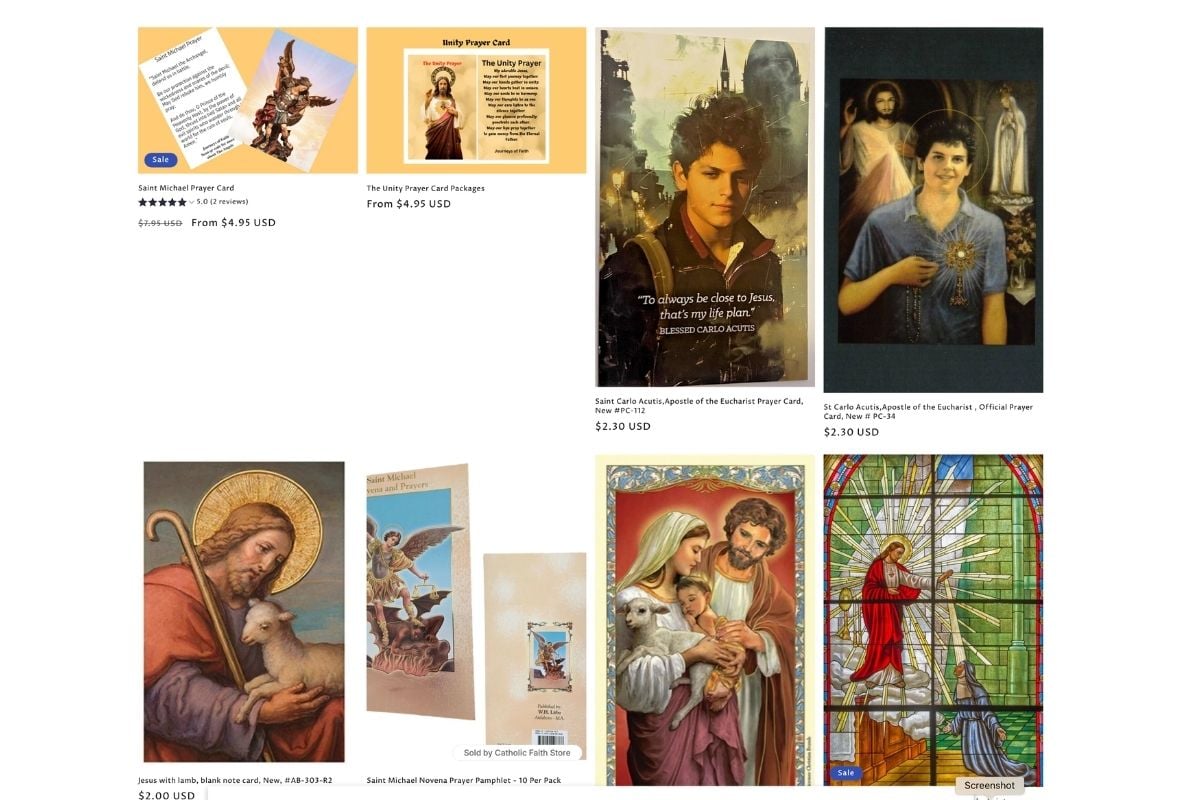
For those seeking tangible connections to Marian devotion, prayer cards and novenas provide portable reminders of our lady of mary's intercession. These simple tools fit in pockets and purses, accompanying believers throughout their daily routines and offering comfort during challenging moments.
| Marian Art Type | Spiritual Purpose | Common Locations |
|---|---|---|
| Icons | Theological meditation | Home altars, churches |
| Statues | Physical focal points | Gardens, shrines |
| Holy Cards | Portable devotion | Wallets, prayer books |
| Paintings | Historical narratives | Galleries, sanctuaries |
Marian Theology and Church Teaching
The Catholic Church's teaching about our lady of mary developed through centuries of prayerful reflection on Scripture and Tradition. Four major Marian dogmas form the core of orthodox Catholic belief, each defined during different historical periods as responses to theological questions or heresies.
The Four Marian Dogmas
Divine Motherhood (Theotokos) - Defined at the Council of Ephesus in 431 AD, this dogma affirms that Mary is truly the Mother of God. Because Jesus is one divine Person with two natures (human and divine), Mary gave birth not merely to Christ's human nature but to the Person of the Word made flesh.
Perpetual Virginity - The Church teaches that Mary remained virgin before, during, and after Christ's birth. This belief, held from apostolic times, emphasizes the miraculous nature of the Incarnation and Mary's total dedication to God.
Immaculate Conception - Defined by Pope Pius IX in 1854, this dogma states that Mary was preserved from original sin from the first moment of her conception. This singular grace prepared her to become the worthy dwelling place of God.
Assumption - Pope Pius XII defined in 1950 that Mary was assumed body and soul into heavenly glory at the end of her earthly life. This dogma reflects Mary's unique participation in Christ's resurrection and her role as the firstfruits of redemption.
Vatican II and Lumen Gentium
The Second Vatican Council's treatment of Mary in Lumen Gentium (Chapter 8) presents balanced Mariology emphasizing her relationship to Christ and the Church. The Council rejected maximalist and minimalist approaches, instead presenting Mary as model disciple, type of the Church, and advocate for God's people.
The Council emphasized that all Marian devotion should lead to Christ, never competing with worship of the Trinity. This christocentric focus ensures that honoring our lady of mary always deepens relationship with Jesus rather than obscuring Him.
Living Marian Spirituality Today
Authentic devotion to our lady of mary transforms how Catholics live their faith daily. Mary's example teaches humility, obedience, contemplation, and active charity. By imitating her virtues and seeking her intercession, believers grow in holiness and conformity to Christ.
Mary's Virtues as Spiritual Model
Catholics seeking to grow in holiness benefit from studying and imitating the virtues exemplified by our lady of mary throughout her life. These virtues, demonstrated in Gospel accounts and developed through centuries of theological reflection, provide practical guidance for contemporary discipleship.
- Humility - Despite her exalted dignity, Mary called herself God's handmaid
- Faith - She believed God's promises even when humanly impossible
- Obedience - Her fiat exemplifies perfect surrender to divine will
- Purity - Her virginity represents total dedication to God
- Charity - She hastened to serve Elizabeth in need
- Contemplation - She pondered God's mysteries in her heart
- Fortitude - She stood firm at the Cross despite unbearable sorrow
Marian Feast Days and Liturgical Celebration
The liturgical calendar includes numerous celebrations honoring our lady of mary, each focusing on different aspects of her life and mission. These feasts range from solemnities (highest rank) to optional memorials, reflecting the Church's hierarchical approach to Marian devotion.
Major Marian solemnities and feasts include:
- Mary, Mother of God (January 1)
- Our Lady of Lourdes (February 11)
- Annunciation (March 25)
- Visitation (May 31)
- Immaculate Heart of Mary (Saturday after Sacred Heart)
- Our Lady of Mount Carmel (July 16)
- Assumption (August 15)
- Queenship of Mary (August 22)
- Birth of Mary (September 8)
- Our Lady of Sorrows (September 15)
- Our Lady of the Rosary (October 7)
- Immaculate Conception (December 8)
Participating in these liturgical celebrations deepens understanding of our lady of mary's role in salvation history while uniting Catholics across time and space in common worship. These feast days offer opportunities for special prayers, pilgrimages, and acts of consecration.
Catholics interested in deepening their knowledge of saints who showed particular devotion to our lady of mary can explore resources about male saints and their spiritual journeys, many of whom attributed their holiness to Marian intercession and imitation of her virtues.
Mary in Ecumenical Dialogue
Understanding our lady of mary requires awareness of different Christian perspectives on Marian doctrine and devotion. While Catholics maintain robust Marian theology, Orthodox Christians share similar beliefs with slight variations in emphasis. Protestant traditions vary widely, from Anglican appreciation of Mary to Evangelical hesitation about Marian devotion.
Points of Agreement and Difference
Most Christians across denominational lines agree on several fundamental truths about our lady of mary: her virginal conception of Jesus, her role as Theotokos (Mother of God), and her unique place in salvation history. The Annunciation, Magnificat, and presence at the Cross unite Christian meditation on Mary's significance.
Differences emerge primarily around:
- Perpetual Virginity - Catholics and Orthodox affirm; most Protestants question or deny
- Immaculate Conception - Catholic dogma; generally rejected by Orthodox and Protestants
- Assumption - Catholic dogma; Orthodox celebrate "Dormition" with slightly different emphasis
- Intercession - Catholic and Orthodox practice; many Protestants object
- Devotional Practices - Rosary, consecration, and apparitions more common in Catholicism
Ecumenical dialogue benefits from recognizing shared reverence for Mary while respectfully discussing differences. Catholics can explain that honoring our lady of mary never detracts from Christ's unique mediation but rather celebrates God's grace working through her cooperation.
The Cathedral of St. Marie's explanation of their dedication to the Blessed Virgin demonstrates how Catholic institutions integrate Marian devotion into their identity and mission, offering opportunities for teaching authentic Catholic theology to diverse audiences.
Our Lady of Mary in Popular Culture and Mission
Contemporary culture presents both challenges and opportunities for promoting devotion to our lady of mary. Secular misunderstandings of Catholic Mariology require patient catechesis, while renewed interest in spirituality creates openings for sharing the beauty of Marian devotion. Social media, podcasts, and digital resources enable unprecedented evangelization efforts.
Sharing Marian Devotion in the Digital Age
Modern technology amplifies opportunities to share the message and intercession of our lady of mary with global audiences. Catholic content creators produce videos, podcasts, blogs, and social media posts introducing Marian devotion to new generations. These digital apostolates make previously inaccessible resources available to anyone with internet access.
Effective approaches to digital Marian evangelization include:
- Short video testimonies of how our lady of mary impacted individual lives
- Podcast episodes explaining Marian doctrines and devotions clearly
- Instagram posts featuring Marian art with brief catechetical captions
- YouTube Rosary prayer sessions allowing remote participation
- Online communities supporting Marian consecration and study
The Sisters of the Company of Mary, Our Lady exemplify how religious communities dedicated to our lady of mary adapt their educational mission to contemporary contexts while maintaining fidelity to founding charisms and Church teaching.
Marian Shrines and Pilgrimage
Physical pilgrimage to Marian shrines remains powerful practice despite digital alternatives. Walking where our lady of mary appeared, praying at sites associated with her intercession, and participating in liturgies alongside pilgrims worldwide provides graces unavailable through virtual experience. Major pilgrimage destinations include Lourdes, Fátima, Guadalupe, Knock, and countless regional shrines.
Pilgrimage benefits include:
- Spiritual renewal through intense prayer and sacramental life
- Physical sacrifice uniting suffering to Christ's passion
- Community experience with fellow pilgrims from diverse backgrounds
- Historical connection to centuries of Catholic tradition
- Miraculous encounters with God's healing and transforming power
Many pilgrims report profound spiritual experiences at Marian shrines, including conversions, healings, vocational discernments, and deeper commitment to faith. The waters at Lourdes, the site of the sun miracle at Fátima, and the tilma image of Guadalupe continue drawing millions annually who seek our lady of mary's maternal intercession.
Our lady of mary remains central to Catholic faith and practice, guiding believers toward her Son through maternal intercession, exemplary virtue, and constant availability. From biblical foundations through contemporary devotions, Marian theology reveals the profound wisdom of honoring the woman God chose to bear His Son and the Church as Mother of all believers. Whether you're deepening existing devotion or discovering Marian spirituality for the first time, Journeys of Faith offers extensive resources to support your journey, including books, prayer materials, and media that illuminate the beauty of Catholic teaching about our lady of mary and help you grow closer to Jesus through His mother's guidance.
Explore Journeys of Faith:
-
Browse our online store with thousands of Catholic items including Marian books, DVDs, prayer cards, and religious articles at https://journeysoffaith.com/collections
-
Support our mission - Journeys of Faith is blessed to provide Catholic media, including podcasts and inspirational content, free of charge across multiple media platforms for viewers and listeners around the world. While access to this content remains free, there are significant and continually increasing costs associated with producing, hosting, and distributing these programs. Your support helps us continue sharing the beauty of the Catholic faith with souls. Please make a donation at https://journeysoffaith.com/pages/donate