Skip to product information
1 of 1

Lanciano Eucharist Minibook

Lanciano Eucharist Minibook

Regular price $11.00 USD
Regular price Sale price $11.00 USD
Sale Sold out
Shipping calculated at checkout.

FREE Shipping for all orders over $50 -- We have graduated discounts automatically  applied up to 67% when you add to cart. --- 20% off orders over $50 --- 25% off orders over $75 --- 30% off orders over $100 --- 35% off orders over $150 --- 5%Cash Back Store Credit on all orders

CHECKOUT TIPS 1. Discounts are applied automatically! 3. Pay with credit card or Express Pay

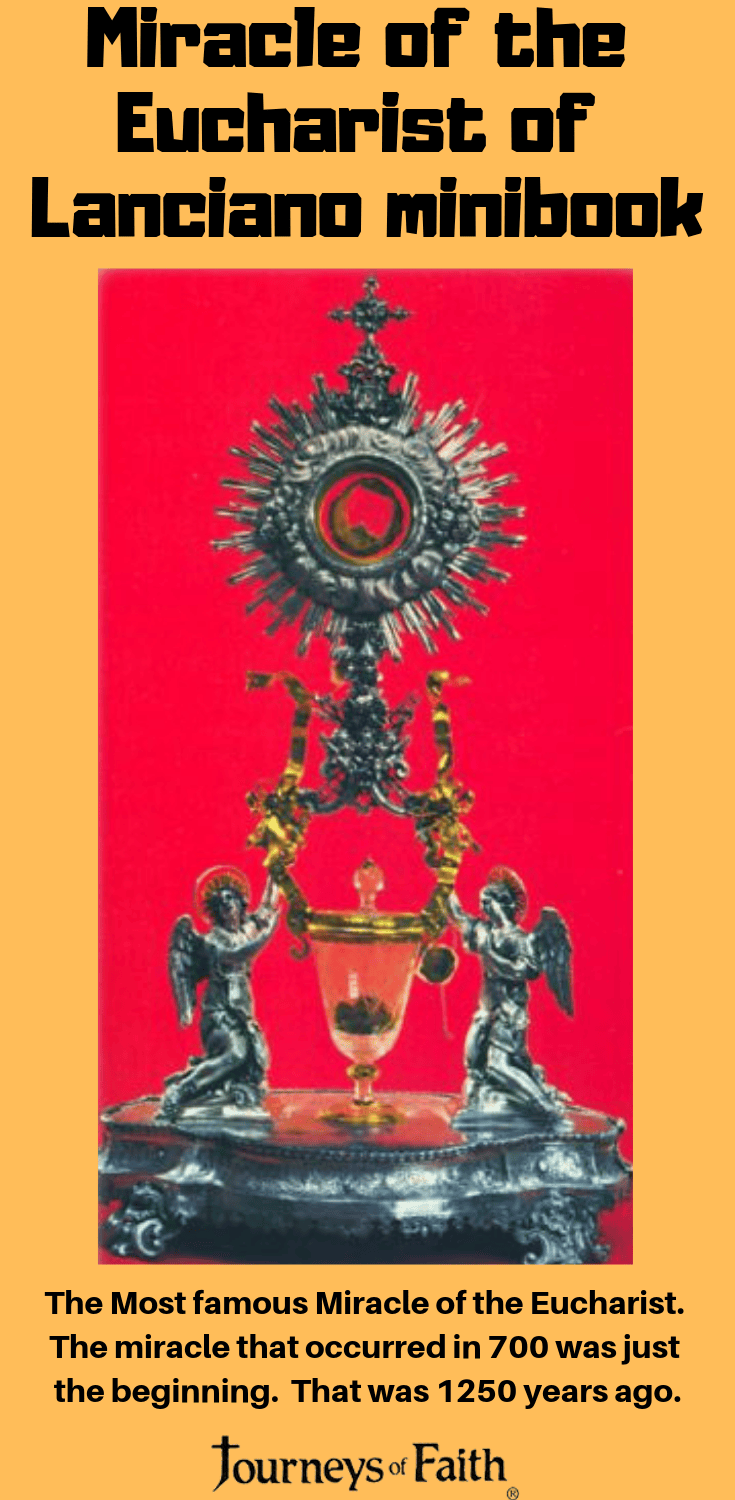
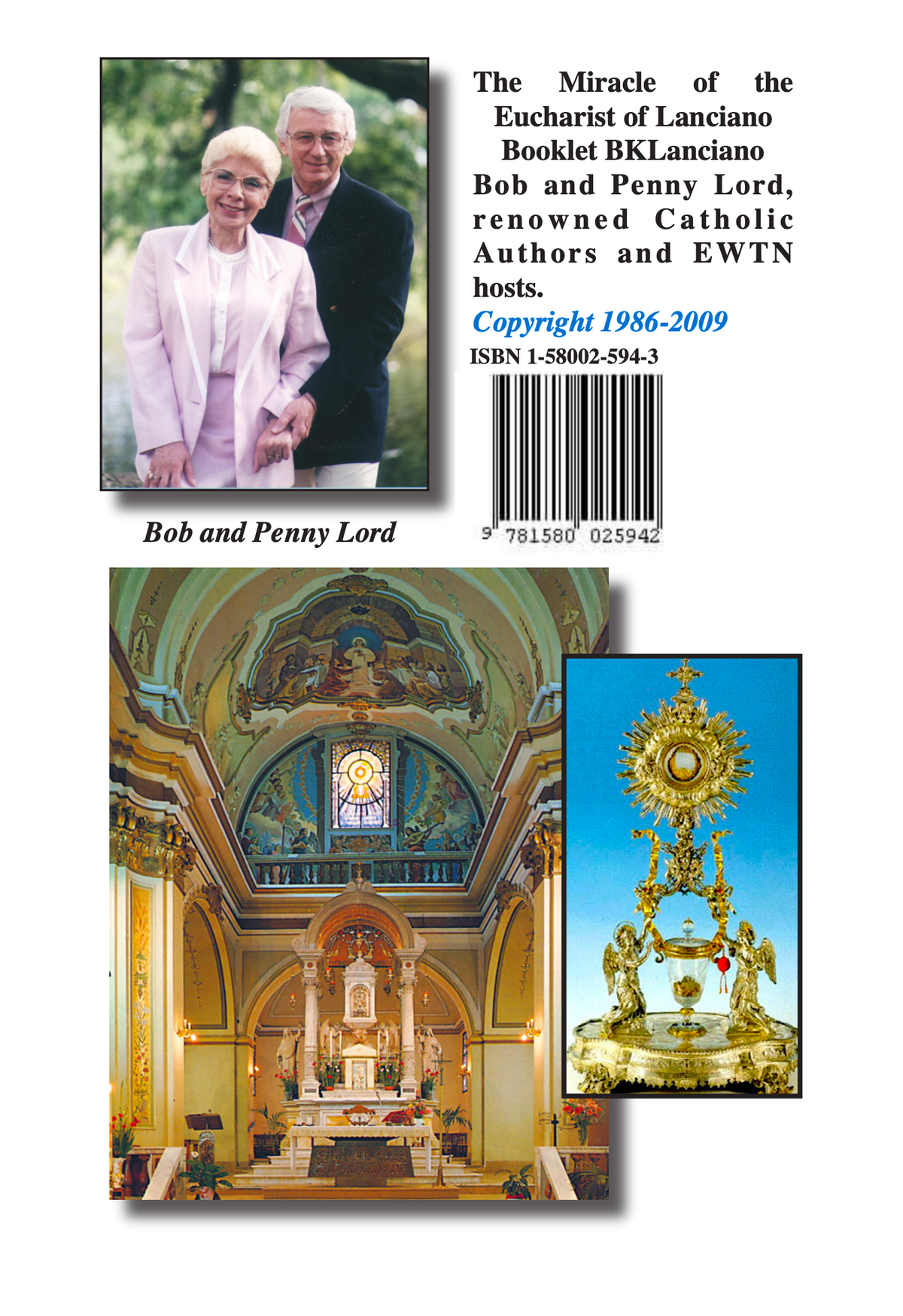
Miracle of the Eucharist of Lanciano is a printed 24-page minibook by Bob and Penny Lord that explains one of the best-known Eucharistic miracles in Catholic tradition. Published by Journeys of Faith, it presents the Lanciano account with specific historical and scientific details that readers can cite, including test findings reported in 1574 and 1970.

  • Printed 24-page Catholic minibook focused on the Eucharistic miracle of Lanciano
  • Explains the reported 8th-century miracle in which the Host became flesh and the wine became blood
  • Includes cited findings that the Flesh was identified as heart muscle tissue and the Blood as human blood type AB
  • Summarizes reported laboratory observations, including proteins and minerals found in normal fresh blood
  • Useful for Eucharistic adoration, parish study, RCIA, confirmation preparation, and personal apologetics reading

Unlike a short devotional card, this minibook gives readers more context for understanding the Miracle of Lanciano, while remaining easy to carry in a purse, backpack, or parish handout stack. Compared to longer Catholic books on Eucharistic miracles, it offers a concise introduction suitable for quick study, gifting, or classroom discussion.

This title is especially helpful for Catholics seeking a compact resource on the Real Presence, Eucharistic miracles, and the ongoing preservation of the relics without chemical preservatives over many centuries. It is a practical choice for those building a Catholic library, preparing a faith formation lesson, or looking for a small printed resource to share with family and friends.

View full details

Frequently Asked Questions

Yes. If you are looking for a short, focused book on a well-known Eucharistic miracle, the Miracle of the Eucharist of Lanciano Minibook is one option. It is a printed 24 page minibook by Bob and Penny Lord that concentrates specifically on the Eucharistic miracle of Lanciano rather than trying to cover every miracle in one volume. This format is especially useful for readers who want a concise introduction to the topic, including the historical event, its devotional importance, and the scientific findings often associated with Lanciano. The booklet explains that the Host and wine are venerated as flesh and blood and summarizes reported testing over the centuries, including findings about heart tissue, human blood, and blood type AB. It is best for Catholics, catechists, prayer groups, and anyone beginning research on Eucharistic miracles who wants something readable in one sitting. If you want a broad academic survey of many Eucharistic miracles, a single-subject minibook like this may feel narrower than a larger reference work.
A good book for learning about the Eucharistic miracle of Lanciano depends on how much depth you want. If you want a brief, accessible introduction, the Miracle of the Eucharist of Lanciano Minibook is a strong choice because it focuses entirely on this one miracle in a short printed format. It covers the traditional account of the miracle in Lanciano, why it matters for belief in the Real Presence, and the scientific claims commonly discussed in Catholic teaching and devotional reading. The booklet also highlights details many readers specifically look for, such as the reported preservation of the flesh and blood and the findings from later analysis. This is best for someone who wants a devotional and informational overview without committing to a long book. It can also work well for parish study, Eucharistic adoration preparation, or sacramental education. The tradeoff is that a 24 page minibook is designed for clarity and brevity, so readers looking for extensive historical sourcing or a multi-chapter academic treatment may want to pair it with broader research.
The Eucharistic miracle of Lanciano is a Catholic miracle tradition dating to around the year 700 in Lanciano, Italy. According to the account, a priest who was struggling with doubt about the Real Presence saw the consecrated Host become flesh and the consecrated wine become blood during Mass. The Miracle of the Eucharist of Lanciano Minibook presents this event as both a historical and devotional subject. It explains that the flesh and blood have been preserved for centuries in a reliquary and have drawn pilgrims who venerate them as a sign of Christ’s presence in the Eucharist. The booklet also summarizes reported examinations, including findings that the flesh is heart tissue and that the blood is human blood with type AB. This topic is especially relevant for Catholics studying Eucharistic theology, the Real Presence, or the role of miracles in faith. Readers should understand that this minibook approaches Lanciano from a Catholic devotional perspective, so it is most useful for faith formation, spiritual reading, and introductory learning rather than detached academic debate alone.
The Lanciano miracle is considered especially significant because it is one of the oldest and most discussed Eucharistic miracles in Catholic tradition, and because the relics are said to remain preserved centuries after the event. For many readers, its importance comes from both the original account and the later scientific examinations often cited in Catholic teaching. The Miracle of the Eucharist of Lanciano Minibook highlights several details that make this case stand out. It describes the flesh and blood as still present in the reliquary, notes the unusual tradition concerning the five blood pellets, and summarizes reported test results from later centuries and from more modern research in 1970. Those results are presented as identifying real human flesh, heart muscle tissue, and human blood of type AB. This makes the booklet especially helpful for people exploring the connection between Eucharistic devotion and miracle testimony. It is best for readers who want a concise explanation of why Lanciano is frequently referenced in discussions of Eucharistic miracles, though it is not meant to replace extended scholarly investigation.
Yes, a minibook can be a very good choice if you want a focused, readable introduction rather than a long study. The main advantage is simplicity. A short printed booklet lets you learn the essentials of a topic quickly, which is helpful for prayer groups, parish handouts, personal devotion, or anyone beginning to explore Catholic miracles. The Miracle of the Eucharist of Lanciano Minibook is 24 pages, so it is designed for concise learning. It centers on one miracle instead of covering many at once, which helps readers stay grounded in a specific case. That makes it useful for people preparing for Eucharistic adoration, teaching sacramental lessons, or looking for a compact faith formation resource. The tradeoff is depth. A minibook will not provide the same level of documentation, historical discussion, or comparative analysis as a larger book. It is best for readers who want a strong overview and key facts in a manageable format, not for those seeking a comprehensive academic volume.
This minibook is best for Catholics and Christian readers who want a short, faith-centered introduction to the miracle of Lanciano. It works especially well for people interested in the Real Presence, Eucharistic devotion, miracle accounts, and Catholic apologetics related to the Eucharist. Because it is only 24 pages, it suits several practical uses. Individuals can read it in one sitting for personal reflection. Catechists and parish leaders can use it as a supplemental resource for adult formation or sacramental instruction. It is also a fitting choice for those building a small Catholic library on Eucharistic miracles, Marian apparitions, or saints. Readers who benefit most are those who prefer concise, topic-specific resources over long theological books. It may be less ideal for someone who wants a broad survey of many miracles or a heavily footnoted historical study. In that case, this booklet works best as a starting point or companion piece rather than a complete research source.
This minibook summarizes the scientific findings commonly associated with the Lanciano miracle in a clear, concise way. According to the book, examinations performed over time reported that the flesh is real human flesh, specifically muscular tissue of the heart, and that the blood is real human blood. It also states that both were identified as belonging to the human species and that the blood type reported was AB. The booklet further notes that proteins and minerals found in the blood were described as consistent with fresh normal blood, and that the long preservation of the flesh and blood without chemical preservatives has been presented as extraordinary. It also mentions the unusual tradition involving five coagulated blood pellets of different sizes reportedly weighing the same in varying combinations. This is most useful for readers who want a brief summary of why Lanciano is often cited in Catholic discussions of Eucharistic miracles. The limitation is that a 24 page devotional minibook provides a condensed overview, so readers looking for original laboratory reports or in-depth scientific critique will need additional sources.
It is best understood as a devotional and educational booklet rather than a full research book. The Miracle of the Eucharist of Lanciano Minibook is a printed 24 page publication that presents the history, significance, and reported scientific findings of the Lanciano miracle in a compact format. That means it is well suited for readers who want a clear Catholic overview they can read quickly, reflect on prayerfully, or use in faith formation settings. Its value lies in being focused, approachable, and centered on one of the best-known Eucharistic miracles. For many readers, that makes it more practical than a dense academic text. The tradeoff is that it is not designed as an exhaustive scholarly treatment with extensive documentation and debate. If your goal is personal devotion, introductory apologetics, or a simple explanation of the miracle, this format is a good fit. If your goal is advanced historical or scientific analysis, you will likely want to supplement it with longer works and primary source material.
Yes, this minibook is well suited for Eucharistic adoration preparation and Catholic faith formation. Because it is short and topic-specific, it can help readers reflect on the Church’s teaching about the Real Presence through the lens of the Lanciano miracle without requiring a large time commitment. In a parish or group setting, it can be used as supplemental reading for Eucharistic revival efforts, sacramental preparation, adult education, or prayer groups focused on the Eucharist. For personal use, it gives readers a compact account of the miracle, its devotional meaning, and the reported scientific examinations that many people find helpful when deepening belief in the Eucharist. Its strongest benefit is accessibility. A 24 page printed booklet is easier to assign, discuss, or revisit than a longer volume. The limitation is that it is narrowly focused on one miracle, so it works best as part of broader catechesis rather than as a complete course on Eucharistic theology or miracle history.
A printed Eucharistic miracle minibook is often chosen for focus, ease of use, and devotional reading. Many people prefer a physical booklet for prayer time, adoration, study groups, or quiet reading because it removes the distractions that often come with screens. The Miracle of the Eucharist of Lanciano Minibook is a printed 24 page resource, which makes it easy to carry, lend, annotate, or use in parish settings. Printed booklets can also be more practical for classroom discussion, ministry handouts, and personal Catholic libraries. For a topic like Eucharistic miracles, some readers simply find a physical format better suited to reverent and reflective reading. The tradeoff is that a printed minibook is less searchable and less instantly accessible than a digital file. Readers who want a tactile resource, a concise teaching tool, or a booklet they can return to during prayer will likely prefer print. Those who prioritize instant access and keyword searching may still prefer digital material for broader research.