
Skip to product information
1 of 1

Our Lady of Pompeii Minibook

Our Lady of Pompeii Minibook

Regular price $11.00 USD
Regular price Sale price $11.00 USD
Sale Sold out
Shipping calculated at checkout.

FREE Shipping for all orders over $50 -- We have graduated discounts automatically  applied up to 67% when you add to cart. --- 20% off orders over $50 --- 25% off orders over $75 --- 30% off orders over $100 --- 35% off orders over $150 --- 5%Cash Back Store Credit on all orders

CHECKOUT TIPS 1. Discounts are applied automatically! 3. Pay with credit card or Express Pay

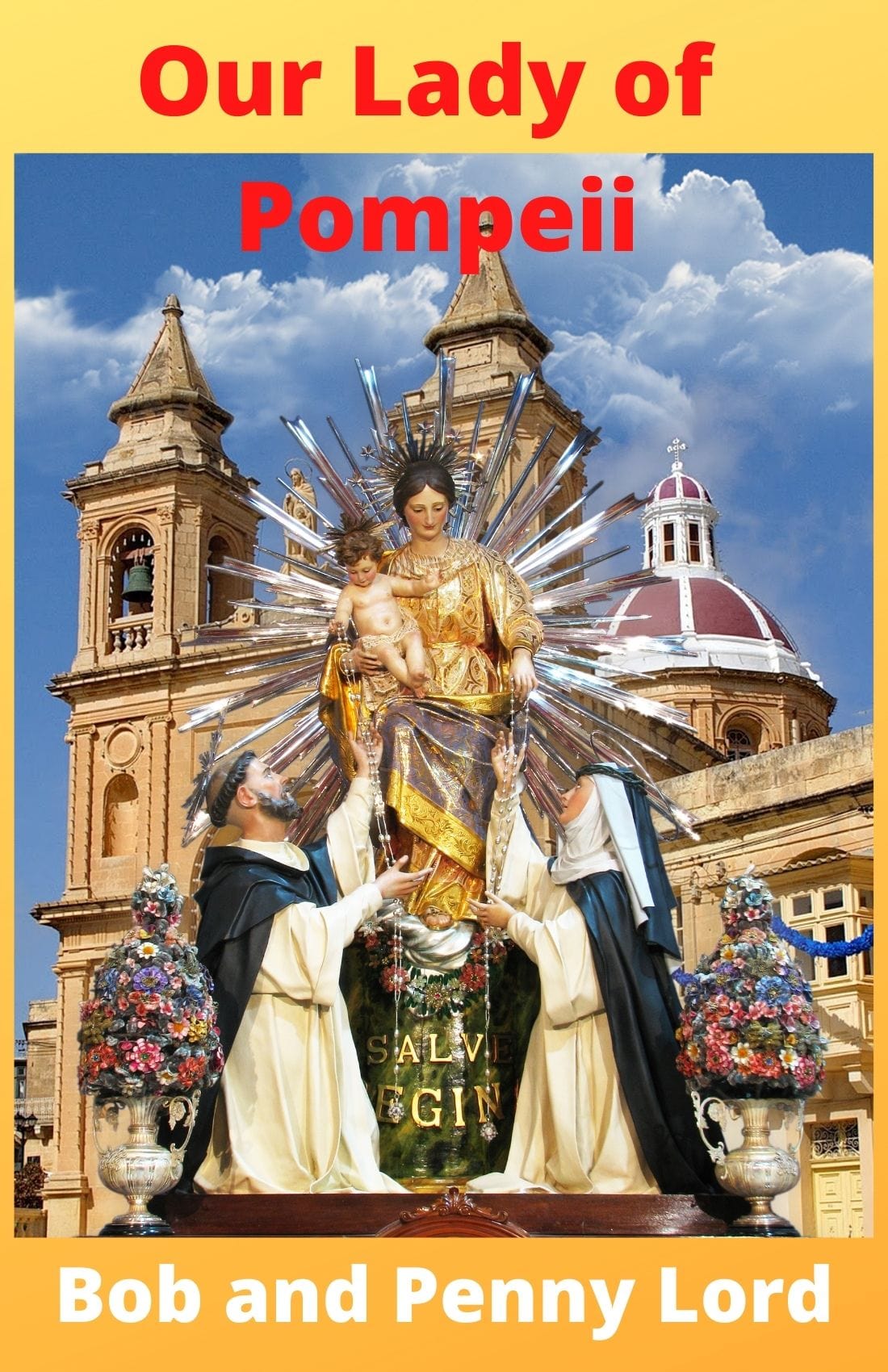
Our Lady of Pompeii Minibook is a printed, staple-bound Catholic minibook published by Journeys of Faith. Written by Bob and Penny Lord, it introduces the Shrine of Our Lady of Pompei in Italy, the conversion of Blessed Bartolo Longo, and the history of the Basilica in a concise format that is easy to read, carry, and reference.

  • Printed staple-bound minibook format for quick reading and study
  • Written by Catholic authors Bob and Penny Lord
  • Focuses on Our Lady of the Rosary of Pompei and the shrine in Italy
  • Explains the conversion story of Blessed Bartolo Longo
  • Includes context on reported miracles linked to the shrine
  • Discusses Countess de Fusco's role in building the Basilica

Unlike a general Marian booklet, this title centers on one specific devotion, one historic shrine, and the people most closely connected to its growth. Compared to longer Catholic books, the minibook format works well for personal prayer time, parish gift tables, Marian study groups, rosary reflection, or Confirmation and RCIA enrichment.

Bob and Penny travel to Pompei, Italy and present the remarkable Shrine of Our Lady of Pompei through a clear Catholic lens. Readers discover the life of Blessed Bartolo Longo, a former Satanic cult priest who converted to Catholicism and vowed to build a shrine to Our Lady of the Rosary in Pompei. The book also reviews the magnificent church built in her honor, the miracles associated with this shrine, and the contribution of Countess de Fusco to the construction of this important basilica.
View full details

Frequently Asked Questions

A good choice is a short Catholic minibook that explains both the history of Our Lady of Pompeii and the Rosary devotion connected to the shrine in Pompei, Italy. Our Lady of Pompeii Minibook BK303 does that in a concise printed format. It covers the Shrine of Our Lady of Pompei, the conversion story of Blessed Bartolo Longo, and the miracles associated with the shrine. This type of book is especially helpful for readers who want a focused introduction instead of a long academic study. It is well suited for Catholics interested in Marian devotion, Rosary history, Eucharistic and miracle-related topics, or the lives of converts and saints. Because it is a staple-bound minibook, it is easy to read in short sessions, share in a parish setting, or use for personal devotional reading. The main tradeoff is depth. A minibook is best for an overview and spiritual reflection, not for an exhaustive historical treatment. If you want a brief, accessible printed guide to Our Lady of Pompeii and the people behind the shrine, this format fits that need well.
A Catholic minibook is best for readers who want a quick, focused introduction to a specific devotion, saint, shrine, or spiritual theme. It works well for people who prefer shorter reading sessions, want something portable, or are choosing material for prayer groups, parish tables, gift baskets, or personal devotional use. Our Lady of Pompeii Minibook BK303 is a good example because it gives a concise overview of the shrine, Blessed Bartolo Longo, Countess de Fusco, and the miracles associated with Pompei. This format is especially useful for beginners, busy Catholics, teens, or anyone exploring a topic before deciding whether to read more deeply. Printed minibooks can also be easier to revisit for meditation or discussion because the content stays focused on one theme. The tradeoff is that a minibook is not as detailed as a full-length Catholic book. If you want extensive historical documentation, theological analysis, or a broad treatment of Marian apparitions and devotions, a larger book may be better. If you want clarity, portability, and a manageable read, a minibook is often the better fit.
This minibook covers the Shrine of Our Lady of Pompei in Italy and the story behind its importance in Catholic devotion. It explains the life of Blessed Bartolo Longo, including his dramatic conversion from involvement in a Satanic cult to Catholic faith and his vow to build a shrine to Our Lady of the Rosary in Pompei. It also discusses the basilica itself, several miracles associated with the shrine, and the role of Countess de Fusco in its construction. That makes it a strong fit for readers interested in Marian devotion, Rosary spirituality, conversion stories, and the history of major Catholic shrines. It is also useful for those who want to understand why Our Lady of Pompeii holds a special place in Catholic prayer life. Because it is a minibook, the content is selective and centered on the key story and devotional significance. Readers looking for a compact printed introduction will benefit most. Those seeking a long scholarly study of Pompei or a broader survey of Marian shrines may want to pair it with additional reading.
It is about all three, with the strongest focus on how they connect. The Our Lady of Pompeii Minibook explains the Marian devotion to Our Lady of the Rosary, the remarkable shrine in Pompei, and the conversion and mission of Blessed Bartolo Longo, who vowed to build the shrine after returning to the Catholic faith. It also includes the role of Countess de Fusco and references miracles associated with the shrine. This balance makes the minibook useful for several kinds of readers. Someone drawn to Mother Mary will appreciate the Rosary-centered devotion. Someone interested in conversion stories will find Bartolo Longo especially compelling. Someone researching Catholic pilgrimage sites or devotional history will benefit from the sections on the shrine and basilica. The main limitation is that a short printed minibook cannot treat each subject in equal depth. If your primary interest is a full biography of Blessed Bartolo Longo or a detailed architectural history of the basilica, you may want a larger book. For a compact overview that links person, place, and devotion, this format works well.
A printed Catholic minibook is often better for devotional reading if you want a screen-free, prayerful, and easy-to-carry format. Our Lady of Pompeii Minibook BK303 is a printed staple-bound minibook, which makes it convenient for reading during quiet prayer time, bringing to adoration, or keeping with other Rosary and Marian devotion materials. Printed devotional reading can help some people stay more focused because there are no notifications or device distractions. It is also easier to lend, gift, or use in parish settings. For topics like Marian devotion, shrine history, and miracle accounts, many readers appreciate the tactile experience of a physical booklet. The tradeoff is convenience in storage and searchability. Digital downloads can be easier to access instantly, enlarge on a screen, or keep while traveling without adding physical items. Readers who prefer highlighting on devices or carrying a large library digitally may prefer downloads. A printed minibook is best for those who value simplicity, portability, and a traditional reading experience for prayer and reflection.
Yes, this is a good Catholic gift for someone devoted to the Rosary or to Mother Mary, especially if they appreciate learning the history behind a Marian devotion. The minibook focuses on Our Lady of Pompeii, the Shrine of Our Lady of the Rosary in Pompei, and the story of Blessed Bartolo Longo, whose conversion and dedication helped establish this important Rosary-centered shrine. It is a thoughtful option for people who pray the Rosary regularly, belong to Marian groups, or enjoy devotional reading tied to Catholic history and miracles. Because it is a compact printed minibook, it also works well as an add-on gift with rosary beads, prayer cards, or other Marian items. The best fit is someone who enjoys short spiritual reading and wants an introduction to a specific Catholic devotion. If the recipient prefers long-form theology, extensive biography, or heavily illustrated books, a larger volume may suit them better. For a concise and meaningful Marian gift rooted in Rosary devotion, this minibook is a practical choice.
This minibook is more focused and historical than a general Marian prayer book. A Marian prayer book usually includes a collection of prayers, novenas, litanies, and devotions to the Blessed Virgin Mary across many titles and feasts. Our Lady of Pompeii Minibook BK303 instead centers on one specific devotion and place: the Shrine of Our Lady of Pompei, along with the story of Blessed Bartolo Longo, Countess de Fusco, and miracles connected to the shrine. That makes it a better choice for readers who want context, background, and devotional history rather than primarily a prayer compilation. It helps explain why this Marian title matters in Catholic life and how Rosary devotion shaped the shrine's importance. The tradeoff is that it is not designed to replace a broad prayer resource. If you need daily Marian prayers or a large set of devotions for regular use, a prayer book may serve you better. If you want to understand the story and significance of Our Lady of Pompeii in a short printed format, this minibook is the more targeted option.
Yes, it is especially suitable for readers interested in Catholic conversion stories because one of its central figures is Blessed Bartolo Longo. The minibook highlights his dramatic journey from involvement in a Satanic cult to a committed Catholic life dedicated to Our Lady of the Rosary. That conversion story is one of the most distinctive parts of the booklet and gives readers a strong example of repentance, grace, and mission within Catholic history. This makes the book a good fit for people who are inspired by testimonies of spiritual change, former skeptics or seekers, and Catholics who want examples of how Marian devotion and the Rosary can shape a life. It also adds historical and devotional context by connecting Bartolo Longo's conversion to the founding of the shrine in Pompei. The limitation is that this is a concise minibook, not a full biography. Readers wanting every stage of his life in depth may need a larger work. For a brief but memorable introduction to one of Catholic history's striking conversion stories, it serves that purpose well.
Yes, this minibook can work well for parish groups, Rosary circles, and small Catholic study discussions because it presents a focused topic in a short printed format. The content gives groups several clear discussion points: the meaning of devotion to Our Lady of Pompeii, the conversion of Blessed Bartolo Longo, the role of Countess de Fusco, the significance of the shrine in Pompei, and the miracles associated with it. That structure is useful for adult faith formation, Marian study groups, prayer circles, or parish gatherings that want a manageable reading assignment rather than a full-length book. It can also support Rosary-based reflection by linking the devotion to real Catholic history and witness. The tradeoff is that a minibook may not provide enough material for a long multi-week course on its own. Leaders who want deeper theological or historical analysis may want to pair it with Scripture, Church documents, or longer Catholic books. For a concise and discussion-friendly introduction to a Marian and Rosary-centered topic, it is well suited.
This product is a printed, staple-bound Catholic minibook, so it is designed to be portable and easy to read in short sessions. That makes it practical for personal devotional reading, travel, parish use, or keeping alongside a rosary and prayer materials. Readers who prefer physical books over screens will likely find the format convenient for prayer time, brief study, or quiet reflection. Because it is a minibook, the reading experience is naturally more focused than a full-length book. You can read it in a single sitting or return to it in small sections when reflecting on Marian devotion, the Rosary, Blessed Bartolo Longo, and the Shrine of Our Lady of Pompei. The tradeoff is that a small printed booklet offers less content than a larger paperback or hardcover study. It is best for readers who value portability, clarity, and a compact introduction to a Catholic topic. If you want an easy-to-carry printed resource on Our Lady of Pompeii that supports short devotional reading, this format is a strong match.