Skip to product information
1 of 8

Saint Benedict 24-Page Minibook

Saint Benedict 24-Page Minibook

Regular price $12.00 USD
Regular price Sale price $12.00 USD
Sale Sold out
Shipping calculated at checkout.

FREE Shipping for all orders over $50 -- We have graduated discounts automatically  applied up to 67% when you add to cart. --- 20% off orders over $50 --- 25% off orders over $75 --- 30% off orders over $100 --- 35% off orders over $150 --- 5%Cash Back Store Credit on all orders

CHECKOUT TIPS 1. Discounts are applied automatically! 3. Pay with credit card or Express Pay

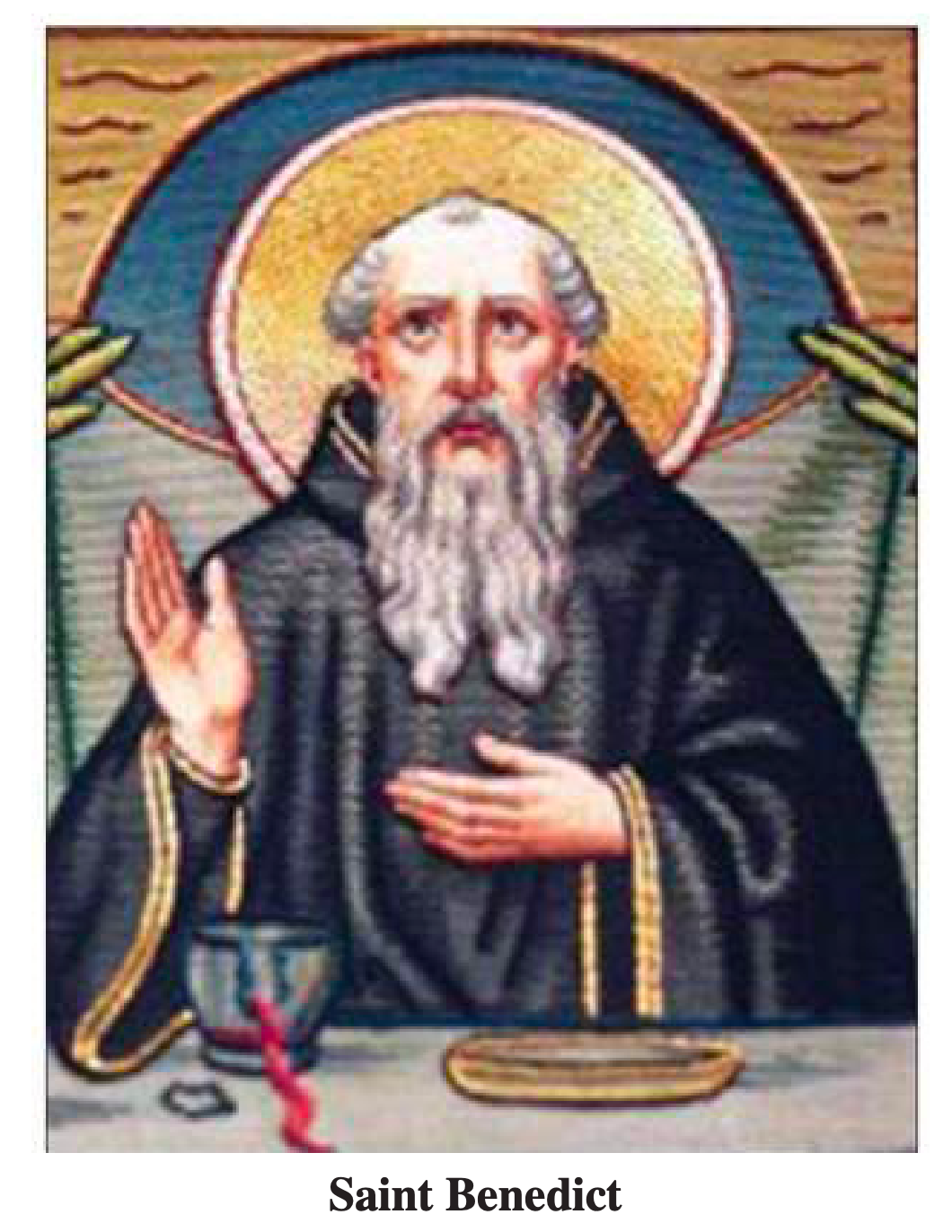
Saint Benedict Minibook BK185 is a printed 24-page staple-bound Catholic minibook by Bob and Penny Lord, published by Journeys of Faith. It offers a concise introduction to Saint Benedict, Father of Western Monasticism and founder of the Benedictine Order, making it useful for personal reading, parish study, or gift giving.

  • 24-page printed minibook in a compact staple-bound format
  • Focuses on Saint Benedict and his twin sister, Saint Scholastica
  • Traces key places linked to his life, including Norcia, Subiaco, and Monte Cassino
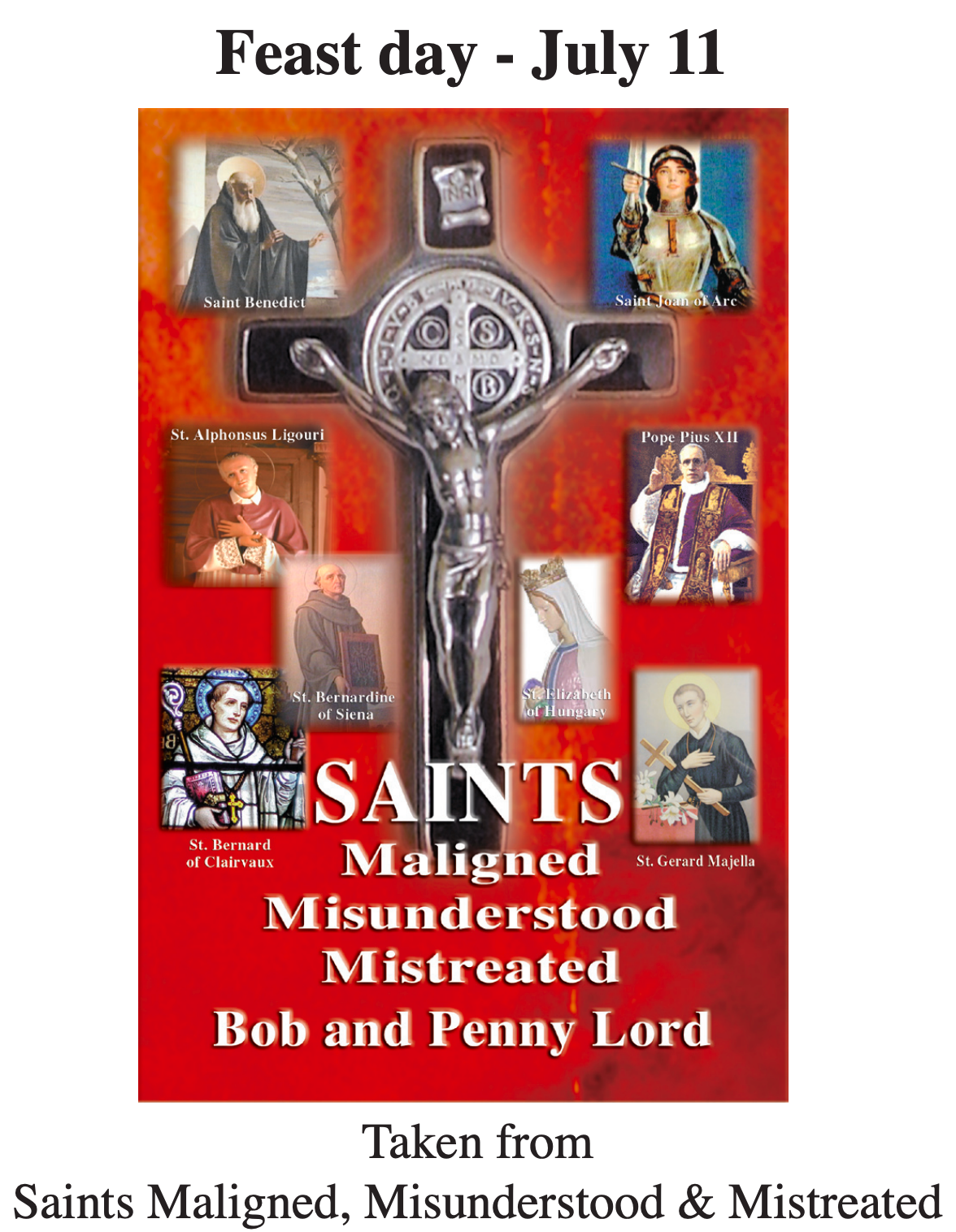
  • Based on the authors' book “Saints, Maligned, Misunderstood, and Mistreated”
  • Includes context on Benedictine history and the growth of monastic life in the Fifth Century
  • Features material connected to the authors' travels and interview with the Abbot of Subiaco Abbey, Arkansas

Compared to a full-length Catholic book, this minibook gives readers a faster, more portable way to learn about one of the Church’s most influential saints. It is well suited for prayer groups, RCIA resource tables, Catholic school religion classes, confirmation study, and anyone interested in saints, monasticism, or the Saint Benedict medal and cross devotion.

Readers follow Saint Benedict from his noble birth in Norcia to his studies in Rome and the founding of monasteries that shaped Western Christian life. The narrative also connects his story to places many pilgrims recognize, including the roadways to Spoleto, Cascia, Subiaco, and Monte Cassino. For those seeking a brief but informative Catholic resource, this printed minibook provides clear historical and devotional context in an easy-to-carry format.

View full details

Frequently Asked Questions

A good Catholic book for learning about St. Benedict depends on how much detail you want. If you want a short, accessible introduction, a printed minibook like Saint Benedict Minibook BK185 is a practical choice. It gives a focused overview of St. Benedict’s life, his role as the Father of Western Monasticism, and his founding of the Benedictine Order in a compact 24-page format. This type of book is especially helpful for readers who want to understand why St. Benedict matters in Catholic history without starting with a long theological or academic text. It also connects his story to important places such as Norcia, Subiaco, and Monte Cassino, which helps make his life easier to follow. It is best for adults, teens, parish groups, and gift buyers looking for a readable Catholic resource on a major saint. The main tradeoff is depth. A minibook is excellent for introduction and devotional reading, but it is not a full scholarly biography or a complete study of Benedictine spirituality.
St. Benedict is best known for writing the Rule of Saint Benedict. This is the foundational guide for Benedictine monastic life and one of the most influential texts in Western Christianity. It sets out practical and spiritual principles for prayer, obedience, humility, stability, and life in community. Many people first encounter St. Benedict through his medal, but the Rule is the reason he is called the Father of Western Monasticism. It shaped monasteries for centuries and influenced Catholic education, culture, and spirituality well beyond monastic communities. If you are shopping for a book about St. Benedict, it helps to know whether you want the Rule itself or a biography about the saint. Saint Benedict Minibook BK185 is a biography-style introduction. It explains who St. Benedict was, where he lived, and why his life still matters. That makes it a better choice for beginners who want context before reading the Rule directly.
There is not a single official Catholic list called the 10 Benedictine rules, but people usually mean key principles drawn from the Rule of Saint Benedict. Commonly summarized themes include prayer, obedience, humility, silence, stability, work, hospitality, moderation, community life, and reverence for God. These principles are not just abstract ideals. They form a practical pattern for Christian living, especially in monastic life. St. Benedict’s Rule is known for being balanced and realistic. It combines discipline with pastoral wisdom, which is one reason it has remained so influential. If you are choosing a book, it is helpful to distinguish between a summary of Benedictine spirituality and a life of the saint. Saint Benedict Minibook BK185 focuses primarily on his biography, including his importance as founder of the Benedictine Order and his connection to places like Subiaco and Monte Cassino. It is a strong starting point for readers who want to understand the man behind the Rule before studying the Rule itself in detail.
A minibook about St. Benedict is best for readers who want a concise, Catholic introduction to his life and influence. It works well for adults beginning to learn about the saints, teens doing personal or parish study, prayer groups, RCIA participants, and gift buyers looking for a small but meaningful religious book. Saint Benedict Minibook BK185 is especially suited to readers who want a printed resource that can be read in one sitting or used for short devotional reading over several days. At 24 pages, it is approachable for people who may not be ready for a longer saint biography or a full study of Benedictine monastic spirituality. It is also useful for those who already have interest in St. Benedict because of the Benedictine medal or cross and now want to understand his life more clearly. The limitation is that it is a brief overview, so readers seeking extensive historical documentation or a complete treatment of the Rule of Saint Benedict may eventually want a larger book.
A printed saint minibook is better if you want a quick, clear introduction, while a full-length biography is better if you want deeper historical detail. The right choice depends on your purpose. A minibook like Saint Benedict Minibook BK185 is useful for devotional reading, gift giving, classroom or parish use, and anyone who wants a manageable overview. It covers the core facts of St. Benedict’s life, his importance in the Church, and key places tied to his mission, all in a short printed format. That makes it easier to finish and easier to share with someone new to the subject. A longer biography will usually provide more historical sources, broader context, and a fuller treatment of Benedictine spirituality. The tradeoff is time and complexity. For many shoppers, a minibook is the better first step because it introduces the saint without being overwhelming. Readers who become more interested can then move on to a full biography or the Rule of Saint Benedict itself.
Saint Benedict Minibook BK185 covers the life and significance of St. Benedict as the Father of Western Monasticism and founder of the Benedictine Order. It presents his story in a short printed format and places him in the historical setting of fifth-century Italy. The book also highlights important locations connected with his life, including Norcia, Subiaco, and Monte Cassino. It references his twin sister, St. Scholastica, and draws from Bob and Penny Lord’s work on saints. The description also notes material connected to the abbeys of Subiaco and Monte Cassino, helping readers understand the physical and spiritual places most associated with St. Benedict’s mission. This is a good fit for readers seeking an overview of his life rather than a line-by-line explanation of the Rule of Saint Benedict. Because it is 24 pages and staple bound, it is designed for concise reading and easy use. Shoppers wanting an introductory Catholic saint resource will likely find it more practical than a lengthy academic text.
Yes, this minibook is a strong choice for beginners who know St. Benedict mainly through the Benedictine medal or cross and want to learn who he was. Many Catholics recognize his name from devotional items, but not everyone knows his historical role in the Church. A short biography helps bridge that gap. Saint Benedict Minibook BK185 introduces him as a major saint of the fifth century, the founder of the Benedictine Order, and the Father of Western Monasticism. It gives readers context for why his witness mattered and why devotion to him became so widespread. It also connects his life to key Italian locations like Norcia, Subiaco, and Monte Cassino. This format is especially useful for someone who wants a readable, printed overview rather than a large theology book. The only tradeoff is brevity. If you want an in-depth explanation of the symbolism of the medal itself or a full study of Benedictine spirituality, you may eventually want additional resources after reading this introduction.
St. Benedict is important in Catholic history because he is widely known as the Father of Western Monasticism and the founder of the Benedictine Order. His spiritual and practical guidance shaped monastic life in the West for centuries and influenced Catholic prayer, learning, discipline, and community life. His Rule provided a stable framework for religious life built around prayer, work, obedience, humility, and order. That influence extended far beyond monasteries. Benedictine communities helped preserve Christian culture, education, and worship through periods of social upheaval. For shoppers choosing a saint book, this matters because a book on St. Benedict is not only about one holy person. It is also about a major turning point in Church history. Saint Benedict Minibook BK185 is helpful for readers who want that historical importance explained in a short, approachable format. It gives enough context to understand why devotion to St. Benedict remains strong, especially among Catholics interested in saints, monastic spirituality, and classic Christian witness.
Yes, this Saint Benedict minibook works well for both personal devotion and parish study, especially when a short printed resource is needed. Its 24-page length makes it manageable for individual reading, small discussion groups, adult faith formation, and saint-themed parish education. For personal devotion, it offers a focused way to reflect on the life of a major Catholic saint without requiring a large time commitment. Readers can finish it in one sitting or read it slowly as part of a novena, feast day preparation, or spiritual reading routine. For parish use, the concise format makes it easier to assign, discuss, or distribute than a longer biography. Its best use is introductory formation rather than advanced scholarship. Those leading a deeper Benedictine spirituality study may want to pair it with the Rule of Saint Benedict or additional historical materials. But as a starting point for learning who St. Benedict was and why he matters, it is practical and accessible.
When choosing a Catholic saint minibook, look for three things: clear Catholic content, a focused scope, and a format that matches your purpose. A good minibook should explain who the saint was, why the saint matters in Church history or devotion, and what kind of reader will benefit most from the book. You should also consider whether you want biography, prayers, spiritual teaching, or a combination. Some saint books are devotional, while others are more historical. Saint Benedict Minibook BK185 is primarily a biography-style introduction. It presents St. Benedict’s life, his role as founder of the Benedictine Order, and his connection to places like Norcia, Subiaco, and Monte Cassino in a brief printed format. This makes it a good option for shoppers who want a readable overview rather than a long theological study. The tradeoff is that a minibook will not offer the same depth as a full-length biography or the complete Rule of Saint Benedict. It is best chosen as an accessible first step or a compact Catholic gift.