
Skip to product information
1 of 1

Saint Conrad Printed Minibook

Saint Conrad Printed Minibook

Regular price $11.00 USD
Regular price Sale price $11.00 USD
Sale Sold out
Shipping calculated at checkout.

FREE Shipping for all orders over $50 -- We have graduated discounts automatically  applied up to 67% when you add to cart. --- 20% off orders over $50 --- 25% off orders over $75 --- 30% off orders over $100 --- 35% off orders over $150 --- 5%Cash Back Store Credit on all orders

CHECKOUT TIPS 1. Discounts are applied automatically! 3. Pay with credit card or Express Pay

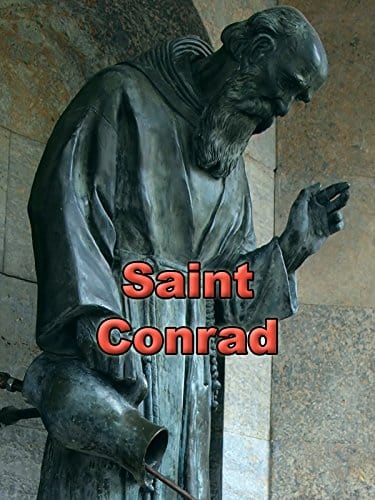
Saint Conrad of Altotting Minibook is a 20-page printed Catholic minibook by Bob and Penny Lord, published by Journeys of Faith. It introduces Saint Conrad as the Capuchin doorkeeper of Our Lady of Altotting and gives readers a concise account of the Bavarian Marian shrine, making it useful for personal devotion, saint study, and Catholic gift giving.

  • 20-page printed minibook format for quick reading and easy sharing
  • Written by Bob and Penny Lord, known for Catholic pilgrimage and saints research
  • Focuses on Saint Conrad, the holy doorkeeper who welcomed pilgrims, the poor, and children
  • Includes historical context on Altotting, a major Marian shrine in Bavaria, Germany
  • Helpful for feast day reading, parish groups, confirmation study, or travel preparation

Unlike a lengthy biography, this minibook offers a focused introduction that can be read in one sitting while still giving clear historical and devotional context. Compared to general saint summaries, it connects Saint Conrad directly to the shrine of Our Lady of Altotting, a site closely associated with Bavarian Catholic life and pilgrimage.

The booklet also recounts the authors' experience visiting shrines in Europe and explains the significance of Altotting through the history of St. Rupert, the Marian shrine, and Saint Conrad's service at the Capuchin monastery. Readers interested in Catholic saints, Marian apparitions, pilgrimage sites, or prayerful reading will find it especially relevant. This printed edition is well suited for home libraries, parish book tables, and thoughtful Catholic gifts.
View full details

Frequently Asked Questions

A good Catholic minibook for this purpose is a short printed saint biography that also explains the shrine, its history, and why the saint matters to pilgrims. The Saint Conrad of Altotting Minibook fits that need well because it introduces Saint Conrad as the holy doorkeeper at the Capuchin monastery and connects his life to the famous Marian shrine at Altötting in Bavaria, Germany. This 20-page printed minibook is especially useful for readers who want more than a basic saint summary. It also describes Our Lady of Altötting, the shrine’s Catholic history, and Saint Conrad’s tomb and living quarters. That makes it a strong choice for people interested in Marian devotion, pilgrimage, Bavarian Catholic history, or saint stories tied to real holy places. It is best for readers who want a concise, focused introduction rather than a long academic biography. If you need a fast, accessible saint resource with shrine context, this format works very well.
Saint Conrad of Altotting is known in Catholic devotion as a humble Capuchin doorkeeper who served pilgrims, the poor, and homeless children at the Marian shrine of Altötting in Germany. His importance comes less from public fame or theological writing and more from faithful daily service, charity, and holiness in ordinary duties. He is closely associated with Our Lady of Altötting, one of the most important Marian shrines in Bavaria. That connection makes him meaningful for Catholics who value pilgrimage, Marian devotion, and the witness of saints who lived simple but deeply sacrificial lives. The Saint Conrad of Altotting Minibook presents him in that context, showing how his life was tied to the shrine, its visitors, and the spiritual life of the region. This saint is especially relevant for readers drawn to examples of hospitality, humble service, and hidden holiness. If you are looking for a saint connected to everyday acts of mercy rather than dramatic public ministry, Saint Conrad is a strong choice.
A saint minibook is best for readers who want a clear, manageable introduction to a saint without committing to a longer book. It works especially well for personal devotion, parish gift-giving, homeschool supplements, quick study, or travel reading. The Saint Conrad of Altotting Minibook is a good example because it gives a focused overview of the saint, the Marian shrine of Altötting, and the spiritual setting that shaped his life. Because it is a 20-page printed minibook, it suits people who prefer concise reading or want to learn about a lesser-known saint in a short format. It is also helpful for Catholics preparing for pilgrimages, researching saints connected to Marian shrines, or building a small collection of saint resources. The tradeoff is depth. A minibook offers accessibility and speed, but not the level of historical detail or theological analysis found in a full-length biography. It is ideal for readers who want a faithful introduction first, and can pursue more advanced study later if needed.
It covers both Saint Conrad and the Shrine of Our Lady of Altötting. The minibook presents Saint Conrad as the holy doorkeeper connected to the Capuchin monastery, but it also gives substantial context about the Marian shrine itself, its Bavarian setting, and the Catholic history surrounding it. The description specifically notes that it explains the shrine, Saint Conrad’s tomb, and his living quarters. It also includes background on Altötting’s origins, its Marian devotion, and its place in Bavaria’s Catholic identity. That makes it more useful than a simple saint sketch, because readers come away with an understanding of both the man and the sacred place that shaped his vocation. This is especially helpful for Catholics interested in pilgrimage, Marian apparitions and shrines, or saints whose lives are tied to a specific devotional center. If you only want a stand-alone, highly detailed biography of Saint Conrad, this may feel brief. But if you want saint life plus shrine context in one short resource, it is a strong fit.
Yes, printed saint minibooks are still useful because they offer a focused, distraction-free way to learn and pray. Online content can be convenient, but it is often fragmented. A printed minibook like the Saint Conrad of Altotting Minibook gathers the key information into one short, organized resource that can be read in a single sitting. This format is especially helpful for prayer corners, church groups, classroom use, and pilgrimage preparation. Since it is a physical 20-page booklet, it is easy to lend, gift, mark for reference, or keep with other devotional materials. It also suits readers who prefer a tactile reading experience or want something simple to bring to Adoration, a retreat, or travel. The main tradeoff is that a printed minibook is shorter and less searchable than online resources. It is not meant to replace in-depth research. Instead, it works best as a concise Catholic reference and devotional reading tool for people who value clarity, portability, and a dedicated saint-focused format.
A saint booklet makes a good gift when it connects a holy person to a meaningful place of devotion. The Saint Conrad of Altotting Minibook does that well because it introduces a saint known for humble service while also explaining the Marian shrine of Altötting, one of Bavaria’s important Catholic pilgrimage sites. For someone interested in Marian devotion, this kind of booklet offers more than biography. It gives shrine history, Catholic context, and insight into how devotion to Our Lady shaped local faith. For someone interested in pilgrimage, it helps them understand why a place matters spiritually, not just geographically. The inclusion of Saint Conrad’s tomb and living quarters adds a concrete connection to the pilgrimage experience. This type of gift is especially suitable for Catholics who enjoy saint stories, shrine history, or small devotional books they can read quickly. The main limitation is that it is concise, so it works best as a thoughtful introduction or companion gift rather than a comprehensive historical volume.
This minibook stands out by combining a saint’s life with the story of a major Marian shrine. Many saint minibooks focus mainly on biography, feast day facts, or devotional inspiration. The Saint Conrad of Altotting Minibook adds another layer by placing the saint within the living Catholic setting of Altötting in Bavaria. It is a printed 20-page booklet, so it remains brief and accessible like other minibooks, but its scope includes Saint Conrad’s role as doorkeeper, his care for pilgrims and the poor, the background of Our Lady of Altötting, and details about his tomb and living quarters. That broader context can make it more appealing for readers interested in pilgrimage, shrine history, and Marian devotion, not just saint biographies. The tradeoff is that readers seeking a long, detailed study may want a full-length book instead. Compared with other short saint booklets, this one is most valuable for those who want a compact resource that ties a saint’s holiness directly to a specific Catholic shrine and region.
Yes, it is a helpful introductory resource for learning about Catholic Bavaria and the shrine at Altötting. While the minibook centers on Saint Conrad, it also explains the Bavarian Catholic setting that made Altötting such an important place of Marian devotion. The description highlights Bavaria as a strong center of Catholicism and presents Altötting as a major shrine associated with Our Lady’s protection and local faith. It also includes traditional historical background, such as the role of Saint Rupert in transforming the site into a Christian Marian shrine. That gives readers more than a biography. It offers a short, readable entry point into the religious identity of the region. This is best for readers who want a concise Catholic overview rather than a scholarly history of Bavaria. It is especially useful for pilgrims, Catholic readers exploring European shrines, or anyone interested in how saints and sacred places shaped regional devotion. If you need academic depth, you may want additional sources, but for a compact introduction, it is well suited.
Yes, this minibook can work well for parish groups, homeschool settings, and saint study discussions because it is short, focused, and rooted in a clear Catholic subject. The Saint Conrad of Altotting Minibook gives readers enough content to discuss Saint Conrad’s virtues, service to pilgrims and the poor, the role of Marian shrines, and the Catholic history of Altötting. Its 20-page printed format makes it manageable for group reading or assignment-based study. In a homeschool setting, it can support lessons on the saints, Church history, European Catholic culture, or Marian devotion. In a parish context, it can help with adult faith formation, prayer group reflection, or pilgrimage-themed discussions. The strongest benefit is accessibility. Readers can complete it quickly and still come away with concrete details about the saint and the shrine. The limitation is that it is not a full curriculum or an exhaustive biography. It works best as a discussion starter, supplemental resource, or devotional reading rather than a stand-alone academic text.
Someone might choose this booklet because Saint Conrad represents a type of holiness that is easy to relate to: faithful service in ordinary life. Even if a reader has never heard of him, his role as a doorkeeper who welcomed pilgrims and cared for poor and homeless children makes his witness immediately understandable. The booklet is also appealing because it introduces him alongside the Marian shrine of Altötting. That means readers are not just meeting an unfamiliar saint. They are also learning about an important Catholic place, Bavarian devotion to Our Lady, and the spiritual environment that shaped his life. For many readers, that makes a lesser-known saint more memorable and meaningful. This is a strong choice for Catholics who enjoy discovering hidden saints, pilgrimage stories, or examples of humble charity. The tradeoff is that it is a concise 20-page minibook, so it serves as an introduction rather than a full historical treatment. For first-time readers, though, that brevity can actually be a benefit.