
Skip to product information
1 of 2

Self Abandonment to Divine Providence Leather Bound Classic

Self Abandonment to Divine Providence Leather Bound Classic

Regular price $24.95 USD
Regular price Sale price $24.95 USD
Sale Sold out
Shipping calculated at checkout.

FREE Shipping for all orders over $50 -- We have graduated discounts automatically  applied up to 67% when you add to cart. --- 20% off orders over $50 --- 25% off orders over $75 --- 30% off orders over $100 --- 35% off orders over $150 --- 5%Cash Back Store Credit on all orders

CHECKOUT TIPS 1. Discounts are applied automatically! 3. Pay with credit card or Express Pay

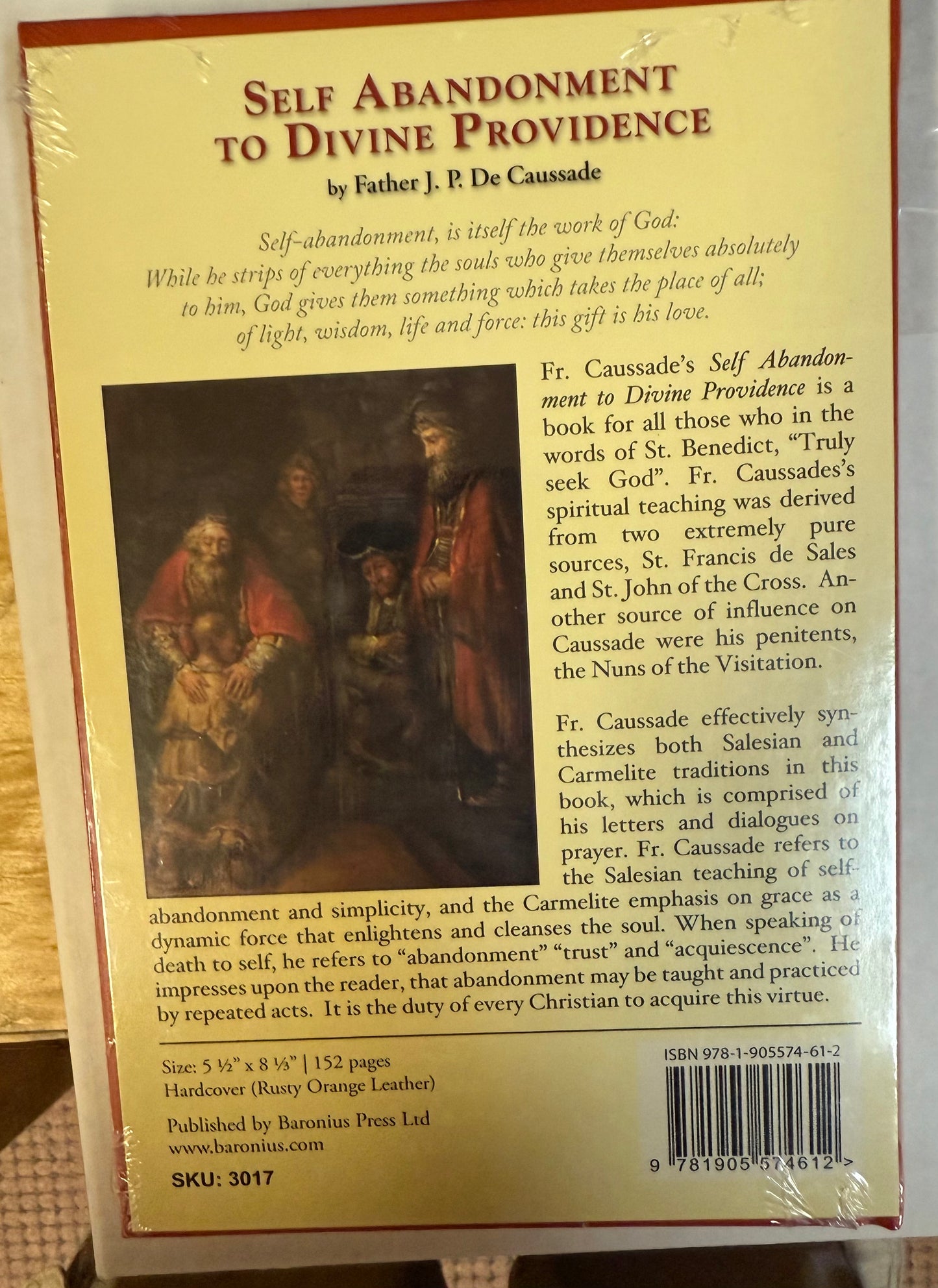
Self Abandonment to Divine Providence is a leather bound Catholic spiritual classic for readers seeking practical guidance in prayer, trust, and surrender to God’s will. This English edition from Baronius Press was published on November 1, 2015, includes 152 pages, and carries ISBN-13 978-1905574612.

Written by Jean-Pierre de Caussade and translated by Algar Thorold, this volume draws from the spiritual teaching of St. Francis de Sales and St. John of the Cross. Unlike general devotional books that offer short reflections alone, this classic presents letters and dialogues on prayer that help readers understand abandonment, grace, and simplicity in daily Christian life.

  • Leather bound edition designed for lasting use in personal libraries
  • 152-page English text suitable for steady spiritual reading and study
  • Rooted in Salesian and Carmelite spiritual traditions
  • Useful for prayer time, retreats, spiritual direction, and gift giving
  • Explores repeated acts of trust, acquiescence, and death to self

Fr. Caussade teaches that abandonment is not passive resignation but a virtue practiced through repeated acts of trust in Divine Providence. Compared to modern inspirational titles, this work offers a more traditional and structured approach to Catholic spiritual formation.

It is well suited for those building a Catholic prayer book collection, choosing classic spiritual direction books, or looking for a meaningful Catholic gift for Lent, Confirmation, RCIA, or everyday devotional reading.

View full details

Frequently Asked Questions

One of the most respected Catholic spiritual classics on trust in God is Self Abandonment to Divine Providence by Fr. Jean-Pierre de Caussade. It is widely recommended for readers who want practical guidance on surrendering daily life to God's will rather than treating spirituality as only a theory. The book draws from the traditions of St. Francis de Sales and St. John of the Cross, giving it a strong foundation in classic Catholic spiritual teaching. This edition is especially well suited for readers looking for a durable keepsake volume, since it is a leather bound classic from Baronius Press. At 152 pages, it is also more approachable than many longer spiritual works. It benefits Catholics who want serious spiritual reading without starting with a dense multi-volume set. The main tradeoff is that it is a classic work, so readers looking for modern examples, contemporary language, or a newly written 2026 release may prefer to pair it with newer Catholic books.
Yes, it can be a very good beginner-friendly Catholic spiritual reading choice, especially for someone who wants to grow in trust, prayer, and surrender to God. Self Abandonment to Divine Providence is only 152 pages, so it is less intimidating than many classic Catholic spirituality books. Its focus is clear and practical: learning to accept God's action in ordinary life through repeated acts of abandonment, trust, and acquiescence. It is best for readers who are serious about interior growth and open to reflective reading. Because the book is drawn from Fr. de Caussade's letters and dialogues on prayer, it often feels personal and direct rather than academic. Beginners who are interested in spiritual direction, discernment, or overcoming anxiety through faith may benefit most. The main limitation is that it is still a spiritual classic, so the style may feel more formal than modern devotional books. Readers who prefer very simple language, study questions, or contemporary examples may need to read it slowly or alongside a Catholic prayer book or guided devotional resource.
Self Abandonment to Divine Providence is about learning to trust God completely in the duties, crosses, and ordinary events of everyday life. Fr. Jean-Pierre de Caussade teaches that holiness is not found only in extraordinary experiences, but in faithful acceptance of God's will in the present moment. He describes this spiritual path using ideas such as abandonment, trust, simplicity, and acquiescence. The book synthesizes two major Catholic spiritual traditions. From St. Francis de Sales, it emphasizes simplicity and loving surrender. From St. John of the Cross and the Carmelite tradition, it presents grace as a living force that purifies and enlightens the soul. This edition is composed of letters and dialogues on prayer, which helps show how the teaching applies in real spiritual life. It is especially helpful for Catholics who struggle with control, worry, or discouragement and want a deeper interior life. The tradeoff is that it is more about spiritual transformation than quick inspiration, so it is best read prayerfully and in small portions rather than rushed straight through.
This book differs from many modern Catholic living books and devotionals because it is a spiritual classic focused on interior surrender rather than lifestyle advice, topical inspiration, or short daily reflections. Self Abandonment to Divine Providence is not built around current events, personal stories, or practical life hacks. Instead, it offers a concentrated spiritual teaching on how to accept God's will in each moment. That makes it a strong choice for readers who want timeless Catholic formation rooted in the tradition of the saints. At 152 pages, it is shorter than many theological works, but it asks for deeper reflection than a casual devotional. Readers interested in prayer, spiritual direction, and growth in trust will likely find it more substantial than lighter inspirational books. The tradeoff is that readers looking for highly contemporary language or step-by-step journaling prompts may prefer a modern devotional first. This book is best for those who want enduring Catholic spiritual reading that can be revisited over many years rather than read once and set aside.
This book is best for Catholics who truly want to grow in holiness by learning trustful surrender to God. It is especially useful for people who feel burdened by worry, perfectionism, restlessness, or the desire to control every outcome. Fr. de Caussade's teaching helps readers see ordinary life, daily duties, and trials as places where God's grace is active. It is also a strong fit for those interested in classic spiritual direction, Carmelite spirituality, Salesian spirituality, or deeper prayer. Because the book gathers letters and dialogues on prayer, it can speak well to readers who want practical counsel rather than abstract theology alone. Retreatants, lay Catholics building a spiritual reading habit, and those returning to the sacraments often benefit from its message. It may be less ideal for someone seeking a fast-paced introduction to Catholicism, a heavily annotated academic study, or a workbook format. The greatest benefit comes to readers willing to go slowly, reflect, and apply its teaching through repeated acts of trust in daily life.
Yes, many readers consider Self Abandonment to Divine Providence an essential Catholic spirituality title because it addresses one of the central themes of the spiritual life: trusting God's providence in all things. Its lasting value comes from its theological depth, practical guidance, and connection to major spiritual traditions shaped by St. Francis de Sales and St. John of the Cross. This makes it a strong book to own in print rather than only borrow once. Since the work is short at 152 pages but rich in content, many Catholics return to it repeatedly for prayerful reading, retreats, or personal reflection. A leather bound edition especially suits readers who want a durable spiritual library volume or a meaningful Catholic gift. The tradeoff is that it is not a broad overview of every aspect of Catholic spirituality. Instead, it goes deeply into one foundational virtue: abandonment to divine providence. For that reason, it works especially well as part of a home Catholic book collection alongside Scripture, a Catholic prayer book, and other saints books or spiritual classics.
The main difference is durability, usability for prayerful reading, and long-term keepsake value. A leather bound edition of Self Abandonment to Divine Providence is often better suited for slow meditation, marking passages, and returning to the text over time than a digital file or PDF. Many readers find that classic Catholic spiritual reading is easier to absorb in print because it encourages focus and fewer distractions. This edition is published by Baronius Press in English and has 152 pages, making it compact enough for regular devotional use while still feeling substantial. A physical edition also makes a better gift for confirmations, RCIA milestones, or anyone building a Catholic home library. A digital format may be more convenient for travel or quick searching, but it does not offer the same tactile reading experience or presentation. Readers deciding between print and digital should choose print if they want a lasting spiritual resource to revisit often, and digital if portability is their top priority.
It is primarily a practical spiritual book centered on prayerful living, though it is grounded in solid Catholic theology. The heart of Self Abandonment to Divine Providence is not abstract speculation but learning how grace works in daily life and how a Christian can respond with trust, surrender, and faithful acceptance of God's will. Because the book is made up of letters and dialogues on prayer, it reads more like spiritual direction than a formal theology textbook. Readers will encounter theological themes such as grace, purification, and divine providence, but always in service of helping the soul grow closer to God. Its influences from St. Francis de Sales and St. John of the Cross give it depth without turning it into a purely academic work. This makes it especially useful for Catholics who want their spiritual reading to shape prayer and habits, not just provide information. The tradeoff is that readers seeking a structured doctrinal study with extensive footnotes or scholarly analysis may want a separate theological commentary alongside it.
Yes, this book can be very helpful for Catholics struggling with anxiety, suffering, or the need to control outcomes, because its central message is trustful surrender to God's providence. Fr. de Caussade teaches that God's grace is present in the duties, disappointments, and uncertainties of each day, and that peace grows through repeated acts of abandonment rather than through perfect circumstances. The book is especially useful for readers who feel spiritually stuck because they want certainty before they can trust. Its language about abandonment, trust, and acquiescence offers a distinctly Catholic path for facing difficulties without despair. Rather than promising instant emotional relief, it trains the soul to respond to life with faith and humility. The limitation is that it is a spiritual work, not a clinical mental health resource. It can deeply support prayer and perspective, but it does not replace counseling or medical care when needed. It is best for those who want a serious Catholic framework for suffering and surrender rooted in the spiritual tradition.
Yes, this is a meaningful Catholic gift for someone discerning a deeper prayer life because it offers lasting guidance rather than a temporary devotional trend. Self Abandonment to Divine Providence is a classic work on trusting God, making it especially fitting for adults entering a more serious season of spiritual growth, retreat, discernment, or personal conversion. The leather bound presentation adds to its value as a gift, since it feels like a keepsake rather than a disposable paperback. It suits recipients who appreciate Catholic books with substance, especially those interested in classic spiritual direction, saints-based spirituality, or learning how to unite everyday life with prayer. Because it is only 152 pages, it is also manageable for many readers who might hesitate to begin a larger spiritual work. A good gift recipient would be someone reflective and open to meditative reading. The main tradeoff is that it is not a light inspirational book, so it is best for readers ready for thoughtful Catholic spiritual reading rather than for very young readers or those seeking a highly casual introduction.