
Skip to product information
1 of 1

Eucharistic Miracles Minibook

Eucharistic Miracles Minibook

Regular price $11.00 USD
Regular price Sale price $11.00 USD
Sale Sold out
Shipping calculated at checkout.

FREE Shipping for all orders over $50 -- We have graduated discounts automatically  applied up to 67% when you add to cart. --- 20% off orders over $50 --- 25% off orders over $75 --- 30% off orders over $100 --- 35% off orders over $150 --- 5%Cash Back Store Credit on all orders

CHECKOUT TIPS 1. Discounts are applied automatically! 3. Pay with credit card or Express Pay

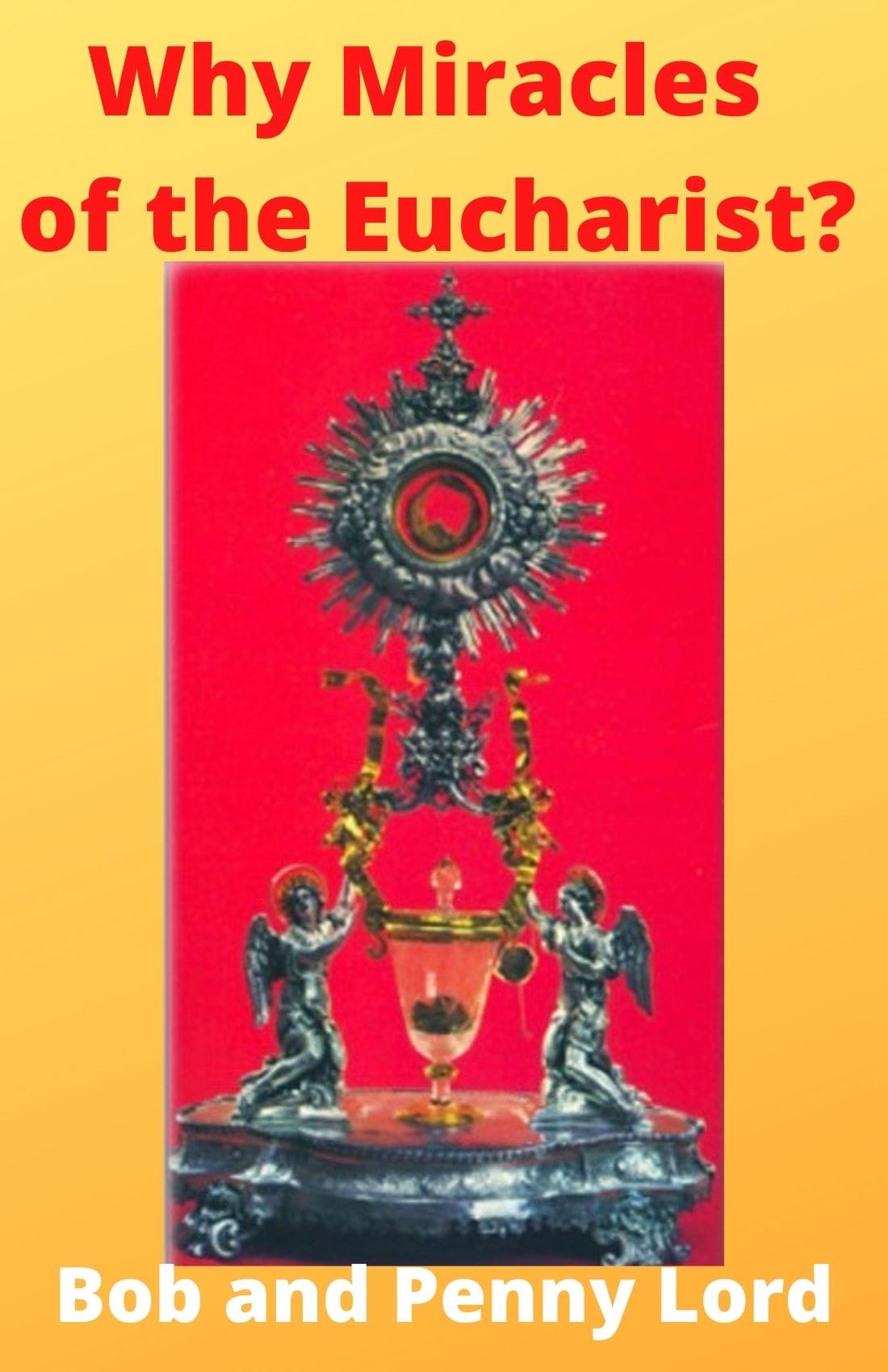
Why Miracles of the Eucharist Minibook is a printed 20-page Catholic minibook by Bob and Penny Lord, published by Journeys of Faith. It explains why Eucharistic miracles matter in Church history, beginning with John 6:51 and the well-known miracle of Lanciano, Italy. Unlike a long theological study, this concise booklet offers a focused introduction that is easy to read for personal prayer, Eucharistic adoration, parish groups, and sacramental formation.

  • Printed minibook format with 20 pages for quick study and reference
  • Written by Bob and Penny Lord, known Catholic authors and speakers
  • Centers on John 6:51 as the scriptural foundation for Eucharistic belief
  • Highlights the Shrine of the Eucharistic Miracle in Lanciano, Italy
  • Includes pilgrims' testimonies describing the Host and Wine miracle
  • Useful for Eucharistic revival, RCIA, confirmation study, and gift giving

At the first Marian Eucharistic Conference in English at the Shrine of the Miracle of the Eucharist in Lanciano, Bob and Penny explain why miracles of the Eucharist have appeared throughout the centuries. Readers encounter firsthand testimony from pilgrims moved to tears as they reflect on the Host said to have become Human Heart tissue and the Wine said to have become Human Blood. Compared to general Catholic prayer books, this minibook is narrowly focused on one question: why the Church preserves and reflects on Eucharistic miracles. It is a practical resource for anyone seeking a compact Catholic book on Eucharistic miracles, apologetics, and devotion to the Real Presence.
View full details

Frequently Asked Questions

A good place to start is a short, focused introduction that explains both what Eucharistic miracles are and why they matter in Catholic belief. Why Miracles of the Eucharist Minibook is designed for that role. It is a 20-page printed minibook by Bob and Penny Lord that begins with the biblical foundation in John 6:51 and then connects that teaching to miracles reported in the life of the Church. This format works especially well for readers who want a clear overview before committing to a larger study. It also centers on Lanciano, Italy, one of the best-known Eucharistic miracle sites, and includes context from a Marian Eucharistic conference held there. That makes it useful for Catholics, RCIA participants, prayer groups, and anyone trying to understand why these miracles are significant. The tradeoff is depth. A minibook is best for an introduction, not a full catalog of miracles or a detailed theological study. If you want a concise starting point that links Scripture, Church history, and a major miracle site, this is a practical choice.
Eucharistic miracles are extraordinary events associated with the Eucharist that Catholics understand as signs pointing back to Christ’s Real Presence. These accounts often involve a consecrated Host or Precious Blood appearing in an unusual way, such as the well-known miracle of Lanciano, where the Host is described as having become human flesh and the wine as human blood. Catholics read about Eucharistic miracles to deepen faith, understand Church history, and reflect on the meaning of the Eucharist in light of Scripture. Why Miracles of the Eucharist Minibook addresses that purpose directly. It explains why such miracles appear throughout the centuries and roots the topic in John 6:51, a central passage for Eucharistic teaching. This kind of resource is most helpful for people who want spiritual and historical context rather than just a list of miracle sites. It can support personal devotion, religious education, or parish discussion. The main limitation is that a short minibook introduces the theme and one major setting very well, but it is not intended to replace a full theological or historical reference work.
This minibook is best suited for beginners and intermediate readers who want a concise explanation of why Eucharistic miracles matter. Its strongest value is that it does not assume advanced theological training. Instead, it starts with Scripture, especially John 6:51, and then explains how miracles of the Eucharist fit into Catholic tradition over the centuries. Because it is only 20 pages, it is approachable for readers who may feel overwhelmed by larger books on Eucharistic theology or miracle collections. It also focuses on Lanciano, Italy, which gives readers a concrete and widely recognized example instead of a scattered overview with too many details at once. Readers who already have substantial knowledge of Eucharistic miracles may still appreciate it as a devotional refresher or a shareable teaching tool. However, those looking for a comprehensive list of cases, extensive documentation, or academic analysis will likely want a larger companion resource. In short, this minibook is strongest as an entry point, a discussion starter, or a brief faith-building read.
Yes. This minibook specifically highlights the Shrine of the Miracle of the Eucharist in Lanciano, Italy, making Lanciano one of its central points of focus. According to the product description, it returns to that shrine as a starting place for explaining the Miracles of the Eucharist and includes reflections connected to a Marian Eucharistic conference held there. It also describes the pilgrims’ response to seeing the Host said to have turned into a human heart and the wine into human blood. That makes the booklet useful for readers who want more than a brief mention of Lanciano and are interested in its devotional impact on pilgrims. This is a good fit for Catholics researching famous Eucharistic miracle sites, people preparing for Eucharistic adoration or parish study, and readers who want to connect miracle accounts with faith testimony. The limitation is scope. While Lanciano is clearly included, the minibook is not presented as a full directory of all known Eucharistic miracles. It is better understood as a focused introduction built around Scripture, Church tradition, and one of the most recognized miracle locations.
A printed Eucharistic miracles minibook is different mainly in length, reading time, and purpose. Why Miracles of the Eucharist Minibook is a 20-page printed booklet, so it is meant to give a focused, accessible introduction rather than an exhaustive treatment. It works well when you want a quick but meaningful overview of the topic. A full-length book usually offers more case studies, deeper theology, historical sources, and broader coverage of Eucharistic miracles across countries and centuries. By contrast, this minibook concentrates on the core question of why Eucharistic miracles occur in the life of the Church and grounds that answer in John 6:51. It also gives special attention to Lanciano and to pilgrims’ testimonies. This makes the minibook ideal for personal reflection, parish handouts, starter reading, or gift-giving to someone curious about Catholic teaching. The tradeoff is that it will not provide the same depth, documentation, or variety of examples as a larger volume. Choose a minibook when you want clarity and brevity; choose a longer book when you want broad research and deeper study.
No, this minibook is not described as a full list or catalog of Eucharistic miracles. Instead, it focuses on explaining why miracles of the Eucharist have appeared throughout Church history and uses Scripture and the example of Lanciano to frame that answer. If your main goal is a broad directory of many miracle cases, this is more introductory than encyclopedic. That said, it can still complement list-based resources well. Collections associated with major Eucharistic miracle exhibits are often strongest for breadth, while this minibook is stronger for concise interpretation and devotional context. It helps readers understand the theological importance behind the miracles rather than simply presenting names and locations. This makes it especially useful for readers who want a short explanation they can finish quickly, teachers who need a discussion starter, or Catholics preparing for adoration, study, or pilgrimage-related reading. The limitation is clear: if you want a resource organized around dozens or hundreds of miracle entries, you will likely need an additional reference. If you want a brief framework for understanding the meaning of the miracles, this minibook fits that need.
This minibook is most helpful for Catholics who want a short, readable introduction to Eucharistic miracles and their spiritual meaning. It is a strong fit for adults beginning to study the Real Presence, parishioners preparing for Eucharistic adoration, RCIA participants, prayer groups, and gift buyers looking for a small but thoughtful Catholic resource. Because it is a printed 20-page minibook, it also suits readers who prefer something they can read in one sitting rather than a longer theological work. The authors, Bob and Penny Lord, frame the topic through Scripture and Church history, with special attention to Lanciano and the witness of pilgrims who encountered the miracle shrine. It may also appeal to people interested in Marian and Eucharistic devotion, since the content is tied to a Marian Eucharistic conference. The main limitation is that advanced readers may want more documentation, more miracle cases, or deeper apologetics than a short booklet can provide. In practical terms, this is best for someone seeking a faithful introduction, devotional reflection, or a simple teaching tool rather than a comprehensive academic study.
This minibook combines all three, but it leans most strongly toward devotional and introductory apologetic use. It is devotional because it presents pilgrims’ reactions to the Lanciano miracle and encourages reflection on the Eucharist as a lived reality of faith. It is apologetic because it answers the question of why Eucharistic miracles exist in the Church and grounds that answer in John 6:51. It is historical in the sense that it refers to miracles of the Eucharist through the centuries and centers on a major shrine in Lanciano, Italy. For many readers, that blend is an advantage. It does not read like a purely academic study, and it also does not reduce the topic to emotion alone. Instead, it offers scriptural foundation, historical continuity, and testimony. This balance makes it useful for personal faith formation, small group reading, and introductory Catholic education. The limitation is that readers looking for rigorous scholarly analysis or a purely historical survey may find it too brief and spiritually oriented. It is best understood as a compact faith-based introduction with apologetic value rather than a technical research volume.
Yes, this minibook can work well in parish and small-group settings, especially when the goal is to introduce the topic clearly and quickly. Its short printed format makes it practical for RCIA discussion, adult faith formation, prayer groups, and preparation for Eucharistic adoration or a parish Eucharistic event. The content is especially useful because it answers a foundational question: why the Church has seen Eucharistic miracles through the centuries. It does not just mention miracles. It ties them to John 6:51 and to the witness of Lanciano, helping participants connect doctrine, history, and devotion. That gives leaders a focused theme for discussion without requiring members to complete a long reading assignment. It is also a reasonable option for groups that want something easy to distribute and finish in a single session. The tradeoff is that a 20-page booklet may need to be supplemented if your group wants a broader survey of miracle cases, Church documents, or deeper theological explanation. As an entry-level study aid or reflection handout, it is especially well suited.
A printed minibook offers a curated, focused reading experience that many people find easier for prayerful study than browsing a website. Why Miracles of the Eucharist Minibook is built around one clear question, why Eucharistic miracles occur, and answers it through Scripture, Catholic tradition, and the example of Lanciano. That gives readers a structured introduction rather than scattered online information. A website may be better for searching many miracle entries, images, or locations. This minibook is better for readers who want a concise path through the subject without distractions. It can also be shared in person, used in class or parish settings, and revisited during prayer, travel, or adoration. This choice is especially beneficial for Catholics who prefer printed materials, gift-givers, and study leaders who need a short resource others can read quickly. The limitation is that a website usually updates more easily and may include a larger number of miracles. If you want breadth and searchable data, a website helps. If you want a compact, faithful introduction with devotional focus, this minibook is a strong fit.